 Oldsmar Siding
 Exterior Contracting for Westchase Homes in Oldsmar
Westchase sits in the middle of a stretch of Pinellas County that takes a beating from the outside in. It's not one single threat that wears down a home's exterior here — it's the combination. Long stretches of intense sun bake painted surfaces and cook caulk joints brittle. Summer storms roll in fast and hard, throwing wind-driven rain sideways against walls that were never designed to shed water at that angle. And even though Westchase isn't directly on the coast, this part of Florida still carries enough salt-laden air on onshore breezes to accelerate corrosion on fasteners, hardware, and unprotected wood trim. Add hurricane-season wind loads to that list, and you've got a climate that is genuinely hard on siding, roofing, windows, and decks — harder than most manufacturers' warranty language was written to assume.
We work this area regularly, which matters more than it sounds like it should. A crew that only shows up in Pinellas County a few times a year doesn't build the pattern recognition that comes from seeing the same failure points over and over: which wall orientations take the worst wind-driven rain, which older siding installs are starting to show soft spots around window returns, which roof valleys clog first after a summer's worth of debris and downpours. Local experience shortens the time between "something's wrong" and "here's exactly what's wrong and why."
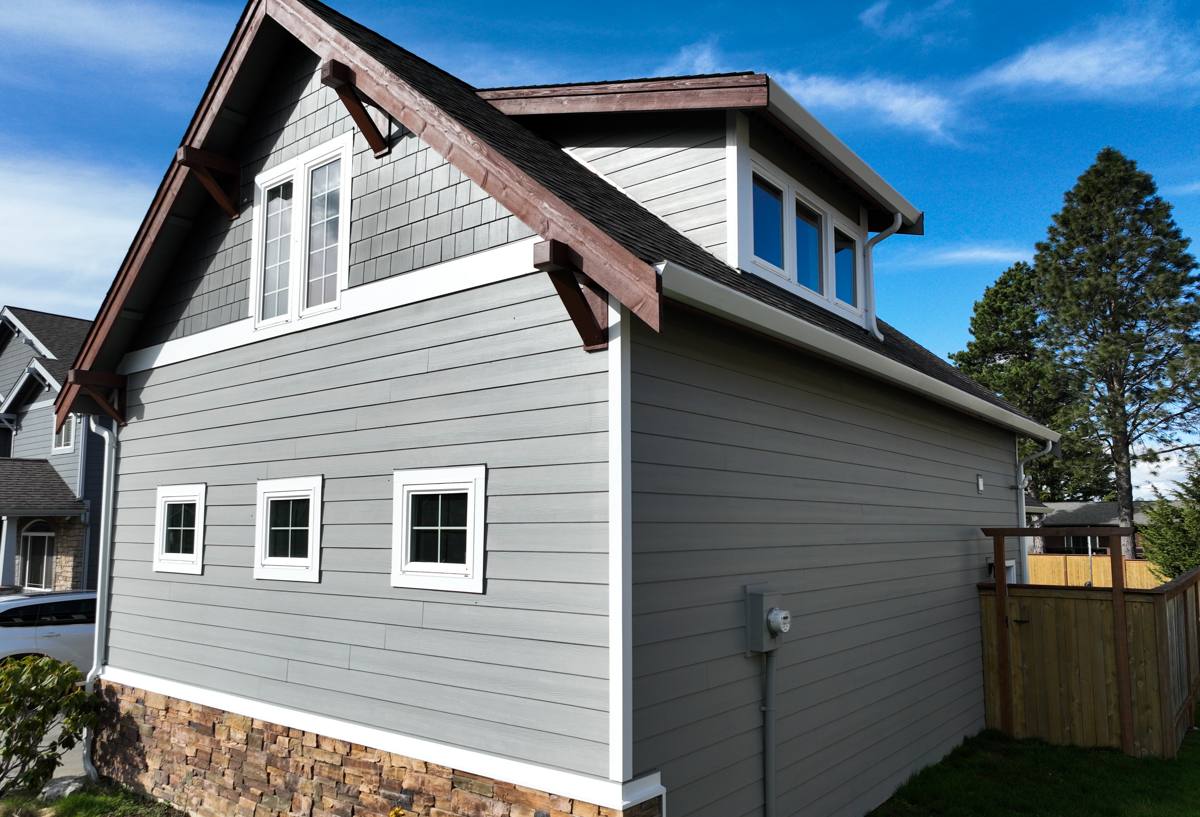
What the Climate Actually Does to a Home's Exterior
Sun and Heat
Florida's UV exposure is relentless almost year-round, not just in summer. On painted wood siding or trim, UV breaks down the paint film faster than in most parts of the country, which means more frequent repainting just to keep water out from behind the finish. On vinyl, sustained heat can cause warping, especially on walls that face west and get direct afternoon sun. Fading is common too — vinyl color is baked into the material but heat-cycling still causes gradual color shift over years, and once it fades unevenly, there's no repainting your way out of it since paint doesn't reliably bond to vinyl.
Wind-Driven Rain
Summer storms in this part of Florida don't just drop rain straight down — wind pushes it horizontally into wall assemblies, seams, and any gap in flashing or trim. Over years, this is what turns a small installation shortcut into a rot problem behind the cladding. It's also why the quality of flashing, house wrap, and joint detailing matters as much as the siding material itself — the best product installed with sloppy water management will still fail.
Salt Air and Corrosion
Homes further inland assume they're safe from salt exposure, but onshore winds carry it well beyond the immediate coastline. Over time, it accelerates rust on unprotected fasteners, hinges, and metal trim, and it can degrade certain caulks and sealants faster than their rated lifespan would suggest. Materials and hardware chosen for this area need to account for that reality, not just the manufacturer's generic spec sheet.
Hurricane-Force Wind
Even in years without a direct hit, Pinellas County regularly sees tropical-storm-force gusts. Siding, soffit, and roofing that isn't fastened to current wind-load requirements is the first thing to start peeling, lifting, or cracking in those events — and once one panel or shingle lifts, it usually takes water intrusion with it.
Siding: Why We Only Install James Hardie
We install James Hardie fiber cement siding exclusively. We don't install vinyl, LP SmartSide, Cemplank, Allura, or primed wood species like spruce or cedar. That's a deliberate standard, not a lack of options, and it's worth explaining honestly rather than just asserting it.
Vinyl is inexpensive and easy to install, and in milder climates it can perform fine for years. In this climate, the heat-warping and UV-fading issues described above show up sooner, and vinyl's inability to be repainted means once it fades or discolors unevenly, the only fix is replacement. LP SmartSide and other engineered wood products use wood strand cores with resin-based treatments — they've improved over the decades, but they remain more moisture-sensitive than fiber cement, and in a climate with this much wind-driven rain, moisture sensitivity is exactly the wrong weak point. Other fiber cement brands like Cemplank and Allura are legitimate fiber cement products, but we've standardized on James Hardie specifically because of its regional-specific engineering (the HZ5 product line was formulated with Gulf Coast and hurricane-belt humidity in mind), the consistency of its ColorPlus factory-applied finish, and the strength of its transferable warranty when installed to Hardie's own specifications. Primed spruce or cedar siding requires the most homeowner maintenance of any option on this list — regular repainting, caulk inspection, and moisture monitoring — which is a hard sell in a climate that's this aggressive on painted wood.
None of this means the alternatives are junk products. It means that after years of installing and repairing exteriors in this specific climate, fiber cement — and James Hardie specifically — is what we're willing to put our name behind and warranty.
James Hardie Product Lines We Install
- HardiePlank lap siding — the most common choice, available in multiple textures and exposures
- HardieShingle — for homes wanting a shingle-style look without the maintenance of real wood shingles
- HardiePanel — vertical panel siding, often used as an accent or on modern-style homes
- HardieTrim — matching trim boards for a consistent, factory-finished look at corners and openings
Roofing in a Storm-Exposed Neighborhood
Roofing failures in this area rarely start as a whole-roof problem — they start small: a lifted shingle tab after a windstorm, a cracked pipe boot letting water track down into the attic, a valley that wasn't flashed generously enough for the volume of water Florida storms actually produce. We look at wind-rated fastening patterns, proper underlayment, and flashing details as the real determinants of how a roof performs here, more than the shingle brand alone. A roof inspection after any named storm, and at least once a year otherwise, is the cheapest insurance against a small leak turning into a rotted deck or damaged ceiling.
Windows: Impact Resistance and Efficiency
Older windows in this part of Florida tend to fail in two ways: seals break down from UV and heat cycling, letting in drafts and moisture, and in a storm, non-impact glass is a real vulnerability if wind-borne debris hits it. Replacement windows rated for wind-borne debris protection do double duty — they reduce the need for separate shutters or plywood before a storm, and they typically improve energy performance year-round, which matters given how many months this area runs air conditioning hard.
Decks: Built for Sun, Rain, and Salt Air
Outdoor living spaces get hit with every climate factor at once, with no wall or roof overhang to shield them. Wood decking needs consistent sealing to survive UV and rain cycling without splitting or graying prematurely; composite decking costs more up front but shrugs off UV fade and moisture far longer with minimal upkeep. Fasteners and structural hardware matter just as much as the decking material — corrosion-resistant hardware is not optional this close to salt air, even a few miles inland.
Comparing Siding Options for This Climate
| Material | UV/Heat Behavior | Moisture Sensitivity | Maintenance | Repaintable |
|---|---|---|---|---|
| James Hardie fiber cement | Stable, factory-finished color | Low — engineered for humid climates | Low | Yes |
| Vinyl | Can warp/fade in sustained heat | Low, but seams are weak points | Low | No |
| LP SmartSide / engineered wood | Moderate | Moderate to high | Moderate | Yes |
| Primed wood (spruce/cedar) | Poor without upkeep | High | High | Yes |
What to Check Before Hiring an Exterior Contractor Here
- Florida contractor license and current insurance, verifiable directly with the state
- Manufacturer certification for the specific siding line being installed (Hardie's warranty depends on installation to spec)
- A written scope that specifies fastening patterns, flashing details, and house wrap — not just "siding replacement"
- Local references or completed work the contractor can speak to specifically
- Clear answers on how storm-driven wind ratings factor into the proposed materials
Why a Local Crew Matters in Westchase
Pinellas County's exterior challenges aren't uniform across the whole region, and a crew that regularly works Oldsmar and the surrounding Tampa Bay-area neighborhoods develops a feel for the details that matter here — how much overhang protection a given wall orientation needs, which flashing detail actually keeps wind-driven rain out during a real storm, and how fastener corrosion shows up here versus a truly coastal property. That pattern recognition, built from repeat work in this specific area, is the difference between a generic install and one that's actually built for what this climate does to a home over time.
If you're weighing a siding, roofing, window, or deck project for your Westchase home, we're happy to walk the property, talk through what we're seeing, and put together a straightforward, no-pressure estimate — no obligation, just a clear look at your options.