 Oldsmar Siding
 Siding Built for Land O' Lakes' Growing, Sun-Baked Neighborhoods
Land O' Lakes has grown fast over the past two decades, and that growth shows in the mix of housing stock you'll find there today: brand-new construction in master-planned communities standing next to older ranch homes and 1980s-90s subdivisions that have been through decades of Florida summers. Whatever the age of the house, the exterior faces the same climate — and in eastern Pasco County, that climate is not gentle on building materials.
We're an Oldsmar-based siding, roofing, window, and deck contractor, and Land O' Lakes is one of the areas we regularly work in. We show up knowing what this part of the Tampa Bay region does to a house exterior over ten, twenty, and thirty years, and we build our recommendations around that reality rather than around whatever product happens to be cheapest that month.
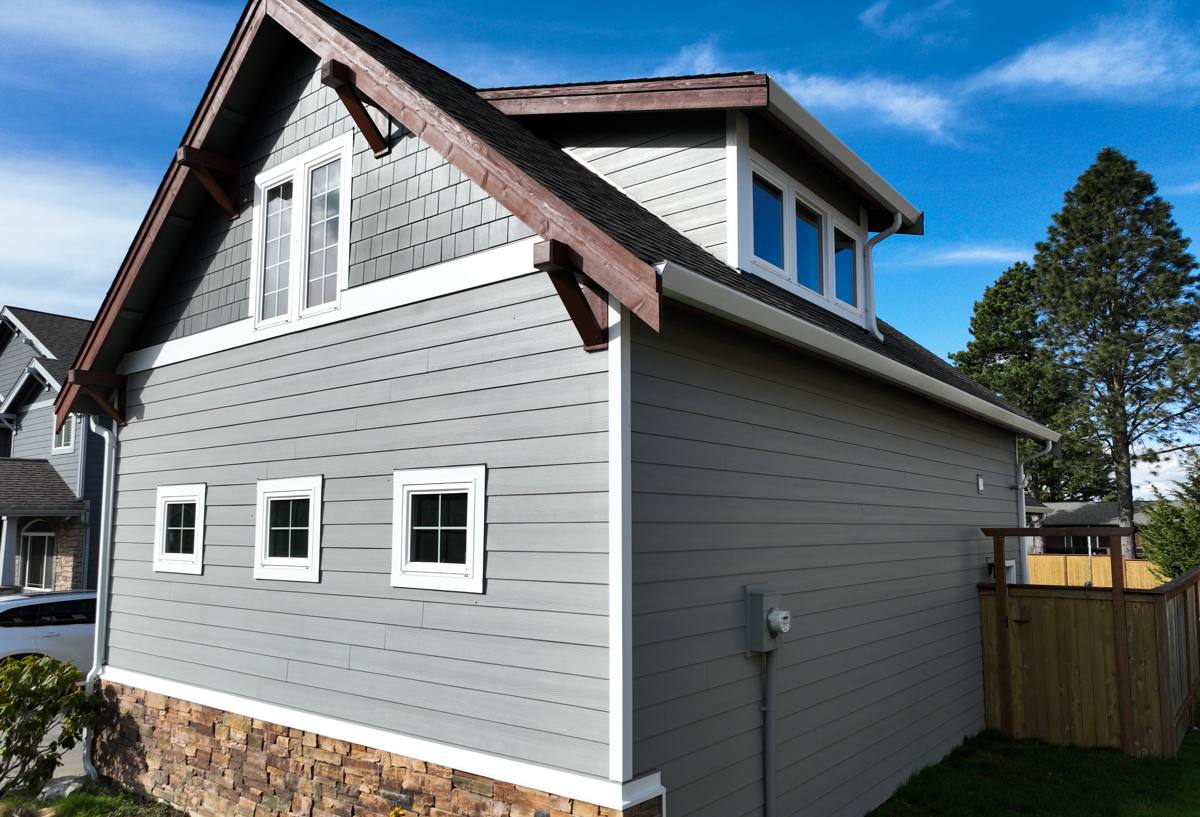
What the Local Climate Actually Does to Siding
Land O' Lakes doesn't sit directly on the coast, but it's close enough to Tampa Bay and the Gulf that salt-bearing air, humidity, and storm systems all reach it. Combine that with the area's abundance of lakes and wetlands — the humidity signature is real, not just a name on a map — and you get a set of conditions that steadily wear down the wrong exterior materials.
The main stressors
- Intense, near-constant UV exposure — Florida sun bakes painted and coated surfaces year-round, not just in summer, breaking down pigments and finishes faster than in most of the country.
- High ambient humidity — moisture in the air keeps wood-based and wood-adjacent siding products damp longer after rain, which is exactly the condition that encourages rot, swelling, and mold growth.
- Wind-driven rain during storms — Florida's storm systems don't just drop rain straight down; wind pushes it sideways into seams, laps, and fastener points where lesser products can start absorbing water.
- Hurricane-force wind events — even homes well inland from the coast need siding and trim that can hold up to the wind loads this region sees during tropical systems.
- Salt air — corrosive to fasteners and hardware, and it compounds the effect of humidity on anything not engineered to resist it.
None of this is unique to Land O' Lakes specifically — it's the reality across the Tampa Bay area. But it's worth spelling out because it directly explains why we're selective about what we'll put on a house.
Why We Install Only James Hardie Fiber Cement Siding
We don't install vinyl siding, LP SmartSide, Cemplank, Allura, or primed wood products like spruce or cedar. That's not a marketing position — it's a standard we hold because of what we've seen these products do in exactly the climate described above.
Vinyl siding softens, warps, and can crack under sustained UV exposure and heat, and it offers little resistance in high wind. Wood-based engineered siding and traditional wood siding depend on an intact factory or field-applied coating to keep moisture out; once that coating is compromised at a cut edge, a fastener hole, or a joint — which happens over time in humid climates — the substrate can absorb water and begin to swell or deteriorate from the inside, often before it's visible from the outside. These aren't defects unique to any one brand; they're inherent trade-offs of the material categories themselves, and homeowners deserve to know that before they commit.
James Hardie fiber cement is a fundamentally different material. It's composed of cement, sand, and cellulose fibers, which makes it non-combustible and dimensionally stable — it doesn't expand and contract with humidity the way wood-based products do, and it isn't vulnerable to UV breakdown the way vinyl is. Hardie's ColorPlus factory-applied finish is baked on in a controlled environment and backed by its own finish warranty, and Hardie engineers specific product lines (the HZ5 line, for example) for higher-humidity climate zones like ours. It's also backed by a strong transferable product warranty, which matters if you sell the home down the road.
James Hardie Product Lines for a Home Like Yours
Hardie's product line covers most of the exterior looks homeowners in Land O' Lakes ask for:
HardiePlank lap siding
The classic horizontal lap look, available in multiple textures (smooth or cedar-grain) and exposure widths. This is the most common choice for both traditional and modern homes in the area.
HardieShingle siding
Staggered or straight-edge shingle profiles for homes that want a coastal cottage or craftsman look without the moisture vulnerability of real wood shingles.
HardiePanel vertical siding
Often used as an accent on gables, porch areas, or modern-style builds, and increasingly popular in newer Land O' Lakes construction that leans toward contemporary exteriors.
HardieTrim boards
Used around windows, doors, corners, and fascia to finish the job with trim that won't rot the way traditional wood trim does.
Color is worth planning for carefully in this climate — ColorPlus finishes resist fading better than field-applied paint, and choosing from Hardie's factory palette avoids the repaint cycle that field-painted siding eventually requires.
What Correct Installation Actually Involves
Fiber cement siding is only as good as the installation behind it. Hardie publishes detailed installation specifications, and skipping steps is the single biggest reason a siding job underperforms — regardless of how good the material is.
- Proper starter strip and flashing at the base of the wall so water sheds away from the structure
- Correct fastener type, spacing, and embedment depth — under- or over-driven fasteners are a common failure point
- Minimum gaps at butt joints, corners, and around penetrations to allow for material movement without trapping moisture
- Weather-resistant barrier installed correctly behind the siding, not just present
- Proper flashing and sealant detailing around every window and door opening
- Field-cut edges primed or sealed per Hardie spec, since factory finish doesn't cover a cut edge on its own
This is where a crew with real Hardie installation experience matters more than the brand name on the material itself. We install to manufacturer spec because that's what keeps the warranty valid and what actually keeps water out of the wall assembly over the long run — not just for the first few Florida summers, but for the decades this siding is built to last.
What Drives Siding Cost in Land O' Lakes
| Factor | Why It Matters |
|---|---|
| Home size and wall complexity | More square footage, gables, dormers, and cutouts mean more material and more labor-intensive detail work |
| Current siding removal | Tear-off of old vinyl, wood, or damaged siding adds labor and disposal cost versus a new-construction install |
| Substrate condition | Rotted sheathing or water damage found once old siding is off needs to be repaired before new siding goes on |
| Product line and profile | Plank, shingle, and panel products carry different material costs; wider exposures use less trim labor than narrow ones |
| Trim and accent scope | Extensive trim work, accent panels, or shingle-and-plank combinations add labor time |
| Color and finish | Factory ColorPlus finishes cost more up front than primed material painted in the field, but eliminate repainting for years |
We give straightforward, itemized estimates so you can see exactly what's driving the number — no vague lump sums.
Roofing, Windows, and Decks Face the Same Climate
Siding is rarely the only exterior component under stress in this region. Roofs take direct UV and wind-driven rain, windows are a common leak point during wind-driven storms if flashing and seals have aged out, and outdoor decks see constant sun and humidity cycling that breaks down lesser materials fast. Because we handle all four — siding, roofing, windows, and decks — we can look at a Land O' Lakes home as one connected exterior system rather than treating each component in isolation. A siding replacement is also a natural point to address aging trim, window flashing, or a deck that's due for attention, all in a single project instead of separate disruptions.
Why a Local Crew Matters Here
A contractor based elsewhere in Florida can technically sell you Hardie siding, but they don't necessarily know the specific rhythm of storms and humidity that eastern Pasco and northern Pinellas County homes deal with, or how quickly a botched flashing detail turns into a real problem in this climate. We're based in Oldsmar and work this general area regularly, which means we're not learning the region on your project — we're applying what we already know about how Tampa Bay weather interacts with exterior materials.
What to look for in any contractor you're vetting, here or anywhere
- Manufacturer-recognized installer status for the specific product they're proposing
- A written, itemized estimate — not a single vague number
- Clear explanation of how they'll handle flashing, moisture barriers, and fastening, not just "we'll install the siding"
- Proof of licensing and insurance appropriate for exterior contracting in Florida
- Willingness to explain trade-offs between products instead of pushing whatever they have in stock
- References or a track record specific to the region, not just generic company reviews
Get a Straight Answer for Your Land O' Lakes Home
If your siding is aging, showing damage after a storm, or you're planning ahead of the next Florida hurricane season, we're happy to take a look and give you an honest read on what your home needs — no pressure, no inflated scope. Fill out the form below for a free estimate, and we'll walk you through exactly what we'd recommend and why.