 Oldsmar Siding
 Two Very Different Materials, One Big Decision
If you're re-siding a home in Oldsmar, you've almost certainly narrowed the field to two finalists: vinyl siding and fiber cement siding, most commonly sold under the James Hardie brand. Both are legitimate, widely used products. Both show up on homes all over Pinellas County. But they are not interchangeable, and the differences matter more here than they would in a climate that doesn't see hurricane-force wind gusts, months of intense UV exposure, and salt-laden air rolling in off Tampa Bay and the Gulf.
We install James Hardie fiber cement exclusively. We don't sell or install vinyl siding. That's a deliberate choice based on years of watching how each product actually performs on homes in this area, not a knock on every vinyl job ever installed. This page lays out the honest trade-offs so you can understand why we made that call, and so you can make an informed one for your own house.
What Each Product Actually Is
Vinyl Siding
Vinyl siding is an extruded PVC (polyvinyl chloride) plastic panel, formed into overlapping planks that snap or nail onto the wall. Color is mixed into the plastic itself rather than painted on top. It's lightweight, relatively inexpensive to manufacture, and has been a staple of American home exteriors since the 1960s.
Fiber Cement (James Hardie)
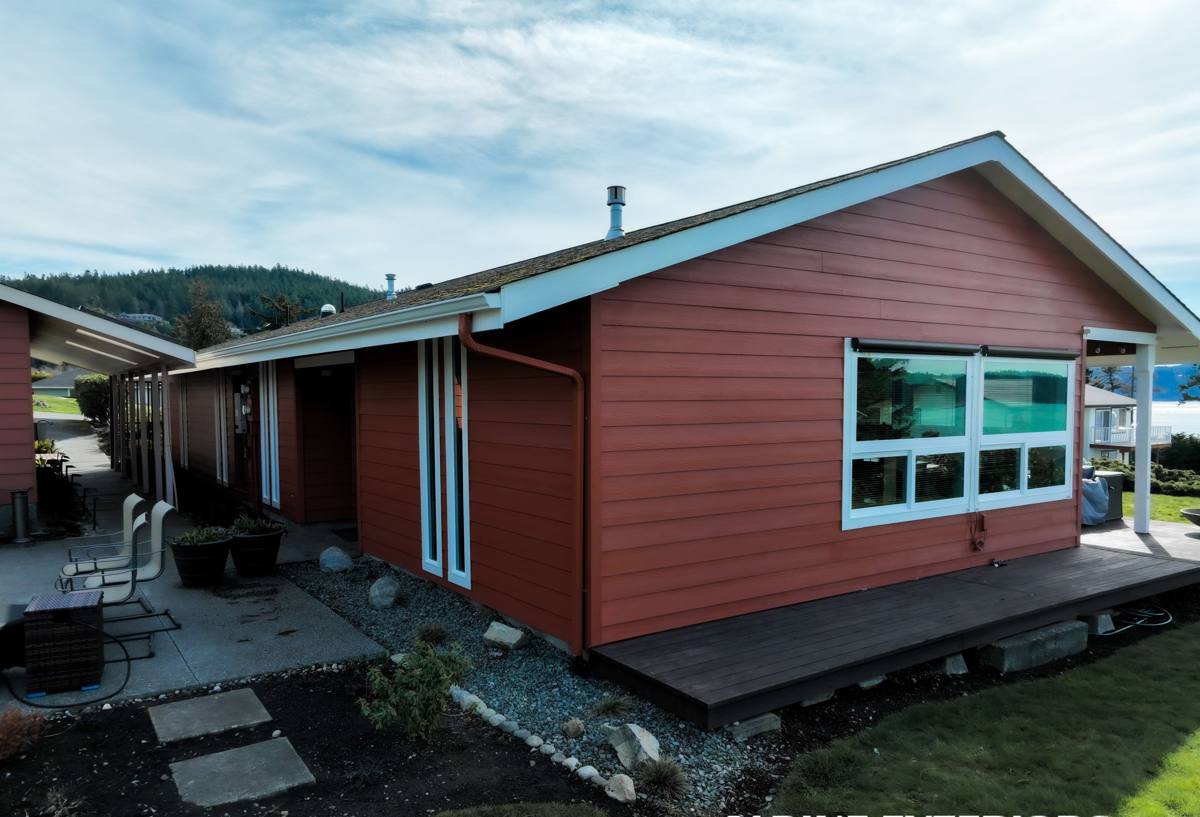
Fiber cement is a composite of Portland cement, sand, and cellulose fiber, formed under pressure into planks, shingles, or panels, then cured. James Hardie's HZ5 product line is specifically engineered for hot, humid, high-moisture climates like ours, and the boards come with a factory-applied ColorPlus finish baked on in a controlled environment rather than a job-site paint job.
How Each One Holds Up to Florida Weather
This is where the two products really part ways, and it's the core of why we standardized on Hardie.
Heat and UV
Vinyl is a plastic, and plastic softens with heat. On a west-facing wall in a Pinellas County summer, vinyl panels can warp, buckle, or distort — sometimes just from reflected heat off a nearby window or grill. Prolonged UV exposure also fades vinyl's color over time since the pigment is mixed through a material that's constantly expanding and contracting with temperature swings. Fiber cement doesn't soften in heat, and the factory-cured ColorPlus finish is formulated to resist UV fading far longer than a field-applied or extruded color.
Wind
Oldsmar sits close enough to the Gulf that hurricane-force gusts are a real, recurring risk, not a hypothetical. Vinyl siding is rated for wind resistance, but it's a thin, flexible panel held on with a loose nailing pattern designed to let it expand and contract — which also means high wind can get up underneath it and peel it off the wall. James Hardie's HZ5 panels are engineered and tested for high-wind zones and installed with a rigid, direct-fastened method that holds up dramatically better once gusts start ripping at loose edges and corners.
Wind-Driven Rain and Moisture
Wind-driven rain doesn't just hit a wall — it drives sideways and finds every gap. Vinyl's overlapping-panel design relies on gravity and lap coverage to shed water; in sideways rain, moisture can work its way behind panels and into the wall assembly, especially at seams, corners, and old or warped sections. Fiber cement is far less prone to wind-driven infiltration when properly installed with correct flashing and house wrap, and the material itself doesn't rot, warp, or provide a food source for mold the way wood-based products can.
Salt Air
Homes closer to Tampa Bay and the Gulf coastline deal with a slow, steady corrosive effect from salt in the air. Vinyl doesn't corrode, but its fasteners and trim accessories often do if not spec'd correctly, and the plastic itself becomes brittle faster in salt-air, high-UV combinations. Fiber cement is inert to salt — it's essentially sand, cement, and cellulose — and doesn't degrade chemically from airborne salt exposure the way some metals and plastics do over a couple of decades.
Durability and Lifespan
| Factor | Vinyl Siding | James Hardie Fiber Cement |
|---|---|---|
| Typical lifespan | 20-30 years, often less in intense sun/heat | 30-50+ years with proper install and maintenance |
| Wind performance | Rated, but panels can lift/peel in sustained high wind | Engineered HZ5 line rated for high-wind regions |
| Heat/UV behavior | Can warp, melt, or fade in direct heat/sun | Dimensionally stable; ColorPlus resists fading |
| Fire resistance | Combustible plastic | Non-combustible cement-based material |
| Moisture/rot risk | Low rot risk itself, but seams can trap moisture | Resists moisture damage; won't rot |
| Impact resistance | Can crack or shatter, especially when cold or aged | More resistant to dents and impact damage |
Fire Resistance
Vinyl siding is a petroleum-based plastic and will melt or burn under enough heat — a real consideration during grill flare-ups, neighboring structure fires, or brush fires. James Hardie fiber cement is non-combustible; it's literally made from the same base materials as concrete. This isn't a marketing footnote — it's one of the more practical, tangible safety differences between the two products, and it's a factor some insurance carriers take into account.
Maintenance: What You'll Actually Be Doing
Vinyl is marketed as "maintenance-free," and it's true you'll never repaint it. But that's not the same as zero upkeep. Vinyl chalks and fades with age, cracks in cold snaps or under impact, and once a panel is damaged, matching faded color on a replacement piece years later is nearly impossible. Fiber cement with a factory ColorPlus finish holds color for a long time and, when it eventually needs attention, can be caulked, spot-repaired, or repainted using standard exterior paint — something you generally can't do well with vinyl.
- Vinyl: occasional pressure washing, watch for cracked or warped panels after storms, accept that color-matching old and new panels gets harder every year
- Fiber cement: periodic inspection of caulk joints and paint film, occasional repainting on a much longer cycle than wood siding, no rot or insect concerns to monitor
Cost: The Honest Range
Vinyl siding is genuinely less expensive up front — that's the product's real advantage and the main reason it's so common. Fiber cement costs more to buy and more to install, since it's heavier, requires specific fastening and cutting tools, and takes a more skilled install crew to do correctly. Where the math changes is over the life of the siding: a vinyl job that needs full replacement at year 20-25 versus a Hardie job still performing at year 35-40 changes the real cost-per-year picture, even though the sticker price up front favors vinyl. We won't quote exact numbers here because every project's size, trim complexity, and site conditions change the price — but if cost is the deciding factor for your project, it's worth asking us for a real number rather than guessing from a national average.
Installation Sensitivity
Vinyl is relatively forgiving to install — a big reason it's popular with lower-cost crews and DIY installers. Fiber cement is not forgiving. It requires correct fastener spacing, proper clearances at grade and roofline, correct flashing and house wrap detailing, and factory-specified joint treatment. Installed wrong, fiber cement can trap moisture and fail early, which is exactly the outcome the material is supposed to prevent. This is a big part of why we treat installation, not just material choice, as the thing that actually determines how your siding performs in Pinellas County weather over the next few decades.
Appearance and Resale
Modern vinyl has improved in texture and color options, but it still reads as vinyl up close — thinner profile, visible seams, a slight plastic sheen in certain light. Fiber cement is milled to closely mimic wood grain, shiplap, and traditional lap profiles, with a heavier, more substantial look and feel. Appraisers and real estate agents in this market generally treat fiber cement as the higher-end exterior material, which can matter if resale value is part of your decision.
A Quick Checklist Before You Decide
- How long do you plan to own the home — a quick flip favors lower upfront cost, a long hold favors longevity
- How exposed is your home to direct wind and salt air (waterfront, open lot, or sheltered)
- Does your HOA or neighborhood have material or appearance restrictions
- Are you comparing true installed cost over 20-30 years, not just the quote total
- Is the contractor you're vetting actually trained and certified in the specific material they're proposing
Why We Standardized on Hardie
We don't install vinyl siding, LP SmartSide, or other alternative products — not because they have no place in the market, but because after years of siding work in this climate, fiber cement is what we've seen hold up best against Pinellas County's combination of wind, heat, UV, and salt air, and it's the only product we're willing to put our name and warranty behind. That's our standard, and it's why every job we quote is a James Hardie system, installed to the manufacturer's spec.
If you're weighing vinyl against fiber cement for your Oldsmar home, we're happy to walk your property, talk through your specific exposure and budget, and give you a straight answer — including telling you if a smaller repair makes more sense than a full re-side. Reach out for a free, no-pressure estimate using the form below.