 Oldsmar Siding
 Why We're Telling You This Before You Buy
Most siding companies will sell you whatever you ask for. We won't. We install James Hardie fiber cement exclusively, which means when a homeowner in Oldsmar or elsewhere in Pinellas County asks us for vinyl siding, we say no — and we think you deserve a real explanation, not a sales pitch dressed up as advice.
Vinyl siding isn't a scam and it isn't junk. It's a legitimate, widely used product that works fine in a lot of the country. Our objection isn't to vinyl in the abstract — it's to vinyl on homes that sit through Gulf Coast summers, tropical storm season, and salt-laced air off Tampa Bay year after year. Here's what we've seen, what the product's own limitations are, and why we made the call we made.
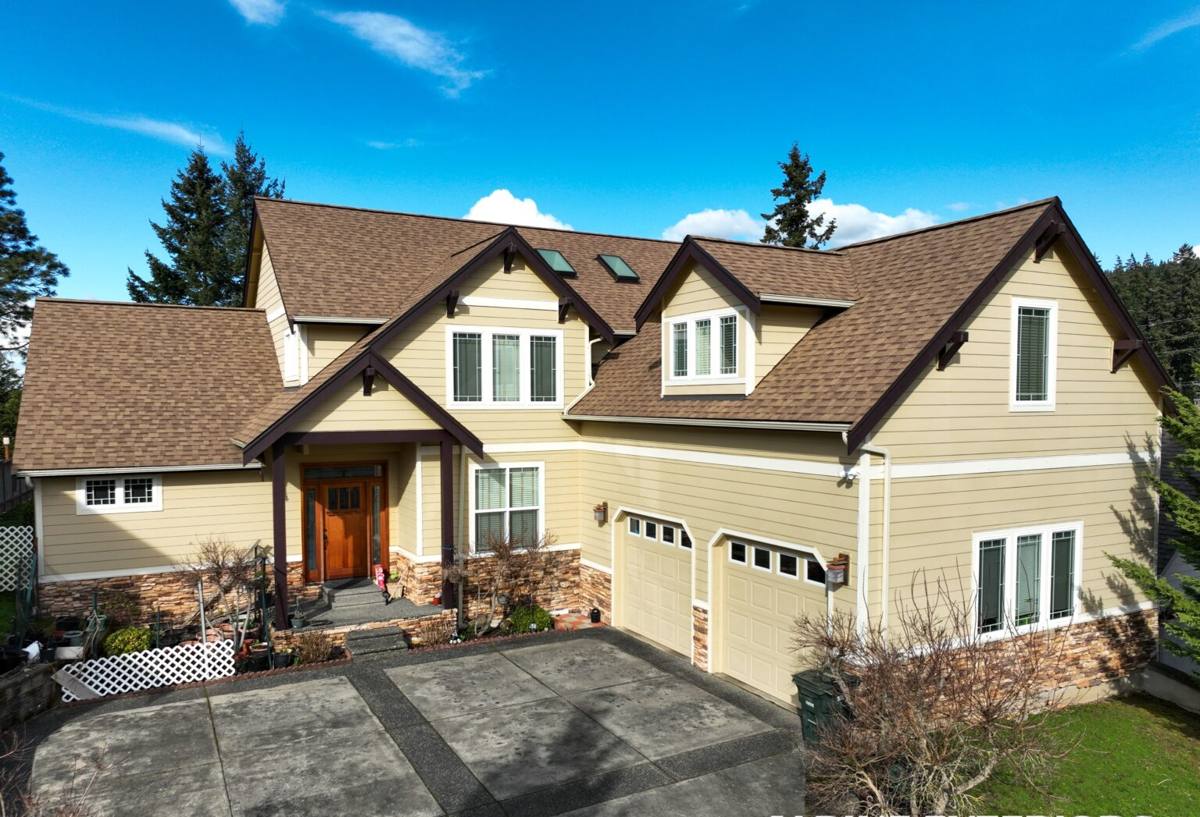
What Vinyl Siding Gets Right
Credit where it's due. Vinyl siding is inexpensive up front, it's lightweight so it goes up fast, and it never needs painting. For a homeowner on a tight budget in a mild climate, it can be a reasonable choice. It's also widely available, which means repairs are usually easy to source materials for, at least while a color is still in production.
If you're comparing it purely on initial cost, vinyl will almost always come in lower than fiber cement. We're not going to pretend otherwise. The problem is what happens after year one.
How Vinyl Behaves in Real Florida Heat and Sun
Vinyl siding is PVC — a plastic. Plastic and intense, near-constant UV exposure don't mix well over the long haul. Pinellas County gets some of the highest annual sun exposure in the continental United States, and that UV load does two predictable things to vinyl over time: it fades the color, and it makes the material more brittle.
The fading isn't cosmetic nitpicking. Vinyl color is baked into the plastic itself, so once the sun starts breaking down the pigment, there's no refinishing it — the only fix is replacing panels, and matching a faded panel to ten-year-old surrounding siding rarely looks right. On the south and west-facing walls of an Oldsmar home, which take the harshest afternoon sun, this shows up faster than most homeowners expect.
Heat also causes vinyl to expand and contract more than most siding materials. Installers have to leave room for that movement (nail slots, not tight-fastened nails), which means the panels are never truly rigid on the wall. Over years of Florida's daily heat swings, that constant flex is part of why seams loosen and panels warp or "oil-can" — a rippling look you've probably noticed on older vinyl-clad homes in the area.
Wind Rating and Hurricane Exposure in Pinellas County
This is the one that matters most here. Oldsmar sits in a hurricane-exposed part of the state, and every siding product carries a wind rating that determines how it's expected to perform in sustained high wind and wind-driven debris.
Standard vinyl siding is a thin, flexible plastic panel, typically around .040" to .046" thick, hung on nail slots rather than fully fastened. Even the better-rated impact and hurricane-zone vinyl products top out well below what fiber cement achieves as a baseline. In wind events, vinyl's failure mode is well understood: panels detach at the bottom edge first, then peel upward, sometimes taking entire sections of a wall's siding with them in one gust. Once one panel goes, the interlocking system that vinyl relies on is compromised, and neighboring panels often follow.
Wind-driven rain is the other half of the problem. When vinyl siding lifts even slightly during a storm — long before full failure — it opens a path for water to get behind the panel and into the wall assembly. That's damage you don't see from the street, and it's often not discovered until there's a moisture or mold problem inside.
Impact, Cracking, and Repair Reality
Vinyl doesn't dent the way metal does — it cracks and shatters, especially once it's spent a few Florida summers getting more brittle from UV exposure. A wind-thrown branch, a ladder bump, or flying debris during a storm can crack a panel outright. Cold snaps make it worse; even Tampa Bay's occasional cold mornings are enough to make aged vinyl noticeably more prone to cracking on impact.
Repairs sound simple in theory — vinyl panels snap in and out — but in practice they rarely are:
- Manufacturers discontinue colors and profiles regularly, so a five- or ten-year-old panel may simply not be available anymore
- Sun fading means even an in-stock replacement panel often won't match the surrounding wall
- Removing one panel frequently requires unlocking several panels above and below it, risking new cracks in already-brittle material
- Full wall or full-house re-siding becomes the practical fix more often than homeowners expect
Moisture, Insulation, and What's Underneath
Vinyl siding is not a water barrier — it's designed to shed most water while allowing some to get behind it, relying entirely on the house wrap and flashing underneath to manage the rest. That's a workable system when installation is meticulous and the wrap stays intact. In a region with as much wind-driven rain as ours, any gap in that underlying moisture barrier — around windows, at seams, at penetrations — becomes a real risk, and vinyl gives you no visual warning that it's happening.
Vinyl also doesn't add meaningful structural rigidity to a wall. Insulated vinyl options exist and help somewhat with energy performance, but they don't change the panel's fundamental wind and impact behavior.
Salt Air and Coastal Corrosion
Oldsmar's location near Tampa Bay and Old Tampa Bay means salt air is a real, ongoing factor here, not just a concern for homes directly on the water. Vinyl itself doesn't corrode, but the fasteners, trim accessories, and any metal flashing details in a vinyl system are exposed to the same salt-laden air as everything else on the exterior. Over time that accelerates corrosion at exactly the connection points a siding system depends on to stay fastened and sealed.
Vinyl vs. Fiber Cement: The Side-by-Side
| Factor | Standard Vinyl Siding | James Hardie Fiber Cement |
|---|---|---|
| Base material | PVC plastic | Cement, sand, cellulose fiber |
| Combustibility | Combustible | Non-combustible |
| UV fade resistance | Fades over years, color is in the plastic | ColorPlus factory finish baked on with UV-cured coating |
| Wind performance | Thin panel, nail-slot mounted, prone to lifting/peeling | Fully fastened, engineered HZ5 line for hurricane zones |
| Impact/crack resistance | Brittle, especially after UV aging | Rigid, resists cracking from debris impact |
| Repair matching | Discontinued colors, fading complicate matches | Consistent factory finish, easier long-term matching |
| Warranty structure | Varies widely, often prorated after early years | Strong transferable manufacturer warranty |
| Upfront cost | Lower | Higher |
What This Table Doesn't Show
Cost comparisons on paper always favor vinyl. What they miss is the cost of a mid-storm-season panel failure, a fading job that forces a full re-side ten years early, or water intrusion behind panels that weren't caught until drywall was already damaged. Those aren't hypotheticals in a hurricane-prone county — they're the reason we stopped installing vinyl.
Why We Standardized on James Hardie Instead
We install James Hardie fiber cement exclusively because it's engineered for exactly the conditions Oldsmar homes face: hurricane-force wind exposure, intense year-round UV, wind-driven rain, and salt air. Hardie's HZ5 product line is specifically formulated for high-humidity, storm-prone climates like ours. The ColorPlus factory finish is baked on and warranted against fading in a way a co-extruded plastic panel's color never can be. Fiber cement doesn't burn, doesn't warp in heat, and holds up to wind and impact in a fundamentally different weight class than vinyl.
It costs more to buy and more to install correctly — fiber cement requires proper fastening, clearances, and joint treatment, and installation quality matters more than with vinyl. That's the trade-off we're willing to make, and the standard we hold every job to.
If You're Still Considering Vinyl
We're not going to talk you out of vinyl if it's genuinely the right call for your budget — we just won't be the ones installing it. If you're still weighing it, ask these questions of any siding product or contractor before you commit:
- What is the actual wind rating of this specific product, not just the vinyl category in general?
- Is the color warranty prorated, and what does it actually cover after year five or ten?
- What gauge/thickness panel is being quoted, and how does it compare to hurricane-zone-rated options?
- How is the house wrap and flashing being installed underneath, since that's doing the real waterproofing work?
- What does a realistic repair look like in ten years if a panel cracks or a color is discontinued?
If the answers give you pause, that's worth taking seriously before, not after, the siding goes up.
Let's Talk About Your Home
Every home and every budget is different, and we'd rather give you a straight answer than a sales pitch. If you'd like to talk through what siding makes sense for your Oldsmar home — including honest numbers on James Hardie versus other options — request a free, no-pressure estimate using the form below.