 Oldsmar Siding
 Two Different Materials, One Job
When homeowners in Oldsmar start researching siding replacement, they usually run into two products competing for the same shelf space: fiber cement (the category James Hardie built its name on) and engineered wood, most commonly sold as LP SmartSide. Both are marketed as upgrades over vinyl. Both claim to handle Florida weather. But they are fundamentally different materials with different chemistry, different failure modes, and different long-term track records in a climate like ours. We think homeowners deserve a straight comparison, not a sales pitch, so this page walks through both products honestly before explaining why our crews only install one of them.
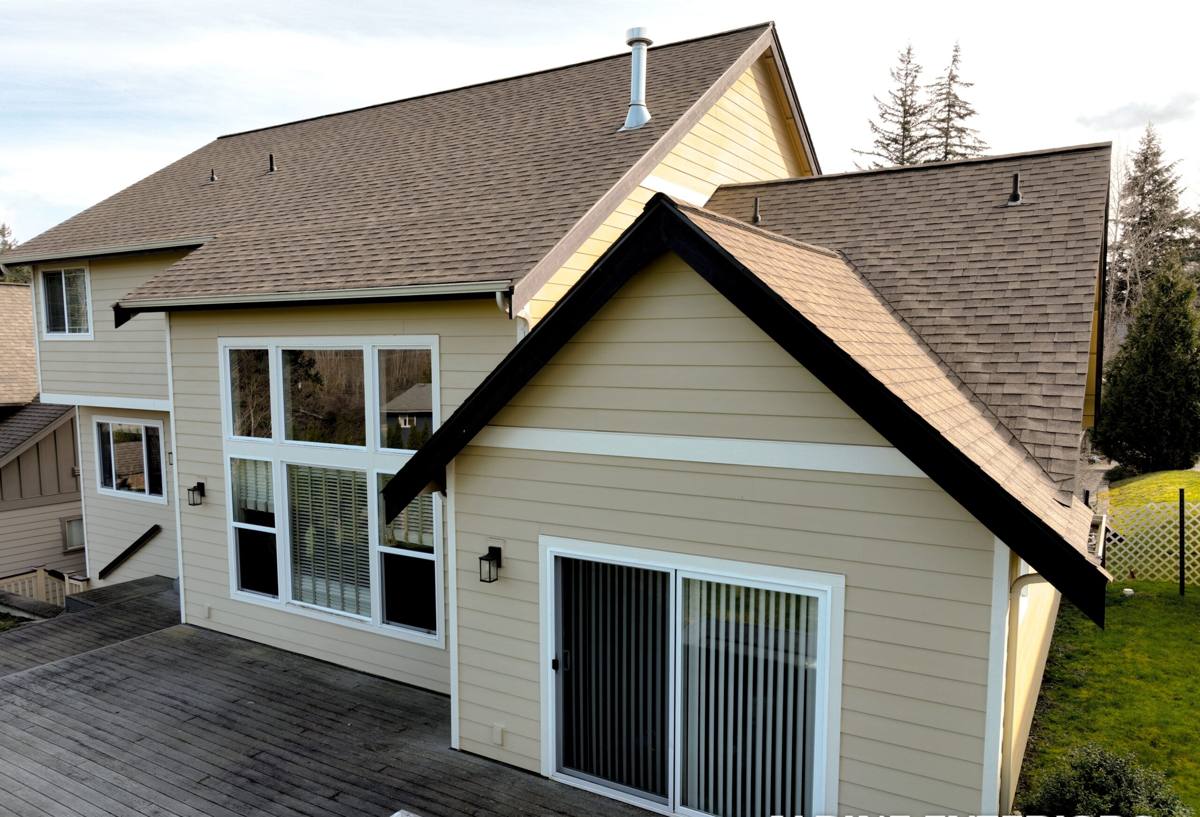
What Engineered Wood Siding Gets Right
LP SmartSide is a legitimate product, and it would be dishonest to pretend otherwise. It's made from wood strands bonded with resin under heat and pressure, then coated with a resin-saturated overlay and factory primer. Compared to old-school primed spruce or cedar lap siding, it's a real improvement: it resists splitting, holds fasteners better, and comes with treatments aimed at deterring fungal decay and insects. It's also lighter than fiber cement, which can make installation faster and slightly less physically demanding on a crew. For homeowners on a tighter budget who want something more durable than vinyl, it's not an unreasonable option in a lot of the country.
The "in a lot of the country" part is where our concerns start.
Where the Trade-offs Show Up in a Climate Like Ours
Engineered wood siding is still, at its core, a wood product. Wood strands, wood fiber, wood-based cores — all of it swells, contracts, and can absorb moisture if the factory coating is ever compromised at a cut edge, a fastener hole, or a seam that wasn't caulked and maintained on schedule. That's a manageable risk in a dry climate with mild winters. It's a much bigger variable here in Pinellas County, where wind-driven rain during summer storms can drive water sideways into every gap and seam, and where salt air off Tampa Bay accelerates the breakdown of coatings, caulk, and metal fasteners faster than it would inland.
Manufacturers of engineered wood products have improved their moisture-resistant treatments over the years, and warranty terms reflect that confidence to a degree. But the products still carry maintenance requirements — sealing cut edges in the field, re-caulking joints on a schedule, prompt repair of any impact damage — that, if skipped or delayed, are exactly the kind of thing that turns a manageable coastal climate into a real problem. Year-round UV exposure adds another layer: it degrades exposed coatings and caulk lines over time, which is precisely where engineered wood is most vulnerable to moisture intrusion.
Fiber Cement: What It's Made Of and Why That Matters
James Hardie fiber cement siding is made from cement, sand, and cellulose fiber, cured into a dense, stable board. There's no wood strand core to swell or rot if a seam opens up. It doesn't feed termites. It's non-combustible, which matters to insurers and to anyone who's watched Florida wildfire and lightning-strike news in a dry spring. And because it's engineered specifically for climate zones — Hardie's HZ10 product line is formulated for the Southeast's humidity and hurricane-prone weather rather than a generic national spec — the material itself is doing more of the work before installation quality even enters the picture.
Fiber cement isn't magic and it isn't maintenance-free. It still needs to be installed to spec, with correct clearances, fastening patterns, and joint treatment, or it will underperform regardless of what the board is made of. But the failure modes are different: fiber cement's vulnerabilities are almost entirely installation-driven, not material-driven. That's a distinction worth taking seriously when you're picking a product that has to survive decades of Gulf Coast weather.
Side-by-Side: The Honest Comparison
| Factor | Engineered Wood (LP SmartSide) | Fiber Cement (James Hardie) |
|---|---|---|
| Core material | Wood strand/fiber with resin binder | Cement, sand, cellulose fiber |
| Moisture behavior | Resistant if coating stays intact; vulnerable at exposed cuts and worn seams | Dimensionally stable; not organic, doesn't rot |
| Fire rating | Combustible (treated) | Non-combustible |
| Weight/handling | Lighter, easier to cut and install | Heavier, requires proper tools and technique |
| Insect resistance | Treated but wood-based | Not a food source for termites/insects |
| Coastal/salt air durability | Coating and caulk maintenance is critical | Factory finish (ColorPlus) resists fading and chalking longer |
| Warranty structure | Manufacturer warranty, often prorated after early years | Non-prorated warranty on material; ColorPlus finish carries its own coverage |
Installation Sensitivity: Both Products Punish Shortcuts
It's tempting to frame this as "one product is foolproof and the other isn't." That's not accurate. Both engineered wood and fiber cement are installation-sensitive products, and a poor install can shorten the life of either one dramatically. The difference is what happens when a mistake occurs. On engineered wood, a missed edge seal or a caulk joint that fails during Oldsmar's rainy season gives moisture a direct path into an organic core — and once that starts, it doesn't reverse itself. On fiber cement, an installation mistake (wrong nail placement, insufficient clearance at grade, unsealed butt joints) causes its own problems, but the board itself isn't feeding on the moisture the way a wood-based product can. That built-in margin for error is a meaningful part of why we standardized on one product rather than offering both.
Where hurricane-zone installation details matter most
- Fastener type, spacing, and embedment depth — both products require manufacturer-specified nailing patterns to hold up under hurricane-force wind loads
- Clearance from grade, roofing, and decking to keep splashback and standing water away from the bottom course
- Properly flashed and caulked window and door transitions, since wind-driven rain finds every unsealed gap
- Correct starter strip and J-channel installation so wind can't get up and under a course
- Field-cut edge treatment on every cut end, not just the factory edges
Warranty and Long-Term Cost
Sticker price on engineered wood siding is often lower than fiber cement, and for a homeowner budgeting a large exterior project, that difference is real and worth acknowledging. But the comparison shouldn't stop at the install invoice. James Hardie's warranty on its fiber cement products is structured as non-prorated coverage for the material, and the ColorPlus factory finish carries its own separate warranty against fading and peeling — which matters in a market with this much year-round sun. Engineered wood warranties have improved over the years, but many still step down (prorate) after the first several years, meaning your coverage shrinks right around the point when Gulf Coast weather has had the most time to work on the product. When we run the numbers over a 20-30 year ownership horizon rather than just the installation cost, fiber cement typically comes out ahead once you factor in touch-up frequency, caulk maintenance, and replacement risk.
Why We Standardized on James Hardie
We made a decision as a company to install James Hardie fiber cement exclusively — not LP SmartSide, not vinyl, not primed spruce or cedar. That's a narrower product lineup than a lot of contractors offer, and we're upfront about the reason: we didn't want to be in the position of installing a product in Oldsmar's climate that requires a homeowner to stay on top of caulk and edge maintenance to avoid moisture problems in an organic material. Fiber cement lets us put a non-combustible, dimensionally stable, factory-finished product on a home and back it with a strong warranty, without asking the homeowner to manage that ongoing risk. It also means our crews specialize in one installation system rather than splitting expertise across multiple product lines with different fastening requirements, different flashing details, and different failure modes.
This isn't a knock on every engineered wood installation everywhere — it can be a reasonable product in the right climate, installed and maintained correctly. It's a statement about what we're comfortable standing behind on homes that face hurricane-force wind, salt air off the bay, and intense UV nearly every month of the year.
What This Means for Your Decision
If you're comparing bids and one contractor is offering LP SmartSide at a lower price, that's worth understanding fully before you decide — not dismissing outright. Ask what the maintenance schedule actually looks like, what the warranty covers after year five or ten, and how the product has held up on homes in Pinellas County specifically, not just in the manufacturer's national marketing. Then compare that honestly against a fiber cement bid. The right choice depends on your budget, your time horizon for the home, and how much ongoing maintenance you want to take on.
Questions worth asking any siding contractor
- Is the warranty non-prorated, and for how many years?
- What's the manufacturer's fastening specification for this coastal wind zone, and will the crew follow it exactly?
- Who handles cut-edge sealing and joint caulking, and is that included in the install or left to the homeowner?
- What does routine maintenance look like five, ten, and fifteen years from now?
- Has this product and installation method held up on other homes near the coast?
If you're weighing fiber cement against engineered wood for a home in Oldsmar or anywhere else in Pinellas County, we're glad to walk through your specific house, your budget, and what we'd actually recommend — no pressure, no obligation. Reach out for a free estimate and we'll give you the same straight answers you just read here.