 Oldsmar Siding
 Exterior Work in Countryside, Built for Pinellas County Weather
Countryside sits inland from the coast but well within reach of everything Tampa Bay weather throws around each year — heavy summer thunderstorms that roll in almost daily, tropical systems that bring sustained wind and horizontal rain, and a sun angle that spends more months beating down on siding than it spends resting. Homes here aren't sitting directly on the water, but salt-laden air still moves inland on sea breezes, and humidity is a constant rather than a seasonal visitor. Exterior materials in this neighborhood are working harder, year-round, than most homeowners realize until something starts to fail.
We handle siding, roofing, windows, and decks for homes in this area, and we look at all four as one connected system. A roof that isn't draining properly dumps extra water onto siding. Windows that aren't flashed correctly feed moisture behind the wall. A deck attached to the house creates a ledger connection that has to be sealed as carefully as any siding seam. Treating these as separate, disconnected projects is how small problems turn into rot, mold, and expensive repairs down the line.
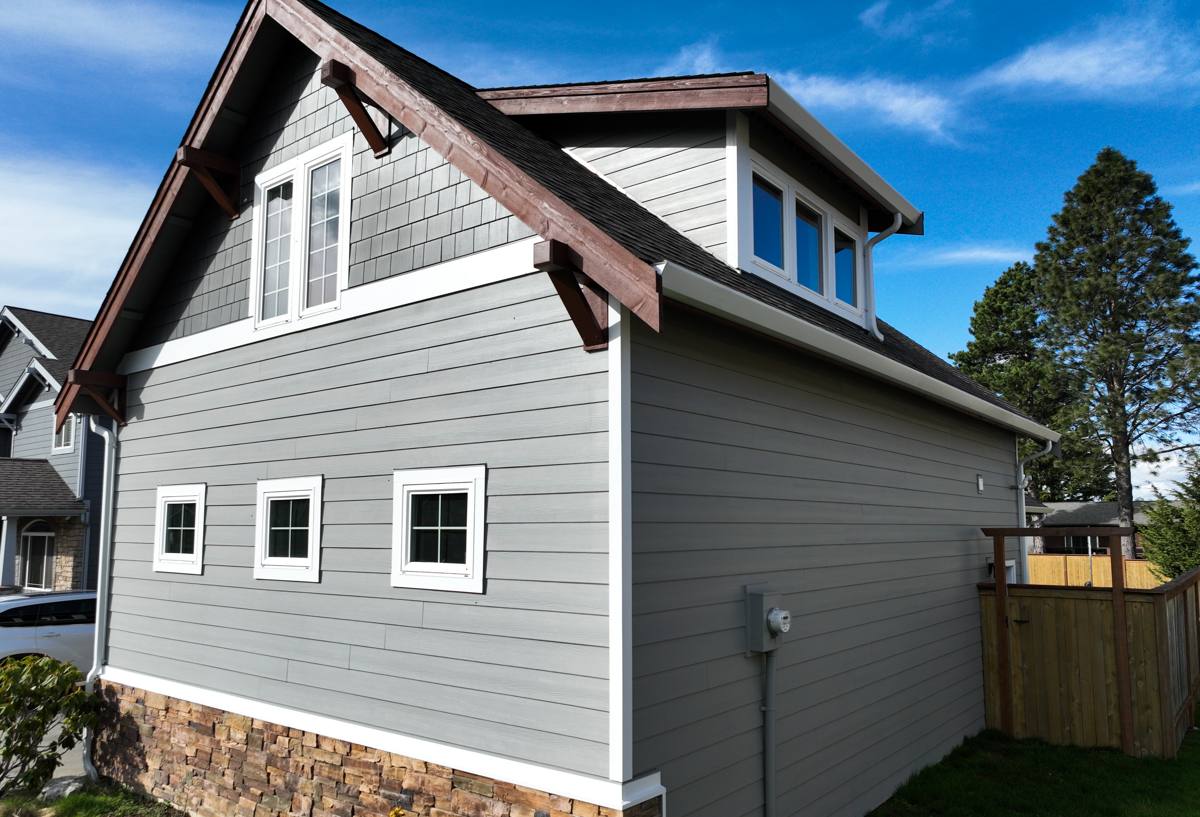
What Countryside Homes Actually Face
Heat and UV Exposure
Florida sun is relentless on painted and coated surfaces. Cheaper siding materials chalk, fade, and lose their factory finish well before their expected lifespan, especially on south- and west-facing walls that catch the most direct exposure. Once a finish breaks down, the substrate underneath is exposed to moisture cycling, and that's when real deterioration starts.
Wind-Driven Rain
Pinellas County doesn't need a direct hurricane hit to get punishing wind-driven rain. Tropical storms, outer bands, and even strong summer squalls push water sideways into siding seams, window frames, and anywhere flashing is even slightly off. Products and installation details that work fine in drier climates often fail here specifically because they weren't designed with this kind of sustained, horizontal moisture load in mind.
Salt Air and Humidity
Countryside isn't beachfront, but it's not far removed from the Gulf either. Salt content in the air corrodes fasteners, accelerates finish breakdown, and combines with Florida's high ambient humidity to keep exterior materials in a near-constant damp cycle. Wood-based products are especially vulnerable to swelling, splitting, and rot under these conditions.
Wind Load
Hurricane-force wind events put real mechanical stress on siding attachment, not just the surface finish. Fastening patterns, panel engineering, and installation to manufacturer spec matter more here than in most parts of the country — this is not a place where shortcuts on installation show up gradually. They show up during the next storm.
Why We Install Only James Hardie Fiber Cement Siding
We made a decision as a company to install James Hardie fiber cement exclusively — not vinyl, not LP SmartSide, not Cemplank, not Allura, not primed spruce or cedar. That's not a marketing angle; it's a standard we hold because of what we've seen this climate do to alternatives over time.
- Non-combustible core — fiber cement doesn't feed a fire the way wood-based products can.
- Engineered for this region — Hardie's HZ10 product line is specifically formulated for hot, humid climates like ours, addressing moisture and heat performance rather than treating Florida as an afterthought.
- Factory-applied ColorPlus finish — baked on under controlled conditions, it holds color and resists the fading and chalking that hits field-painted surfaces first, especially under Pinellas County sun.
- Dimensional stability — fiber cement doesn't swell, warp, or rot the way wood-based siding can when it stays damp for extended stretches.
- Strong transferable warranty — backed by a manufacturer with decades of Florida-market presence, not a newer entrant still building a track record here.
We're not going to tell you every alternative product is worthless — some have real strengths in the right application. But we've drawn a line based on what holds up under sustained coastal-adjacent heat, humidity, salt air, and wind, and Hardie is what we're willing to put our labor and our name behind.
How a Siding Project Works in Countryside
Assessment
We start by walking the exterior and identifying problem areas — soft spots, failed caulk joints, signs of moisture intrusion around windows and rooflines, and any areas where previous siding or trim work wasn't done to spec. This is also when we check how the roof, windows, and any attached structures like decks interact with the wall system.
Moisture Barrier and Flashing
Before a single piece of new siding goes up, the water-resistive barrier and flashing details get addressed. This is the step that determines whether a house stays dry through the next tropical storm or slowly develops hidden rot behind a brand-new exterior. It's also the step that's easiest to shortcut and hardest to inspect once the siding is on.
Installation to Manufacturer Spec
James Hardie publishes specific fastening patterns, clearances, and caulking guidance for high-wind and high-moisture regions. We follow those specs, not a generic national installation approach, because Pinellas County's wind and rain exposure is part of what the product was engineered to handle — but only if it's installed correctly.
Integration with Roofing, Windows, and Decks
Because we handle all four trades, siding termination points at the roofline, around window openings, and at deck ledger connections are planned as part of one system rather than left for whoever shows up last. That coordination matters more in a climate where every seam is a potential entry point for wind-driven rain.
Comparing What We Won't Install to What We Do
| Material | Common Trade-Off in This Climate | Our Standard |
|---|---|---|
| Vinyl siding | Can warp or distort under sustained high heat and direct sun exposure; impact resistance limits in wind events | Not installed |
| LP SmartSide | Wood-strand composite; performance depends heavily on sealed edges and consistent maintenance in humid climates | Not installed |
| Primed spruce / cedar | Natural wood movement, rot risk, and repainting cycles accelerated by Florida humidity | Not installed |
| Cemplank / Allura fiber cement | Also fiber cement, but we've standardized on one manufacturer's engineering, finish system, and warranty structure for consistency | Not installed |
| James Hardie fiber cement | Requires correct installation to spec; higher material cost than vinyl | What we install exclusively |
Roofing, Windows, and Decks in Countryside
Siding is rarely the only thing showing wear at the same time. Roofs in this part of Pinellas County take a steady beating from UV and storm cycles, and a roof past its prime is one of the most common sources of water finding its way behind siding. Windows original to older homes often have failed seals or outdated flashing that lets moisture in around the frame regardless of how good the siding is. Decks attached to the house need the same attention to waterproofing at the ledger board — it's a connection point that's easy to overlook and expensive to fix once rot sets in.
Because we do all four, a Countryside homeowner replacing siding can also get a straight answer on whether the roof or windows need attention now or can reasonably wait — instead of getting four different opinions from four different companies with four different incentives.
What to Check Before Hiring Anyone for Exterior Work
- Are they licensed and insured to work in Florida, and can they show proof without hesitation?
- Do they install to the manufacturer's published specifications for high-wind, high-moisture regions, or a generic national standard?
- Will they put the warranty terms — both manufacturer and labor — in writing before work starts?
- Do they coordinate siding with roofing, window, and deck work, or treat each as unrelated?
- Can they explain why they chose the specific product they're recommending for your home, rather than just quoting a price?
A Local Crew Matters Here
A contractor working across Pinellas County day in and day out has seen how these homes age in real time — which walls fail first, which details hold up through hurricane season, and which shortcuts eventually show up as callbacks. That local pattern recognition is worth more than a lower bid from a crew unfamiliar with how this specific climate treats an exterior. We're not guessing at what Oldsmar-area weather does to a house; we're accounting for it in every estimate and every install.
If you're noticing fading, soft spots, or aging siding on your Countryside home, or you're overdue for a look at your roof, windows, or a deck attached to the house, we're happy to come take a look. Estimates are free, there's no pressure, and you'll get a straight answer about what actually needs attention now versus what can wait.