 Oldsmar Siding
 Palm Harbor and Oldsmar: A Coastal Pinellas Climate Snapshot
Palm Harbor sits in northwest Pinellas County, close enough to the Gulf and to Tampa Bay that homes here deal with a specific combination of stresses most inland siding never has to survive. It's not one big event that wears out an exterior in this part of Florida — it's the accumulation of ordinary weeks. Intense, near year-round UV breaks down pigments and surface coatings. Afternoon storms drive rain sideways into wall assemblies rather than straight down. Humidity keeps moisture in play even between storms. And salt-laden air, carried inland on Gulf breezes, settles on exterior surfaces and accelerates corrosion of fasteners and hardware.
Then there's hurricane season. Palm Harbor and greater Oldsmar aren't strangers to tropical storm and hurricane-force wind events, and siding is one of the first things a wind-driven storm tests. A wall covering that isn't rated for the wind loads this area sees, or isn't fastened correctly for them, is a liability during exactly the kind of event Pinellas County homeowners plan around every June through November.
We work throughout this part of the county, and the pattern is consistent: siding that was installed with an inland climate in mind, or with cost as the only consideration, tends to show problems years earlier here than it would somewhere with milder sun and no salt exposure.
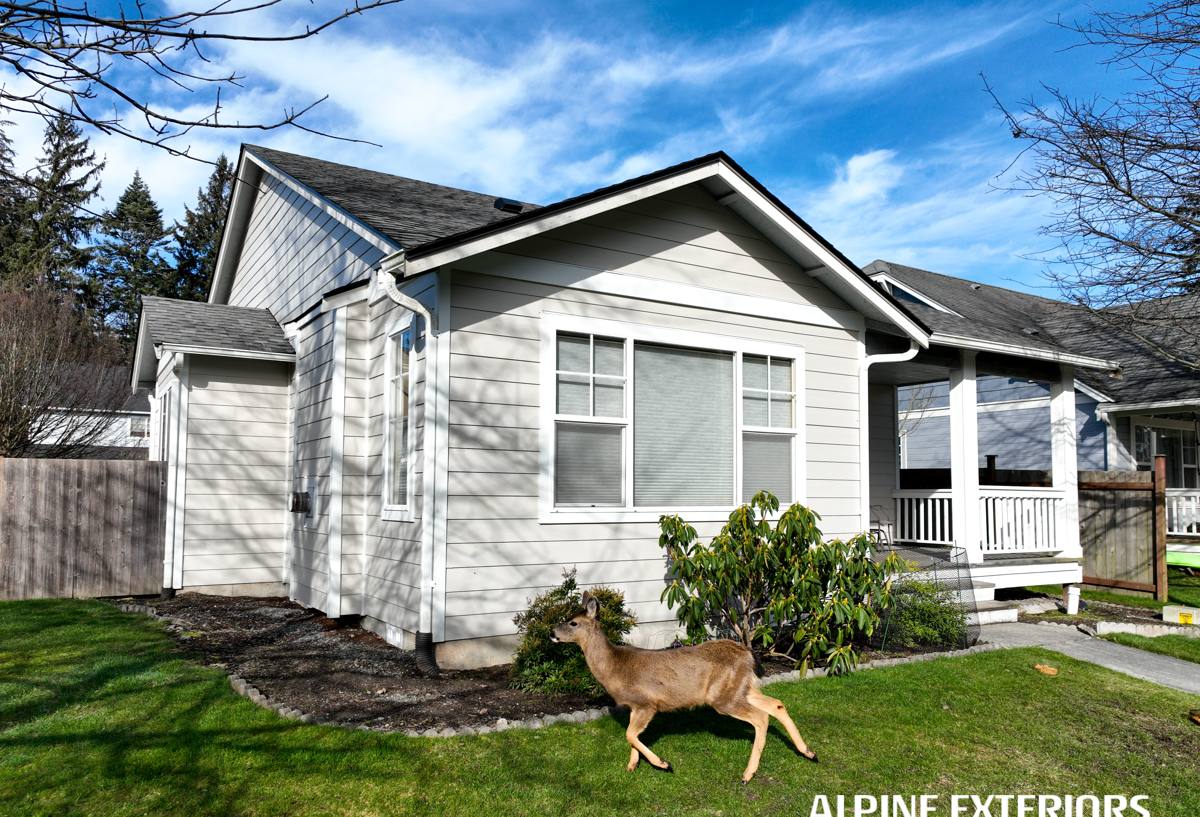
What This Climate Actually Does to Siding Over Time
UV and Heat
Florida's UV index runs high most of the year. On darker-colored siding, prolonged sun exposure fades pigment, and on lower-quality materials it can also cause the surface layer to chalk or become brittle. Repeated heating and cooling cycles stress any material that expands and contracts, and materials that don't handle that cycling well eventually show it as warping, cracking, or seam separation.
Wind-Driven Rain and Humidity
Rain here doesn't fall politely straight down. Storms push it laterally into lap joints, corners, and butt seams. Combined with Pinellas County's humidity, any siding material that absorbs moisture, or any installation with gaps that let water behind the cladding, sets up conditions for rot, mold, and swelling long before the siding looks obviously damaged from the street.
Salt Air
Even homes not directly on the water pick up salt aerosol carried by onshore winds. Salt accelerates corrosion on exposed metal fasteners and trim, and it can contribute to surface degradation on materials that aren't engineered to resist it.
Wind Load
During tropical storms and hurricanes, siding has to stay attached under sustained wind pressure and withstand impact from wind-borne debris. Fastening pattern, panel engineering, and the material's own structural integrity all matter more here than in a calmer climate.
Why We Only Install James Hardie Fiber Cement Siding
We made a decision as a company to install one siding product across every job: James Hardie fiber cement. We don't install vinyl, LP SmartSide or other wood-based composite siding, Cemplank, Allura, or primed spruce or cedar. That's not because those products have no legitimate use anywhere — it's because, given what we see this climate do to exterior materials year after year, we don't think they hold up to the standard we want to put our name behind here in Pinellas County.
Vinyl siding is affordable and low-maintenance in mild climates, but it's a petroleum-based product that softens in heat and becomes brittle in temperature swings, and it can deform or blow off in high wind events if not installed with hurricane-rated fastening — and even then, its wind resistance ceiling is lower than fiber cement's. Wood-based composite siding products, including LP SmartSide, use engineered wood strand technology that performs reasonably well in drier climates, but wood-based cores are inherently more vulnerable to the moisture and humidity load Pinellas County delivers, and any breach in the factory coating can allow swelling or rot to start at the edges. Primed spruce or cedar is real wood, and real wood requires ongoing maintenance, repainting, and moisture vigilance that most homeowners underestimate until they're several years in.
Fiber cement, by contrast, is a mix of cement, sand, and cellulose fibers. It doesn't burn, it doesn't rot, it isn't attractive to termites, and it holds paint and factory finishes far longer than wood-based alternatives because it doesn't expand and contract with moisture the way organic materials do. James Hardie is the manufacturer we've standardized on specifically because they engineer their product lines for regional climate conditions and back them with a strong, transferable warranty — details we cover below.
Comparing Siding Options for This Climate
| Factor | Vinyl | Wood-Based Composite | James Hardie Fiber Cement |
|---|---|---|---|
| Moisture behavior | Doesn't absorb water, but seams can let water behind panels | Wood core can swell or rot if the factory coating is breached | Non-combustible, engineered to resist moisture-related swelling and rot |
| UV/color retention | Can fade and chalk over time, especially darker colors | Factory finish fades faster than baked-on finishes | ColorPlus factory finish is baked on and warrantied against fading |
| Wind performance | Lower wind rating; can deform or detach in high wind | Moderate, dependent on fastening and panel condition | Higher wind ratings when installed to manufacturer spec |
| Fire resistance | Combustible | Combustible (wood-based core) | Non-combustible |
| Maintenance | Low, but limited repair options once damaged | Periodic caulking, coating inspection, moisture checks | Minimal; occasional caulk and wash |
| Typical lifespan with proper install | 15-25 years | 20-30 years | 30-50 years |
The Hardie HZ5 Climate-Engineered Line for Florida Homes
James Hardie engineers its siding in different formulations for different climate zones, sold under their HZ5 and HZ10 designations. Homes in Pinellas County fall in the zone Hardie engineers for high-moisture, humid, storm-prone regions — meaning the formulation used here is built with our specific rain, humidity, and storm exposure in mind rather than a one-size-fits-all product shipped nationwide.
Hardie's product lines give homeowners real choice in look without sacrificing performance:
- HardiePlank lap siding — the classic horizontal lap look, available in multiple textures and exposure widths
- HardieShingle siding — a shingle profile for homes that want a coastal or craftsman aesthetic
- HardiePanel vertical siding — often used as an accent or on modern-style homes
- HardieTrim boards — matching trim for a consistent, factory-finished look at corners, fascia, and window surrounds
The ColorPlus finish that comes on most of these products is baked on in a controlled factory environment across multiple coats, rather than field-applied paint, which is a major reason it holds color and resists the fading and chalking that intense Florida sun causes on lesser finishes.
What Correct Installation Looks Like Here
Fiber cement siding only performs the way it's engineered to when it's installed correctly, and installation quality is where a lot of the real-world variation between a 15-year siding job and a 40-year one comes from. In a wind-and-rain climate like ours, that means:
- Proper fastener spacing and type, rated for the wind exposure category of the home's location
- Correct clearance from grade, roof lines, and decks to prevent moisture wicking
- Properly flashed and sealed penetrations at windows, doors, and utility penetrations
- Manufacturer-specified overlap and gapping at joints to allow for expansion without opening a path for wind-driven rain
- A compatible weather-resistive barrier installed underneath, not just the siding itself
A crew that treats fiber cement like just another siding product, without following Hardie's climate-specific installation instructions, can undercut a lot of the product's real advantage. That's a big part of why local, experienced installation crews matter as much as the material choice itself.
Signs Your Current Siding Is Already Struggling
Homeowners in Palm Harbor and Oldsmar often live with early warning signs longer than they should, mostly because siding damage tends to be gradual rather than sudden. Worth checking for:
- Visible warping, buckling, or gaps between panels or boards
- Soft spots or a "give" when you press on siding near the bottom of walls or below windows
- Paint that's peeling, bubbling, or chalking heavily when wiped with a hand
- Fading that's uneven across the same wall, suggesting inconsistent original coating
- Rust streaks near fasteners or trim
- Any musty smell near exterior walls inside the home, which can indicate moisture intrusion behind the siding
Beyond Siding: Roofing, Windows, and Decks in the Same Climate
Siding doesn't work in isolation — it's one part of a home's exterior envelope, and the same wind, UV, and moisture exposure that affects siding in Palm Harbor and Oldsmar affects the roof, windows, and any outdoor decking too. We handle all four because they need to work together: a roof that's shedding water properly, windows that are flashed and sealed correctly, and siding that's installed to spec all depend on each other to keep water out of the wall assembly. When we're on a property for a siding project, we're looking at the whole exterior, not just the walls, because a gap in one area can undermine work done well everywhere else.
What to Expect from an Estimate
A straightforward siding estimate for a Palm Harbor or Oldsmar home should give you a clear picture before any work starts. Reasonable things to expect and ask for:
- An in-person inspection of current siding condition, not just a measurement from the street
- A clear explanation of which Hardie product line and profile fits the home and budget
- A written scope covering trim, flashing, and moisture barrier work, not just panel installation
- A realistic timeline that accounts for Florida's rainy season scheduling
- Transparency about what's covered under the manufacturer's warranty versus the workmanship warranty
If you're weighing your options for a Palm Harbor or Oldsmar home, we're glad to come take a look and walk you through what we see, with no pressure to commit. Reach out for a free estimate using the form below.