 Oldsmar Siding
 Why Tampa-Area Siding Wears Out Faster Than It Should
Homes in the Tampa area, including the neighborhoods around Oldsmar in Pinellas County, take a different kind of beating than siding was originally designed for in most of the country. It isn't one problem — it's four working against the same wall at once: intense year-round UV that never really lets up, wind-driven rain that gets forced sideways into laps and seams, salt-laden air pulled in off Tampa Bay, and the outside chance of hurricane-force wind loading every storm season. Individually, most siding products can handle one of those. Stacked together, year after year, they expose which products were engineered for this climate and which ones were not.
That's the lens we use on every siding replacement job in Tampa: not "what looks good going up," but "what is still going to be doing its job in fifteen summers." A lot of the premature siding failure we get called out to look at in this area isn't from bad luck — it's from a product or installation detail that was never a good match for this coastal climate to begin with.
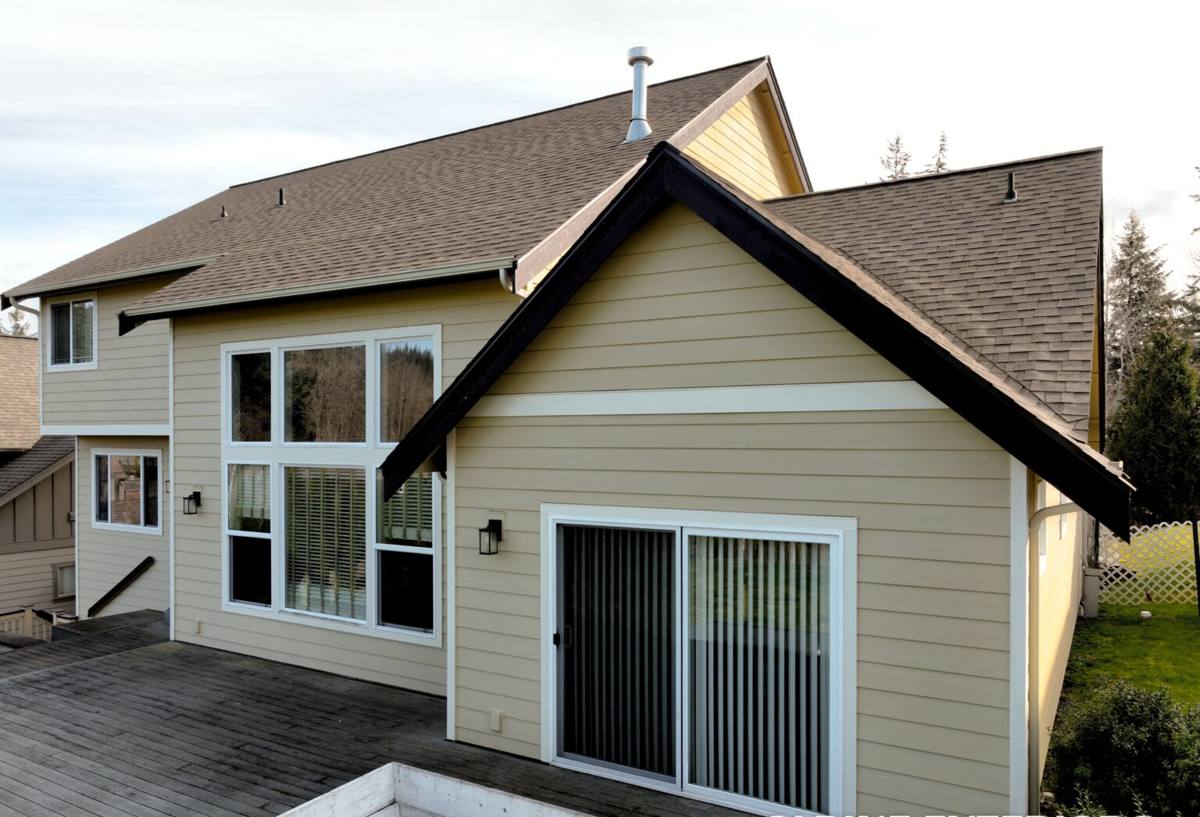
What Tampa Homes Specifically Need From Their Siding
Real Moisture Management, Not Just a Water-Resistant Face
Wind-driven rain in a Gulf Coast storm doesn't just hit siding — it gets pushed up and under laps that were designed for gravity, not pressure. Siding replacement in this area has to assume water will occasionally get behind the surface layer, and the assembly behind it — the water-resistive barrier, flashing, and drainage plane — has to be able to shed that moisture back out before it reaches the sheathing.
UV Stability
Florida sun is harder on exterior finishes than almost anywhere else in the continental U.S. Paints and coatings that hold up fine in milder climates fade, chalk, or become brittle faster here. A factory-applied, UV-stable finish holds its color and its flexibility far longer than field-applied paint exposed to this much sun.
Salt Air Tolerance
Tampa Bay's proximity means airborne salt is a real factor even a few miles inland. Salt accelerates corrosion of fasteners and trim, and it degrades some coatings faster than plain UV exposure alone. Material choice and fastener choice both matter here.
Wind Resistance
Siding attachment has to meet Florida's wind-load requirements, and in coastal Pinellas County that's not a formality — it's the difference between siding that stays put in a tropical storm and siding that peels off in sheets.
Signs a Tampa-Area Home Needs Siding Replacement (Not Just a Patch)
Not every siding problem calls for a full replacement, but in this climate small issues compound quickly. Watch for these warning signs:
- Soft, spongy, or crumbling spots when you press on the siding, especially near the bottom courses or around windows
- Visible warping, buckling, or gaps between panels or lap boards
- Paint that's peeling, bubbling, or chalking heavily even after a recent repaint
- Persistent mildew or dark staining that comes back shortly after cleaning
- Rising energy bills with no other explanation — often a sign the wall assembly behind the siding is compromised
- Visible fastener rust or streaking, a common early sign of salt-air corrosion
- Interior signs like peeling wallpaper, musty smells, or discolored drywall on exterior walls
- Siding that's original to a home built more than 20-25 years ago, especially if it's never been fully inspected behind the surface
If you're seeing two or more of these at once, it's usually a sign the underlying moisture barrier has failed in more than one spot, and patch repairs will just mean repeating the same repair call in a year or two.
What a Correct Siding Replacement Actually Involves
Siding replacement done right is mostly about what happens before the new siding ever goes up. The visible product is maybe half the job.
1. Full Tear-Off and Inspection
Old siding comes off completely so the sheathing underneath can actually be inspected — not guessed at. This is where hidden rot, soft sheathing, or old moisture damage gets found and dealt with, instead of getting sealed back up behind new siding to keep spreading.
2. Sheathing Repair
Any damaged or compromised sheathing gets replaced before anything else happens. Installing new siding over damaged sheathing just guarantees a repeat failure, usually faster the second time.
3. Water-Resistive Barrier
A new weather barrier goes on correctly lapped, shingle-style, so water is directed down and out rather than trapped. In a wind-driven rain climate like this one, the barrier detailing matters as much as the barrier product itself.
4. Flashing at Every Penetration
Windows, doors, hose bibs, light fixtures, vents — every penetration through the wall plane needs proper flashing integrated with the water-resistive barrier. This is one of the most common places we find shortcuts on older installations, and it's almost always where leaks start.
5. Correct Fastening and Clearances
Fastener type, spacing, and pattern all need to match manufacturer specs and Florida's wind-load requirements. Siding also needs proper clearance from the ground, roofline, and adjoining hard surfaces so it isn't sitting in standing water or trapped moisture.
6. The Siding Itself
Only after the assembly behind it is right does the visible siding go on — installed to the manufacturer's specified nailing pattern, gapping, and caulking details, not generic "close enough" carpentry.
Why We Install Only James Hardie Fiber Cement
We don't install vinyl, LP SmartSide, Cemplank, Allura, or primed wood siding, and that's a deliberate standard, not an oversight. Each of those products has legitimate strengths on the right project — but none of them, in our professional judgment, hold up as reliably as James Hardie fiber cement under this specific combination of UV intensity, wind-driven rain, salt air, and hurricane wind loading, over the long haul and with the least maintenance burden to the homeowner.
James Hardie fiber cement is non-combustible, resists moisture-driven swelling and rot in a way wood-based products can't, and its ColorPlus factory finish is baked on and UV-cured specifically to resist Florida-level sun exposure — which matters far more here than in most of the country. Hardie's HZ5 product line is engineered specifically for high-humidity, moisture-prone climates like ours. The warranty is transferable, which matters at resale, and backed by a company with decades of manufacturing track record in fiber cement specifically.
None of that means other products are worthless — it means that for the specific stresses Tampa-area homes face, we've concluded Hardie is the more defensible long-term choice, and it's the only siding we put our name behind.
Our Siding Replacement Process
- On-site assessment — we inspect current siding, look for signs of moisture intrusion, and check trim, soffit, and fascia condition while we're at it
- Written scope and estimate — what's being removed, what's being repaired if sheathing damage is found, and exactly which Hardie product and color is proposed
- Tear-off and sheathing inspection — full removal, with photos of any damage found before it's covered back up
- Weather barrier and flashing installation — done to manufacturer spec, not shortcuts
- Hardie installation — correct fastening pattern, gapping, and caulking per manufacturer requirements and Florida wind-load code
- Final walkthrough — we go over the finished work with you before calling the job done
What Siding Replacement Costs Depend On
| Factor | Why It Matters |
|---|---|
| Home size and wall complexity | More corners, gables, and penetrations mean more flashing and cutting labor |
| Sheathing condition | Rot or moisture damage found during tear-off adds repair scope |
| Hardie product line and profile | Lap siding, shingle-style panels, and board-and-batten all price differently |
| ColorPlus vs. field-painted finish | Factory finish costs more upfront but lasts substantially longer in this sun |
| Trim and accessory scope | Fascia, soffit, and trim replacement alongside siding affects total cost |
| Access and site conditions | Multi-story sections, tight lot lines, or landscaping can affect labor time |
We give straightforward written estimates and explain the "why" behind every line item — no vague allowances that turn into surprises mid-project.
Why Hiring a Crew That Already Works This Area Matters
Siding installation isn't uniform across the country, and a crew that mostly works drier, milder climates can miss details that matter here. A contractor who regularly works siding replacement projects in the Tampa area already understands the local wind-load requirements, knows which flashing details actually hold up against wind-driven rain, and has already seen what salt air does to fasteners and trim over time. That familiarity shows up in the small decisions — flashing laps, fastener spacing, clearance details — that don't show up on a spec sheet but decide whether a siding job lasts eight years or twenty-five.
It also matters for accountability. A local crew is reachable if a question comes up after the job, and has a reputation in the community worth protecting.
Caring for Hardie Siding After Installation
One advantage of correctly installed Hardie fiber cement is how little ongoing maintenance it demands compared to wood or vinyl alternatives — but "low maintenance" isn't "no maintenance." A simple annual routine keeps it performing as designed:
- Rinse siding with a garden hose once or twice a year to clear salt residue and pollen buildup
- Keep sprinklers from hitting siding directly and repeatedly — constant wetting shortens the life of any caulking and trim
- Check caulking at trim joints and penetrations annually and have any cracked sections resealed
- Keep gutters clear so water isn't overflowing and running down the siding face
- Trim back shrubs and landscaping so siding gets airflow and isn't held wet against foliage
If you're seeing warning signs on your current siding, or you're simply due for a straight answer about whether repair or replacement makes more sense for your home, we're happy to take a look. Reach out for a free, no-pressure estimate — the form below gets you started.