 Oldsmar Siding
 Palm Harbor's Climate Is Hard on Siding — Harder Than Most Homeowners Realize
Palm Harbor sits close enough to the Gulf that salt-laden air reaches home exteriors year-round, even on properties that aren't waterfront. Combine that with Pinellas County's intense, near-constant UV exposure, wind-driven rain that comes in sideways during summer storms, and the real possibility of hurricane-force winds during the season, and you have one of the more demanding climates in the country for exterior building materials. Siding here isn't just cosmetic — it's the layer standing between your home's structure and a coastal environment that doesn't let up.
Homes in this area age differently than homes inland. Sun exposure fades and chalks paint faster. Humidity keeps wood-based products damp longer between rain events, which accelerates rot and swelling. Salt air corrodes fasteners and trim faster than in drier climates. Any siding installed here has to be chosen and installed with all of that in mind, not just what looks good on the day it goes up.
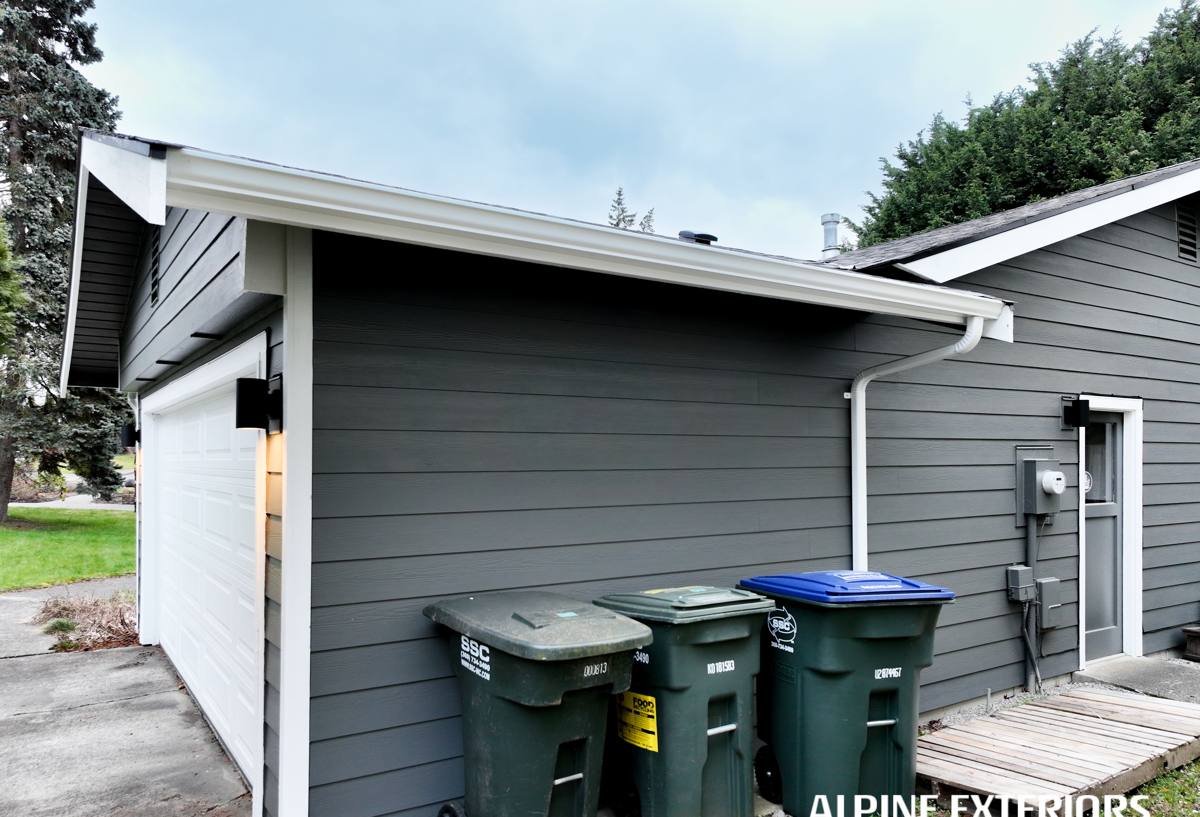
Signs a Palm Harbor Home Needs Siding Replacement, Not Another Repair
Some siding problems are cosmetic and can wait. Others signal that moisture or structural damage is already underway. Knowing the difference saves homeowners from patching a symptom while the real problem keeps spreading behind the wall.
- Soft, spongy, or bubbling spots when you press on the siding — a strong sign of moisture trapped behind it
- Visible warping, buckling, or panels pulling away from the wall
- Paint that won't hold no matter how often it's redone, especially on south- and west-facing walls
- Cracking or splitting concentrated near seams, corners, or fastener points
- Rising energy bills with no other explanation — a sign the siding and underlying barrier are no longer doing their job
- Visible mold, mildew, or a persistent musty smell along exterior walls
- Siding that's simply reached the end of its rated service life and is being kept alive with patchwork repairs
If more than one or two of these apply, a repair is usually a short-term fix on a problem that full replacement solves permanently.
Why We Install Only James Hardie Fiber Cement Siding
We made a deliberate decision years ago to install one product system — James Hardie fiber cement — and nothing else. Not vinyl, not LP SmartSide, not Cemplank or Allura, not primed spruce or cedar. That's not a marketing angle; it's a standard we hold because of what we've seen these products do over time in exactly the kind of climate Palm Harbor sits in.
Vinyl siding is affordable and easy to install, and for some climates it holds up fine. In Gulf Coast heat and direct sun, though, it softens, warps, and fades faster than most homeowners expect, and it offers essentially no wind or impact resistance compared to fiber cement. Wood-based products like primed spruce, cedar, and engineered wood siding such as LP SmartSide can look excellent when new, but they depend heavily on paint film integrity and moisture management — miss a maintenance cycle in a humid coastal climate and rot risk climbs fast. Other fiber cement brands like Cemplank and Allura are legitimate competitors to Hardie on paper, but we've standardized on Hardie specifically for its HZ5 climate-engineered formulation for humid, coastal regions, its factory-applied ColorPlus finish, and the depth of its installation specifications and warranty backing.
None of this means those other products are junk — plenty are installed correctly and perform adequately. It means we've chosen to specialize in one system we can install to spec every time, back with a real warranty, and stand behind without hedging.
What Makes James Hardie Different
James Hardie fiber cement is non-combustible, resists moisture-driven swelling and rot far better than wood-based sidings, and holds paint and color dramatically longer because the color is baked into the product at the factory rather than applied on-site. The HZ5 product line specifically is engineered for high-humidity, storm-prone climates like ours — it's not a one-size-fits-all product pulled from a colder-climate catalog.
What a Correct Siding Replacement Actually Involves
Siding replacement done right is not just pulling off old panels and nailing up new ones. In a coastal wind and rain environment, the parts you don't see matter as much as the parts you do.
Tear-Off and Substrate Inspection
Old siding comes off down to the sheathing so we can actually see what's underneath — soft wood, hidden rot, or prior water damage doesn't show up until the old material is gone. Any compromised sheathing gets addressed before anything new goes up.
Weather-Resistive Barrier
A properly lapped and sealed weather barrier goes on before siding, giving the wall a secondary line of defense against wind-driven rain — the kind Palm Harbor gets regularly during summer storms.
Flashing and Water Management
Windows, doors, and any wall penetrations get flashed correctly so water is directed out and away from the structure rather than trapped behind the siding. This is one of the most commonly rushed steps in low-quality installations, and it's usually where callback problems originate.
Fastening to Manufacturer Spec
James Hardie has specific fastener patterns, spacing, and clearance requirements built around real-world wind performance. Installing to that spec — not "close enough" — is what lets the siding perform the way it's rated to in high-wind events.
Choosing the Right Hardie Product Line for a Palm Harbor Home
James Hardie makes several distinct siding profiles, and the right one depends on the home's architectural style, existing trim, and how the homeowner wants the finished look to read from the street.
| Product Line | Look | Best Fit For |
|---|---|---|
| HardiePlank Lap Siding | Traditional horizontal lap | Most single-family homes; the standard choice for classic Florida exteriors |
| HardiePanel Vertical Siding | Clean vertical panels | Modern or coastal-style homes, accent walls, gable ends |
| HardieShingle Siding | Staggered or straight-edge shingle look | Craftsman or cottage-style homes wanting texture |
| Artisan / Statement Collection | Premium smooth or textured profiles | Homeowners prioritizing a high-end, dimensional finish |
Every line is available in the HZ5 formulation appropriate for our humidity and storm exposure, and in ColorPlus factory finishes engineered to resist fading under intense Florida UV.
Our Process, Start to Finish
We keep the process straightforward and communicate at each stage so there are no surprises mid-project.
- Free on-site inspection and estimate — we look at the current siding, sheathing condition where visible, and the home's exposure
- Product and color selection, including a look at how ColorPlus finishes hold up in direct coastal sun
- Scheduling built around weather, since tear-off shouldn't sit exposed during storm season
- Tear-off, substrate inspection, and repair of any damaged sheathing before new material goes up
- Weather barrier, flashing, and Hardie installation to manufacturer spec
- Final walkthrough so the homeowner can inspect the finished work before we consider the job done
What Affects the Cost of Siding Replacement in This Area
Every home is different, so we don't quote prices without seeing the property, but a few factors consistently move the number up or down.
| Factor | Why It Matters |
|---|---|
| Home size and wall complexity | More corners, gables, and dormers mean more cutting, fitting, and labor time |
| Condition of existing sheathing | Hidden rot discovered during tear-off adds repair scope before new siding can go on |
| Product line and profile chosen | Lap, panel, and shingle profiles differ in material and installation labor |
| Trim and accent work | Window trim, corner boards, and accent details add finishing time |
| Access and site conditions | Landscaping, fencing, and multi-story sections can affect staging and labor |
We walk through these factors during the estimate so homeowners understand exactly what's driving the number, not just a final total.
Why Hiring a Crew That Already Works in Palm Harbor Matters
Siding installation isn't one-size-fits-all across Florida, let alone the country. A crew that regularly works Pinellas County properties already understands how to detail flashing for wind-driven rain, how to space fasteners for hurricane-zone wind ratings, and which product formulations actually hold up against salt air — because they've seen what happens when those details get skipped. That local pattern recognition is hard to substitute with a crew that mostly works inland or in a different climate zone. It shows up in fewer callbacks, tighter water management, and siding that still looks and performs correctly five and ten years out, not just on installation day.
If your Palm Harbor home's siding is showing wear, or you're planning ahead of the next storm season, we're happy to walk the property with you and give a straightforward, no-pressure estimate — no obligation, just an honest look at what your home actually needs. Use the form below to get started.