 Oldsmar Siding
 Siding Installation for the Tampa Side of Pinellas County
Oldsmar sits right at the point where Pinellas County meets Hillsborough County, at the northwest corner of Tampa Bay. That location means homes here take on a mix of exposures that a lot of siding never gets engineered for: salt-laden air rolling in off the bay, the wind-driven rain that comes with our summer storm pattern, and some of the most intense year-round UV in the continental United States. When we install siding on a home in this corridor, we're not treating it as a generic Florida job — we're treating it as a Tampa Bay job, with all the moisture and wind loading that comes with it.
This page is specifically about siding installation for homes in and around the Tampa side of the Oldsmar area — what the climate actually does to exterior cladding here, what a correct installation has to account for, and why we install exclusively James Hardie fiber cement rather than the vinyl, engineered wood, or lower-grade fiber cement products you'll see quoted elsewhere.
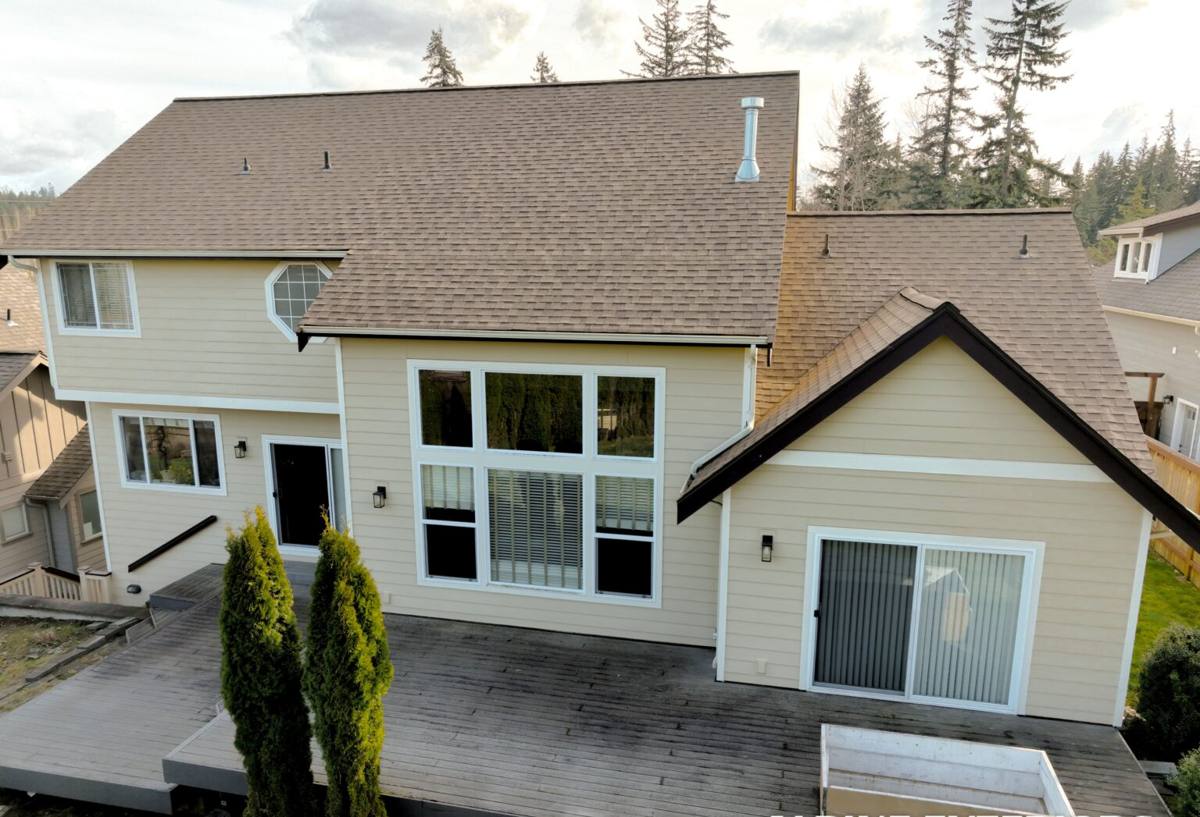
What This Climate Does to Siding Over Time
Every siding material eventually fails somewhere. The question for a Tampa Bay homeowner is which failure mode you're signing up for. Three things drive most of it in this area:
Wind-Driven Rain and Moisture Intrusion
Tropical systems and summer thunderstorms don't just drop rain straight down here — wind pushes it sideways, into laps, seams, and any gap in the water-resistive barrier behind the siding. Materials that swell, delaminate, or wick moisture at the panel edges are the ones that fail first in this pattern, usually starting at the bottom courses and around window and door trim.
Salt Air
Being close to Tampa Bay means airborne salt is a constant, low-level presence even miles from open water. Salt accelerates corrosion on fasteners and trim hardware and degrades poorly-formulated coatings faster than inland exposure would. It's a slow effect, but it's cumulative and it doesn't take a hurricane to cause it.
UV Load
Florida sun is hard on paint and factory finishes year-round, not just in summer. Coatings that aren't engineered for this UV intensity chalk, fade, and crack early — which is as much a maintenance and curb-appeal problem as it is a protection problem, since a degraded finish stops shielding the substrate underneath.
Wind Load
Pinellas and Hillsborough Counties both sit inside the state's high-velocity hurricane zone provisions in the Florida Building Code. Siding installed here has to be fastened to hold up under real storm wind loads, not just look good on a calm day — and that's as much about installation practice as it is about the product itself.
Why We Install Only James Hardie Fiber Cement
We don't install vinyl, LP SmartSide, Cemplank, Allura, or primed wood siding — on purpose. Every one of those products has legitimate uses somewhere, but none of them line up well with the specific combination of wind, moisture, salt, and UV this area produces. Vinyl can deform in high heat and doesn't offer the impact and wind resistance that fiber cement does. Engineered wood and primed wood products rely on the paint film and edge sealing staying intact to keep moisture out, which is a harder bar to clear in a climate this wet and sunny. Lower-tier fiber cement brands exist, but James Hardie is the one that builds region-specific HZ5 formulations for our climate zone, backs the product with a strong transferable limited warranty, and finishes it with a factory-applied ColorPlus coating engineered to resist UV fade rather than relying on a field-applied paint job.
Fiber cement is also non-combustible, which matters in a state where wildfire and electrical exposure risk is part of most insurance conversations. We put James Hardie on homes because after years of installing and maintaining siding in this exact climate, it's the product that holds up the way homeowners expect siding to hold up — not because it's the only option on the market.
What a Correct Installation Involves
The siding itself is only part of the system. Most premature failures we get called out to inspect trace back to installation shortcuts, not the product. A correct job for this climate includes:
- A continuous water-resistive barrier installed and lapped correctly behind the siding, with no gaps at seams or penetrations
- Proper flashing at every window, door, and roofline transition, directing water out and away from the wall assembly
- Correct fastener type, spacing, and embedment — under-driven or over-driven nails are one of the most common causes of early siding problems
- Manufacturer-specified clearances between the siding's bottom edge and the roofline, deck surfaces, and grade
- Caulking and sealant only where the manufacturer calls for it — sealing the wrong joints traps moisture instead of shedding it
- Painted or factory-finished cut edges, since an exposed raw edge is where moisture gets in first
None of this is visible once the job is finished, which is exactly why it matters who's doing the installing. A siding job can look identical from the curb and behave completely differently in five years depending on whether these details were followed.
Our Process
- On-site assessment. We look at your current siding's condition, the substrate underneath, and any moisture or trim issues around windows and doors before quoting anything.
- Product and color selection. We walk you through the applicable James Hardie board profile and ColorPlus color options for your home.
- Tear-off and substrate check. Old siding comes off and we inspect the sheathing underneath for rot or water damage before covering it back up.
- Water-resistive barrier and flashing. This is the layer that actually keeps water out — it goes in before a single piece of siding is hung.
- Installation to manufacturer spec. Fastening, spacing, and clearances follow James Hardie's published installation guidelines for our wind zone, not shortcuts.
- Trim, caulk, and final inspection. Cut edges are sealed, joints are finished, and we walk the job with you before calling it done.
Signs Your Siding Needs Attention
Homeowners in the Tampa Bay area often live with early warning signs longer than they should, mostly because siding problems tend to hide behind an otherwise normal-looking wall. Worth a look if you notice:
- Soft, spongy, or visibly swollen sections, especially near the bottom courses or below windows
- Paint that's chalking, peeling, or fading unevenly across the same wall
- Visible gaps, warping, or buckling panels, particularly after storm season
- Rust streaks running down from fasteners or trim hardware
- Rising energy bills that track with a wall that no longer insulates or seals the way it used to
- Musty smells or interior wall staining, which can point to moisture already past the siding layer
Comparing Siding Options for This Climate
| Material | Wind/impact resistance | Moisture behavior in this climate | UV/finish durability |
|---|---|---|---|
| James Hardie fiber cement | Strong; installed to HZ5 spec for wind zones like ours | Doesn't rot; engineered for humid, storm-prone climates | Factory ColorPlus finish resists fade and chalking |
| Vinyl | Can deform or crack under high wind and impact | Doesn't rot, but seams and panel movement can let moisture behind it | Field color can fade and become brittle under heavy UV over time |
| Engineered/primed wood | Moderate; depends heavily on installation and sealing | Relies on intact paint/sealant to resist moisture uptake | Coating needs regular maintenance to stay protective |
| Cedar | Moderate; natural material, more installation-sensitive | Absorbs moisture without diligent finishing and upkeep | Requires ongoing refinishing to hold color and protection |
What Drives the Cost of a Siding Installation
Every home is different, so we won't quote a number without seeing the job, but these are the factors that actually move the price:
| Factor | Why it matters |
|---|---|
| Home size and wall complexity | More linear footage and more corners, gables, and dormers mean more material and labor |
| Substrate condition | Rotted or damaged sheathing found during tear-off has to be repaired before new siding goes on |
| Board profile and finish | Different James Hardie lines and ColorPlus finish options carry different material costs |
| Trim and detail work | Window and door trim, corner boards, and soffit detailing add labor time |
| Access and site conditions | Tight lot lines, landscaping, or multi-story sections affect crew time and equipment needs |
| Tear-off and disposal | Removing and hauling away old siding is part of most full replacement jobs |
Why a Crew That Already Works This Area Matters
Siding installation isn't a one-size-fits-all job, and a crew that works Pinellas and the Tampa Bay corridor regularly already knows what this climate does to a wall assembly — where moisture tends to find its way in, how storm exposure affects a given elevation, and what the Florida Building Code's wind provisions actually require in practice, not just on paper. That local familiarity shows up in the details: flashing choices around a window that faces prevailing wind-driven rain, fastening patterns appropriate to the wind zone, and knowing which parts of a home take the worst of the salt air over time. It also means a shorter distance to your job site for the walkthrough, the install, and any follow-up — which matters if a question comes up after a storm.
If your Tampa-area home needs new siding or you're planning ahead of the next storm season, we're happy to walk the property, look at what's there now, and give you a straightforward, no-pressure estimate for a James Hardie installation built for this climate. There's no obligation — just an honest look at what your home actually needs.