 Oldsmar Siding
 Safety Harbor's Climate Is Hard on Siding — Here's What That Means for Your Home
Safety Harbor sits along the water in Pinellas County, and that location cuts both ways. The bay views and mature tree canopy are part of what makes the area desirable, but the same conditions that make it pleasant to live in also work against exterior building materials year-round. Homes here deal with sustained UV exposure nearly every day of the year, wind-driven rain that comes in sideways during summer storms, tropical-storm and hurricane-force wind events, and a steady dose of salt-laden air moving in off the water. None of these forces are occasional here — they're constant, and siding that isn't engineered for that combination shows it early: fading, swelling, cracking, and fastener corrosion are common complaints on homes with the wrong product or a rushed install.
We install siding for homeowners throughout the Oldsmar and Safety Harbor area, and this page is specifically about one job: putting James Hardie fiber cement siding on Safety Harbor homes correctly, using a process built around what this climate actually does to a house over 20-plus years, not just what looks good on installation day.
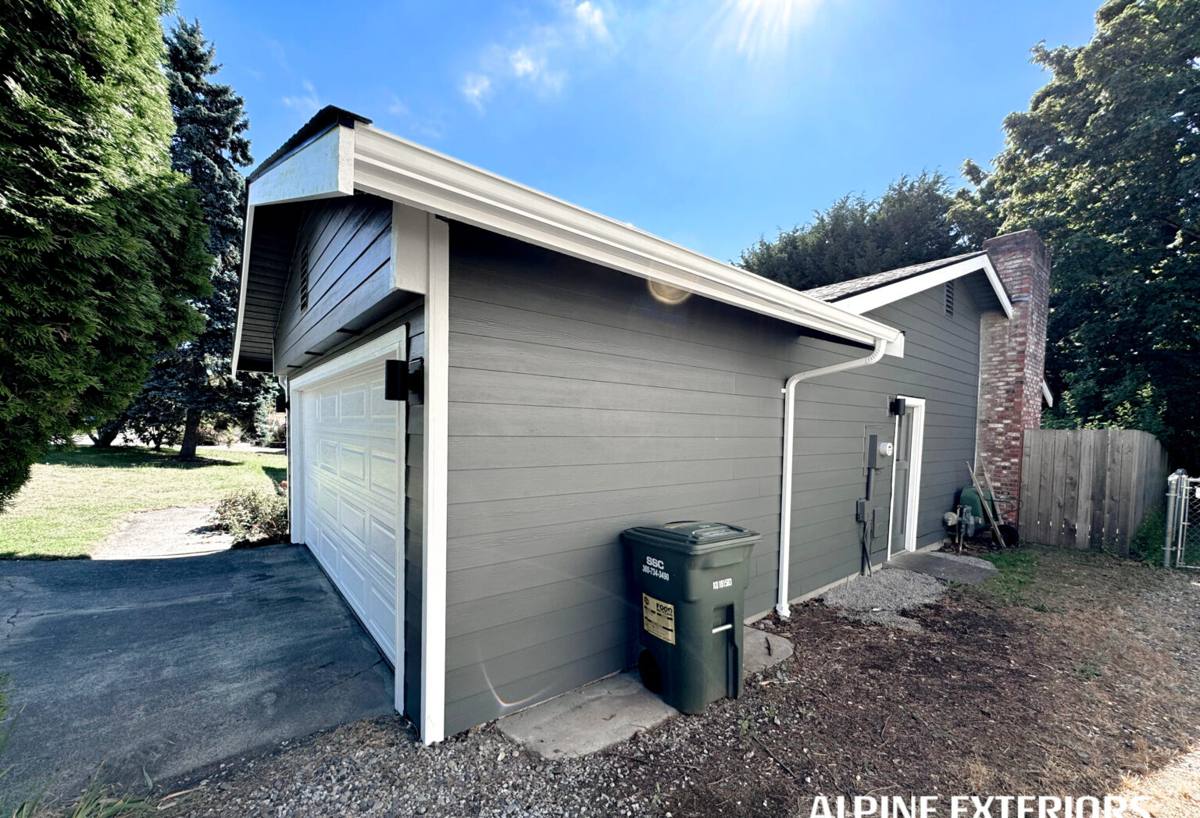
Why We Only Install James Hardie
We don't install vinyl, LP SmartSide, Cemplank, Allura, primed wood, or cedar siding. That's a deliberate standard, not a marketing line. Vinyl softens and can distort in sustained heat and is more vulnerable to wind uplift in storm-force gusts. Wood-based products, including engineered wood siding, depend on an intact factory coating to keep moisture out — once that coating is compromised by UV or a nick during installation, the underlying material is exposed to exactly the humidity and wind-driven rain that Safety Harbor gets on a regular basis. James Hardie fiber cement is cement, sand, and cellulose fiber — it doesn't rot, it's non-combustible, and it's manufactured with a factory-applied ColorPlus finish that's baked on rather than field-painted, which matters enormously in a climate that fades and beats down painted surfaces faster than most of the country.
We're not claiming other products can't perform when installed and maintained perfectly. We're saying that after years of doing exterior work in this exact climate, Hardie is the one product family we're willing to stand behind and warranty our labor against. That's why it's the only thing that goes on a wall when our crew does the work.
What a Correct Hardie Installation Actually Involves
Following Manufacturer Fastening and Clearance Specs
James Hardie publishes detailed installation instructions for a reason — the product's real-world performance depends on them being followed, not treated as suggestions. That includes correct fastener type and spacing, minimum clearances from grade, roofing, and decking, and proper overlap on lap siding courses. In a wind zone like ours, under-fastening or wrong fastener placement is the difference between siding that rides out a tropical storm and siding that doesn't.
Moisture Management Behind the Siding
Siding is only one layer of a wall's defense against water. Correct installation means a proper weather-resistive barrier, correctly integrated flashing at windows, doors, and penetrations, and drainage paths that let any moisture that does get behind the cladding find its way back out rather than sitting against the sheathing. With the amount of wind-driven rain Safety Harbor sees, a wall assembly that traps moisture instead of shedding it will cause problems eventually, even with a good siding product on the surface.
Joints, Caulking, and Butt Seams
Every horizontal and vertical seam is a potential water entry point. We follow Hardie's specifications for joint treatment and use sealants rated for exterior, high-UV exposure — a lower-grade caulk will chalk and crack within a couple of seasons here and open the door to the exact moisture intrusion the siding is supposed to prevent.
Cut Edges and Field Painting
Any cut edge on fiber cement siding needs to be sealed or primed before installation, since a raw cut edge doesn't have the factory finish's protection. Skipping this step is a common shortcut on rushed jobs, and it's one of the first places you'll see staining or deterioration show up on an otherwise good installation.
Choosing the Right Hardie Product Line for Safety Harbor
James Hardie makes climate-specific product formulations, and for this part of Florida that means the HZ5 line, engineered for high-humidity, high-moisture climates like the Gulf Coast. It's a different formulation than the HZ10 product built for drier, freeze-prone regions — using the correct regional formulation isn't cosmetic, it affects how the product handles moisture cycling over time.
| Product | Best Use | Why It Fits Safety Harbor |
|---|---|---|
| HardiePlank lap siding | Most common wall application | Traditional lap look, available in several textures, handles wind and moisture cycling well |
| HardiePanel vertical siding | Accent walls, gables, modern designs | Clean vertical lines, often paired with trim for a distinct look on porches or dormers |
| HardieTrim boards | Corners, fascia, window/door trim | Same non-combustible, moisture-resistant material as the field siding, so trim doesn't become the weak point |
| HardieSoffit panels | Eaves and overhangs | Resists the humidity that collects under overhangs near the water |
How Hardie Compares to the Alternatives in This Climate
| Factor | James Hardie Fiber Cement | Vinyl | Engineered Wood (e.g. LP SmartSide) |
|---|---|---|---|
| Wind resistance | Rated for high-wind installation when fastened to spec | Can distort or detach in sustained high winds | Adequate but panel/seam integrity depends on coating condition |
| UV/fade resistance | Factory ColorPlus finish, baked-on, long fade warranty | Color can fade and become brittle over time in intense sun | Depends entirely on maintaining the surface coating |
| Moisture/rot risk | Cement-based, does not rot | Doesn't rot but can trap moisture behind panels | Wood-based core is vulnerable once the coating is breached |
| Fire performance | Non-combustible | Combustible | Combustible |
| Maintenance | Low — no repainting needed with ColorPlus finish | Low but discoloration is not repaintable | Coating requires monitoring and eventual maintenance |
Our Process for a Safety Harbor Siding Job
- On-site assessment — we look at the existing wall condition, sheathing, and any signs of past moisture intrusion before quoting anything.
- Product and color selection — choosing the right Hardie line and ColorPlus color for the home's exposure and HOA or neighborhood expectations, where applicable.
- Removal and inspection — old siding comes off and we check the sheathing and framing underneath for damage before covering it back up.
- Weather barrier and flashing — installed or corrected to current standards, since this layer matters as much as the siding itself.
- Hardie installation to manufacturer spec — correct fastening, clearances, joint treatment, and trim integration.
- Final inspection and cleanup — walking the job with the homeowner before we consider it done.
Why Hiring a Crew That Already Works Safety Harbor Matters
Siding installation quality isn't just about the crew's general skill — it's about whether they understand the specific demands of this location. A crew that regularly works Safety Harbor and the broader Oldsmar area already knows how close to the water a given block is, what kind of wind exposure a home typically gets, and how the salt air affects fastener and trim choices over time. That local pattern recognition shows up in small decisions — flashing details, fastener material, joint sealant selection — that a crew unfamiliar with this specific coastal environment might not think twice about.
It also means faster, more realistic scheduling. Storm season affects work windows here, and a crew based in the area plans around that reality instead of learning it the hard way mid-project.
What to Check Before You Hire Anyone for This Job
- Are they licensed and insured to do siding work in Florida, and will they show you proof without being asked twice?
- Do they install to James Hardie's published specifications, including correct fastener type and joint treatment — not just "similar" methods?
- Will they inspect and address the sheathing and weather barrier, or just cover over what's already there?
- Do they use the HZ5 product formulation appropriate for this climate zone, not a generic or mismatched line?
- Can they explain their moisture management approach in plain terms, without dodging the question?
- Do they provide a written scope of work and warranty terms for both materials and labor?
Get a Straight Answer on Your Safety Harbor Siding Project
If your Safety Harbor home's siding is fading, cracking, or just due for a real assessment, we're happy to take a look and give you an honest read on condition and options — no pressure, no inflated quote to scare you into a decision. Fill out the form below for a free estimate and we'll walk the property with you.