 Oldsmar Siding
 Storm Damage Roof Repair Built for the Feather Sound Bay Corridor
Feather Sound sits along Old Tampa Bay in Pinellas County, close enough to open water that homes here take a harder hit from wind and wind-driven rain than roofs just a few miles inland. When a storm rolls through the Tampa Bay area, the combination of sustained wind, gusts off the water, and heavy rain arriving sideways rather than straight down puts stress on roof edges, flashing, and fasteners that a standard roof was never really tested against. Add in Florida's year-round UV exposure and the salt content in the coastal air, and you get roofing materials that are already more brittle and more corrosion-prone than roofs in drier, cooler climates before the first named storm of the season even forms.
This page is about one job done right in one area: repairing a Feather Sound roof after storm damage, not replacing it wholesale, not guessing at what an insurance adjuster wants to hear, and not leaving hidden problems behind for the next storm to find.
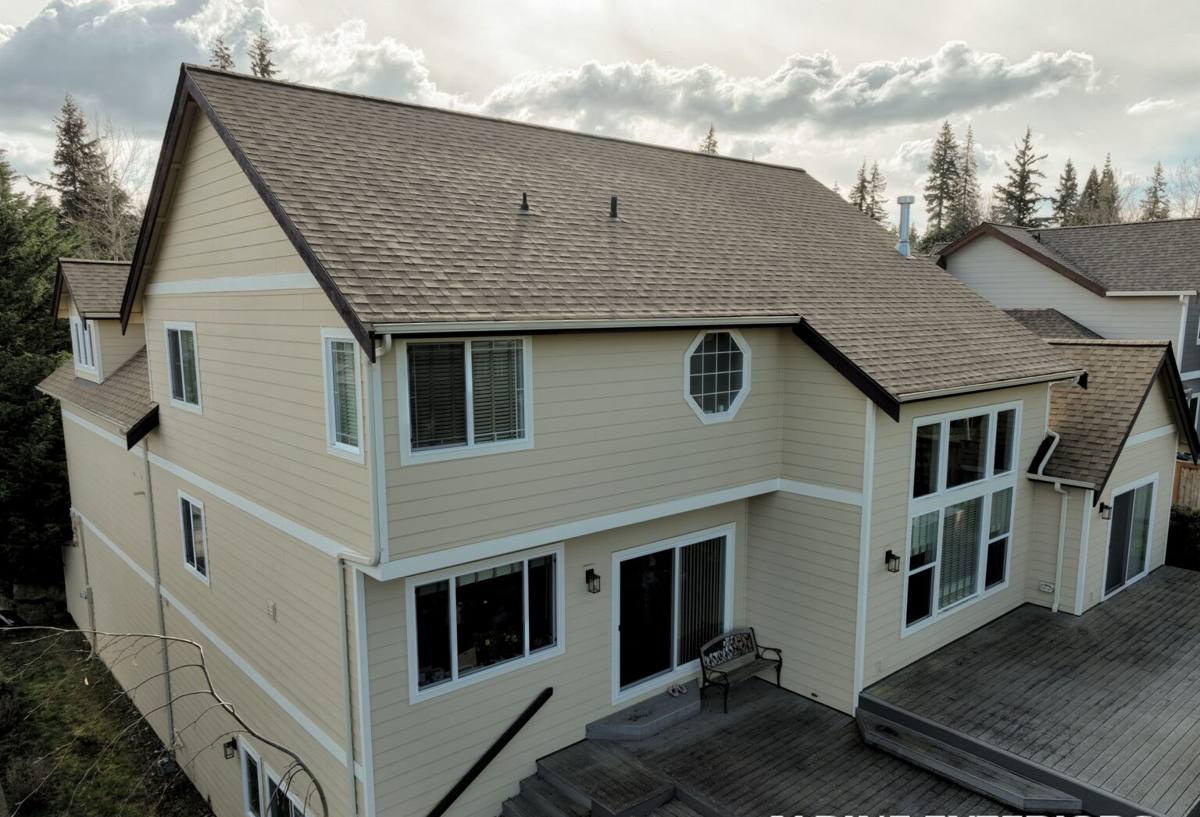
What Storm Damage Actually Looks Like on a Florida Roof
Storm damage isn't always a hole you can see from the driveway. Most of the calls we get after a wind event fall into a few categories:
- Shingles that are lifted, creased, torn loose, or missing outright along ridges and edges where wind uplift concentrates
- Cracked, slipped, or displaced tiles on tile roofs, especially near hips and valleys
- Punctures or bruising from wind-blown debris — palm fronds, branches, loose gutters from a neighboring structure
- Flashing that has lifted or separated at chimneys, skylights, plumbing vents, and roof-to-wall transitions
- Granule loss on asphalt shingles, which exposes the asphalt mat underneath to UV and accelerates aging in exactly the spots that already took the worst of the storm
- Damaged soffit and fascia, which are often the first things to fail under wind pressure at the roof's edge
Damage You Can See vs. Damage You Can't
The tricky part of storm damage repair is that a lot of it doesn't announce itself. A shingle tab can lift during a storm and then blow back down into a position that looks almost normal, with its seal broken and its resistance to the next storm gone. A cracked tile can still shed water in light rain and only leak once wind drives rain up and under it at an angle. Underlayment seams can separate without a single shingle or tile moving. This is why a proper storm damage inspection isn't a walk-by from the street — it's a hands-on check of the roof surface plus the attic, where water staining, damp insulation, or a stray beam of daylight through the decking tells the real story.
Why Waiting on Storm Damage Repair Costs More Than the Repair Itself
A small breach in a roof surface doesn't stay small in this climate. Pinellas County's humidity means moisture that gets under a roof covering doesn't dry out quickly — it sits against wood decking, insulation, and drywall, and it stays there working on rot and mold long after the storm has passed and the sky is blue again. What starts as a repair measured in square feet of shingles or a few tiles can turn into replacing sections of decking, insulation, and interior ceiling finishes if it sits through a few more rain events. It also complicates insurance: the longer damage goes unaddressed, the harder it is to prove it was caused by a specific storm event rather than ongoing neglect, which is exactly the distinction adjusters look for.
Our Storm Damage Repair Process
Emergency Stabilization
When a roof is actively leaking or has an open breach, the first priority is stopping water intrusion, not scoping the full repair. That means temporary tarping and flashing secured well enough to hold through the next round of weather, done safely and without causing additional damage to a roof that's already compromised.
Full Roof Inspection
Once the immediate risk is controlled, we walk the roof and check the attic from underneath — decking, rafters, insulation, and any staining or moisture readings that point to a leak path. We look at flashing, vents, valleys, and roof edges specifically, since those are where storm damage in this area most often starts.
Documentation
We photograph and record what we find in a way that holds up whether you're filing an insurance claim or just want a clear picture of what's wrong and why. This isn't about inflating a damage list — it's about making sure nothing gets missed and nothing gets claimed that isn't actually storm-related.
Repair Scope and Permitting
Depending on the extent of the damage, repair work in Pinellas County may require a permit, particularly for structural or larger-scope roof work. We handle that process and make sure the repair meets current Florida Building Code requirements for the materials and fastening used — not just a patch that visually matches the old roof.
Repair or Replace? How We Help You Decide
Not every storm-damaged roof needs to come off. But some do, and the honest answer depends on more than just the size of the visible damage. Here's how we weigh it:
| Factor | Points Toward Repair | Points Toward Replacement |
|---|---|---|
| Roof age | Roof is under roughly 10-12 years old | Roof is near or past its expected service life |
| Extent of damage | Damage is localized to one section or slope | Damage is spread across multiple slopes or the whole roof |
| Repair history | Few or no prior repairs | Multiple past repairs already patching the same areas |
| Decking condition | Decking is sound once exposed | Decking shows rot, delamination, or repeated soft spots |
| Insurance scope | Claim covers a defined repair area | Adjuster's scope already reflects full or partial replacement |
We'll walk you through where your roof lands on that list before recommending a direction — the goal is the right call for your roof and your budget, not the biggest possible job.
Working With Your Insurance Company
Storm damage repair often runs alongside an insurance claim, and we treat that process as part of the job. We document damage accurately, provide the photos and notes an adjuster needs, and are available to meet on-site during an inspection if that's helpful. If hidden damage turns up once repair work is underway — decking rot found after tile removal, for example — we document it and communicate with you about a supplement request rather than either hiding it or padding the original estimate to cover for it in advance.
Why a Crew That Already Works Feather Sound Matters
Feather Sound is a mix of single-family homes and condominium or townhome communities, and a fair number of roofs here answer to an HOA or condo association as well as to the homeowner. That means repair work sometimes needs to account for association-approved materials, colors, or notification requirements in addition to the usual permitting. A crew that already works in the area knows to ask about that upfront instead of discovering it mid-job.
There's also the practical matter of timing. After a regional storm, every roofing company in the Tampa Bay area gets flooded with calls at once, and homeowners in the neighborhoods that get triaged fastest tend to be the ones a contractor already knows. Working locally in Oldsmar and the surrounding Pinellas County communities, including Feather Sound, means we're not learning the area's wind exposure, salt air corrosion patterns, or permitting offices for the first time when your roof needs help.
Materials and Codes We Follow for Storm Repairs
Florida's building code sets wind-uplift and wind-borne debris standards that are stricter than most of the country, and Pinellas County enforces them. For a bay-adjacent area like Feather Sound, that translates into practical choices: corrosion-resistant fasteners and flashing metals that hold up against salt air, underlayment rated for wind-driven rain rather than just standard felt, and fastening patterns that meet current uplift requirements even when only repairing a section of an older roof. We repair to current code, not just to "match what was there," because a repair that doesn't meet today's wind standards is a repair that fails again in the next storm.
After a Storm: What to Do Before We Arrive
- Stay off the roof — storm-damaged roofing can be unstable even when it looks intact
- Photograph any visible damage from the ground, including missing shingles, tiles in the yard, or damaged gutters
- Check the attic or top-floor ceilings for water staining, dampness, or daylight coming through the decking
- Use buckets or a tarp to protect belongings from an active leak until repairs can start
- Keep receipts for any temporary protection you pay for — insurance often reimburses reasonable emergency measures
- Be cautious of unfamiliar crews going door-to-door immediately after a storm asking for a signature on the spot
- Contact your insurance company to open a claim if the damage looks storm-related
- Call a licensed local roofing contractor for an inspection rather than waiting to see if a small leak gets worse
If a recent storm has left your Feather Sound roof with missing shingles, cracked tiles, or a leak you can't quite trace, we're glad to take a look. Reach out for a free, no-pressure estimate using the form below — we'll walk the roof, tell you honestly what we find, and lay out what repair or replacement actually involves before any work begins.