 Oldsmar Siding
 Composite Decking Built for Town 'N Country's Climate
Homes around Town 'N Country deal with a specific combination of weather stress: long stretches of intense UV, heavy summer humidity, sudden downpours, and the occasional run-in with hurricane-force wind. A deck out here isn't just an outdoor living space — it's a structure that has to shrug off sun bleaching, moisture cycling, and wind uplift year after year. Composite decking, installed correctly, handles that combination better than most traditional materials, but "installed correctly" is doing a lot of work in that sentence. A lot of decking problems we get called out to fix aren't material failures at all — they're installation shortcuts that never accounted for how this climate actually behaves.
This page is about composite decking specifically for homes in and around Town 'N Country, near Oldsmar in Pinellas County. We're not going to give you a generic rundown of decking materials. We're going to walk through what your deck actually needs to hold up here, what a correct installation looks like, and why hiring a crew that already knows this area's building patterns matters more than picking a brand name off a shelf.
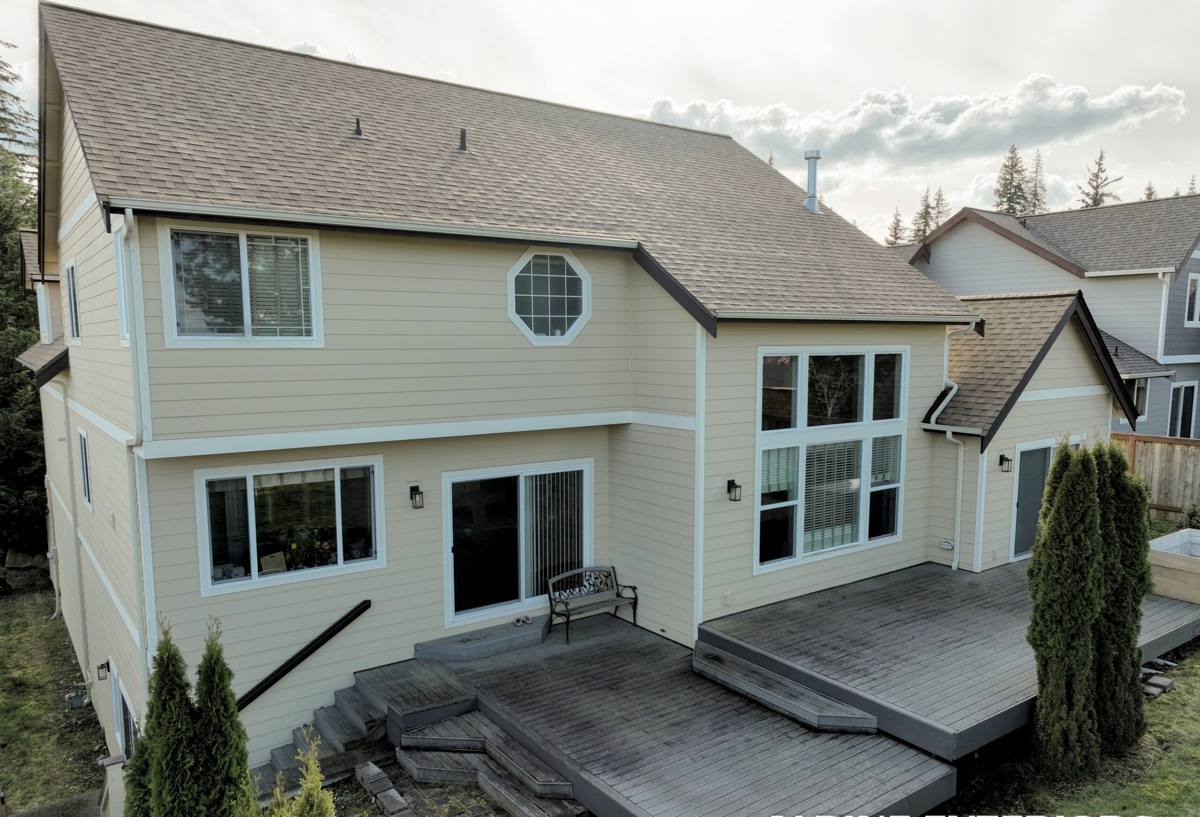
Why This Climate Is Harder on Decks Than People Expect
Florida's Gulf Coast weather is deceptively rough on outdoor structures. It's not one extreme condition — it's several working against your deck at once, all year round.
- UV exposure: Nearly year-round sun breaks down surface fibers and fades color on lower-quality boards long before the structure itself fails.
- Humidity and moisture cycling: Boards and hardware swell and contract with daily humidity swings, not just seasonal ones. Fasteners and clips that aren't rated for this cycle work loose over time.
- Wind-driven rain: Storms here don't just drop water from above — wind pushes rain sideways and up under boards, into fastener holes, and along ledger connections. Drainage and flashing details matter as much as the decking material.
- Salt air: Even away from the immediate coastline, salt-laden air moving inland accelerates corrosion on any hardware that isn't marine-grade or coated for the purpose.
- Storm wind loads: Hurricane-force gusts put real uplift and racking stress on ledger boards, joist hangers, and railing posts — connections that are often the weakest point on an older or budget-built deck.
None of this means a deck can't last decades out here. It means every decision — board selection, fastener type, framing spacing, ledger attachment — needs to be made with this specific combination of stresses in mind, not copied from a build spec meant for a drier, calmer climate.
Why Composite Makes Sense for Town 'N Country Homes
Composite decking earns its keep in this environment because it doesn't behave like wood under moisture and sun stress. It won't splinter, rot, or need annual staining, and quality composite boards hold their color and surface texture far longer than wood exposed to this much UV. That said, composite isn't a "install it and forget it forever" product — it still needs the right substructure, ventilation, and fastening approach to perform the way it's designed to.
What Correct Composite Installation Actually Involves
A proper composite deck build for this area includes:
- Pressure-treated or coated framing sized and spaced for composite board flex characteristics, not standard wood-decking spacing
- Corrosion-resistant fasteners and hidden fastener systems rated for coastal humidity and salt exposure
- Proper gapping between boards for expansion, contraction, and drainage — too tight and boards buckle in summer heat, too loose and they look sloppy and trap debris
- Ventilation underneath the deck so trapped moisture doesn't sit against framing or the underside of boards
- Ledger board attachment and flashing sized for wind uplift, not just static weight
- Railing post connections built to the same wind-resistance standard as the deck frame itself
Skip any one of these and the deck may look fine for a year or two before problems show up — boards that cup or bounce, fasteners that back out, or a railing that flexes more than it should in a strong gust.
Composite vs. Wood vs. PVC: An Honest Comparison
Every decking material has trade-offs. Here's how they stack up specifically for a Pinellas County backyard, not a generic national comparison.
| Material | UV/Fade Resistance | Moisture Behavior | Maintenance | Typical Lifespan Here |
|---|---|---|---|---|
| Pressure-treated wood | Fades and grays quickly under constant sun | Absorbs moisture, prone to cupping and rot without diligent sealing | Annual sealing/staining recommended | 10-15 years with upkeep |
| Composite | Strong resistance with quality capped boards | Doesn't absorb or rot; needs proper gapping and ventilation | Occasional washing, no sealing/staining | 25-30+ years |
| PVC/vinyl decking | Very good, though some products can look less natural | Fully moisture-resistant, no rot risk | Low, similar to composite | 25-30+ years |
We install composite for most Town 'N Country homeowners because it hits the sweet spot between real-wood appearance, low upkeep, and cost — without the sealing-and-staining treadmill that pressure-treated wood demands in this climate.
Our Process for a Composite Deck Build
1. On-Site Assessment
We look at your yard's grade, drainage path, sun exposure, and how the deck will tie into your home — ledger attachment points, door thresholds, and any existing structure that needs to be removed or reinforced first.
2. Framing Built for Wind and Moisture
We frame to handle both the static load of furniture and people and the dynamic load of wind gusts, with fastener and hardware choices selected for humidity and salt-air exposure rather than generic interior-grade hardware.
3. Board Installation with Proper Spacing
Composite boards go down with manufacturer-specified gapping for thermal movement and drainage, using hidden fastener systems where the product allows it for a clean, screw-free surface.
4. Railing and Edge Detail
Railings are anchored to the frame at the same structural standard as the deck itself — not treated as a lightweight afterthought, since railing failure under wind load is one of the more serious safety issues we see on older decks.
5. Final Walkthrough
We walk the finished deck with you, check board seating and fastener finish, and confirm drainage is working the way it should before we consider the job done.
Sizing Up an Older Deck Before You Build New
If you're replacing an existing deck rather than building from scratch, the condition of what's underneath matters. A worn top surface can hide a frame that's already compromised by years of moisture cycling and wind stress. Before quoting a composite replacement, we check:
- Ledger board condition and attachment to the house — the single most common failure point on older decks
- Joist and beam condition for soft spots, rust staining, or fastener corrosion
- Post footing depth and condition, especially on decks built before current wind-load standards were common
- Railing post connections for looseness or rot at the base
- Drainage and grading underneath the deck for standing water or poor runoff
Sometimes the frame is solid and only the surface needs replacing, which keeps costs down. Other times, reusing an old frame under new composite boards just transfers the same underlying problem to a nicer-looking deck. We'll tell you honestly which situation you're in.
What Affects Cost on a Composite Deck Project
Composite decking costs more upfront than pressure-treated wood, but the lower long-term maintenance and longer lifespan usually even that out over time. The main cost factors on a Town 'N Country project are:
| Factor | Why It Matters |
|---|---|
| Deck size and shape | Complex angles, multiple levels, or curves add labor and material waste |
| Board tier and brand | Capped composite boards cost more than uncapped but resist staining and fading better in constant sun |
| Existing structure condition | Frame repair or full replacement adds cost versus resurfacing a sound frame |
| Railing style | Composite, aluminum, or cable railing systems vary significantly in price |
| Site access and grading | Sloped yards, tight access, or drainage corrections add labor |
| Permitting requirements | Deck height, attachment to the house, and railing height can all trigger permit and inspection requirements |
We'll walk through actual numbers for your specific yard and board selection during an in-person estimate rather than quoting from a table — every deck footprint is different.
Why Local Experience in Town 'N Country Matters
A crew that already works in and around Oldsmar and Pinellas County knows the wind-load expectations local inspectors look for, the drainage issues common to this area's soil and grading, and how fast UV and humidity actually age a deck here versus a cooler, drier region. That's not something you get from a national franchise following a one-size-fits-all install manual. It shows up in the small decisions — fastener spacing, ledger flashing, board gap width — that determine whether your deck is still tight and solid in year fifteen or already showing problems in year five.
We treat every composite deck build the same way: framed for real Gulf Coast wind and moisture conditions, fastened with hardware that won't corrode out from under the boards, and finished so it looks good and stays that way with minimal upkeep on your part.
Get a Straight Answer on Your Deck Project
If you're weighing a new composite deck or wondering whether your current deck's frame is still sound, we're happy to take a look and give you an honest read — no pressure, no upsell. Fill out the form below for a free estimate on your Town 'N Country composite decking project.