 Oldsmar Siding
 Siding Built for an Eastlake Woodlands Lot, Not Just an Oldsmar Address
Eastlake Woodlands sits inland from the open water that gets most of the attention in Pinellas County storm talk, but that doesn't mean the exterior of your home has it easy. This is a mature, tree-canopied golf course community, and that canopy changes the equation for siding in ways a bare, sun-blasted lot doesn't face. Shade slows down drying time after rain. Moss and mildew have more places to take hold. Wind funnels differently through established landscaping than it does across an open field. Any siding installation here has to account for those conditions specifically, not just the general Tampa Bay climate.
We install siding across Oldsmar and the surrounding Pinellas County communities, and Eastlake Woodlands is one of the neighborhoods we return to regularly. That matters more than it sounds like it should — a crew that has worked a dozen homes in the same streets knows the tree cover, the moisture patterns, and often the HOA expectations before they ever pull into the driveway.
What This Climate Actually Does to Siding
Florida's Gulf Coast climate is hard on exterior building materials in a few distinct ways, and Eastlake Woodlands feels most of them:
- Wind-driven rain: Tropical systems and seasonal storms don't just drop rain straight down — they push it sideways, into seams, laps, and trim joints that never see water in a normal shower.
- Hurricane-force wind loads: Even homes well inland from the coast are rated for real wind pressure. Siding that isn't fastened and flashed to spec becomes the first thing to fail, not the last.
- Intense, near year-round UV: Sun exposure breaks down paint film, pigment, and some substrate materials faster here than almost anywhere else in the country.
- Salt-laden air: Even at a distance from open water, humid coastal air carries salt that accelerates corrosion of fasteners and metal trim, and speeds up general material fatigue.
- Shade and moisture retention: The mature tree canopy that makes Eastlake Woodlands attractive also keeps siding wetter, longer, after every rain event — ideal conditions for mildew and algae growth if the material and installation don't account for it.
None of these factors are unique to this one neighborhood, but the combination of heavy shade with everything else on this list is what separates an Eastlake Woodlands install from a job on an open lot a mile away.
Why Tree Canopy Changes the Job
Slower drying, more biological growth
Direct sun is actually one of the best things that happens to siding after a rain — it dries the surface fast and keeps mold and algae from establishing. Under heavy canopy, siding can stay damp for hours longer after every storm. Over years, that difference shows up as streaking, dark staining, and softer, more porous surfaces on materials that weren't engineered to handle sustained moisture exposure.
Debris and physical wear
Falling limbs, pine needles, and general yard debris accumulate against siding and trim in ways that don't happen on cleared lots. Small impacts matter less to a dense fiber cement product than they do to a hollow vinyl panel, and that's a real practical difference in a neighborhood like this one.
Reduced air movement
Landscaping that provides privacy and shade also reduces the airflow across exterior walls. Less airflow means slower evaporation and, again, more time for moisture to sit against a wall assembly. Correct water-management detailing behind the siding — not just the siding material itself — becomes more important, not less, on a shaded lot.
What a Correct Installation Actually Involves
Siding failures in this climate are rarely about the visible panel itself. They're almost always about what's underneath it, or how it was fastened, flashed, and gapped. A correct installation includes:
- A continuous, properly lapped weather-resistive barrier behind the siding, with all penetrations sealed
- Correct flashing at every window, door, and roofline transition, directing water out and away from the wall assembly
- Fastener spacing, type, and embedment that meet the manufacturer's specification for the local wind zone
- Proper clearance between the bottom of the siding and grade, roofing, decks, and patios
- Caulked and sealed joints at trim and corners, using products rated for the material and exposure
- Field-cut panel edges primed or sealed before installation, not left raw
Skip any one of these steps and the siding can look fine for a year or two while water is already working its way behind it. This is the part of the job that separates a crew that's rushing through a schedule from one that's installing to the manufacturer's actual instructions.
Old Siding vs. a Correct Modern Installation
| Detail | Common Shortcut / Old Installation | Correct Installation |
|---|---|---|
| Weather barrier | Missing, torn, or poorly lapped | Continuous, correctly lapped, penetrations sealed |
| Fasteners | Wrong length, spacing, or material — prone to corrosion | Corrosion-resistant, correct spacing and embedment per spec |
| Flashing | Absent or reused from prior siding | New, integrated flashing at every penetration and transition |
| Ground clearance | Siding buried against soil, mulch, or hardscape | Manufacturer-specified clearance maintained |
| Cut edges | Left unsealed, exposed to moisture | Primed or factory-sealed before install |
Why We Only Install James Hardie Fiber Cement
We made a decision as a company to install one siding system: James Hardie fiber cement. We don't offer vinyl, LP SmartSide, or other fiber cement brands, and that's a deliberate standard, not a lack of options.
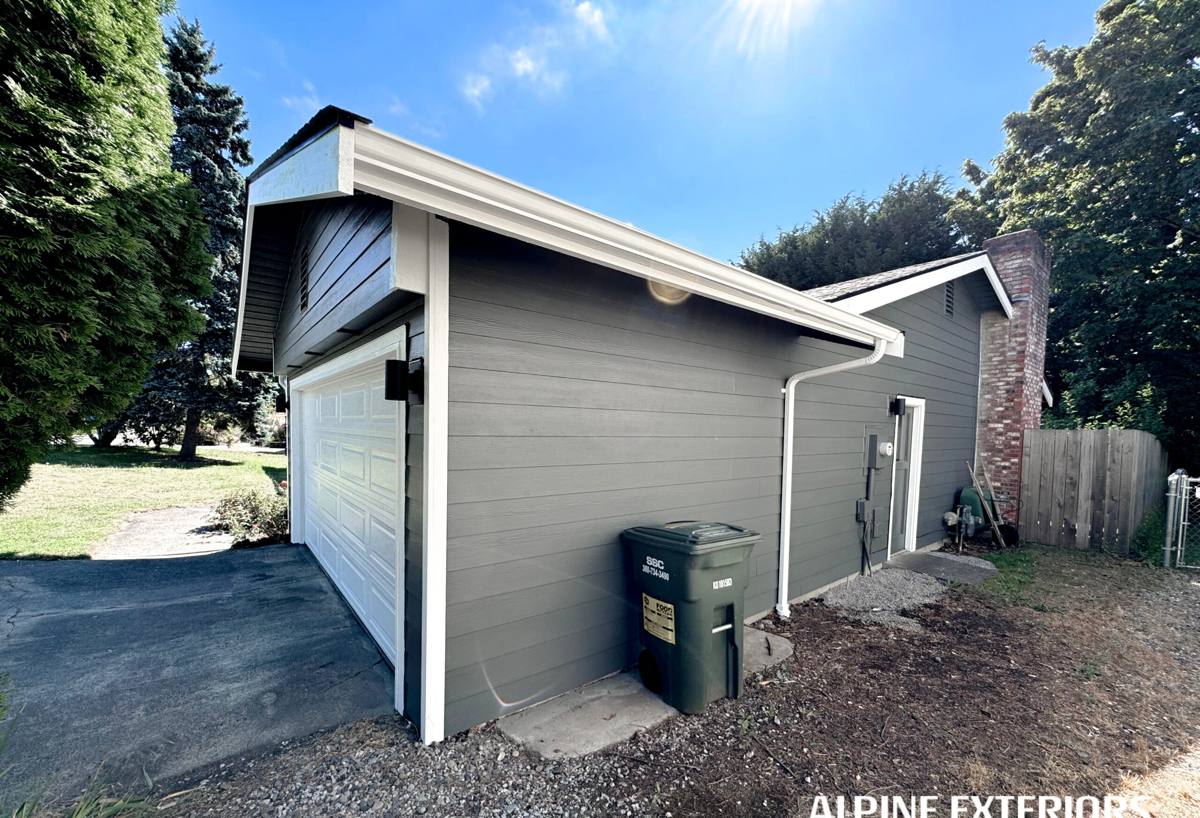
Fiber cement handles the specific combination of conditions in a neighborhood like Eastlake Woodlands better than the alternatives we chose not to carry. It's non-combustible, which matters in a state where wildfire and lightning-driven brush fires are a real if secondary risk. It doesn't soften, warp, or become brittle under sustained heat and UV the way some engineered wood and vinyl products can. James Hardie's HZ5 product line is specifically engineered for hot, humid climates like ours, with formulation aimed at resisting moisture-related damage. The factory-applied ColorPlus finish is baked on under controlled conditions and backed by a real finish warranty — a meaningful advantage in a shaded lot where field-painted surfaces take longer to cure and are more exposed to mildew before that cure is complete.
None of that makes fiber cement maintenance-free, and we won't tell a homeowner it is. It's heavier and more labor-intensive to install correctly than vinyl, which is exactly why installation quality matters as much as the material choice. But for a shaded, storm-exposed Pinellas County lot, it's the product we're willing to put our name behind.
Working With Your HOA and Architectural Guidelines
Established golf course communities like Eastlake Woodlands typically have architectural review requirements for exterior changes, including siding color and style. We factor that into the process from the estimate forward — reviewing color and profile options that are likely to fit neighborhood standards, and giving homeowners paperwork and product documentation in a format that's easy to submit for approval. We don't handle the HOA submission on your behalf, but we won't leave you guessing what to hand them either.
Choosing a Color and Profile That Fits the Neighborhood
James Hardie's ColorPlus palette and lap, shingle, and panel profiles give homeowners real range without stepping outside what a mature, established community expects to see. A few practical notes specific to a shaded lot:
- Darker colors show pollen, dust, and mildew streaking less noticeably than very light colors under heavy tree cover
- Matte, factory-applied finishes hold up better under filtered light and humidity than field-applied paint
- Traditional lap profiles remain the most common fit for the architectural style found throughout this type of community
Our Installation Process
- On-site evaluation: We walk the exterior, check for existing moisture damage, note tree cover and drainage patterns specific to your lot, and measure for material.
- Written estimate: A clear, itemized proposal covering material, labor, tear-off, and any repairs to sheathing or framing found underneath the old siding.
- Tear-off and inspection: Removing the old siding lets us actually see the wall assembly — this is when hidden moisture damage from prior water intrusion gets found and addressed, not covered over.
- Weather barrier and flashing: Installed fresh, correctly lapped and sealed, before a single piece of siding goes up.
- James Hardie installation: Fastened, gapped, and sealed to manufacturer specification for our wind zone.
- Final walkthrough: We go over the finished work with you directly before calling the job done.
Signs Your Current Siding Needs Attention
In a shaded, humid neighborhood, siding problems often show up as surface symptoms well before there's structural damage underneath. Watch for:
- Persistent dark streaking or green/black staining that pressure washing doesn't fully remove
- Soft spots, bubbling, or visible warping, especially near the ground or under roof valleys
- Cracked or missing caulk at trim, corners, and window edges
- Paint that's peeling or chalking heavily on one side of the house more than the others
- Any musty smell or visible staining on interior walls that back up to exterior siding
Why a Crew That Works This Neighborhood Matters
A siding contractor who's installed on several homes in Eastlake Woodlands already understands the tree canopy density, the typical home styles and eras, and the kind of architectural review most homeowners here go through. That familiarity shows up in fewer surprises during tear-off, more realistic estimates up front, and a smoother approval process if your HOA requires one. It's a small thing on paper, but it saves real time and avoids the guesswork that comes with a crew seeing this type of lot for the first time.
If your siding is showing wear, or you're planning ahead for a replacement before it becomes an emergency after storm season, we're happy to take a look. Reach out for a free, no-pressure estimate — we'll walk your property, tell you honestly what we see, and explain what a correct James Hardie installation would involve for your specific lot.