 Oldsmar Siding
 Custom Decks Built for Feather Sound's Conditions
Feather Sound sits in the Oldsmar area of Pinellas County, close enough to Old Tampa Bay that salt-laden air, humidity, and open exposure to wind are part of daily life for homes here. A deck that looks right on installation day but wasn't built with those conditions in mind will show it within a few seasons — soft spots in the framing, rusted fasteners bleeding through the boards, railings that loosen, finishes that fade and chalk. We build custom decks specifically for what this part of the county throws at them, not a generic spec pulled from a catalog.
This page covers what actually matters for a Feather Sound deck project: the climate factors driving our material and hardware choices, what correct construction looks like below the surface where you can't see it, the code and permitting realities in Pinellas County, and how we run the job from first conversation to final walkthrough.
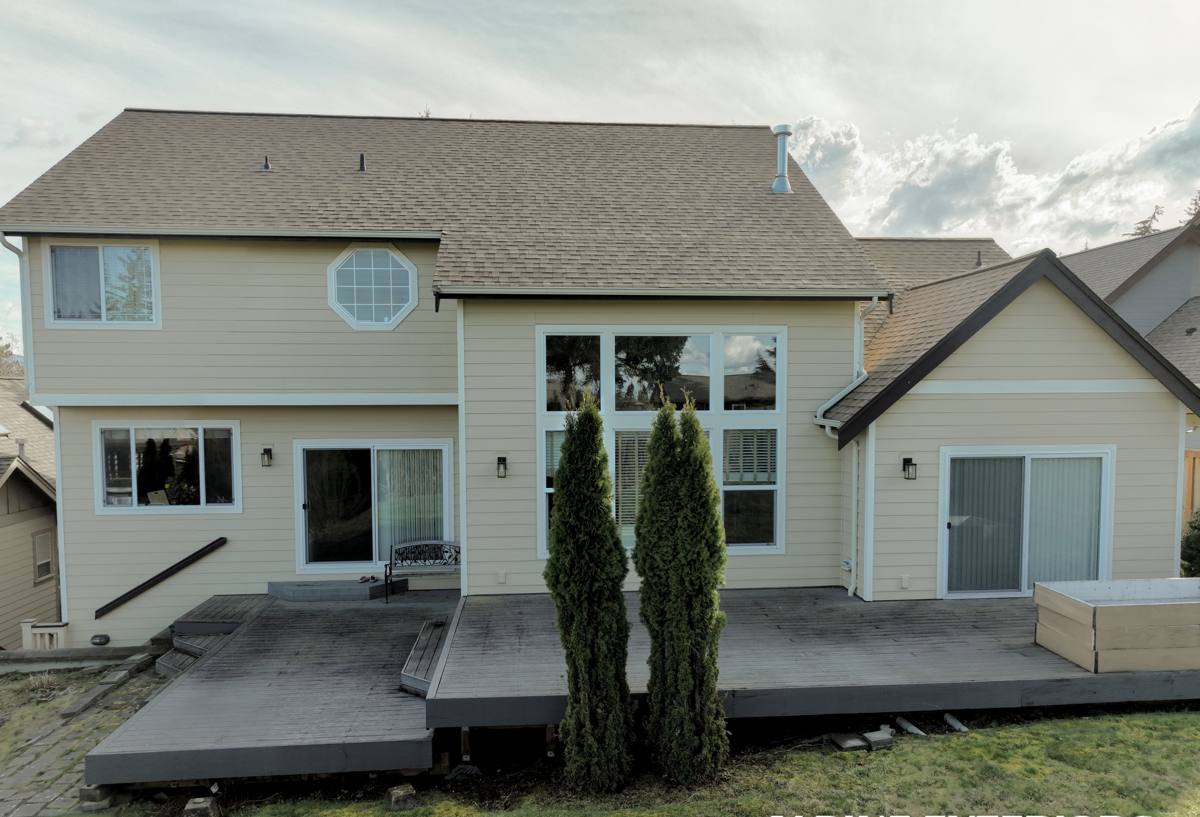
What Feather Sound Homes Are Actually Up Against
Florida's Gulf Coast doesn't have a mild season for outdoor structures. A deck in this area deals with several stresses at once, and each one attacks a different part of the build.
Salt Air and Humidity
Proximity to Old Tampa Bay means airborne salt travels further inland than most homeowners expect, accelerating corrosion on any exposed metal — fasteners, joist hangers, railing brackets, and screws. Combined with year-round humidity, this also means wood framing that isn't properly treated and ventilated stays damp longer, inviting rot and wood-boring insects.
Intense, Constant UV
Central Florida sun is stronger and more consistent than in most of the country. UV breaks down wood fibers, dries out natural oils in lumber, and fades or chalks composite and PVC surfaces that aren't rated for it. A deck here spends far more annual hours under direct sun exposure than the national averages most manufacturer warranties are written against.
Wind-Driven Rain
Storms in this region rarely fall straight down — wind pushes rain sideways and up under structures, into ledger connections, and behind fascia boards. Flashing and drainage details that would be optional in a drier climate are not optional here.
Hurricane-Force Wind Loads
Pinellas County building code reflects the real risk of tropical storm and hurricane wind events. Decks, especially elevated ones or those attached to the house, need connections engineered for uplift and lateral loads, not just the vertical weight of people and furniture.
Choosing the Right Decking Material for This Area
There's no single "best" decking material — the right choice depends on how much maintenance a homeowner wants to do, budget, and how the deck will be used. Here's how the common options actually perform under Feather Sound conditions.
| Material | How It Handles This Climate | Maintenance | Typical Lifespan Here |
|---|---|---|---|
| Pressure-treated pine | Affordable, strong, but needs consistent sealing to resist humidity and UV drying; prone to splitting and fastener corrosion if hardware isn't matched to the chemical treatment | Sealing every 1–2 years | 10–15 years with upkeep |
| Composite decking | Resists rot and insects well; quality matters — lower-grade composite can fade or absorb moisture at cut edges in constant humidity | Periodic cleaning, no sealing | 20–25+ years |
| PVC / capped polymer | Fully resists moisture absorption and salt exposure; handles constant UV with minimal fading when properly rated | Occasional cleaning | 25+ years |
| Tropical hardwoods (ipe, cumaru) | Naturally dense and rot-resistant, but requires oiling to prevent graying and surface checking under intense sun | Oiling 1–2 times per year | 20-30 years with upkeep |
We'll walk through these trade-offs honestly during your estimate — including what each one actually costs to own over ten years, not just to install.
Fasteners and Hardware Matter as Much as the Decking
A beautiful deck surface with the wrong fasteners underneath is a warranty claim waiting to happen. Standard treated lumber contains chemicals that corrode ordinary galvanized hardware faster in humid, salt-influenced air. We use hot-dip galvanized or stainless-steel-rated connectors and fasteners sized for coastal-adjacent exposure, matched to whatever decking and framing material we're installing.
What Correct Construction Looks Like Below the Surface
The decking boards are the least of what determines whether a deck lasts. Most deck failures we get called to inspect trace back to the structure underneath, not the surface material.
Ledger Attachment and Flashing
Where a deck attaches to the house, that ledger board and its flashing are the single most important detail on the entire structure. Done wrong, wind-driven rain works its way behind the flashing and rots the house's rim joist from the inside — a much more expensive problem than a bad deck board. We flash every ledger connection to shed water away from the structure, not just seal it and hope.
Footings and Post Bases
Footing depth and post connections need to account for both soil conditions and wind uplift, not just static weight. Post bases should sit above grade and off standing water, with connections rated for the uplift forces our wind zone requires.
Joist Spacing and Hardware
Tighter joist spacing than the minimum code allows makes for a stiffer, quieter deck surface and reduces long-term board movement — cheap insurance against squeaks and sag down the road.
Ventilation Underneath
Low-clearance or fully enclosed deck undersides trap humidity against framing. We build in ventilation gaps so air can move underneath, which matters more here than in drier climates where that detail gets skipped without consequence.
Permits, Codes, and Wind Load in Pinellas County
Custom decks in Pinellas County require a building permit in the vast majority of cases, along with plans that show footing sizes, ledger attachment, and structural connections sized to the applicable wind speed for the area. This isn't paperwork for its own sake — it's the mechanism that keeps a deck attached to the house during a real storm event instead of becoming debris.
We pull the required permits, handle inspections at each stage, and build to the wind and structural requirements that apply in this jurisdiction — not a generic national minimum. If your property is near enough to the water to fall under additional flood or elevation considerations, we'll flag that during the design conversation rather than after the footings are poured.
Railings, Stairs, and the Safety Details Code Requires
Railing height, baluster spacing, and stair riser/tread dimensions are all governed by code, and they're also the details most likely to get value-engineered away on a cut-rate job. We build these to spec every time:
- Guardrails at the required height wherever the deck surface is elevated above the code threshold
- Baluster spacing tight enough that a small child cannot pass through
- Stair stringers sized and supported for the actual run, not stretched beyond safe spacing
- Handrails on stairs where required, graspable and properly terminated
- Post-to-rim connections strong enough to resist a lateral push, not just screwed to decking boards
These aren't upsells — they're the difference between a deck that passes inspection and stays safe for years, and one that becomes a liability the first time it's used for a gathering.
Our Process, Start to Finish
Every custom deck we build follows the same sequence, whether it's a simple rear platform or a multi-level design:
- On-site consultation — we look at your yard, house structure, sun and drainage patterns, and how you actually want to use the space.
- Design and material selection — we walk through decking, railing, and structural options with honest trade-offs, not a hard sell toward the highest-margin product.
- Engineering and permitting — plans sized to Pinellas County wind and structural requirements, permit submitted and tracked by us.
- Framing and structural inspection — footings, posts, ledger flashing, and framing built and inspected before any decking goes down.
- Decking, railings, and finish work — surface material, railings, stairs, and any lighting or fascia details installed to spec.
- Final inspection and walkthrough — we confirm everything passes and walk the finished deck with you before calling the job done.
Maintenance Checklist for Feather Sound Deck Owners
Even a well-built deck needs some ongoing attention in this climate. A simple seasonal routine catches small problems before they become expensive ones:
- Inspect fasteners and hardware for rust or corrosion at least once a year
- Check ledger flashing and the point where the deck meets the house for signs of water staining
- Clear leaves and debris from between boards and off footings to prevent trapped moisture
- Reseal or re-oil wood decking on the schedule appropriate to that material
- Wash composite or PVC surfaces periodically to remove salt residue and airborne grime
- Check railings and posts for movement or looseness, especially after storm season
- Confirm under-deck ventilation gaps haven't been blocked by landscaping or storage
Why Hiring a Crew That Already Works Feather Sound Matters
A deck built to a generic national spec is a deck built for the wrong climate. Crews who don't regularly work Gulf Coast Florida projects can miss the fastener corrosion issue until a homeowner calls about rust streaks two summers in. They can under-flash a ledger because it "usually" doesn't rain sideways where they learned the trade. They can spec a footing depth that meets a minimum code number without accounting for how local wind and soil actually behave together.
We already know the Pinellas County permitting process, the wind requirements that apply to Feather Sound properties, and which material and hardware combinations actually hold up against salt air and constant UV rather than just surviving the first year's photos. That local knowledge shows up in decisions you never have to think about — because we already made the right call before the framing went up.
If you're planning a new deck or replacing one that didn't hold up, we're happy to take a look and talk through honest options for your property. Reach out for a free, no-pressure estimate — use the form below to get started.