 Oldsmar Siding
 Safety Harbor sits right on Old Tampa Bay, and that waterfront position means storms don't arrive the same way they do a few miles inland. Wind that's already picked up speed crossing open water hits these roofs with less to slow it down first, and the same water that makes the town's setting appealing also means wind-driven rain gets pushed sideways into roof systems that a purely inland home would rarely see at that intensity. After a storm passes, the question homeowners here actually need answered isn't just "is there damage" — it's whether that damage is cosmetic, structural, or somewhere in between, and what actually needs to happen to fix it correctly instead of just patching what's visible.
Why Storms Hit Safety Harbor Roofs Differently
Pinellas County as a whole deals with hurricane-force wind events, intense year-round UV, and salt air, but a waterfront community like Safety Harbor gets a concentrated version of all three. Wind coming off Tampa Bay doesn't have the tree lines and inland terrain that break up gusts a few miles from the water, so roofs here see higher sustained wind loads and more uplift pressure at edges, ridges, and corners during a storm. Wind-driven rain follows the same pattern — instead of falling straight down, it's driven at an angle into fascia, soffits, and any gap in flashing or shingle seal that a calmer rain would never find. Add in salt air working on fasteners and metal flashing between storms, and UV breaking down shingle asphalt and sealant strips through the rest of the year, and you get a roof that's under more constant stress than one further from the bay, even on days when nothing dramatic is happening.
Where the Damage Actually Starts
Storm damage on a Safety Harbor roof rarely starts in the middle of a roof plane. It starts at the edges — the ridge line, the rake edges, the eaves, and anywhere flashing meets a wall, chimney, or vent. Those are the spots where wind gets underneath a shingle or panel first, and where wind-driven rain finds its way past a seal that's already been weakened by sun and salt exposure over time. A roof can look intact from the ground after a storm and still have real damage starting at exactly these points.
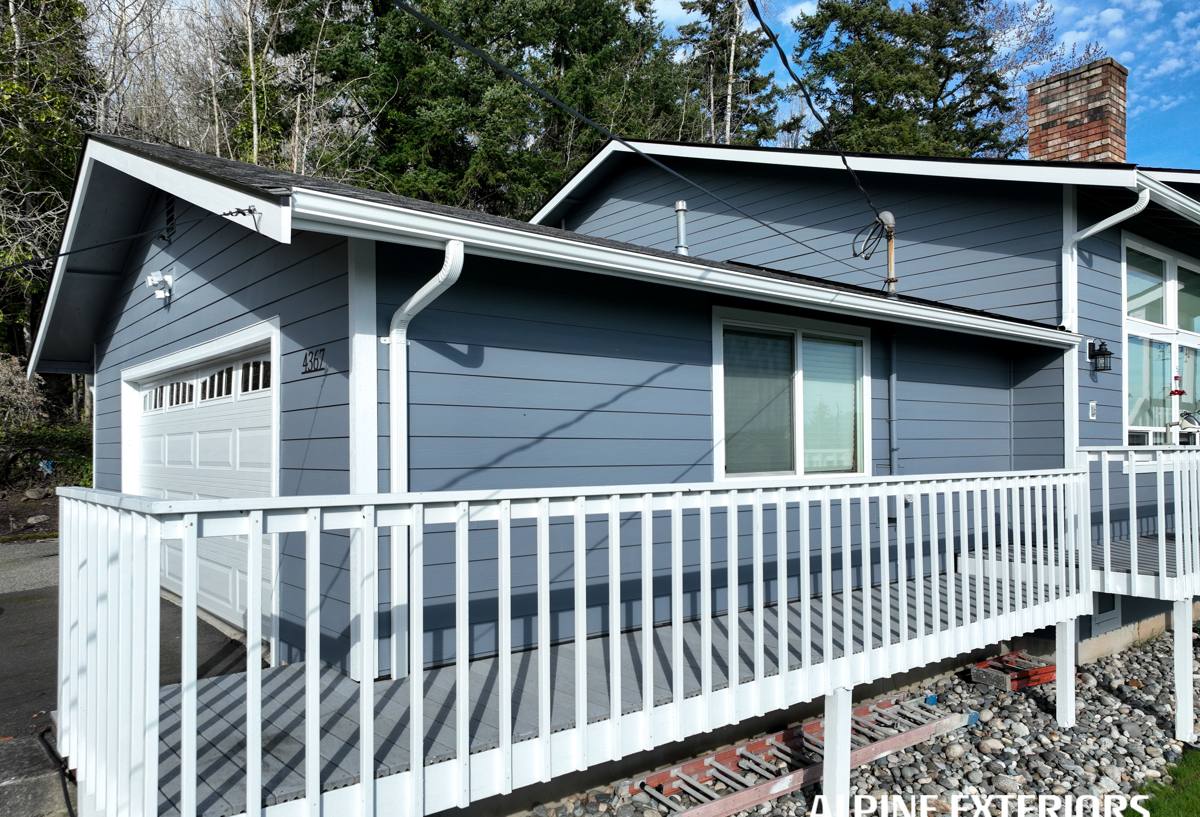
What Storm Damage Actually Looks Like on a Roof
Storm damage isn't always a hole or a missing section. Most of what we find after a wind or rain event in this area falls into a handful of categories, and some of them aren't visible without getting on the roof or into the attic.
- Wind uplift and creased shingles — shingles that got lifted and reset, leaving a crease that breaks the seal even though the shingle is still in place
- Missing or torn shingles and panels — the obvious damage, usually concentrated at edges, ridges, and corners
- Granule loss — impact from wind-blown debris or heavy rain that strips the protective granule layer off asphalt shingles, accelerating UV breakdown underneath
- Flashing separation — around chimneys, vents, and roof-to-wall transitions, where wind and repeated flexing work fasteners and sealant loose
- Soffit and fascia damage — wind-driven rain forced up under eaves, or wind pressure that pulls fascia boards away from the roof edge
- Saturated decking — water that made it past the shingle layer and soaked into the wood deck below, which won't show from the ground but affects everything installed on top of it
- Debris impact — dents, punctures, or cracked material from branches or wind-blown objects during the storm
Common Storm Damage Situations We See in Safety Harbor
Every roof and every storm is different, but a few patterns show up often enough on Safety Harbor homes that they're worth calling out specifically.
- Ridge and hip shingles lifted or torn loose after a wind event, even when the rest of the roof field looks fine
- Wind-driven rain intrusion around chimney and skylight flashing that wasn't leaking before the storm
- Soffit panels pulled loose or fascia separated on the side of the house facing the bay or open exposure
- Older roofs where storm damage exposes sealant and flashing that were already near the end of their service life from UV and salt exposure
- Localized hail bruising on asphalt shingles that isn't visible from the ground but shows up on a close inspection
- Water staining on interior ceilings that shows up days after a storm, once saturated decking finally works its way through
What a Correct Storm Damage Repair Involves
A Real Inspection, Not a Guess From the Ground
A proper storm damage assessment means getting on the roof and, when there's any sign of water intrusion, checking the attic too. Damage at the edges, around penetrations, and underneath the shingle surface doesn't show up in a drive-by look or a photo taken from the driveway. We document what we find with photos before any repair work starts, which matters both for doing the job right and for any insurance claim that follows.
Emergency Mitigation First
If a roof has active exposure — missing shingles, a torn section, or exposed decking — that gets covered before anything else happens. A tarp or temporary dry-in that actually holds under continued wind and rain stops the damage from spreading while the rest of the repair gets planned and materials get sourced.
Fixing the Cause, Not Just the Symptom
Replacing a few visible shingles without addressing the flashing or decking underneath them is a patch, not a repair. If wind pulled shingles loose because the original nailing pattern or sealant strip had already failed, replacing shingles without correcting that leaves the same spot vulnerable to the next storm. We repair what actually failed — deck, underlayment, flashing, or shingle — rather than covering the visible part and leaving the underlying cause in place.
Matching Materials Correctly
Shingle and panel colors and profiles change over time, and manufacturers periodically discontinue lines. We match as closely as the current market allows and are upfront when an exact match isn't possible, rather than installing something that will stand out or behave differently than the surrounding roof.
Our Process, Start to Finish
- Initial contact and mitigation — if there's active exposure, we prioritize getting the roof covered and dry first
- On-roof and attic inspection — a full look at the damage, documented with photos, including areas that aren't visible from the ground
- Honest scope assessment — repair versus replacement, explained with the reasoning, not just a number
- Documentation for insurance — if you're filing a claim, we provide the inspection findings and photos you'll need
- Material sourcing and scheduling — matching existing materials where possible and setting a realistic timeline
- Repair work — deck, underlayment, flashing, and shingle or panel work completed to match the rest of the roof system
- Final walkthrough — reviewing the completed repair with you before we consider the job done
Insurance Claims and Documentation, Handled Honestly
Storm damage repairs often involve an insurance claim, and how that gets documented matters. We inspect and report what we actually find — storm-caused damage clearly identified as such, and pre-existing wear or age-related deterioration identified as that instead. Inflating a claim or labeling routine wear as storm damage isn't something we do; it creates problems with the claim and can create bigger problems for you down the line. If an adjuster needs to walk the roof with us or review our documentation, we make that straightforward. Our job is to give you an accurate picture so you and your insurer can make an informed decision, not to tell you what you want to hear.
Repair vs. Replacement: What Actually Drives the Decision
Not every storm-damaged roof needs to be replaced, and not every roof can be adequately repaired. The right call depends on a few factors that we walk through with you directly rather than defaulting to the more expensive option.
| Factor | How It Affects the Decision |
|---|---|
| Extent of the damage | Isolated damage to a section is usually repairable; widespread damage across multiple planes often isn't cost-effective to patch piecemeal |
| Roof age | An older roof already near the end of its service life may not be worth extensive repair if replacement is close on the horizon anyway |
| Decking condition | Saturated or rotted decking found during repair changes the scope, since compromised decking has to be replaced before anything goes back on top |
| Material availability | If the existing shingle or panel line is discontinued, a close match may still be possible, but an exact match may not be |
| Insurance coverage | What your policy covers, and whether the damage meets your insurer's threshold, factors into the practical decision alongside the roof's condition |
Quick Checklist Before You Hire Anyone After a Storm
- Confirm they'll physically inspect the roof and attic, not just estimate from photos or a drive-by
- Ask for photo documentation of the damage they find, before repairs begin
- Get a written scope that distinguishes repair from replacement and explains why
- Ask directly whether they'll identify pre-existing wear separately from storm damage on any insurance paperwork
- Confirm they'll match existing materials as closely as possible, and tell you upfront if an exact match isn't available
- Check that mitigation (tarping, temporary dry-in) is part of their response if your roof has active exposure
Why Hiring a Crew That Works Safety Harbor Matters
After any significant storm, out-of-area crews and door-to-door solicitors show up in coastal Pinellas County neighborhoods looking for quick work, and Safety Harbor is no exception. Some are legitimate; a lot aren't around to stand behind the work once the immediate rush is over. A crew that works this part of the bay regularly knows how wind off the water tends to concentrate damage at ridges and edges here, understands the wind and flashing requirements that apply under Pinellas County code, and isn't guessing at how a particular roof type or exposure holds up over multiple storm seasons. That local familiarity shows up in the details — where to expect hidden damage, how to detail flashing so it holds up to the next round of wind-driven rain, and what actually needs replacing versus what can be repaired correctly.
It also matters that we'll still be here after the immediate storm response is over — for the follow-up, for any warranty question, and for the next time salt air and UV work on this roof between storms.
Ready for a Straightforward Assessment
If your Safety Harbor roof has visible damage, a suspected leak, or you just want an honest look after a recent storm, we offer free, no-pressure estimates. Use the form below to get an inspection scheduled and find out exactly what your roof needs, with no obligation attached.