 Oldsmar Siding
 Deck Repair Built for Dunedin's Climate, Not Just Its Looks
Dunedin sits close enough to Oldsmar that our crews are already in the area on a regular basis, and the decks we inspect there share the same problems we see across Pinellas County: sun-bleached and splitting wood, soft spots near the house, rusted fasteners, and railings that wiggle more than they should. A deck here isn't just outdoor furniture — it's a structure exposed to some of the harshest conditions a piece of residential construction can face in the continental U.S. Repairing it correctly means understanding why it failed in the first place, not just patching what's visible.
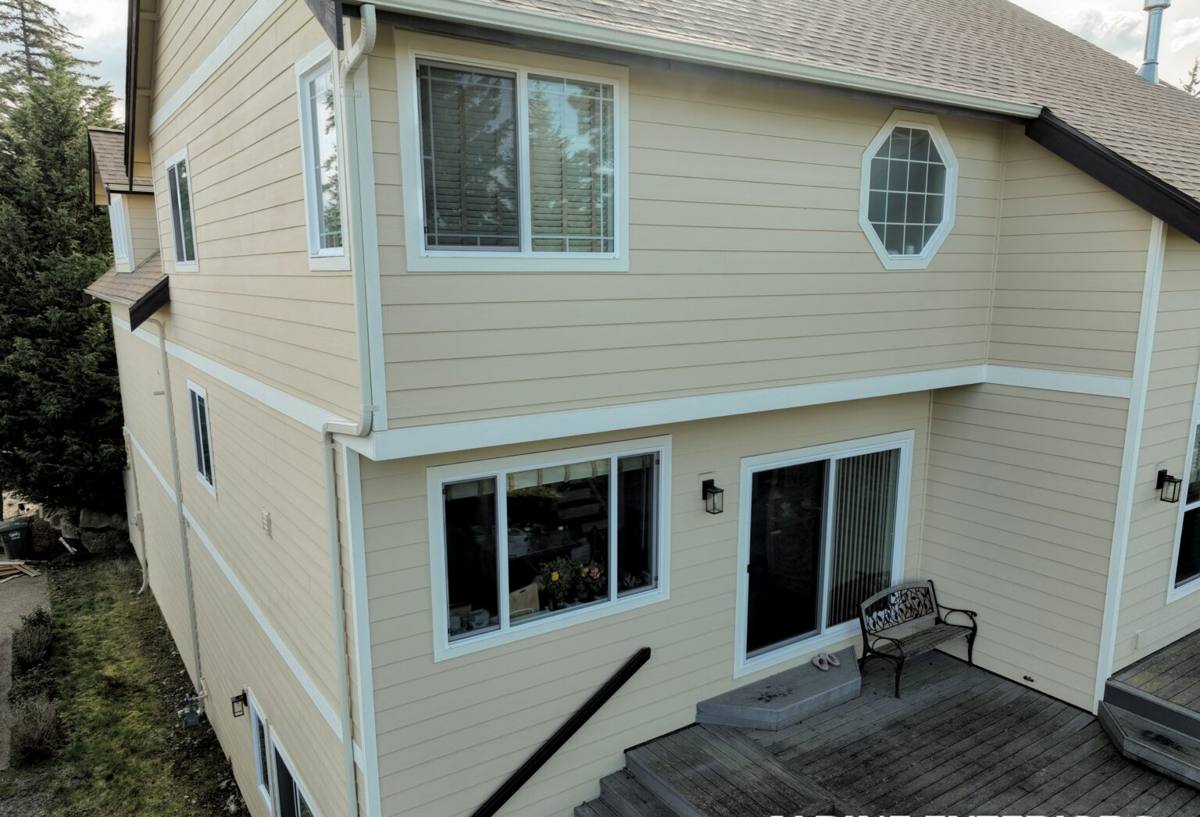
Why Decks in This Area Break Down Faster Than You'd Expect
Four things work on a Dunedin or Oldsmar deck every single day, whether anyone notices or not:
- Intense, year-round UV exposure — Florida sun breaks down the lignin in wood fibers and dries out the plasticizers in composite decking and vinyl railing, leading to fading, splintering, and brittleness long before a similar deck would show wear farther north.
- Wind-driven rain — Storms here rarely fall straight down. Rain gets pushed sideways into ledger boards, under railing posts, and into fastener holes, then sits there because it has nowhere to drain.
- Salt air — Even away from the immediate coastline, Pinellas County's proximity to Tampa Bay and the Gulf means airborne salt accelerates corrosion on screws, joist hangers, and structural brackets — often invisibly, from the inside out.
- Hurricane-force wind loads — A deck attached to a house has to transfer real force back into that house during a storm. Loose ledger connections, undersized post bases, or rotted framing turn a minor storm event into a major failure point.
None of these forces act alone. A fastener weakened by salt corrosion fails faster under wind load. Wood softened by trapped rainwater degrades faster under UV. That's why deck problems in this part of Florida tend to compound rather than stay isolated.
What We Actually Find When We Inspect Dunedin-Area Decks
Wood Decks
Pressure-treated pine is common in this region because it's affordable and locally available, but it needs consistent maintenance to earn its keep in this climate. We regularly find checking and splitting on top surfaces, soft or spongy boards near planters or low-drainage areas, and rot at the ledger board where the deck meets the house — usually because flashing was missing or installed incorrectly from the start.
Composite Decking
Composite holds up better against rot, but it isn't maintenance-free in this climate. We see fading and color inconsistency from sustained UV exposure, boards that have expanded and contracted enough to pop fasteners loose, and — on older or lower-grade composite — moisture wicking in at cut ends that weren't properly capped or sealed during the original install.
Railings, Posts, and Fasteners
This is where we most often find the safety issues homeowners didn't know they had. Wobbly railing posts, rusted-through joist hangers, and corroded lag bolts are common, and they're rarely visible from a casual walk across the deck. A railing can look fine right up until it's leaned on.
What a Correct Deck Repair Actually Involves
A repair that only replaces what's visibly damaged on the surface often leaves the underlying cause untouched — which means the same failure comes back in a year or two. Our approach treats the deck as a structural system:
- Identify the source of moisture or stress, not just the symptom (a soft board is often a drainage or flashing problem, not just a bad board).
- Check structural connections — ledger attachment, post bases, joist hangers, and beam bearing — since these carry the load during storms.
- Replace deteriorated framing and decking with materials rated for ground contact or exterior exposure as appropriate, never a lesser grade to save cost on a hidden component.
- Correct the original defect where one exists, such as missing flashing, undersized fasteners, or inadequate drainage slope.
- Re-secure and re-level railings and stairs, since these are the components most tied to everyday safety.
Repair or Replace? How We Help You Decide
Not every deck problem calls for a full rebuild, and not every deck is worth patching. We walk homeowners through the real trade-offs rather than defaulting to the more expensive option:
| Factor | Favors Repair | Favors Replacement |
|---|---|---|
| Structural framing | Solid, dry, no rot at ledger or beams | Rot or soft spots at multiple structural points |
| Age of decking surface | Under roughly 10-12 years, isolated damage | Widespread cracking, warping, or fastener failure |
| Fasteners & hardware | Hardware sound, corrosion limited | Rust throughout connectors and fasteners |
| Cause of damage | Localized (one leak, one impact) | Systemic (poor original drainage or flashing) |
| Budget goal | Extend usable life a few more years | Long-term, lower-maintenance solution |
We'll always tell you honestly when a repair is the smarter call — and when putting more money into an aging structure just delays a replacement you'll need anyway.
Our Deck Repair Process
Every job starts with a hands-on inspection, not a guess from the driveway. We check for soft spots by walking and probing the decking, examine ledger board attachment and flashing, inspect joist hangers and post bases for corrosion, and test railing stability by hand. From there:
- We give you a clear, written scope of what needs repair and why — including photos of anything hidden, like framing issues under the decking.
- We remove and replace only the compromised material, matching board profiles and fastener patterns so repairs blend in rather than standing out as patchwork.
- We correct the root cause (drainage, flashing, undersized hardware) wherever that's what caused the original failure.
- We use fasteners and connectors rated for coastal and high-moisture exposure, since standard hardware corrodes faster in this environment.
- We do a final walk-through with you before calling the job done, so you know exactly what was fixed and what to keep an eye on going forward.
Materials We Use and Why
For structural framing repairs, we use pressure-treated lumber rated for ground contact where appropriate, since standard-grade treated lumber isn't always adequate for framing exposed to sustained moisture. For fasteners and structural connectors, we favor stainless steel or heavy hot-dip galvanized hardware over standard coated screws — the difference in corrosion resistance matters more here than in drier, inland climates. For decking surfaces, we'll work with wood or composite depending on your budget and maintenance preference, and we're upfront about the trade-offs: wood costs less upfront but needs regular sealing and inspection, while composite costs more initially but resists rot and reduces long-term upkeep. We don't push a single product as a one-size-fits-all answer, because the right choice depends on your specific deck, budget, and how much maintenance you're willing to keep up with.
Maintenance That Actually Extends a Deck's Life Here
A few consistent habits make a real difference against Pinellas County's sun, rain, and salt air:
- Inspect railings and stair connections for looseness at least twice a year, especially before hurricane season.
- Keep gutters and downspouts clear so runoff doesn't pour directly onto or under the deck.
- Reseal or refinish wood decking on a regular schedule rather than waiting for visible graying or splitting.
- Check for standing water after heavy rain — pooling anywhere on the surface usually points to a drainage or slope problem worth addressing early.
- Look underneath the deck occasionally, not just on top — most rot and corrosion start where you can't see them from the surface.
- Address small soft spots or loose boards immediately; in this climate, small problems compound quickly into structural ones.
Why It Matters That We Already Work in This Area
A deck repaired by a crew unfamiliar with local conditions often gets fixed to a generic standard — one that doesn't account for the salt air corroding hardware faster, the UV intensity shortening a sealant's effective life, or the wind loads a properly permitted deck attachment needs to withstand in this part of Florida. Working regularly in and around Dunedin and Oldsmar means we're not guessing at what holds up here — we're applying what we've already seen fail, and building repairs that account for it from the start.
If you've got a deck in the Dunedin or Oldsmar area showing soft spots, loose railings, or general wear, we're happy to take a look. Reach out for a free, no-pressure estimate using the form below — we'll tell you honestly what needs fixing and what can wait.