 Oldsmar Siding
 Decking in Countryside Has to Answer to Florida Weather First
Countryside sits inland enough from the open Gulf to feel a little sheltered, but it's still Pinellas County — which means the same humidity, UV load, and storm exposure that hits every neighborhood between Tampa Bay and the coastline. A deck here spends its life in full sun for most of the day, gets soaked by sudden afternoon thunderstorms, and sits through hurricane season every year without a break. Whatever gets built has to hold its color, its footing, and its fasteners under that kind of pressure, not just look good on installation day.
A lot of deck problems we get called out to fix in this area aren't from bad materials — they're from a deck that was designed for a milder climate and installed the same way it would be in Ohio or the Carolinas. Ledger boards without proper flashing, undersized footings, fasteners that weren't rated for coastal humidity. None of that shows up right away. It shows up in year three or four, after enough wet-dry cycles and enough sun have found every weak point.
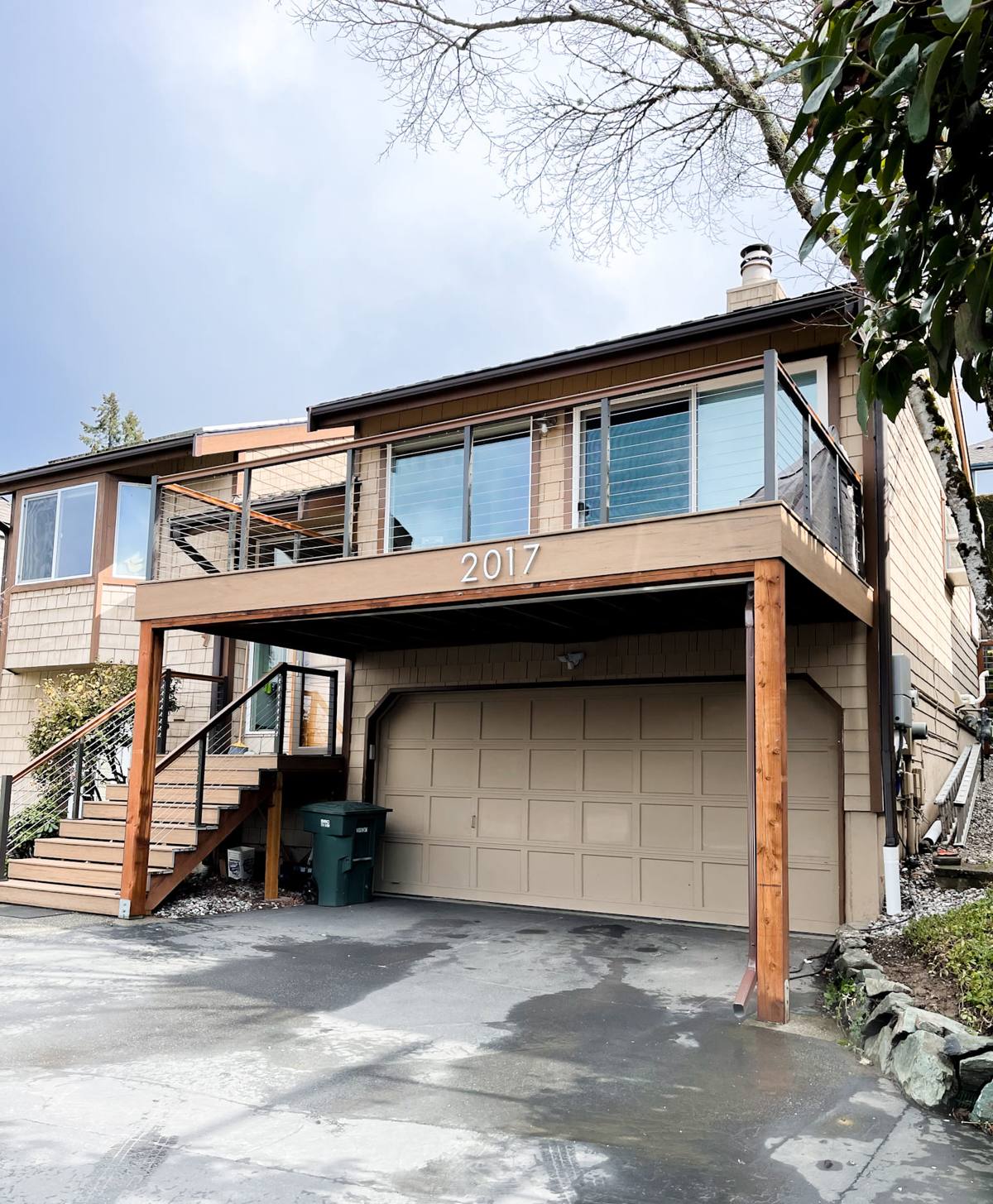
Why Composite Makes Sense for This Neighborhood
Composite decking — a blend of wood fibers and recycled plastic, usually with a protective cap layer — was built to solve exactly the problems that wood struggles with in a climate like ours: constant moisture, intense UV, and wide temperature swings between a 95-degree afternoon and a cooler, damp night. It doesn't need annual sealing or staining, it resists the rot and insect damage that wood decks in shaded or low-airflow yards deal with, and it holds its color far longer under the kind of sun exposure Pinellas County gets nearly year-round.
Capped vs. Uncapped Composite
Not all composite is the same, and the difference matters more here than in drier climates. Capped composite has a solid polymer shell wrapped around the core board, which is what actually blocks moisture absorption and UV fading. Uncapped or lower-grade composite boards can still absorb water at the edges and cut ends over time, especially in a yard that holds humidity. We install capped composite specifically because it holds up to the freeze-free, high-moisture cycle Florida puts decks through — not because every composite product is interchangeable.
Where Wood and PVC Still Fit
We're not against wood or PVC on principle. Pressure-treated wood costs less upfront and some homeowners prefer the look and the option to refinish it. Solid PVC decking handles moisture even better than composite in some cases but shows heat and expansion differently underfoot. The honest answer is that composite hits the best balance of low upkeep, durability, and cost for most Countryside homeowners — but we'll walk through the real trade-offs for your yard rather than push one product by default.
What a Correct Composite Deck Build Involves Here
Substructure First
The decking boards get the attention, but the framing underneath is what actually determines whether a deck lasts. In this climate, that means pressure-treated or composite-compatible joists, proper joist spacing for the board span rating (composite typically needs tighter spacing than wood), and joist tape or flashing on top of the framing to keep moisture from wicking into the wood core over time.
Fasteners and Hardware
Coastal air in Pinellas County carries enough salt to corrode standard fasteners faster than most homeowners expect, even well inland. We use stainless steel or coated hardware rated for coastal exposure, and hidden fastener systems designed for composite boards, which also keep the deck surface free of exposed screw heads that can back out as boards expand and contract in the heat.
Ledger Attachment and Flashing
Where the deck attaches to the house is the single most common failure point we see on older decks in this area. Correct flashing at the ledger board keeps wind-driven rain from getting behind the siding and rotting the rim joist or sheathing — a slow, hidden problem that's expensive to fix once it's found. This is one of those details that costs almost nothing extra to do right during installation and a great deal to fix later.
Wind and Code Compliance
Pinellas County's wind load requirements reflect the fact that hurricane-force gusts are a real, recurring possibility here, not a hypothetical. Railing posts, guardrail attachment, and footing depth all have to meet code for wind uplift and lateral load, not just gravity load. We pull permits and build to current county requirements rather than to whatever the minimum used to be — a deck that isn't permitted or doesn't meet current wind code can become a real problem at resale or insurance renewal.
How We Approach a Countryside Composite Decking Project
- On-site assessment. We look at your yard's drainage, sun exposure, existing structure (if replacing a deck), and how the space connects to your house before recommending anything.
- Material and layout selection. We walk through composite board options, color, railing style, and layout, with real cost ranges for each choice.
- Permitting. We handle the Pinellas County permit application and engineering documentation where required, so the project is built and inspected to current code.
- Substructure build. Framing, flashing, and footings go in first, built to the wind and moisture standards this climate demands.
- Decking and railing installation. Boards, hidden fasteners, and railing go in with attention to expansion gaps and drainage.
- Final walkthrough. We go over the finished deck with you, including what little maintenance composite actually needs going forward.
Comparing Decking Materials for a Pinellas County Yard
| Material | Upfront Cost | Maintenance | Typical Lifespan Here | Sun & Heat Behavior |
|---|---|---|---|---|
| Pressure-treated wood | Lowest | Annual sealing/staining recommended | 10-15 years with upkeep | Grays and splinters without regular sealing |
| Capped composite | Moderate to higher | Occasional washing, no sealing/staining | 25-30+ years (manufacturer-dependent) | Fade-resistant caps; some boards run warmer underfoot |
| Solid PVC | Highest | Occasional washing | 25-30+ years | Excellent moisture resistance; more visible expansion/contraction |
Living With a Composite Deck in This Climate
One of the real selling points of composite in a place like Countryside is how little it asks of you afterward. There's no annual sanding, staining, or sealing schedule to keep up with. That said, "low maintenance" doesn't mean "no maintenance" — salt air, pollen, and Florida's humidity will still put a film of mildew or algae on any outdoor surface eventually, composite included.
- Rinse or wash the deck surface every few months, more often if it's shaded or near sprinklers that keep it damp.
- Keep planters and furniture legs from trapping moisture against the boards for long stretches.
- Clear leaves and debris out of gaps between boards so water keeps draining through properly.
- Check railing hardware once a year for looseness — normal thermal expansion can work fasteners over time.
- After a major storm, do a quick visual check of footings and railing attachment points.
What Actually Drives the Cost
Every composite deck quote is a little different because the variables genuinely change the price. Rather than quote a number that doesn't mean much without context, here's what actually moves the cost up or down on a typical Countryside project:
- Board tier and brand. Composite lines range from entry-level capped boards to premium, longer-warranty products.
- Deck size and shape. Simple rectangles cost less per square foot than decks with angles, multiple levels, or curves.
- Substructure condition. New builds need full framing; replacements may be able to reuse a sound existing structure after inspection.
- Railing choice. Composite or aluminum railing costs more than basic wood but matches the low-maintenance goal of the deck itself.
- Site access and tear-out. Removing an old deck, dealing with tight yard access, or working around existing landscaping adds labor.
- Permit and engineering requirements. Larger or elevated decks may need engineered plans, which adds to the upfront cost but is required for code compliance.
Why Local Experience in This Area Matters
A deck built to a generic national spec sheet isn't the same as one built by a crew that already knows how Pinellas County inspectors read the wind load requirements, how drainage tends to behave in Countryside's yards, and which fastener and flashing details actually hold up through a full Gulf Coast hurricane season. That experience shows up in decisions you'd never think to ask about — joist spacing that accounts for our humidity, flashing details at the ledger, hardware that won't corrode in salt-laden air even several miles inland.
It also matters for permitting. A permit application that's missing documentation or doesn't match current county wind provisions gets kicked back, which costs time. A crew that pulls permits in this county regularly knows what the reviewers want to see the first time.
Get a Straightforward Estimate
If you're weighing a new composite deck or replacing an aging wood one in Countryside, we're glad to come take a look, walk through material options honestly, and put together a clear estimate — no pressure, no upsell script. Use the form below to get started.