 Oldsmar Siding
 Metal Roofing for Countryside Homes
Countryside sits inland enough from the Gulf to feel a little sheltered, but it still takes the same beating every other neighborhood in Pinellas County takes each year: tropical-storm and hurricane-force winds, months of intense UV exposure, wind-driven rain that finds every weak seam, and salt-laden air that doesn't stop at the coastline. A roof here isn't just shedding water — it's fighting off four different stressors at once, year after year. Metal roofing, installed correctly, handles that combination better than most other roofing materials available today. Installed poorly, it fails in the exact same ways a cheap asphalt job does, just with a bigger price tag attached.
This page covers what a metal roof actually needs to survive in Countryside, what a correct installation looks like, and how our process works for homeowners in this part of Oldsmar.
What This Climate Actually Does to a Roof
Pinellas County roofs deal with a specific mix of conditions, and each one attacks a metal roof differently:
- Hurricane-force wind: Wind doesn't just push down on a roof — it creates uplift at edges, ridges, and rakes, which is exactly where fastener failures and panel loss start.
- Year-round UV: Constant sun exposure breaks down coatings, sealants, and gaskets faster than in most other parts of the country. A finish rated for a milder climate will chalk and fade early here.
- Wind-driven rain: Storms in this area rarely fall straight down. Rain gets pushed sideways under laps and around fasteners that would stay dry in a calmer climate, which is why lap design and sealant placement matter more here than the panel material itself.
- Salt air: Even set back from the water, Countryside gets enough airborne salt to accelerate corrosion on the wrong metal, the wrong fasteners, or the wrong coating system.
None of these are exotic problems — they're the normal, predictable conditions any roof in this part of Florida has to handle. The difference between a metal roof that lasts decades and one that leaks or lifts within a few years usually comes down to whether the installer actually accounted for all four.
Choosing the Right Metal Roofing System
Not all metal roofing is built the same way, and the differences matter more in a wind- and salt-exposed area like Countryside than they would somewhere calmer.
Standing Seam vs. Exposed-Fastener Panels
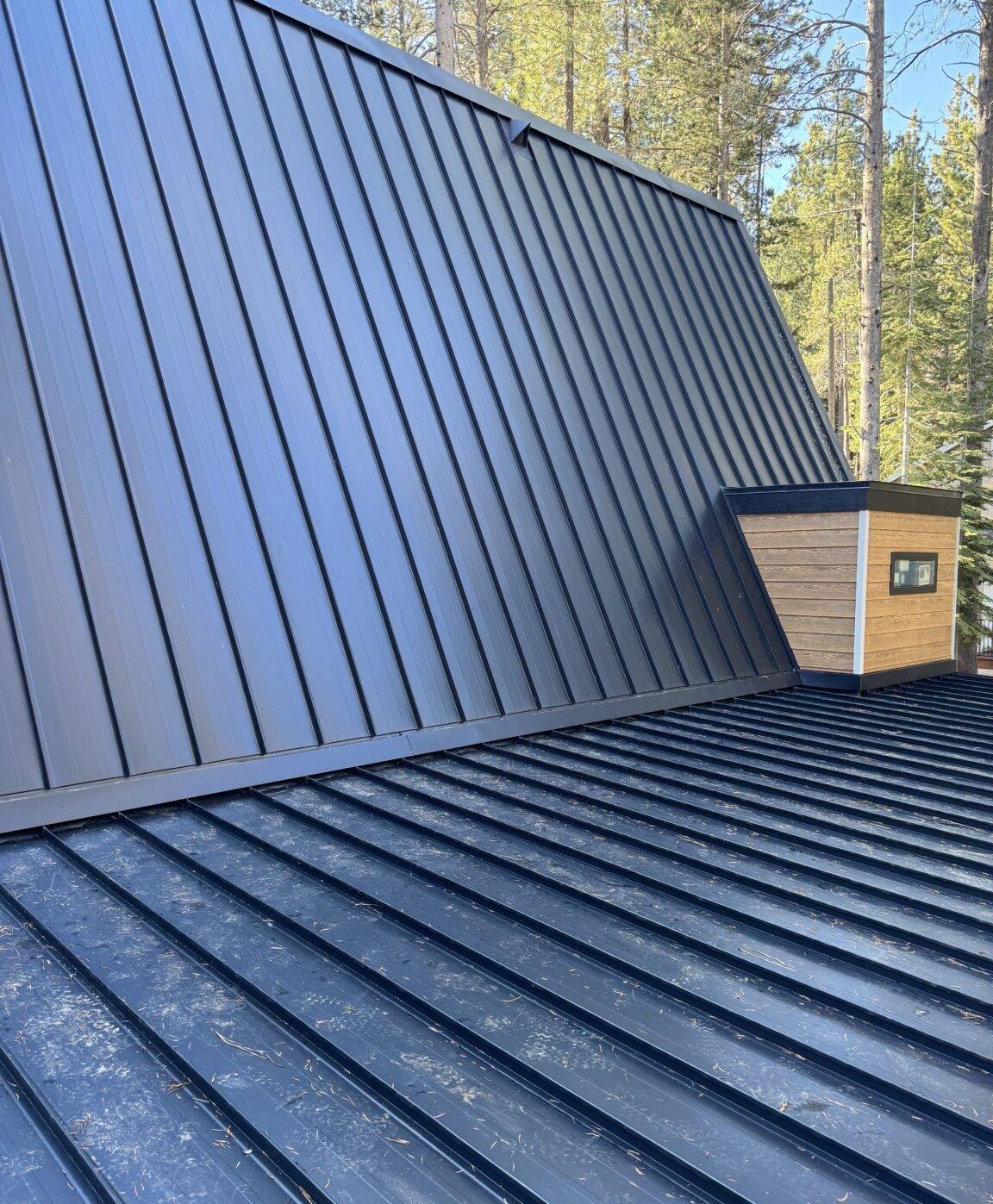
The two most common systems are standing seam (concealed fastener) panels and exposed-fastener corrugated or ribbed panels. Both can perform well when installed correctly, but they age very differently in this climate.
| Factor | Standing Seam | Exposed-Fastener Panel |
|---|---|---|
| Fastener exposure | Fasteners hidden under seams, not exposed to UV or rain | Fasteners penetrate the panel face directly |
| Wind performance | Higher uplift resistance; fewer penetration points to fail | Adequate when installed to spec, but more failure points |
| Long-term maintenance | Very low — no exposed sealant to fail over time | Fastener washers and sealant degrade under UV and need periodic checks |
| Upfront cost | Higher | Lower |
| Typical lifespan in this climate | Longest, when detailed correctly | Solid, but shorter than standing seam if fasteners aren't maintained |
For most homes in Countryside, we recommend standing seam where the budget allows it, specifically because it removes the weakest point in a Florida metal roof: exposed fastener sealant baking in year-round sun. Exposed-fastener panels are still a legitimate, cost-effective option — they just come with a maintenance conversation we make sure homeowners understand up front, not after the fact.
Coatings and Metal Type
In a salt-air environment, the coating system matters as much as the base metal. We steer homeowners toward panels with coatings rated for coastal exposure rather than a generic finish, because the cost difference upfront is small compared to what premature corrosion or fading costs to fix later. We'll walk through the specific manufacturer options and warranty terms during your estimate rather than guessing at pricing here — panel gauge, coating, and profile all move the number.
What a Correct Installation Actually Involves
Metal roofing gets a reputation for being "bulletproof," but the material is only as good as what's underneath it and how it's attached. A correct installation has three parts that all matter equally.
Deck Prep and Underlayment
The roof deck gets inspected and repaired before anything else goes down — soft or delaminated decking is a problem no roofing material can fix from above. Over the deck, we install a high-temperature synthetic or self-adhering underlayment appropriate for metal, which acts as the real waterproof layer if wind-driven rain ever gets past the panels themselves.
Fastening for Wind Uplift
Fastener pattern and spacing are engineered for wind resistance, not just for holding the panel down. This means tighter fastening at eaves, ridges, and rakes — the zones where uplift pressure concentrates during a hurricane-force event — following the pattern the panel manufacturer specifies for high-wind regions like ours.
Flashing and Penetrations
Valleys, wall transitions, vent pipes, and chimney penetrations are where most roof leaks actually start, on metal or any other material. We custom-fit flashing at every penetration rather than relying on generic trim pieces, and we seal laps and transitions with sealants rated for sustained UV and moisture exposure — not general-purpose caulk that breaks down in a Florida summer.
How Our Process Works
For a Countryside metal roofing project, the process generally looks like this:
- On-site inspection and measurement — we assess your existing roof, deck condition, and any problem areas before recommending a system.
- System selection — we walk through standing seam vs. exposed-fastener options, coating choices, and color, matched to your home and budget.
- Written estimate — a clear scope of work and pricing, no vague allowances.
- Tear-off and deck inspection — old roofing removed, deck checked and repaired as needed before anything new goes down.
- Underlayment, panel installation, and flashing — installed to the wind-rated specifications appropriate for this area.
- Final walkthrough — we review the finished roof with you before calling the job done.
Maintenance in a Salt-Air Environment
Metal roofing is low-maintenance compared to most materials, but "low-maintenance" doesn't mean "no-maintenance" in Pinellas County. A short annual check catches problems while they're still cheap to fix.
- Rinse off accumulated salt, pollen, and debris periodically — buildup traps moisture against the panel surface.
- Check exposed fasteners (if you have an exposed-fastener system) for loosening or worn washers.
- Inspect flashing around vents, chimneys, and valleys after any major storm.
- Clear gutters and downspouts so water isn't backing up against roof edges.
- Look for scratches or chips in the coating near foot traffic areas, walkways, or fallen debris impact points — exposed metal corrodes faster than coated metal.
- Have the roof professionally inspected after any named storm that brought sustained high winds through the area.
What Drives the Cost
Every metal roofing quote in Countryside varies based on a handful of specific factors:
| Factor | Why It Matters |
|---|---|
| Panel system (standing seam vs. exposed-fastener) | Standing seam costs more upfront but needs less long-term maintenance |
| Roof complexity | Valleys, dormers, and multiple roof planes add labor and flashing work |
| Deck condition | Rot or delamination discovered during tear-off adds repair cost |
| Coating and gauge | Coastal-rated coatings and heavier gauge metal cost more but last longer in salt air |
| Tear-off scope | Removing existing roofing (vs. installing over it, where code allows) affects labor |
We don't quote a number without seeing the roof — anyone who does is guessing. What we can tell you honestly is that metal roofing costs more upfront than asphalt shingles, and for most Countryside homeowners it earns that difference back through fewer repairs and a much longer service life in this climate.
Why Local Experience in Countryside Matters
Roofing codes, wind-load requirements, and inspection expectations in Pinellas County aren't the same as they are two counties over, and a crew that doesn't work here regularly can miss details that matter — the right uplift rating for this wind zone, the flashing detail that actually holds up to Gulf-adjacent storms, the coating that won't chalk out in three summers. We work on homes in Oldsmar and the surrounding Countryside area regularly, which means we're not learning the local conditions on your roof — we already know what this climate does to a metal roof over time, and we build for that from the start.
If you're considering a metal roof for your Countryside home, we're happy to take a look and walk you through your options. Reach out for a free, no-pressure estimate using the form below.