 Oldsmar Siding
 Dunedin's Roofs Work Harder Than the Shingle Package Admits
Every bundle of asphalt shingles carries a warranty number, but that number was tested somewhere else. Dunedin and the surrounding Oldsmar area sit close to Tampa Bay and the Gulf, which means the roof over a Dunedin home deals with a combination most manufacturers only account for in the fine print: sustained hurricane-force wind gusts, some of the most intense year-round UV exposure in the continental United States, wind-driven rain that gets forced sideways under loose edges, and a steady drift of salt air off the water that speeds up corrosion on every exposed fastener and flashing. None of that is exotic weather — it's just Tuesday in Pinellas County. A shingle roof that's installed correctly for this climate holds up. One that was installed for a milder market, with shortcuts on fastening, flashing, or ventilation, tends to show it early — curling edges, granule loss, and leaks well before the shingle's rated lifespan is up.
This page covers exactly one service for one area: asphalt shingle roofing on Dunedin homes, done by a crew that already works this part of Oldsmar and Pinellas County on a regular basis. We're not going to give you a generic national rundown of shingle roofing — we're going to tell you what actually matters for a roof going on a house a few miles from the water.
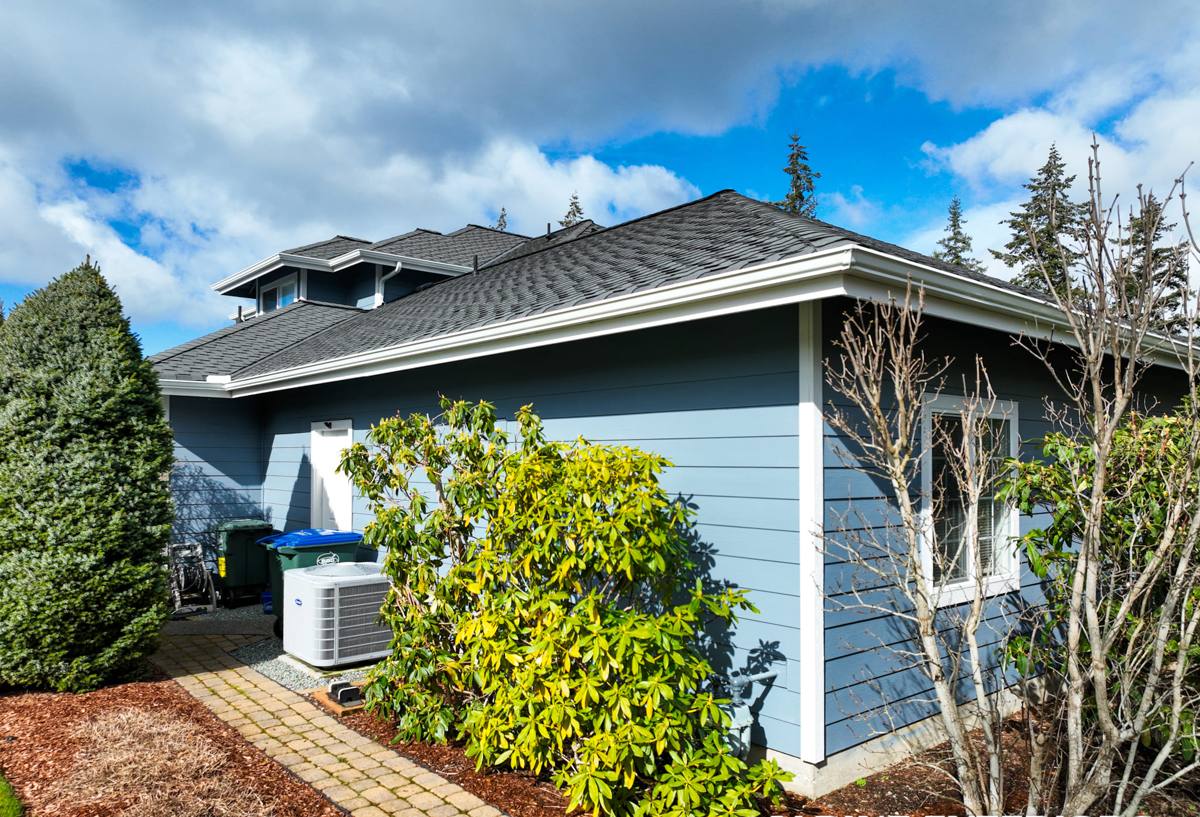
What Actually Damages an Asphalt Shingle Roof Here
UV and Heat
Florida sun breaks down the asphalt binder in shingles faster than almost anywhere else in the country. Over years, that shows up as granule loss, brittleness, and shingles that crack instead of flex when wind gets under them. Lighter shingle colors and proper attic ventilation both slow this down; dark shingles on a poorly vented attic age fastest.
Wind
Pinellas County homes are built to Florida Building Code wind provisions for our wind-borne debris region, and a shingle roof is only as good as its weakest fastening detail. Most wind-related roof failures don't start with the whole roof peeling off — they start with one edge shingle, one ridge cap, or one section with the wrong nailing pattern that lets wind get a grip and start prying.
Wind-Driven Rain
Straight-down rain rarely causes leaks on a healthy roof. Rain that's being pushed sideways by hurricane-strength gusts finds every gap in flashing, every under-driven nail, and every spot where underlayment wasn't lapped correctly. This is why the details around chimneys, skylights, sidewalls, and valleys matter more here than the shingles themselves.
Salt Air
Being close to Tampa Bay means airborne salt reaches roofs that aren't technically "beachfront." Salt accelerates corrosion on exposed metal — nail heads, drip edge, flashing, and vent boots — which is why fastener and flashing material choice matters as much as the shingle brand.
What a Correct Asphalt Shingle Installation Involves
A shingle roof is a system, not a single product. Skipping or downgrading any layer is where problems start, even if the shingles themselves are a good brand.
- Deck inspection and repair — soft, delaminated, or water-stained plywood gets replaced before anything goes back on; shingles fastened to a bad deck will fail regardless of quality.
- Drip edge — corrosion-resistant metal at every eave and rake edge, installed under the underlayment at the eaves and over it at the rakes, per code.
- Underlayment — a synthetic or self-adhered underlayment layer that acts as the roof's real waterproofing backup if a shingle is ever compromised by wind or debris.
- Self-adhered ice-and-water-type membrane at vulnerable zones — valleys, around penetrations, and low-slope transitions, even though we don't get ice, this membrane is what actually stops wind-driven rain intrusion.
- Correct nailing pattern — the right number of nails, in the right position, driven flush (not over- or under-driven) — this is the single biggest factor in a shingle roof's actual wind rating, more than the shingle brand.
- Flashing at every penetration and transition — chimneys, skylights, sidewalls, plumbing stacks, and roof-to-wall junctions, using corrosion-resistant metal given the salt air.
- Ridge and hip caps — installed with the fastening pattern rated for high-wind areas, not the builder-grade minimum.
- Balanced attic ventilation — intake at the soffits and exhaust at the ridge or roof vents, sized to move air through the attic, which extends shingle life and controls heat and moisture.
Our Process, Start to Finish
1. On-Site Inspection
We look at the whole system — deck condition, existing ventilation, flashing details, and any signs of past leaks — not just the shingles on top. You get a straight assessment of whether you need a full replacement, a repair, or something in between.
2. Written Scope and Estimate
You get a clear scope covering tear-off, deck repair allowance, underlayment type, shingle product, flashing, ventilation work, and cleanup — no vague line items.
3. Permitting
Roofing work in Oldsmar and Pinellas County requires a permit and inspection. We handle that process rather than leaving it to you, and we don't cut corners to avoid it.
4. Tear-Off and Deck Inspection
Old roofing comes off down to the deck so we can actually see what's underneath. Any damaged sheathing gets flagged and replaced before underlayment goes down — this is not an optional add-on we spring on you later without discussion.
5. Underlayment, Flashing, and Shingle Installation
Underlayment, membrane at vulnerable areas, new drip edge, flashing, and shingles go on in that order, with the nailing pattern and fastener spacing set for our wind exposure.
6. Ventilation Check
We confirm soffit intake and ridge or roof-vent exhaust are balanced, adding or correcting vents where the existing setup is inadequate.
7. Final Inspection and Cleanup
A final walk-through, magnetic sweep for stray nails, haul-away of old materials, and the county inspection sign-off close out the job.
Shingle Options for Dunedin-Area Homes
The right shingle depends on budget, how long you plan to stay in the home, and how much wind resistance you want beyond the code minimum. Here's how the common options compare for this climate:
| Shingle Type | Typical Wind Rating | Relative Lifespan Here | Best For |
|---|---|---|---|
| 3-Tab | Lower end of code range | Shorter — sun and wind wear it fastest | Tight budgets, rental properties |
| Architectural (Laminate) | Mid-to-high, product dependent | Longer, better UV and impact resistance | Most owner-occupied homes |
| High-Wind / Impact-Rated Architectural | Highest available in asphalt | Longest asphalt option, best resistance to wind uplift and debris | Homes closer to open water or owners wanting maximum wind protection |
We install what fits your house and budget honestly — including telling you when a mid-tier architectural shingle is the smarter dollar-for-dollar choice over the top-tier product, and when the upgrade is worth it.
Cost Factors Beyond the Shingle Itself
| Factor | Why It Moves the Price |
|---|---|
| Roof pitch and access | Steeper or harder-to-access roofs take longer and need more safety setup |
| Number of layers to remove | Tear-off of multiple old layers costs more than a single-layer tear-off |
| Deck condition | Rotted or delaminated plywood sections add material and labor |
| Penetrations and roof complexity | More valleys, chimneys, and skylights mean more flashing work |
| Shingle tier chosen | Impact-rated and high-wind products cost more per square than standard architectural |
Signs Your Dunedin-Area Roof Needs Attention
- Granules collecting in gutters or at downspout discharge points
- Shingle edges curling up or corners lifting
- Cracked or missing shingles after a windstorm
- Dark streaking or visible algae growth across the roof field
- Soft spots or sagging when walked (should only be assessed by a professional)
- Water stains on interior ceilings, especially near chimneys, skylights, or exterior walls
- Daylight visible through the roof deck from inside the attic
- Rusted or lifting flashing around vents, chimneys, or roof-to-wall joints
Any one of these on its own might just mean a repair. Several together, or a roof past 15-20 years old, usually means it's time to have it looked at seriously rather than waiting for a leak to force the issue.
Why a Crew That Already Works Dunedin Matters
Roofing crews that mostly work inland or in milder climates sometimes install to the letter of code and stop there. A crew that works Dunedin, Oldsmar, and the rest of Pinellas County regularly has seen which details actually fail first in this environment — which is usually flashing corrosion from salt air, under-fastened ridge caps, and underlayment that wasn't lapped correctly in valleys — and builds in the extra step to prevent it, not just the code minimum. We also already know the local permitting process and inspection expectations, so there's no learning curve or delay figuring out how Oldsmar or Pinellas County wants the paperwork handled.
There's also a simple accountability piece: a local crew is easy to reach if a question comes up two years after installation, not a name that only shows up during storm season from out of the area.
After Installation: What Keeps a Shingle Roof Lasting
A correctly installed roof still needs basic upkeep to hit its full lifespan in this climate:
- Keep gutters clear so water isn't backing up under the eave edge.
- Trim back overhanging branches that drop debris and hold moisture against the roof surface.
- Have the roof looked at after any major storm, even if nothing looks obviously wrong from the ground.
- Address small leaks or lifted shingles quickly — they don't fix themselves and wind-driven rain will find any small gap.
- Get a periodic inspection every couple of years, especially once the roof passes the ten-year mark.
If your Dunedin-area roof is showing wear, was installed with shortcuts, or you just want an honest read on how much life it has left, we're glad to take a look. The estimate is free, there's no pressure to sign anything on the spot, and you'll get a straight answer about repair versus replacement — use the form below to get started.