 Oldsmar Siding
 Largo sits in the same stretch of Pinellas County we already work regularly out of Oldsmar, and the two areas share the same exterior problem: a home's siding has to survive hurricane-force wind gusts, wind-driven rain, intense year-round UV, and salt air drifting in off Tampa Bay, all at the same time, every year, for decades. That combination is harder on a home's exterior than almost anywhere else in the country, and it's why we install James Hardie fiber cement exclusively rather than offering a menu of siding materials and letting price alone decide.
This page is specifically about James Hardie siding for Largo homes — what the climate actually demands from the material and the installation, how we approach a job in this area, and why working with a crew that's already familiar with Largo and greater Oldsmar makes a real difference in the outcome.
What Largo's Climate Actually Does to Siding
It's easy to talk about "Florida weather" in the abstract. On a wall, it breaks down into a few specific, mechanical stresses:
- Hurricane-force wind gusts put uplift and racking load on every fastener and every panel edge, not just during a named storm but during the shorter, sharper squall lines that pass through several times a season
- Wind-driven rain doesn't fall straight down — it gets pushed sideways into laps, seams, and trim joints, which means the water management behind the siding matters as much as the siding itself
- Intense, near-constant UV breaks down unstable coatings and pigments faster than in most of the country, which is why finish quality shows up as a real difference within a few years, not decades
- Salt air off Tampa Bay accelerates corrosion on exposed or poorly protected fasteners and trim, and it degrades finishes that weren't formulated with a marine-influenced climate in mind
None of these forces are unique to Largo — they're the same forces at work across coastal Pinellas County, including Oldsmar. But they're real enough that a siding product and an installation method that would be perfectly fine in a drier, milder climate can start showing problems here within a handful of years. That's the standard we're installing against.
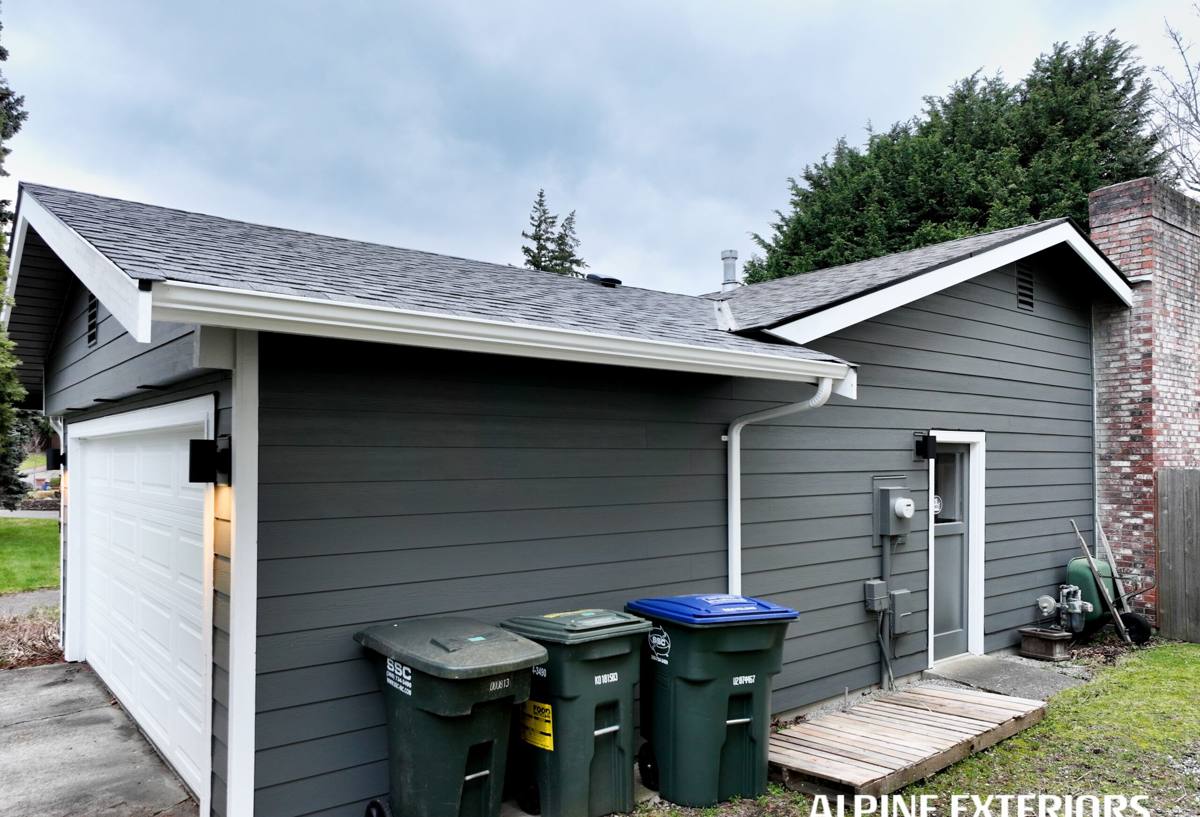
What a Correct James Hardie Installation Involves
James Hardie fiber cement is engineered to handle this kind of exposure, but the product alone doesn't guarantee a durable result — the installation has to be done to spec. A few details matter more here than in a mild climate.
Weather-Resistive Barrier and Flashing First
Before a single piece of siding goes up, the wall needs a properly lapped and sealed weather-resistive barrier, with flashing integrated at every window, door, and roof-to-wall intersection. This layer is what actually keeps wind-driven rain out of the wall assembly if it gets past the siding's outer surface — the siding is the first line of defense, not the only one.
Fastening Pattern Matched to Wind Exposure
James Hardie publishes specific fastener spacing and penetration requirements, and those requirements shift based on wind exposure and the home's design wind speed under the Florida Building Code. Using a generic fastening pattern instead of one calculated for the actual site conditions is one of the more common shortcuts that shows up later as loose boards or blown-off sections during a storm.
Joints, Gaps, and Caulking Done to Spec
Butt joints need consistent, correct gapping so the boards have room to move without buckling, and caulking belongs only where the manufacturer specifies it — not as a general-purpose fix for gaps that should have been flashed or trimmed correctly in the first place. Overcaulked seams tend to trap moisture rather than shed it.
Choosing the Right James Hardie Product Line
James Hardie doesn't sell one universal siding product — it manufactures regional formulations engineered for different climate zones, and it offers several profiles that suit different parts of a home. For a Largo project, that generally means:
| Product | Where It's Used | Why It Fits This Climate |
|---|---|---|
| HardiePlank HZ5 lap siding | Primary wall coverage | Formulated for high-humidity, high-moisture-exposure regions like the Gulf Coast, not a generic nationwide mix |
| HardieTrim | Corners, window and door surrounds, fascia | Matches the field siding's moisture stability so trim doesn't move or fail at a different rate than the walls around it |
| HardieSoffit | Eaves and overhangs | Vented or non-vented options that resist the humidity buildup common under Florida roof overhangs |
| HardiePanel | Vertical accents, gables | Same dimensionally stable fiber cement, used where a vertical design element is wanted |
The HZ5 formulation is the detail worth understanding: James Hardie engineers its siding differently depending on the climate it's shipped to. A board built for a dry inland climate isn't the same product as one built for sustained coastal humidity and rain exposure. Homes in this part of Florida get the HZ5 line specifically because of what Largo and Oldsmar's weather actually does to a wall over time.
ColorPlus Finish in a High-UV, Salt-Air Environment
Finish durability matters as much as the substrate underneath it, especially under Florida's UV load. James Hardie's ColorPlus finish is baked on in a controlled factory process through multiple coating and curing steps, rather than sprayed or brushed on after the boards are already installed on the wall. That process produces a finish that resists fading, chalking, and chipping significantly better than typical field-applied paint, which matters most in a climate where the sun is doing damage nearly every day of the year, not just in summer.
Salt air is the second half of that equation. It doesn't just affect the siding's finish — it's harder on any exposed metal, including fasteners and flashing details, than it would be further inland. Part of doing this job correctly in Largo means using fastener and flashing materials suited to a coastal environment, not just whatever is cheapest to source, and keeping the ColorPlus finish's factory warranty intact by installing and maintaining the siding the way the manufacturer specifies.
Warning Signs on Existing Siding in This Area
Homeowners often reach out after noticing something specific rather than as a routine check-in. If you're looking at your own home's exterior, these are the signs worth taking seriously:
- Soft or spongy spots when you press on the siding, especially near the bottom courses or around window trim
- Visible buckling, cupping, or waviness in the wall plane, particularly after periods of heavy rain
- Rust streaking below fastener heads or trim edges, a sign the fasteners themselves are corroding
- Caulk that's cracked, pulled away, or missing at joints that were never properly flashed to begin with
- Persistent dark staining or mold growth concentrated on the sides of the home that get the least direct sun
- Paint that's chalking heavily or peeling in sheets rather than wearing evenly
Any one of these can be a minor, localized fix. Several at once, especially combined with soft spots, usually points to a moisture problem behind the siding that's been developing for a while — worth having looked at before it spreads.
Our Process for a Largo Project
The steps don't change much from house to house, but doing each one thoroughly is what separates a siding job that lasts from one that doesn't.
- On-site assessment — we walk the exterior, check the current siding and substrate condition, and measure for materials and wind-exposure fastening requirements
- Tear-off and substrate inspection — removing the old siding is when hidden moisture damage or rot in the sheathing gets found and addressed, not covered over
- Weather-resistive barrier and flashing installation — the water management layer goes in and gets inspected before any siding covers it up
- Siding installation to manufacturer spec — correct fastening pattern, joint gapping, and clearances, following James Hardie's published requirements for this wind exposure
- Trim, soffit, and caulking — finishing details completed to the same standard as the field siding, not treated as an afterthought
- Final walkthrough — a homeowner walkthrough to review the finished work before we consider the job complete
Why a Crew That Already Works This Area Matters
Largo and Oldsmar sit in the same Pinellas County jurisdiction for permitting and building code purposes, and both deal with the same coastal wind-load requirements under the Florida Building Code. A crew that already works this area on a regular basis has a working familiarity with local permitting expectations, the wind-exposure calculations that apply here, and the range of home construction styles and ages common to this part of the county — block homes from earlier decades sit differently than newer frame construction, and the substrate condition underneath old siding varies accordingly. That familiarity shortens the learning curve on-site and reduces the chance of a detail getting missed because a crew is guessing at local conditions instead of already knowing them.
It also means a shorter distance for warranty follow-up, inspections during the job, and any post-storm check the homeowner wants, rather than relying on a contractor with no ongoing presence in the area.
What Affects the Cost of a Largo James Hardie Project
Every home is different, and the only way to get an accurate number is a walk-through and a written estimate, but the main variables that move the price are consistent from job to job:
| Factor | How It Affects Cost |
|---|---|
| Home size and wall complexity | More square footage and more corners, dormers, or angles mean more material and labor |
| Tear-off and disposal of existing siding | Removing old material, especially multiple layers or damaged substrate, adds labor before installation even starts |
| Substrate repair | Rot or moisture damage found during tear-off has to be repaired before new siding goes up |
| Trim and profile choices | More decorative trim, accent panels, or a mix of profiles adds detail work beyond plain lap siding |
| Site accessibility | Tight lot lines, landscaping, or multi-story sections affect how efficiently a crew can work |
As a very general range, James Hardie installations in this part of Florida commonly fall somewhere in the neighborhood of $9 to $16 per square foot installed, though a project with significant substrate repair or complex trim work can run higher. That figure is a starting point for planning, not a quote — the only reliable number comes from seeing the actual home.
Getting Started
If you're weighing James Hardie siding for a home in Largo, we're glad to walk the property, talk through what the existing siding and substrate look like, and put together a free, no-pressure estimate with no obligation attached.