 Oldsmar Siding
 Siding Replacement in Land O' Lakes: What the Climate Actually Demands
Land O' Lakes sits squarely in the Tampa Bay weather pattern, and that pattern is hard on exterior walls. Homes here deal with hurricane-force wind gusts during the June-to-November storm season, wind-driven rain that gets pushed sideways into wall assemblies, and some of the most intense year-round UV exposure in the continental United States. Add in the salt-laden humidity that drifts inland across the greater Pinellas and Pasco County area, and you have a climate that will find every weakness in a siding system within a few years, not a few decades.
Siding replacement in this area isn't a cosmetic upgrade. It's the single biggest factor in whether a home's wall assembly stays dry, whether paint holds its color, and whether the structure underneath stays sound. We install and replace siding across the Land O' Lakes area from our base in Oldsmar, and the failures we see are almost always tied back to one of those three stressors: wind, UV, or moisture that got behind the cladding and had nowhere to go.
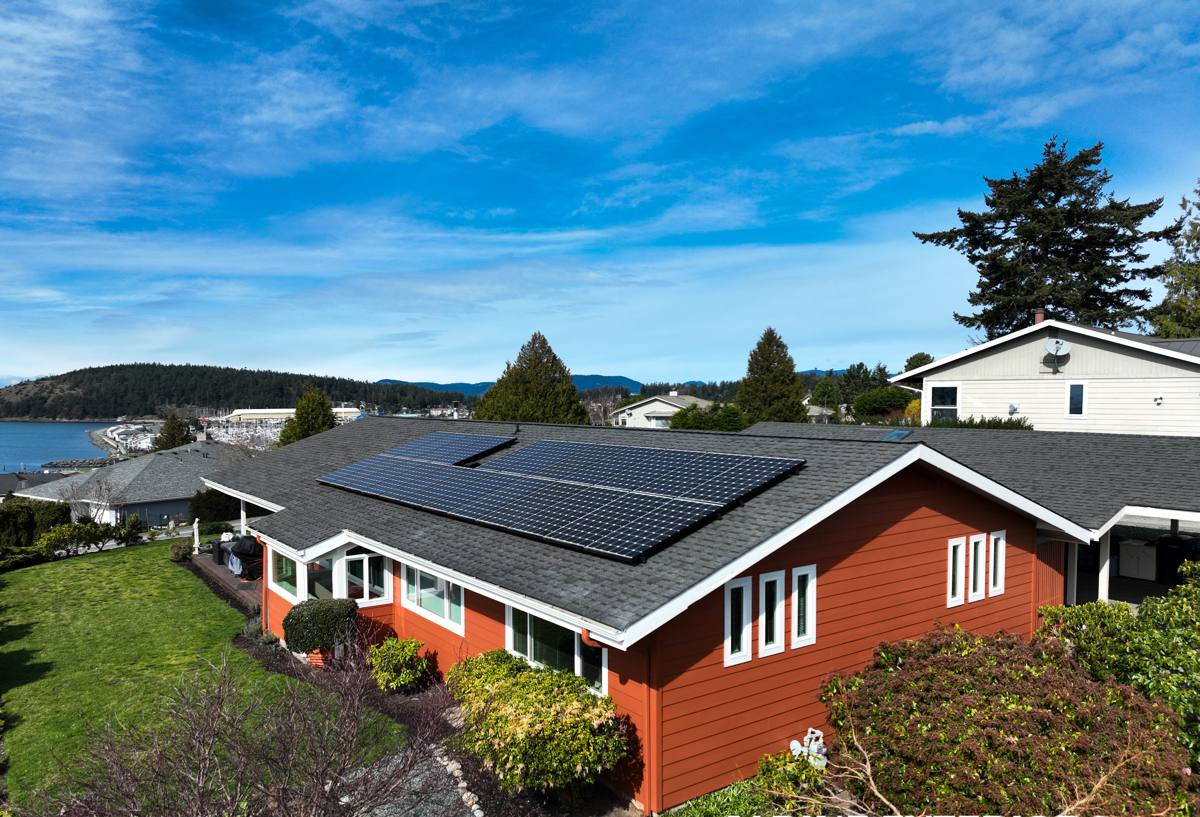
Signs Your Land O' Lakes Home Needs Siding Replacement, Not Just a Patch
Homeowners often ask whether a problem area can be spot-repaired or whether the whole elevation needs to come off. The honest answer depends on how far moisture has already traveled behind the siding. A patch only makes sense if the underlying sheathing and house wrap are still dry and intact. Once water has been finding its way behind panels for a season or two, patching just hides a problem that keeps spreading.
- Panels that have visibly warped, cupped, or bowed away from the wall
- Soft or spongy spots when you press on the siding, especially near the bottom courses
- Paint that's peeling, chalking heavily, or won't hold color for more than a couple of years
- Cracking or splitting concentrated on south- and west-facing walls (the highest UV exposure)
- Rust streaks at fasteners or visible gaps opening up at panel seams and corners
- A musty smell along interior walls, or mold/mildew on the siding that returns right after cleaning
- Noticeably higher cooling bills, which can point to moisture-saturated insulation behind the cladding
If you're seeing more than one of these at once, that's usually a sign the whole wall system needs attention, not just the panel that looks worst.
What a Correct Siding Replacement Job Actually Involves
It starts underneath the siding, not with the siding
The panels you see are the last layer, not the first decision. A correct replacement starts with a full tear-off so we can actually see the sheathing, framing, and any water intrusion that's been hidden for years. Skipping this step and installing new siding over a compromised wall is how homeowners end up paying for the same repair twice.
The weather-resistive barrier is where the real protection lives
Underneath every siding system is a water-resistive barrier and flashing details at every window, door, and penetration. In a wind-driven rain climate like ours, this layer matters more than the siding itself — it's the last line of defense if water ever gets past the exterior cladding. We install it continuously, lap it correctly at every seam, and detail penetrations so water is directed out, not trapped in.
Fastening has to match the wind exposure, not a generic spec
Fastener type, spacing, and embedment change based on wind zone, and Pasco County wind requirements are not the same as an inland, low-exposure zone. Under-fastened or improperly spaced panels are one of the most common causes of siding failure we find during replacements — panels that looked fine for years but were never actually secured to hold through a real storm.
Caulking and joint treatment can't be an afterthought
Every joint, corner, and trim intersection is a potential entry point for water. We treat these per manufacturer spec, not with a bead of caulk applied after the fact to cover a gap.
Why We Install Only James Hardie Fiber Cement Siding
We made a deliberate decision to install one product system, not a menu of options, because in this climate the product choice determines how many times a homeowner has to redo this project. We don't install vinyl, LP SmartSide, primed wood, or other fiber cement brands. Here's the reasoning:
- It's non-combustible. Fiber cement doesn't feed a fire the way wood-based or vinyl products can, which matters for both safety and, in many cases, insurance considerations.
- It's engineered for climates like this one. James Hardie's HZ10 product line is formulated specifically for Gulf Coast and hot-humid, high-moisture regions — resistance to moisture-related damage and cracking is built into the formulation, not added after the fact.
- The factory finish outperforms field-applied paint. ColorPlus finishes are baked on under controlled conditions and hold color and adhesion far longer than paint applied on-site to primed wood or vinyl, which matters enormously under this region's UV load.
- The warranty is transferable and substantial. That protects resale value, which matters in an area where homes change hands regularly.
Other products have real advantages — vinyl is inexpensive and low-maintenance in mild climates, LP SmartSide is easier and faster to install than fiber cement. But under sustained UV, wind-driven rain, and hurricane wind loads, those advantages don't hold up as well as fiber cement's moisture resistance and impact durability. That trade-off is why we standardized on Hardie rather than offering every option.
Our Siding Replacement Process
| Step | What Happens | Why It Matters Here |
|---|---|---|
| Assessment | Full exterior walkthrough, checking for soft spots, existing moisture damage, and wind exposure by elevation | South and west walls and corners take the most UV and wind load and often need different detailing |
| Tear-off | Complete removal of old siding down to sheathing | Reveals hidden rot or moisture damage before it's sealed behind new material |
| Sheathing repair | Replace any damaged sheathing or framing found during tear-off | New siding over compromised sheathing fails early regardless of product quality |
| Weather barrier & flashing | Continuous house wrap with detailed flashing at every opening and penetration | This layer is the actual defense against wind-driven rain |
| Hardie installation | Panels installed to manufacturer spec for fastener type, spacing, and clearance | Correct fastening is what lets siding survive hurricane-force gusts |
| Final inspection & walkthrough | Joint and trim check, cleanup, and a walkthrough with the homeowner | Confirms the finished job meets both code and our own standard before we consider it done |
What Siding Replacement Costs in Land O' Lakes
Every home is different, so we don't quote a number without seeing the house, but the main cost drivers are consistent across most projects:
| Factor | How It Affects Cost |
|---|---|
| Home size and wall complexity | More square footage and more corners, gables, and trim detail increase labor time |
| Condition of the existing wall | Sheathing repair or rot remediation found during tear-off adds cost but is not optional to skip |
| Siding profile and plank width | Wider reveals and certain textures require more material and cutting time |
| Trim and accessory scope | Corner boards, window trim, and fascia work done alongside siding affects overall project size |
| Access and site conditions | Height, landscaping, and how close the home sits to neighboring structures can affect labor |
We provide a written, itemized estimate after an in-person assessment, not a rough number over the phone — the cost drivers above vary too much from house to house to estimate accurately without seeing the walls.
Why Hiring a Crew That Already Works Land O' Lakes Matters
Siding installation quality depends heavily on details that don't show up in a sales brochure: fastener spacing calibrated to local wind exposure, flashing details built for wind-driven rain rather than vertical rainfall, and familiarity with the permitting and inspection process in this part of the Tampa Bay area. A crew that installs primarily in drier, lower-wind regions and treats every job the same way is more likely to miss the details that actually determine whether siding holds up here.
We work this region regularly, which means we're not guessing at wind zone requirements or relearning local permitting each time. That familiarity translates directly into fewer callbacks and a wall system that's actually built for what Land O' Lakes weather does to a house.
Get a Straight Answer About Your Siding
If your siding is showing its age or you just want an honest opinion on whether repair or full replacement makes sense, we're happy to take a look. We'll walk the exterior with you, explain what we find in plain terms, and put together a written estimate — no pressure, no upsell to a product we don't stand behind. Request a free estimate using the form below.