 Oldsmar Siding
 Building a Deck That Can Actually Handle Oldsmar's Climate
Forest Lakes is an established residential neighborhood in Oldsmar, tucked into Pinellas County on the Tampa Bay side of the state. It's a good place to live, but it's a hard place on outdoor lumber. Between the intense year-round UV, the humidity that never really lets up, wind-driven rain off summer storms, and the salt-laden air blowing in off the bay, an exterior deck here is under constant low-grade attack. Add in the occasional hurricane-force wind event, and it's easy to see why a deck built to "national average" standards doesn't hold up the way it might in a drier, milder climate.
Composite decking exists specifically to deal with this kind of environment — but only when it's specified and installed correctly for the site. Most of the composite decking problems we get called out to fix in this area aren't material failures, they're installation shortcuts: wrong fastener spacing, no drainage plan, a ledger board that was never properly flashed. This page covers what a Forest Lakes composite deck actually needs, what correct work looks like, and how we approach it.
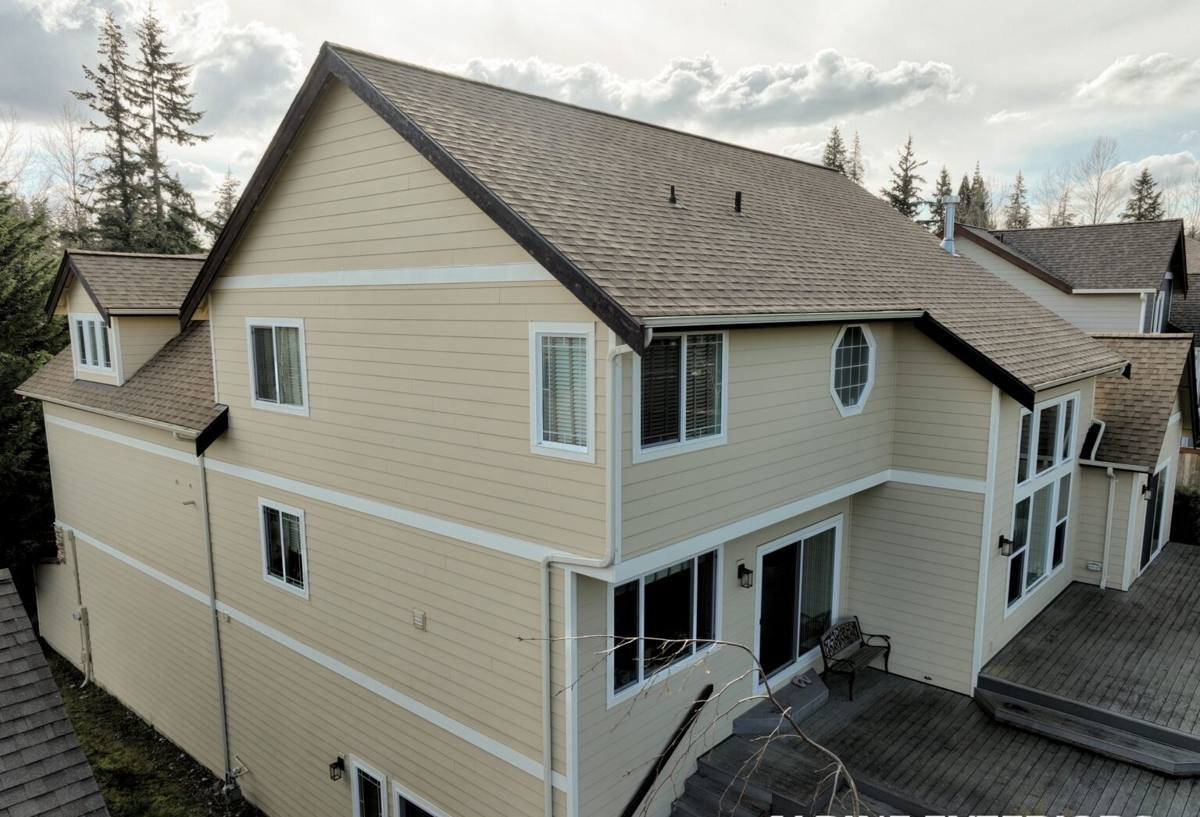
What Composite Decking Actually Is
Composite decking is a manufactured board made from a blend of wood fiber and polymer, pressed and extruded into deck-board profiles. It's designed to resist the two things that kill wood decks fastest in Florida: moisture absorption and UV breakdown. That said, not all composite is built the same, and the difference matters more here than in a lot of other climates.
Capped vs. Uncapped Composite
Capped composite boards have a polymer shell wrapped around the wood-plastic core on all sides. That cap is what actually blocks moisture intrusion, staining, and fading — it's the part doing the work in our humidity and sun. Uncapped composite, or composite with only a partial cap, is cheaper up front, but the exposed core can still absorb moisture and is more prone to surface wear over time. For a Forest Lakes deck sitting in full Florida sun for years, we specify fully capped boards as our standard — that's a maintenance and longevity decision, not a brand preference.
Hidden Fasteners and Grooved Boards
Most quality composite systems use grooved-edge boards with a hidden fastener clip system rather than screws driven through the top face. This gives a cleaner look, but it also matters functionally here: fewer exposed screw penetrations through the board face means fewer entry points for water to work into the board over time.
Composite vs. the Alternatives, for This Climate Specifically
Homeowners in Forest Lakes usually ask us to compare composite against pressure-treated wood and PVC/vinyl decking. All three can be built well or built poorly, but they behave differently in a hot, humid, salt-air environment, and that's worth laying out plainly.
| Factor | Composite Decking | Pressure-Treated Wood | PVC / Vinyl Decking |
|---|---|---|---|
| UV / fade resistance | Good to very good (capped boards) | Poor — grays and roughens without regular sealing | Very good |
| Moisture / rot resistance | Good (capped) to fair (uncapped) | Fair — treatment slows rot but doesn't stop it | Excellent, fully synthetic |
| Upfront material cost | Mid to upper-mid | Lowest | Highest |
| Ongoing maintenance | Low — periodic cleaning | High — sealing/staining every 1-2 years in this climate | Low |
| Heat underfoot | Can run warm in direct sun, varies by color | Moderate | Can run warm, similar to composite |
| Feel / appearance | Wood-grain texture, wide color range | Natural wood, changes with weathering | Smoother, more uniform look |
There's no single right answer for every homeowner — budget and priorities matter. But for a deck that's going to sit exposed to Pinellas County sun and salt air for the next 15-25 years with minimal upkeep, capped composite is where most of our Forest Lakes clients land.
What a Correct Installation Involves
The decking boards themselves get most of the attention, but the substructure underneath is what determines whether the deck actually survives storm season after storm season. This is the part that's easy to shortcut and hard to inspect once it's covered.
Substructure and Framing
Composite decking is heavier and flexes differently than wood, which means joist spacing has to match the manufacturer's specification for composite specifically — not whatever spacing was used for an old wood deck being replaced. Diagonal or picture-frame board patterns often require tighter joist spacing than a standard straight-lay pattern. We frame to the board manufacturer's spec, not to habit.
Fasteners and Hardware
Salt air corrodes standard hardware faster than most homeowners expect, even at some distance from the water. We use stainless steel or coated fasteners and structural hardware rated for coastal exposure throughout the frame, not just at the visible connections. It's a detail you won't see once the deck is finished, but it's a big part of why a deck lasts or doesn't.
Ledger Attachment, Flashing, and Drainage
Where a deck attaches to the house, the ledger board needs proper flashing to keep wind-driven rain from working its way behind the siding and into the wall structure — this is one of the most common failure points we find on older decks in this area. We also leave manufacturer-specified expansion gaps between boards, since composite expands and contracts more than people assume across Florida's daily and seasonal temperature swings, and we plan the deck's slope and gapping so water actually drains instead of pooling against the house or under the boards.
Wind, Permitting, and Structural Requirements in Pinellas County
Oldsmar sits in a wind zone where decks, railings, and their attachment to the house are held to real structural standards, not just "looks sturdy" judgment calls. Post spacing, footing depth, ledger fastening, and railing attachment all have to be sized for wind and load, and a permitted deck project goes through inspection to confirm that. We pull the required permits and build to what the local jurisdiction requires — permitting isn't optional paperwork to us, it's the mechanism that confirms the structure underneath your composite boards can actually take a Florida wind event.
Footings also need to account for local soil conditions and drainage, especially with Florida's heavy seasonal rain. Undersized or shallow footings are a common shortcut on lower-cost deck jobs, and they're one of the first things to fail when a big storm puts real lateral load on a structure.
Our Process for Forest Lakes Deck Projects
Every deck is a little different, but the sequence we follow is consistent:
- On-site assessment — we look at the existing structure (if any), grade, drainage, sun exposure, and how the deck ties into the house.
- Design and material selection — board pattern, railing style, and composite line chosen for the site's exposure, along with a straightforward cost breakdown.
- Permitting — plans submitted and permits pulled before any demo or construction starts.
- Demo — where an existing deck is being replaced, old decking and framing removed and hauled off.
- Framing and footings — substructure built to spec for composite loads and Pinellas County wind requirements.
- Decking, railing, and fascia installation — hidden-fastener composite boards, railing system, and finish trim.
- Final walk-through — we go over the finished deck with you before we consider the job done.
Maintenance That Actually Matters in This Climate
One of the real advantages of composite is how little upkeep it needs compared to wood — but "low maintenance" isn't "zero maintenance," especially with salt air and heavy pollen in the mix. A few habits go a long way:
- Rinse the deck periodically to clear salt film, pollen, and dust buildup before it sets into the board texture
- Keep the gaps between boards clear of leaves and debris so water can actually drain through instead of pooling on the surface
- After a significant storm, do a quick check for any boards or railing hardware that shifted
- Clean mildew or algae film promptly in shaded, humid corners of the deck with a mild composite-safe cleaner — don't let it sit
- Skip the pressure washer on high settings; it can etch or fuzz the surface of composite boards
- Have the ledger flashing and connection points looked at every year or two, since that's the spot most likely to develop a hidden leak
Why a Crew That Already Works Forest Lakes Matters
A deck built to a generic national spec sheet isn't necessarily built for Oldsmar. A crew that already works in this area knows the local permitting process, has a feel for how the soil and drainage behave on these lots, and has already seen how different composite lines hold up to a full Tampa Bay hurricane season and years of salt air — not just how they look on a sample board in a showroom. That local track record is what lets us make honest recommendations instead of guesses, and it means a faster response if something needs attention after a storm.
If you're weighing composite decking for a Forest Lakes property, we're glad to walk the site, talk through material and design options honestly, and put together a straightforward estimate — no pressure, no hard sell. Use the form below to get started.