 Oldsmar Siding
 Why Largo Homes Need Siding Built for This Climate
Largo sits in the thick of Pinellas County's weather — close enough to the Gulf and Tampa Bay that salt-laden air is a daily fact of life, and squarely in the path of the summer storm pattern that brings wind-driven rain against exterior walls almost every afternoon from June through September. Add in year-round UV exposure that's stronger and more constant than most of the country ever deals with, and you've got a set of conditions that will find every weakness in a siding system within a few years, not a few decades.
This isn't a generic "Florida is hot and humid" problem. It's a specific combination: intense solar load that breaks down pigments and plastics, salt air that accelerates corrosion and coating failure, and wind events strong enough to drive water sideways into seams, laps, and fastener points that were never designed to handle it. Siding that performs fine in a drier, milder climate can fail here in a fraction of the time. That's the lens we use on every Largo project — not "what siding looks good," but "what siding will still be doing its job in twenty years under these exact conditions."
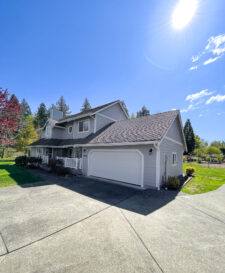
Why We Install Only James Hardie Fiber Cement
We don't install vinyl, LP SmartSide, primed wood, cedar, or other fiber cement brands like Allura or Cemplank. That's a deliberate standard, not a sales pitch. Vinyl softens and warps under sustained heat and can crack in wind events; wood and wood-based composites need a maintenance commitment most homeowners don't realize they're signing up for until moisture gets into a seam. Other fiber cement brands make a reasonable product, but James Hardie is the one we've found delivers the most consistent combination of factory-cured finish quality, product engineering aimed at climates like ours, and a warranty structure that actually transfers with the home.
James Hardie fiber cement is a non-combustible blend of cement, sand, and cellulose fiber, engineered to hold its shape and finish under heat, moisture, and UV that would degrade other materials. The ColorPlus finish is baked on in a factory environment under controlled conditions — not brushed or sprayed on site — which is a meaningful difference in a climate that's this hard on exterior coatings.
HZ5 Climate Engineering
Hardie makes climate-specific product lines, and homes in our part of Florida fall under the HZ5 designation — engineered for high humidity, heavy rain exposure, and hot, sun-intense conditions. That's not marketing language; it affects the moisture-resistance formulation of the board itself. Using the correct HZ line matters more here than in most of the country, and it's one of the first things we confirm before ordering material for a Largo project.
What a Correct Fiber Cement Installation Actually Requires
Fiber cement siding is only as good as its installation. A huge share of the problems homeowners eventually run into — moisture intrusion, cracking at butt joints, premature caulk failure — trace back to installation shortcuts, not the material itself. In a climate that stresses every seam with wind-driven rain, those shortcuts show up faster.
- Correct starter strip and clearance from grade, decks, and roof lines so water has somewhere to go
- A water-resistive barrier installed and lapped correctly behind the siding — the drainage plane matters as much as the siding itself
- Proper fastener type, spacing, and depth per Hardie's installation instructions — over-driven or wrong fasteners are one of the most common causes of early failure
- Correct joint treatment at butt seams, corners, and around penetrations (vents, fixtures, hose bibs)
- Field-cut edges sealed or primed per manufacturer spec, especially on HardiePlank lap siding
- Proper flashing at windows, doors, and roof-to-wall transitions — the single most common source of hidden water damage
None of this is exotic. It's documented in Hardie's own installation manual. The problem in the field isn't a lack of instructions — it's crews skipping steps to move faster. In wind and rain conditions like Largo sees regularly, skipped steps become leaks within a few storm seasons rather than a few decades.
Signs Your Largo Home's Current Siding Is Falling Behind
Whether you're on original vinyl, aging wood, or a fiber cement job that wasn't installed to spec, the warning signs tend to look similar:
| What You See | What It Usually Means |
|---|---|
| Soft or spongy spots when pressed | Moisture has gotten behind the siding and is affecting sheathing |
| Visible warping, buckling, or waviness | Heat cycling and/or moisture trapped behind the panel |
| Chalky residue or faded, patchy color | UV breakdown of the surface coating — common on field-painted or lower-grade products |
| Cracking at corners or butt joints | Wind flex, poor joint treatment, or wrong fastener placement |
| Peeling paint or bubbling near trim | Moisture trying to escape from behind the siding |
| Rust streaks near fasteners | Wrong fastener material for salt-air exposure |
Any one of these on its own might be minor. Several together, especially on one side of the house (typically the side that takes the most wind-driven rain), usually means it's worth a full inspection rather than a spot repair.
How We Approach a Largo Siding Project
1. On-Site Assessment
We walk the exterior, check for moisture intrusion at vulnerable points (window and door flashing, roof-to-wall transitions, penetrations), and evaluate the sheathing underneath where existing siding is coming off. This is where hidden damage from years of wind-driven rain typically surfaces.
2. Product and Line Selection
We confirm the right HardiePlank, HardiePanel, or HardieShingle profile and ColorPlus color for the home, factoring in HOA or neighborhood aesthetics common in this part of Largo and Oldsmar, sun exposure on each elevation, and the homeowner's maintenance preferences.
3. Tear-Off and Substrate Repair
Old siding comes off, and any compromised sheathing or framing gets repaired before anything new goes up. Installing new siding over damaged substrate just locks the problem inside the wall.
4. Weather Barrier and Flashing
A correctly lapped water-resistive barrier and properly integrated flashing at every window, door, and transition point go in before a single piece of siding is hung. This step is invisible once the job is done, and it's the step that determines whether the house stays dry for the next twenty years.
5. Installation to Manufacturer Spec
Fastener spacing, clearances, joint treatment, and sealed cut edges are done per Hardie's published installation requirements — the same requirements that keep the manufacturer's warranty intact.
6. Final Walkthrough
We review the finished work with the homeowner, point out anything they should know about long-term care, and make sure everything matches what was scoped at the start.
Fiber Cement vs. Other Siding Options for This Climate
| Factor | James Hardie Fiber Cement | Vinyl | Wood / Primed Spruce |
|---|---|---|---|
| UV / fade resistance | Factory-baked ColorPlus finish, engineered for sun exposure | Can fade and become brittle over time in constant sun | Paint fades and chalks; needs recoating |
| Wind resistance | Rigid, holds shape under wind load when correctly fastened | Can crack, oil-can, or blow off in high wind | Depends on install quality; prone to warping |
| Moisture behavior | Engineered HZ5 formulation for high-humidity climates | Doesn't absorb water but traps it behind panels if installed poorly | Absorbs moisture; rot risk without diligent upkeep |
| Salt air exposure | Non-organic composition resists salt-driven degradation | Generally stable but seams and fasteners still vulnerable | Higher maintenance burden near coastal air |
| Fire performance | Non-combustible | Combustible, can melt under heat exposure | Combustible |
| Ongoing maintenance | Occasional wash; no repainting needed with ColorPlus | Low maintenance but limited repair options once damaged | Regular repainting/staining and inspection required |
What Affects the Cost of a Largo Fiber Cement Project
Every home is different, but the same factors drive most of the variation in price for a fiber cement job in this area:
| Cost Factor | Why It Matters |
|---|---|
| Home size and elevation count | More square footage and more wall complexity means more material and labor |
| Tear-off and substrate condition | Hidden moisture damage found during tear-off can add repair scope |
| Trim, corners, and architectural detail | Complex trim work and multiple corner types take more time to finish correctly |
| Product profile (lap, panel, shingle) | Different HardiePlank and HardieShingle profiles carry different material and labor costs |
| Accessibility | Two-story sections, tight lot lines, or landscaping obstacles affect labor time |
We won't quote broad numbers here that don't mean anything without seeing the actual house — an honest estimate has to be based on your home's specific size, condition, and detail level.
Why Hiring a Crew That Already Works This Area Matters
A siding job done right for Pinellas County isn't identical to one done right in a drier, calmer climate. The flashing details, fastener choices, and clearance decisions that matter here are shaped by the same conditions every Largo home deals with — sustained UV, salt air, and wind-driven rain. A crew that installs fiber cement regularly in this specific environment has already made the adjustments that generic installation instructions don't spell out: which details fail first here, which corners can't be cut, and which parts of the installation manual actually matter most when a storm hits.
That local experience is also why we're comfortable standing behind our work with a single-product standard. We're not trying to match a product to every budget or trend — we install James Hardie because it's what we've found holds up, and we know how to install it correctly for this specific climate.
Questions Worth Asking Any Contractor Before You Hire
- Do they install to the manufacturer's published specification, or their own shortcuts?
- Will they inspect and repair sheathing before new siding goes up, not just over it?
- Do they use the correct HZ climate line for this region?
- Is the warranty tied to certified installation, and does it transfer if you sell the home?
- Can they explain their flashing and water-barrier approach in plain terms?
If your Largo home's siding is showing wear, or you're planning ahead for a replacement, we're happy to take a look and walk you through what we're seeing — no pressure, no obligation. Fill out the form below for a free estimate.