 Oldsmar Siding
 Deck Replacement in East Lake
East Lake sits inland from Oldsmar and the rest of Pinellas County, but "inland" in this part of Florida doesn't mean sheltered. Homes here still take the full brunt of Gulf Coast weather: long stretches of intense UV, sudden wind-driven downpours, hurricane-force gusts during storm season, and salt-laden air that travels farther inland than most homeowners expect. A deck built without those conditions in mind will show problems years before it should — and by the time those problems are visible on the surface, the structure underneath is often already compromised.
We work on decks throughout the Oldsmar and East Lake area regularly, which means we're not guessing at how local conditions affect decking materials, fasteners, and framing. We're replacing decks that failed for the same predictable reasons, over and over, and building the replacements to hold up longer.
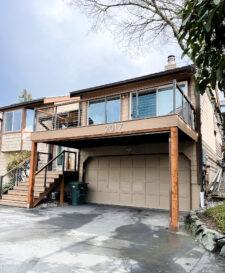
What East Lake's Climate Actually Does to a Deck
Every deck failure we see traces back to one or more of the same environmental stresses. Understanding them is the first step in building something that lasts.
UV Exposure
Florida sun is relentless nearly year-round. Untreated or poorly finished wood dries out, cracks, and silvers within a few seasons. UV also breaks down the surface resins in lower-grade composite boards over time, which is why not all composite decking performs the same way here even though it's marketed as "low maintenance."
Wind-Driven Rain
Rain in this region rarely falls straight down. Wind pushes it sideways and up underneath railings, into ledger board connections, and between deck boards. Any deck without proper drainage gaps, flashing, and slope will trap moisture in exactly the places you can't see until rot has already started.
Salt Air
Even set back from the water, East Lake gets salt-bearing air carried in off the Gulf. Salt accelerates corrosion in fasteners, joist hangers, and structural connectors. A deck built with standard, non-coastal-rated hardware will show rust and fastener failure well before the decking material itself wears out.
Hurricane-Force Wind
Wind load isn't just about the storm itself — it's about what the wind does to connections that have already been weakened by moisture or corrosion. A deck with sound lumber but corroded hardware, or solid hardware but a rotted ledger board, is still a structure that can fail under load. Wind resistance depends on every connection point working together, not just the visible boards.
Signs Your Deck Needs Replacement, Not Repair
Not every aging deck needs a full replacement, but there's a point where patching individual boards or re-securing loose railings stops being a real fix and starts being a way to delay an inevitable rebuild. Watch for:
- Soft, spongy, or visibly sagging deck boards, especially near the house
- Rust streaks running down from fasteners or metal connectors
- Wobble or movement in railings or stair stringers when you put weight on them
- Gaps or separation where the deck attaches to the house (the ledger board)
- Visible rot, splitting, or insect damage in support posts or beams
- A deck older than 15–20 years that has never had its structural framing inspected
- Repeated board replacements in the same areas year after year
If you're seeing two or more of these at once, that's usually a sign the underlying structure — not just the surface — has been compromised.
Choosing the Right Decking Material for This Climate
There's no single "best" decking material for every homeowner — it depends on budget, maintenance appetite, and how the deck will be used. Here's how the common options actually perform under Pinellas County conditions:
| Material | UV / Sun Performance | Moisture & Rot Resistance | Maintenance |
|---|---|---|---|
| Pressure-treated wood | Fades and can crack without regular sealing | Good if properly sealed and maintained | Annual cleaning and resealing recommended |
| Composite decking | Good on higher-grade capped boards; lower-grade boards can fade or chalk | Very good — doesn't rot, but check board-specific water absorption ratings | Low — periodic cleaning only |
| PVC decking | Excellent — fully synthetic, doesn't absorb UV like wood fiber | Excellent — no organic material to rot | Lowest — cleaning only, no sealing ever needed |
| Tropical hardwoods | Good natural UV tolerance but will gray without oiling | Naturally rot-resistant when properly installed | Moderate to high — periodic oiling for color retention |
We'll walk you through these trade-offs honestly during your estimate. A composite or PVC board with a strong warranty and a track record in humid coastal climates is usually the better long-term value for East Lake homeowners who want to spend less time maintaining the deck and more time using it. Wood still has its place for homeowners who want that specific look and are willing to keep up with sealing.
What a Correct Deck Replacement Actually Involves
A deck replacement is a structural project, not a cosmetic one. Skipping any of these steps is how decks end up needing another full replacement in half the time they should last.
Full Demo and Structural Inspection
We remove the old decking down to the framing and inspect posts, beams, joists, and — critically — the ledger board where the deck attaches to the house. This is the single most common failure point we find on older decks in this area, because it's the connection most exposed to trapped moisture.
Footings and Framing
Footings need to be sized and set to local code, and framing lumber needs to be rated for ground contact or exterior use as appropriate. We don't reuse old framing that shows any sign of rot, insect damage, or corrosion at the connectors, even if it means the project takes a little longer.
Fasteners, Flashing, and Hardware
Given the salt air in this region, we use corrosion-resistant, coastal-rated fasteners and structural connectors rather than standard hardware. Proper flashing at the ledger board keeps wind-driven rain from getting behind the house's siding and framing — this one detail prevents a huge share of the hidden rot we find on decks we're asked to replace.
Decking, Railings, and Stairs
Boards are installed with proper spacing for drainage and expansion, railings are secured to structural blocking (not just the decking surface), and stair stringers are sized to code. Every railing and stair connection is a point that has to hold up under both daily use and wind load.
Permitting and Code Compliance
Deck replacements typically require a permit and inspection through the local building department. We handle that process as part of the job so you're not left figuring out permitting requirements on your own, and so the finished deck is documented as code-compliant — which matters for insurance and resale.
Our Process for East Lake Deck Replacements
- On-site assessment — we inspect the existing deck's framing, ledger connection, and hardware condition, not just the surface boards.
- Honest recommendation — repair vs. full replacement, with the reasoning explained, and material options that fit your budget and how you use the space.
- Written estimate — clear scope, materials, and timeline before any work starts.
- Permitting — we pull the required permit and schedule inspections.
- Demo and structural rebuild — old decking removed, framing and footings brought up to code.
- Decking, railing, and stair installation — using coastal-rated hardware throughout.
- Final walkthrough — we go over the finished deck with you, including any maintenance recommendations specific to the material you chose.
Railings, Stairs, and Attachment Points Matter More Than the Boards
Homeowners naturally focus on what the decking surface will look like, but the parts of a deck most likely to fail — and most likely to cause injury if they do — are the connections you don't see day to day. A railing that's screwed into decking boards instead of structural blocking can fail under lateral pressure. A ledger board attached without proper flashing and fasteners is a slow-motion moisture problem. Stair stringers that aren't sized correctly for the rise and run become a safety issue over time as wood settles or composite material expands and contracts with heat. We treat these connection points with the same care as the visible decking, because that's where the structural integrity of the whole deck actually lives.
Why Hiring a Crew That Already Works in East Lake Matters
A deck built to a generic national standard isn't necessarily built for this environment. Crews who don't regularly work Gulf Coast conditions can underestimate how much salt air affects hardware, how much wind-driven rain gets behind ledger boards, or how quickly UV breaks down lower-grade materials here compared to a drier climate. Working throughout Oldsmar and the surrounding Pinellas County area means we're consistently seeing how different materials and installation details actually hold up locally — not just how they're rated in a manufacturer's spec sheet. That local track record shapes every recommendation we make, from hardware selection to which decking products are worth the extra cost.
After Replacement: Keeping Your Deck in Good Shape
Whatever material you choose, a little regular attention goes a long way in this climate:
- Rinse off salt residue and debris periodically, especially after storms
- Keep gutters and downspouts clear so water isn't dumping directly onto or near the deck
- Check railings and stair connections for movement once or twice a year
- Reseal or re-oil wood decking on the schedule recommended for the specific product
- Address any soft spots, rust streaks, or loose fasteners right away rather than waiting
Catching small issues early is what keeps a well-built deck lasting for decades instead of needing premature repairs.
Get a Free, No-Pressure Estimate
If your East Lake deck is showing its age — or you just want an honest opinion on whether it's a repair or a replacement situation — we're happy to take a look and walk you through the options. Fill out the form below for a free estimate with no pressure and no obligation.