 Oldsmar Siding
 Roofing Built for East Lake's Weather, Not Just Any Weather
East Lake homes sit close enough to Tampa Bay and the Gulf that the air itself works against a roof. Salt-laden humidity settles into shingle granules and metal fasteners year-round. Summer sun bakes asphalt shingles at UV intensities that most manufacturers' warranties were never really tested against outside Florida. And when a tropical system or a straight-line summer storm rolls through, wind-driven rain doesn't just fall on a roof — it gets pushed sideways, up under shingle tabs, and into any gap a rushed installation left behind. A roof that would hold up fine in a drier, milder climate can fail early here if it wasn't built with these specific conditions in mind.
We work on roofs throughout Oldsmar and East Lake regularly, so we're not guessing at what this climate does to asphalt shingles over ten or fifteen years — we see it on tear-offs. That experience shapes how we spec materials, fasten shingles, and detail every edge, valley, and penetration on every job.
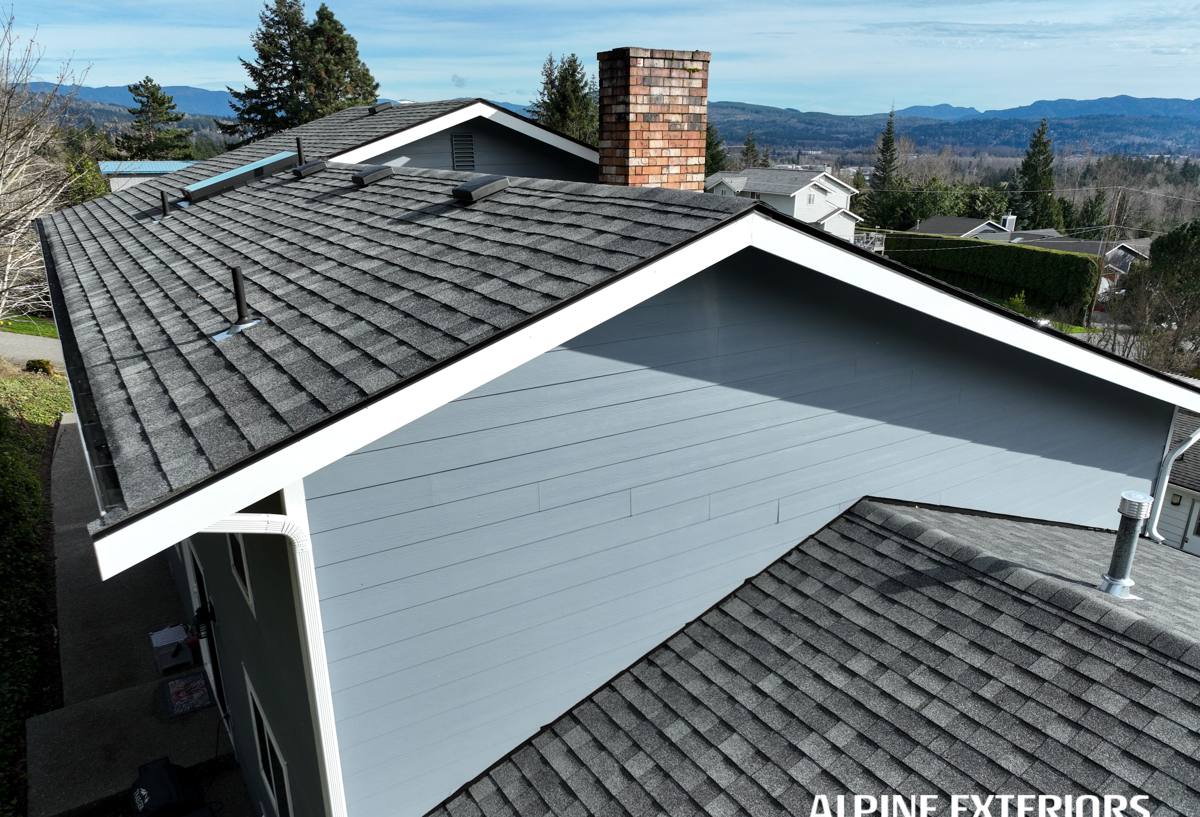
What Pinellas County's Climate Actually Does to a Shingle Roof
Wind
Hurricane and tropical-storm-force gusts create uplift at eaves, ridges, and rakes — the edges of the roof, not just the field. Shingles that aren't nailed correctly, or that use a fastening pattern rated for a calmer climate, start lifting at those edges first. Once a tab lifts even slightly, wind can get underneath it, and the next storm takes it the rest of the way.
UV Exposure
Florida sun is relentless almost every month of the year. UV breaks down the asphalt in a shingle over time, drying it out and making it brittle. Brittle shingles crack instead of flexing, and cracked shingles lose their ability to shed water.
Wind-Driven Rain
Rain that comes in nearly horizontal during a storm tests every seam, nail hole, and flashing detail on a roof. A roof that's watertight in a normal vertical rain can still leak in a wind-driven event if underlayment, flashing, and shingle overlap weren't done correctly.
Salt Air
Even set back from the water, East Lake gets enough salt in the air to accelerate corrosion on exposed metal — nail heads, flashing, and vent stacks. Corroded fasteners lose their grip strength over time, which quietly weakens a roof's wind resistance long before it's visible from the ground.
What a Correctly Installed Shingle Roof Includes
"Correct" isn't just nailing shingles to plywood. In this climate, every layer under the shingles matters as much as the shingles themselves.
- Deck inspection and repair — soft, delaminated, or water-damaged decking gets replaced before anything new goes down, not covered up.
- Synthetic or self-adhering underlayment — a secondary water barrier that protects the deck if wind or wear ever compromises the shingles above it.
- Ice-and-water-style membrane at vulnerable points — valleys, eaves, and roof-to-wall transitions where wind-driven rain concentrates.
- Drip edge at eaves and rakes — directs water off the roof edge instead of letting it wick back under the shingles or into the fascia.
- Correct nailing pattern and nail count — matched to the shingle manufacturer's high-wind installation instructions, not the minimum standard pattern.
- Properly detailed flashing — around chimneys, skylights, and wall intersections, where most roof leaks actually originate.
- Balanced attic ventilation — intake at the soffit and exhaust at the ridge, so heat and moisture don't cook the underside of the deck or the shingles from below.
Choosing a Shingle for East Lake Conditions
Not every asphalt shingle product is built the same way, and the differences matter more here than in milder climates. We talk homeowners through the real trade-offs rather than just pushing the most expensive option.
| Shingle Type | Wind Performance | Typical Lifespan Here | Best Fit |
|---|---|---|---|
| 3-tab (standard) | Lower wind rating, lighter weight | Shorter, especially with direct sun exposure | Budget-driven projects, less wind-exposed roof areas |
| Architectural / dimensional | Higher wind rating, heavier and more rigid | Longer, holds up better to UV and impact | Most East Lake homes, especially higher or more exposed rooflines |
| Impact-resistant (Class 4) | Strong wind and hail resistance | Comparable to or longer than standard architectural | Homes seeking possible insurance premium credits |
For most East Lake homes, we recommend architectural shingles with a high-wind-rated installation. They cost more up front than 3-tab shingles, but they're heavier, lay flatter, and are engineered to perform in the wind speeds this area actually sees. Some insurance carriers also offer premium discounts for impact-resistant products — worth asking your agent about before you decide.
A Note on Shingle Warranties
Manufacturer warranties often list a wind-speed rating that only applies if the shingles were installed exactly to that manufacturer's high-wind specification — extra nails, specific nail placement, sometimes additional adhesive. A standard installation voids the enhanced wind coverage even if the shingle itself was rated for it. We install to the high-wind spec as standard practice, not as an upcharge, because anything less doesn't hold up here.
Signs an East Lake Roof Needs Attention
Most roof failures don't happen all at once — they show warning signs first. Homeowners who catch these early usually face a repair instead of a full replacement.
- Granules collecting in gutters or at downspout outlets
- Shingle edges that look curled, cupped, or lifted
- Cracked or split shingles, especially on south- and west-facing slopes
- Dark streaking or staining across the roof surface
- Soft spots when walking the roof, or sagging visible from the ground
- Daylight visible through the attic roof deck
- Water stains on interior ceilings after a storm
- Missing shingles or exposed nail heads after high wind
- Rusting or lifted flashing around vents, chimneys, or skylights
None of these mean an automatic full tear-off. But left alone through even one more storm season, a small issue like a few lifted shingles can turn into deck damage that costs significantly more to fix.
How We Approach a Project in East Lake
- On-site inspection. We walk the roof (not just look from the ground), check the attic for ventilation and moisture issues, and assess the deck condition — not just the shingles.
- Honest scope and estimate. We explain whether the roof needs a repair, a partial re-roof, or a full replacement, and why — with a written estimate that breaks down materials and labor.
- Material selection. We go over shingle options, wind ratings, and color choices, factoring in your home's exposure and your budget.
- Scheduling around weather. Florida's rain patterns mean timing matters. We plan installation days to minimize the amount of time a deck is open to the elements.
- Tear-off and deck inspection. Old shingles come off completely — we don't install a new layer over an old one — and any damaged decking is identified and replaced.
- Underlayment, flashing, and shingle installation. Installed to the manufacturer's high-wind specification, with attention to every valley, edge, and penetration.
- Ventilation check. We confirm intake and exhaust airflow is balanced before closing out the job.
- Final walkthrough and cleanup. We inspect the finished roof with you, answer questions, and make sure the property is cleaned of debris and nails before we leave.
Repair or Replace? Factors That Actually Matter
This is one of the most common questions we get, and the honest answer depends on more than the roof's age.
| Factor | Leans Toward Repair | Leans Toward Replacement |
|---|---|---|
| Roof age | Under half of expected shingle lifespan | Approaching or past expected lifespan |
| Extent of damage | Isolated to one area or slope | Spread across multiple areas or slopes |
| Deck condition | Solid, no soft spots or rot | Soft, delaminated, or water-damaged in multiple areas |
| Granule loss | Minimal, localized | Widespread, shingles look "bald" |
| Storm history | Single recent event, otherwise sound roof | Repeated storm damage over several seasons |
We'll always tell you if a repair is the honest answer, even if a full replacement would be the bigger job for us. A roof that's structurally sound and just needs a section addressed doesn't need to be torn off.
Permits, Codes, and Insurance Considerations
Roof replacements in Pinellas County generally require a permit, and inspections are part of the process — this isn't a job that should be done off the books. Beyond the legal requirement, permitted work with documented inspections gives you a paper trail that matters when you sell the home or file an insurance claim down the road. We handle the permitting process as part of the job so you're not left tracking down paperwork yourself.
It's also worth checking with your homeowner's insurance provider before and after a re-roof. Some carriers adjust premiums based on shingle wind rating, impact resistance, or the age of the roof — a new, properly installed roof can sometimes reduce your premium, and it's a conversation worth having with your agent.
Why Local Experience in East Lake Matters
A roofing crew that only occasionally works in this part of Pinellas County is learning the local conditions on your dime. A crew that works East Lake and Oldsmar regularly already knows how the wind moves across this area, which roof orientations take the hardest sun, and where salt air and storm exposure tend to cause the earliest wear. That's not marketing — it's the difference between a generic installation and one that's actually built for the address it's going on.
Local experience also means faster response when something needs attention after a storm. We're not driving in from across the region — we're already working in the neighborhood.
Maintenance That Extends the Life of Your Roof
A well-installed shingle roof still needs occasional attention to reach its full lifespan in this climate.
- Keep gutters and downspouts clear so water doesn't back up under the eaves
- Trim overhanging tree limbs to reduce debris buildup and abrasion
- Have the roof inspected after any major storm, even if no leak is visible
- Address small repairs promptly rather than waiting for them to spread
- Check attic ventilation periodically — poor airflow shortens shingle life from underneath
If you're seeing signs of wear, planning ahead of hurricane season, or just want a straight answer about your roof's condition, we're glad to take a look. Request a free, no-pressure estimate using the form below and we'll walk you through exactly what your East Lake home needs.