 Oldsmar Siding
 Why Dunedin's Coastal Location Is Tough on Siding
Dunedin sits on the Gulf side of Pinellas County, which puts homes here closer to open water than most of the Tampa Bay area. That location is part of what makes the community appealing, but it also means exterior building materials face a harsher combination of stressors than siding has to handle almost anywhere else in the country. Four factors do most of the damage over time, and they rarely act alone.
Salt Air
Airborne salt drifts inland from the Gulf and settles on every exterior surface, including siding, trim, and fasteners. Left alone, that salt film holds moisture against the wall and accelerates corrosion of anything metal — nail heads, flashing, screws — long before it would fail in an inland neighborhood.
Year-Round UV
Florida sun is intense almost every month of the year, not just in summer. Constant UV exposure breaks down pigments and resins in lower-grade finishes, which is why field-painted siding in this climate tends to fade, chalk, or need repainting on a much shorter cycle than the same product would in a milder climate.
Wind-Driven Rain
Storms here rarely drop rain straight down. Wind pushes it sideways and up under laps, at corners, and around penetrations like hose bibs and light fixtures. If the siding system, flashing, and underlying weather barrier aren't detailed correctly, that's exactly where water finds its way into the wall assembly.
Hurricane-Force Wind
Pinellas County sits in a high-velocity hurricane zone. Siding has to resist sustained wind loads and wind-borne debris impact, and it has to stay attached through repeated pressure cycling, not just a single storm event. Fastening pattern and edge attachment matter as much as the material itself.
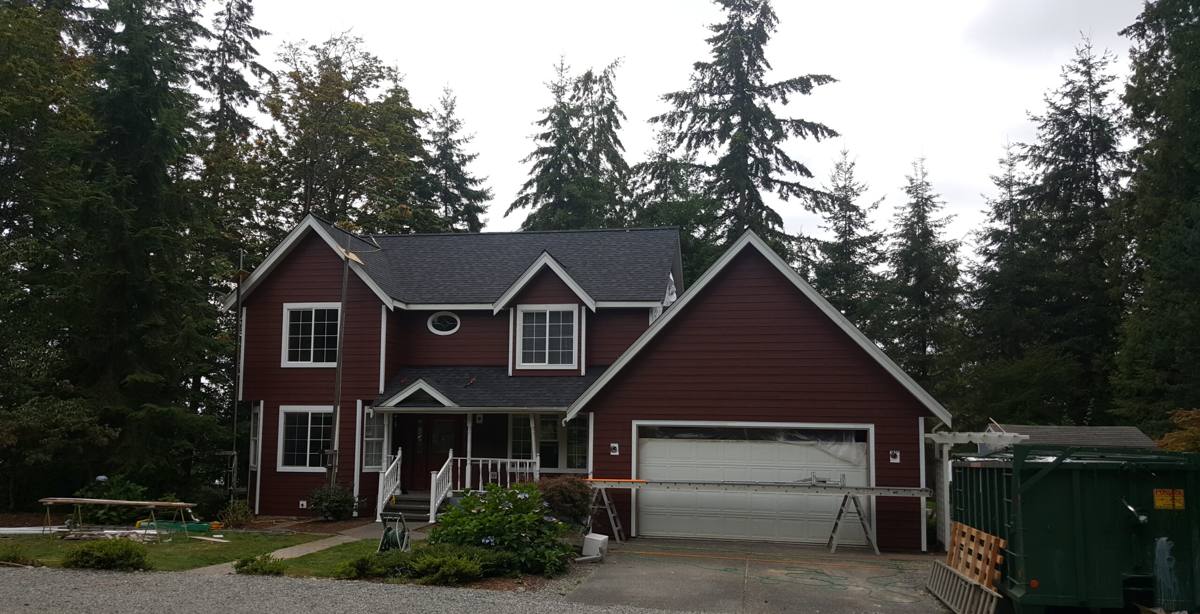
What a Correct Fiber Cement Job Requires Here
Fiber cement siding can handle this climate extremely well — but only when it's installed to the standard the climate actually demands. A correct installation in Dunedin includes several details that get skipped on rushed or inexperienced jobs:
- A continuous, properly lapped weather-resistive barrier behind the siding, with no gaps at seams or penetrations
- Corrosion-resistant fasteners — stainless steel or hot-dip galvanized, never standard coated nails that will rust in salt air
- Fastener spacing and placement matched to the local wind zone, not a generic nailing schedule
- Proper flashing and head flashing at every window, door, and wall penetration
- Correct lap dimensions and butt joint treatment so wind-driven rain can't track behind the plank
- Quality sealant at joints and trim transitions, applied to manufacturer spec rather than caulked over as an afterthought
None of these steps are optional in a coastal wind zone. Skip any one of them and the siding may look fine for a year or two while a moisture or corrosion problem builds behind it.
Why We Install Only James Hardie Fiber Cement
We standardized on James Hardie siding for every home we work on, including in Dunedin, and we don't install vinyl, LP SmartSide, Cemplank, Allura, or primed wood siding. That's not a marketing position — it's a decision based on how these products perform, or don't, in a hurricane-exposed, salt-air climate over the long run.
James Hardie's HZ5 product line is engineered specifically for high-humidity, hurricane-prone regions like ours, with a formulation designed to resist moisture-related damage better than standard fiber cement. Hardie's ColorPlus finish is baked on at the factory in a controlled process, which gives it significantly better UV and fade resistance than a coat of paint applied on site after installation — a real advantage in a climate that gets sun exposure nearly every day of the year. The fiber cement core itself is non-combustible and doesn't swell, rot, or attract wood-boring insects the way engineered wood products can if moisture gets behind them. And Hardie backs the product with a strong, transferable warranty, which matters to homeowners who plan to sell in the years after a siding project.
Other products have their own strengths — vinyl is inexpensive, LP SmartSide is lighter to install, cedar has a look some homeowners love. We're not disputing that. We've simply concluded that the maintenance burden, moisture sensitivity, or installation tolerances of those alternatives don't hold up to our standard for what we're willing to put our name on in this climate, so we only offer what we're confident will perform.
Our Installation Process
Every Dunedin project follows the same sequence, regardless of house size:
- Assessment — we inspect the existing siding, sheathing, and trim for hidden moisture damage before any tear-off begins
- Tear-off and substrate check — old siding comes off and the sheathing underneath is inspected and repaired as needed; this is often where problems from a previous installation surface
- Weather barrier installation — a continuous, correctly lapped moisture barrier goes on before a single piece of siding is hung
- Flashing details — windows, doors, and every penetration get proper flashing before trim and siding close them in
- Hardie panel or plank installation — installed per James Hardie's published fastening and clearance specifications for our wind zone
- Finish — ColorPlus factory-finished product where color options fit the home, or correctly primed and field-painted Hardie where custom color is required
- Final walk-through — we review the completed work with the homeowner before calling the job done
Fiber Cement vs. Other Siding Options in This Climate
| Factor | Fiber Cement (Hardie) | Vinyl | Wood / LP SmartSide |
|---|---|---|---|
| Hurricane wind resistance | High when installed to spec | Lower impact and wind resistance | Moderate, installation-sensitive |
| Moisture / rot resistance | Engineered core, doesn't rot | Won't rot but can trap moisture behind it | Vulnerable if moisture gets behind panels |
| UV / color retention | Factory finish resists fading | Can fade and become brittle over time | Field paint fades faster in constant sun |
| Salt air durability | Non-metallic core; fasteners are the main concern | Generally stable but can chalk | More susceptible to moisture-driven decay |
| Long-term maintenance | Low with correct install | Low but limited repair options | Higher — repainting and moisture checks |
Signs Your Current Siding Is Already Struggling
If you're not sure whether your Dunedin home's siding needs attention, watch for these warning signs:
- Visible cracking, buckling, or warping in panels or planks
- Soft spots when pressed, especially near the bottom courses or around windows
- Heavy chalking or fading that doesn't wash off
- Dark streaking or mold growth concentrated in shaded or low-airflow areas
- Gaps opening up at trim boards, corners, or butt joints
- Rust staining running down from fastener heads
Any of these can indicate the siding — or what's behind it — is no longer doing its job of keeping wind-driven rain and salt air out of the wall assembly.
Maintenance Checklist for Hardie Siding in a Salt-Air Environment
Hardie siding is low-maintenance, not no-maintenance. A short annual routine goes a long way in this climate:
- Rinse siding periodically with a garden hose to clear accumulated salt film, especially after long dry stretches
- Walk the exterior once a year and check caulking at trim, corners, and penetrations for cracking or gaps
- Look for hairline cracks or chips after any major storm and have them addressed before the next rain event
- Keep landscaping and irrigation heads from spraying directly on siding to reduce constant moisture exposure
- Trim back vegetation and tree limbs that hold humidity against the wall or that could impact siding in high wind
- Have gutters and downspouts checked so runoff isn't running down the face of the siding
Cost Factors for a Dunedin Fiber Cement Project
Every home is different, but the same handful of factors drive most of the variation in a quote:
| Factor | Why It Affects the Estimate |
|---|---|
| Tear-off vs. new construction | Removing and disposing of existing siding adds labor and disposal cost |
| House size and number of stories | More square footage and taller walls mean more material and staging time |
| Substrate condition | Hidden sheathing damage found during tear-off may need repair before siding goes on |
| Trim and architectural detail | Dormers, multiple gables, and custom trim take more time than a simple flat wall |
| Finish selection | ColorPlus factory finish vs. field-primed and painted Hardie affects both cost and long-term maintenance |
We walk through each of these in person before putting together a number, so the estimate reflects your actual home rather than a generic average.
Why It Matters to Hire a Crew That Already Works in Dunedin
Fiber cement is a forgiving material when it's installed correctly and an unforgiving one when it isn't. A crew that regularly works in Pinellas County's coastal wind zones already knows the fastening schedules, flashing details, and permitting expectations this area calls for — they're not learning them on your house. That familiarity shows up in fewer surprises during the project and in siding that's still performing the way it should years after installation, through salt air, summer sun, and whatever the next storm season brings.
If you're weighing a siding project for your Dunedin home, we're happy to take a look and walk you through what we'd recommend — no pressure, no obligation. Request a free estimate using the form below.