 Oldsmar Siding
 Deck Replacement Built for the Tampa Area's Climate
Homes in the Tampa neighborhoods around Oldsmar sit in one of the harder climates in the country to keep a deck looking and performing well. Between the Gulf humidity, long stretches of intense UV, wind-driven rain off summer storms, and the salt air that drifts in off Tampa Bay and Old Tampa Bay, an aging deck doesn't fail gracefully here — it fails fast, and often from underneath where you can't see it coming. If your deck is cupping, the fasteners are bleeding rust, or the substructure feels soft when you walk it, replacement is usually the more honest answer than another round of patching.
This page covers what a proper deck replacement looks like specifically for Tampa-area homes near Oldsmar in Pinellas County — not a generic national write-up, but the version that accounts for what actually happens to decks in this part of Florida.
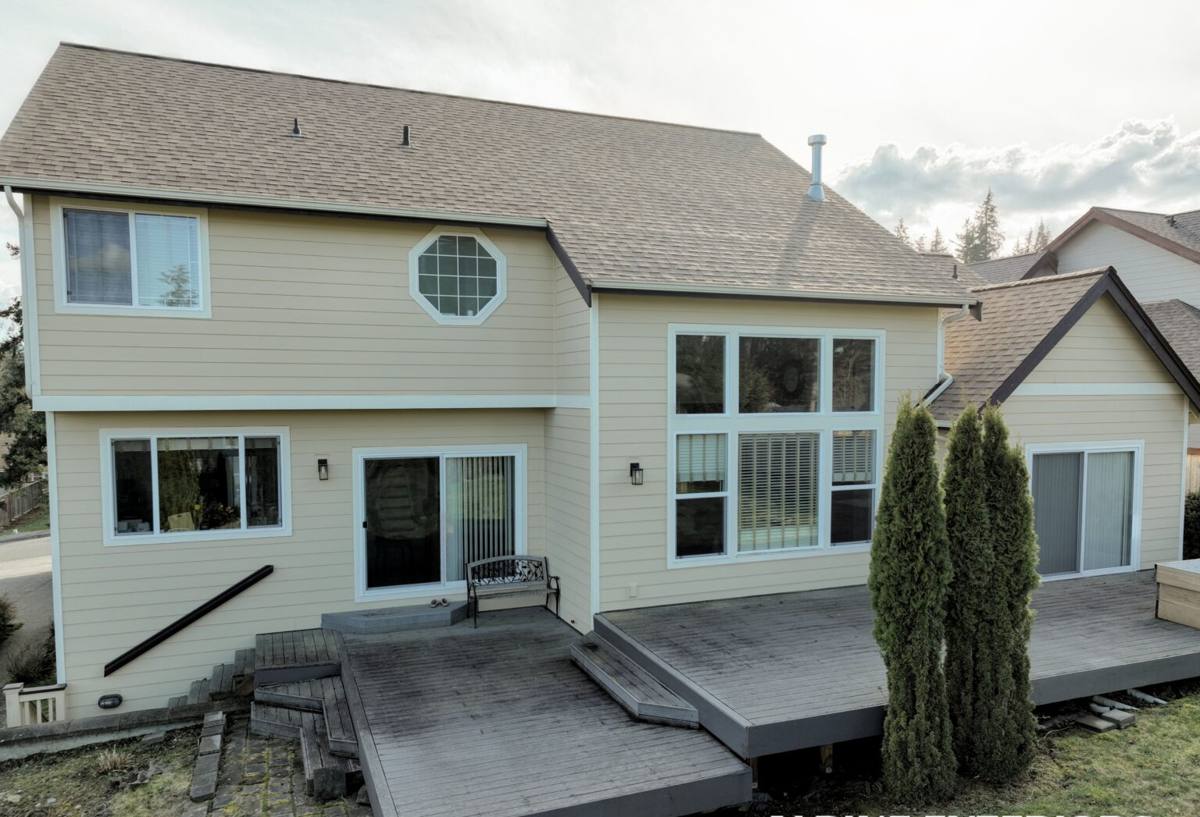
Why Decks Wear Out Faster Here
Humidity and Moisture Cycling
Tampa Bay's humidity keeps deck boards, ledger boards, and framing damp for long stretches, especially in shaded yards or decks close to grade. Wood that stays damp swells; wood that then bakes in direct sun the next afternoon shrinks. That daily and seasonal swelling-and-drying cycle is what drives cupping, splitting, and loosened fasteners over time — it's a mechanical problem, not just a cosmetic one.
UV Exposure
Florida sun is strong and consistent almost year-round. UV breaks down the lignin in wood fibers and degrades the surface finish on composite and PVC decking alike. A deck with no shade coverage in a Tampa-area yard will show surface wear noticeably sooner than the same product installed somewhere with more tree cover or a shorter sun season.
Wind-Driven Rain and Storm Load
Summer storms and the occasional hurricane-strength wind event push rain sideways, driving water into board gaps, fastener holes, and any spot where flashing or sealant has failed. Structurally, decks here also need to be tied into the house and footings in a way that can take real wind uplift and lateral load — not just support foot traffic on a calm day.
Salt Air Corrosion
Proximity to Tampa Bay means salt-laden air reaches yards that are nowhere near the water. Salt accelerates corrosion in any exposed metal — fasteners, joist hangers, railing brackets — which is why fastener and hardware selection matters as much as the decking material itself.
Signs a Tampa-Area Deck Needs Replacement, Not Repair
- Boards that cup, crown, or feel spongy underfoot, especially near the house or in shaded areas
- Rust streaking from fastener heads or joist hangers
- A ledger board with soft spots, dark staining, or gaps pulling away from the house
- Railing posts that wiggle when pushed — often a sign the post base or blocking has rotted
- Visible daylight or gaps opening up between boards that used to sit tight
- A substructure more than 15-20 years old, even if the surface decking was replaced more recently
- Recurring standing water on or under the deck after normal rain
A repair makes sense when the problem is isolated — a few bad boards, a loose rail. Once the framing, ledger connection, or footings are in question, patching individual boards just delays a bigger, more expensive failure later.
What a Correct Deck Replacement Involves
Full Removal and Inspection
We pull the old decking and, in most cases, the framing down to the ledger and footings so we can actually see what's underneath. This is the step that gets skipped when a deck is "resurfaced" instead of replaced, and it's the step that matters most in a humid climate — rot and hidden rust hide under the boards you can see.
Ledger Board and Flashing
The ledger connection to the house is one of the most common failure points on any deck, and it's a safety issue, not just a maintenance one. We install proper flashing to keep water from tracking behind the ledger and into the house framing, and we use structural fasteners rated for the load and for exterior/coastal exposure.
Framing and Footings
Joists, beams, and posts get sized and spaced for the actual load and span of your deck, not just matched to what was there before. Footings are checked or replaced as needed to meet current code depth and bearing requirements — this matters more here than in drier climates because ground moisture and occasional flooding can affect footing performance over time.
Hardware Selection
Given the salt air, we spec corrosion-resistant fasteners, joist hangers, and connectors rated for coastal or treated-lumber exposure. Standard interior-grade hardware corrodes fast in this environment and is a false economy.
Decking Material Installation
Whatever decking surface you choose, proper board spacing, fastening pattern, and ventilation underneath the deck are what keep moisture from getting trapped. Poor airflow under a deck is a major contributor to premature rot in this climate, even with a "good" decking material on top.
Railings and Code Compliance
Railing height, baluster spacing, and stair requirements need to meet current Pinellas County building code, which applies regardless of what was there before. We handle permitting and inspection so the finished deck is documented and compliant, not just built to match the old one.
Decking Material Options for This Climate
| Material | How It Handles Tampa's Climate | Maintenance |
|---|---|---|
| Pressure-treated wood | Affordable upfront; needs sealing and vigilant moisture management to resist the humidity/UV cycle | Annual cleaning and resealing recommended |
| Composite decking | Resists rot and doesn't splinter; quality varies by product on UV fade resistance | Periodic cleaning, no sealing needed |
| PVC/capped polymer decking | Strong moisture and UV performance, holds up well near salt air | Low — mostly rinsing and occasional cleaning |
| Tropical hardwoods | Naturally dense and rot-resistant, but installation-sensitive and can be prone to checking in extreme UV without maintenance | Regular oiling to maintain appearance |
We'll walk through the honest trade-offs for your specific yard — sun exposure, shade, budget, and how much upkeep you actually want to do — rather than pushing one product as a default. There isn't a single "best" material for every Tampa-area deck; there's a best fit for your situation.
Our Process for a Tampa-Area Deck Replacement
- On-site evaluation of the existing deck, ledger connection, framing, and footings
- Honest assessment of repair vs. replacement, with the reasoning explained, not just a recommendation
- Material and layout discussion based on your sun exposure, use, and budget
- Permitting and code review specific to Pinellas County requirements
- Demolition, framing, flashing, and installation with corrosion-resistant hardware throughout
- Final walkthrough and inspection sign-off before we consider the job done
Why Local Experience in Tampa and Oldsmar Matters
A crew that already works in this area knows the local permitting process, the flood and wind-load considerations that apply here, and — just as important — what actually fails first on decks in Tampa Bay's climate versus decks built for a drier or milder region. That's the difference between a deck that's built to a national average spec and one that's built for what this specific stretch of Florida throws at it year after year: the humidity cycling, the UV load, and the salt air working on hardware and finishes even when the deck looks fine on the surface.
We also know that homeowners in Oldsmar and the surrounding Tampa neighborhoods are often dealing with decks that were originally built to a lower standard than current code requires, or decks that have had DIY repairs layered onto a compromised structure. Part of our job is catching that during the evaluation, explaining it clearly, and giving you a straight answer about what's actually needed versus what's optional.
Cost Factors to Expect
Every deck replacement is priced around the specifics of the project, but a few factors consistently move the number:
| Factor | Why It Affects Cost |
|---|---|
| Deck size and layout | More square footage and complex shapes (multi-level, angles) mean more material and labor |
| Decking material | Pressure-treated wood costs less upfront than composite or PVC, which cost more but need less upkeep |
| Framing and footing condition | If footings need to be added or relocated to meet code, that adds structural work beyond surface replacement |
| Railing and stair requirements | Height, run, and code-driven baluster spacing affect materials and labor |
| Height off grade | Elevated decks require more substantial framing and support than ground-level ones |
We'll give you a clear, itemized estimate after seeing the site in person — not a phone-quote guess.
Get a Straightforward Estimate
If your deck near Tampa or Oldsmar is showing its age — soft spots, rusted hardware, boards that won't sit flat — it's worth having someone look at what's underneath before deciding between repair and replacement. Fill out the form below for a free, no-pressure estimate, and we'll give you a straight answer about what your deck actually needs.