 Oldsmar Siding
 Building a Deck in East Lake That Actually Holds Up
East Lake sits inland from the coast, but that doesn't mean the weather goes easy on a deck. Between the intense Florida sun overhead most of the year, the wind-driven rain that comes through with summer storms, and the humidity that never really leaves, an outdoor deck here works harder than the same structure would almost anywhere else in the country. A deck that's framed, fastened, and finished the right way for this climate will give a family decades of use. One that's built to a generic national standard, with the wrong fasteners or the wrong wood, starts showing problems in a few short years — cupped boards, rust streaks, soft spots at the ledger, rail posts that wobble.
This page is about what a deck built specifically for East Lake needs to get right, from the ground up.
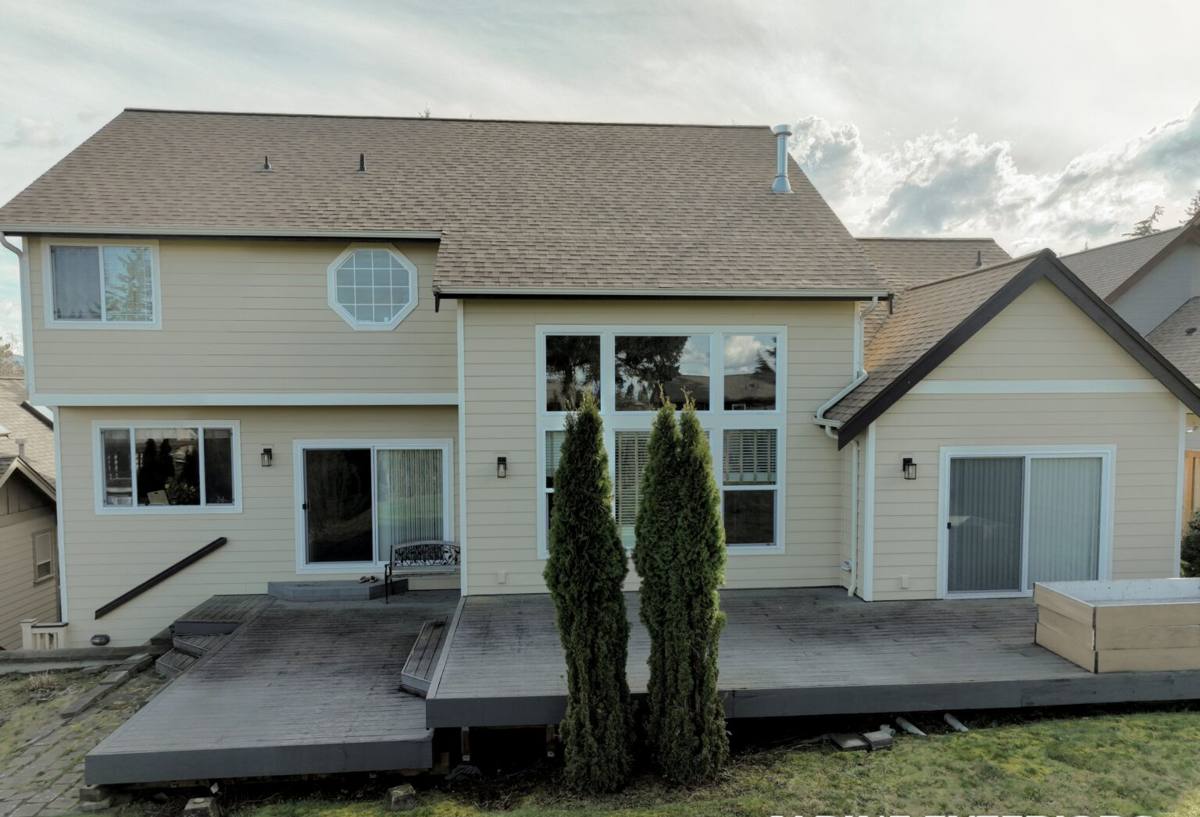
What East Lake's Climate Actually Does to a Deck
Sun and UV
Pinellas County gets strong, direct sun nearly year-round. UV breaks down the lignin that holds wood fibers together, which is why untreated or poorly sealed wood grays, splinters, and checks (those long surface cracks) faster here than in cooler, cloudier climates. Composite and PVC decking resist UV degradation better than wood, but even those products vary — cheaper composites can fade or chalk over time, which is why the brand and formulation matter, not just the material category.
Wind-Driven Rain and Humidity
Summer storms in this area don't just drop rain straight down — wind pushes it sideways, driving moisture into joints, under railings, and into any gap where end grain is exposed. Combined with the humidity that sits in the air most of the year, that moisture doesn't evaporate quickly. Wood that isn't properly sealed at cut ends, or framing that doesn't get enough airflow underneath, stays damp longer than it should. That's the setup for rot, mold staining, and fastener corrosion.
Salt Air
East Lake isn't beachfront, but Pinellas County as a whole is a coastal environment, and salt-laden air travels well inland, especially with onshore winds. Ordinary steel fasteners and hardware corrode faster here than they would inland in a drier state. This is one of the most overlooked details in deck building — the deck can look fine on the surface while the fasteners holding it together are quietly losing strength underneath.
Decking Material Options, Compared Honestly
There's no single "best" decking material for every homeowner — it depends on budget, how much upkeep you want to take on, and how long you plan to stay in the home. Here's how the common options actually perform in this climate.
| Material | Upfront Cost | Maintenance | How It Handles This Climate |
|---|---|---|---|
| Pressure-treated pine | Lowest | Annual cleaning, re-sealing every 1-2 years | Affordable and repairable, but needs consistent sealing or it will gray, check, and eventually soften from sun and moisture cycling |
| Tropical hardwoods (ipe, cumaru, etc.) | High | Periodic oiling to maintain color; low rot risk without it | Naturally dense and rot-resistant; handles humidity well but is unforgiving to install — pre-drilling and correct fasteners are non-negotiable |
| Composite decking | Mid to high | Occasional washing; no sealing or staining | Resists rot and UV fading well when it's a quality product; heat retention underfoot is a real consideration in direct sun |
| PVC/capped polymer decking | Highest | Lowest — mostly just washing | Fully resists moisture absorption and rot, strong UV performance; best long-term option for wet, sunny climates if the budget allows |
Whatever decking surface you choose, it's only as good as the frame underneath it. We've replaced plenty of composite and even PVC deck boards sitting on framing that failed years before the surface material did.
Getting the Structure Right: Footings, Framing, and Fasteners
A deck is a structure, not just a surface to walk on, and Pinellas County's building code reflects that with wind-load and connection requirements that a generic national deck plan won't automatically satisfy. The parts that matter most, and that are hardest to inspect once the deck is finished:
- Footings sized and set below frost/scour depth requirements for the soil conditions on the lot, not just poured to whatever depth is convenient
- Ledger board attachment to the house structure, flashed correctly so water is directed away from the house rim joist instead of trapped behind the ledger
- Joist hangers and structural connectors rated and coated for exterior, coastal-adjacent use
- Fasteners matched to the wood — treated lumber's chemical preservatives corrode standard fasteners, so hot-dip galvanized or stainless steel is used, not whatever's cheapest at the box store
- Post-to-beam and beam-to-footing connections engineered for wind uplift, not just gravity load
- Railing posts through-bolted into the frame rather than just screwed to the rim joist
None of this is visible once the deck boards go down, which is exactly why it has to be done right the first time.
Permits and Inspections
Most new decks and many substantial deck replacements in Oldsmar and unincorporated Pinellas County require a building permit, and for good reason — it's the mechanism that gets a structural inspector to sign off on the footings, framing, and attachment before it's covered up with decking. Skipping the permit might save time up front, but it can create real problems later: insurance claims denied over unpermitted structures, and headaches at resale when a home inspector or buyer's agent flags it. We pull the required permits and schedule inspections as a normal part of the job, not an optional add-on.
How We Build a Deck in East Lake
Every property is a little different, but the process follows the same sequence on every job:
- On-site assessment — we look at grade, drainage, sun exposure, and how the deck will tie into the house before recommending a design
- Material and layout discussion — honest tradeoffs on wood versus composite versus PVC based on your budget and how much upkeep you actually want
- Permit drawings and submission — sized and detailed to meet Pinellas County structural and wind requirements
- Footings and framing — built to spec, with corrosion-resistant hardware and fasteners throughout
- Ledger flashing and waterproofing — the single most common failure point on older decks, done right from the start
- Decking, railing, and stair installation — fastened and spaced correctly for the material's expansion and contraction in heat and humidity
- Final inspection and walkthrough — we don't consider the job done until it's passed inspection and you've walked it with us
What We See Go Wrong on Older and DIY Decks Around East Lake
When we're called out to inspect or repair an existing deck in the area, the same handful of issues show up repeatedly:
- Ledger boards attached without proper flashing, leading to hidden rot at the house band board
- Standard steel screws and joist hangers used with treated lumber, causing accelerated corrosion
- Footings too shallow or undersized for the deck's actual load and span
- Railing posts attached with lag screws into decking or rim joist only, with no through-bolt into structural framing
- No gap or ventilation left under low decks, trapping moisture against the framing year-round
Most of these aren't visible to a homeowner until there's a soft spot, a wobble in the railing, or a failed inspection at resale — which is exactly why the framing details matter more than the visible decking surface.
Maintaining a Deck Once It's Built
Even a well-built deck needs some upkeep in this climate to reach its full lifespan:
| Material | Recommended Upkeep |
|---|---|
| Wood (treated or hardwood) | Wash annually, inspect and re-seal or re-oil every 1-2 years, especially before rainy season |
| Composite | Wash a few times a year to prevent mildew buildup in humid shaded areas; check railing hardware for corrosion |
| PVC/polymer | Wash periodically; minimal upkeep, but still worth an annual hardware check |
Whatever the surface, we recommend an annual look underneath the deck at the framing, hardware, and ledger flashing — the early warning signs of a problem show up there long before they show up on top.
Why Hire a Crew That Already Works in East Lake
A deck contractor who's already familiar with East Lake and the surrounding Pinellas County area isn't guessing at what the climate demands — they've already dealt with the sandy or clay-heavy soil conditions that affect footing depth, they know which fastener and hardware grades hold up against the salt air, and they've already been through the local permitting and inspection process enough times to know what the inspectors expect to see. That familiarity translates into fewer surprises during the build and a deck that's actually engineered for where it's standing, not just assembled from a generic plan.
If you're planning a new deck or replacing one that's showing its age, we're happy to come take a look, walk the property with you, and put together a straightforward estimate — no pressure, no hard sell, just a clear picture of what the job involves and what it will cost. Use the form below to get started.