 Oldsmar Siding
 Building Decks That Actually Hold Up in Safety Harbor
Safety Harbor sits close enough to Tampa Bay that homes here deal with a specific mix of stress most decks elsewhere never see: salt-laden air off the water, long stretches of intense UV, sudden wind-driven downpours, and the real possibility of hurricane-force gusts during storm season. A deck that's framed and fastened the way it would be in a drier, calmer climate will show problems early — soft spots, rust streaks at the fasteners, boards that cup or crack, railings that work loose. A deck built for this specific area holds its line for decades instead of years.
We work in Oldsmar and the surrounding Pinellas County communities, including Safety Harbor, and we build decks around what actually happens to wood, composite, and metal in this exact environment — not a generic spec sheet.
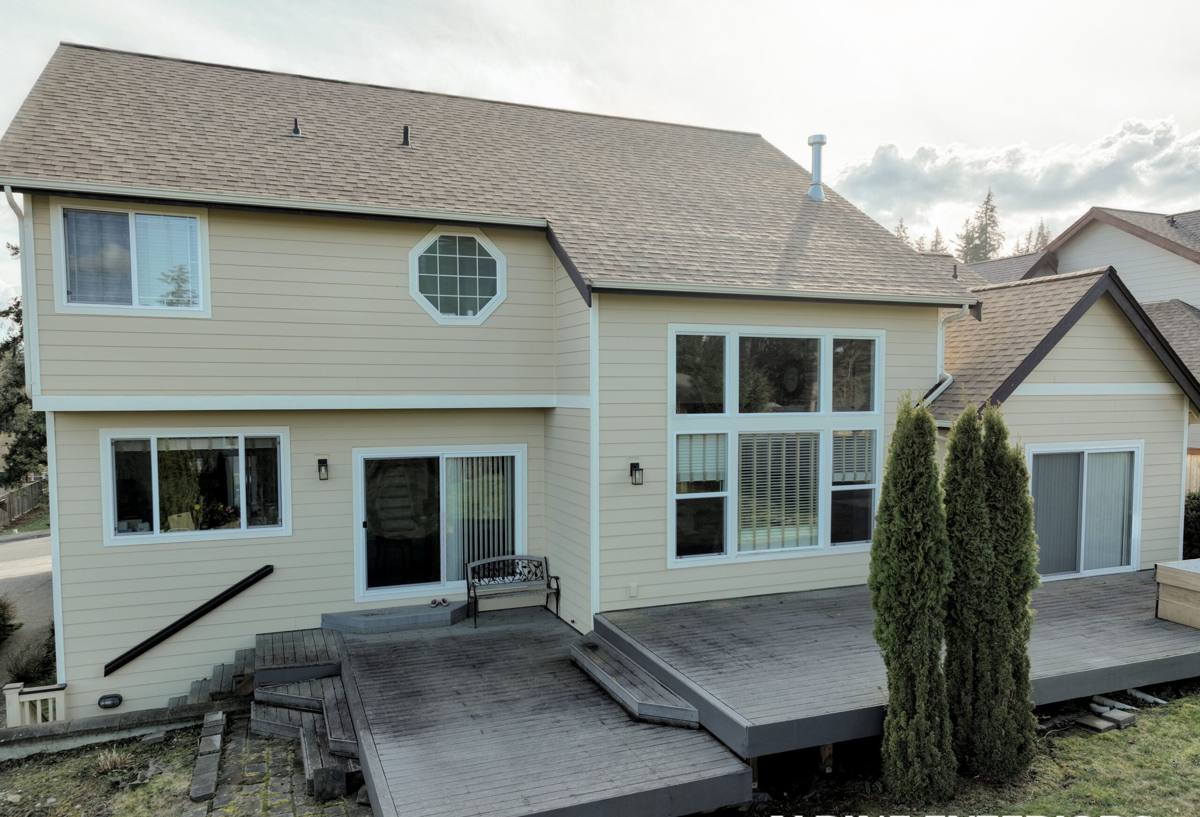
What the Climate Does to an Improperly Built Deck
Before talking about materials and process, it's worth being specific about what's actually working against a deck here:
- Salt air accelerates corrosion on any exposed metal — screws, bolts, joist hangers, railing hardware — especially the closer a property sits to the bay.
- UV exposure in Florida is intense nearly year-round, not just in summer. Unprotected wood grays and checks fast; lower-grade composites can fade or chalk over time.
- Wind-driven rain gets pushed sideways and up under boards and around ledger connections, so drainage and flashing details matter more here than in a climate with mostly straight-down rain.
- Hurricane-force wind loads put real lateral and uplift stress on railings, posts, and the ledger connection to the house — the same connection that's often the weakest point on an older or poorly built deck.
None of these are exotic problems, and none of them require exotic solutions. They just require building to the conditions instead of ignoring them.
Decking Material Options for a Safety Harbor Property
There's no single "best" decking material — the right choice depends on budget, how close the property is to open water, how much upkeep the owner wants to do, and how the deck will actually be used.
| Material | Upfront Cost | Maintenance | How It Handles This Climate |
|---|---|---|---|
| Pressure-treated wood | Lowest | Annual cleaning, periodic sealing/staining | Fine if sealed and maintained on schedule; skipping upkeep leads to graying, splintering, and fastener corrosion faster than in drier climates |
| Capped composite | Mid-to-high | Occasional washing, no sealing/staining | Handles UV and moisture well when it's a quality capped product; resists salt-air weathering better than uncapped boards |
| PVC decking | Highest | Very low | Doesn't absorb moisture, resists salt and UV degradation over the long haul, but can run hotter underfoot in direct sun |
| Tropical hardwoods (e.g., ipe) | High | Regular oiling to maintain color | Naturally dense and rot-resistant, but needs disciplined maintenance or it grays like any other wood |
We don't push one product line across every job. We'll tell an owner honestly where a cheaper material makes sense and where spending more up front saves money in five years — including where a manufacturer's warranty is genuinely strong versus where it's mostly marketing.
Uncapped vs. Capped Composite — Why It Matters Here
Not all composite decking is built the same. Uncapped composite boards absorb moisture at a higher rate and are more prone to mold staining and fading in a humid, sun-heavy climate like this one. Capped composite has a protective shell around the core that resists moisture intrusion and UV fading much better. In a salt-air, high-humidity area, that difference shows up faster than it would somewhere drier — it's a real factor in the material conversation, not an upsell.
What a Correctly Built Deck Actually Involves
A deck is only as good as what's underneath the decking boards. The visible surface gets all the attention, but the structure is what determines whether it's still solid in ten or fifteen years.
Footings and Framing
Footings need to be sized and set to local code depth, not guessed at. Framing lumber should be rated for ground contact where it's near or in soil contact, and joist spacing should account for the actual decking product being used — composite and PVC often have different span requirements than wood.
Fasteners and Hardware
This is where salt air does the most damage if it's overlooked. We use corrosion-resistant, coated or stainless fasteners and connectors rated for the exposure the deck will actually see — not standard hardware that will streak and weaken within a few seasons near the coast.
Ledger Attachment
The ledger board connection to the house is one of the most safety-critical parts of any attached deck, and it's also one of the most common places for water intrusion if it isn't flashed correctly. Proper flashing keeps wind-driven rain from working its way behind the ledger and into the house structure.
Railings and Guard Systems
Railings need to meet code height and load requirements, and in a wind-exposed area, post attachment matters as much as the railing material itself. A good-looking railing that isn't anchored to withstand real wind load is a liability, not a feature.
Permitting in Oldsmar and Pinellas County
Most new deck construction and many significant deck replacements require a building permit and inspection in this area. Requirements vary depending on deck height, attachment method, and whether electrical or plumbing work is involved (outdoor kitchens, lighting circuits, etc.). We handle the permitting process as part of the job — pulling the permit, scheduling inspections, and building to what the inspector will actually check, rather than leaving an owner to navigate that on their own or skipping the permit and hoping it doesn't come up during a future home sale.
Designing for a Safety Harbor Lot
Lot layout, sun exposure, and how close a property sits to water all shape what makes sense for a given deck:
- Homes with more direct afternoon sun benefit from planning shade — pergolas, roof extensions, or material choices that stay cooler underfoot.
- Proper deck drainage and gapping between boards keeps water moving off the surface instead of pooling, which matters during Florida's heavier rain months.
- Properties closer to the water benefit from the more corrosion-resistant end of the hardware and fastener spectrum, even if it costs a bit more up front.
- Multi-level decks or those integrating stairs need extra attention to structural bracing given regional wind loads.
Our Process for a Custom Deck Build
- On-site assessment — we look at the site, discuss how the deck will be used, and talk through material options honestly, including trade-offs.
- Design and proposal — layout, material selection, and a clear written scope so there are no surprises once work starts.
- Permitting — we pull the necessary permits and schedule required inspections through the local building department.
- Construction — footings, framing, decking, railings, and any finishing work, built to the structural and hardware standards this climate calls for.
- Final walkthrough and inspection — we confirm the finished deck passes inspection and walk the owner through basic care.
Maintaining a Deck in This Climate
Even a well-built deck needs some ongoing attention in a coastal, high-UV environment:
- Rinse off salt residue and debris periodically, especially on properties closer to the bay.
- Check railing posts and fastener points annually for looseness or early corrosion signs.
- Reseal or restain wood decking on the schedule the product actually calls for — skipping a cycle in this sun accelerates graying and checking.
- Keep gaps between boards clear of debris so water and airflow can do their job.
- Have the structure looked at after any major storm, not just when something looks obviously wrong.
Signs an Existing Deck Needs Attention
- Soft, spongy, or springy spots underfoot
- Visible rust streaking around screws, bolts, or joist hangers
- Railings or posts that wobble or flex under normal pressure
- Gaps opening up around the ledger board where it meets the house
- Boards that are significantly more faded, cracked, or cupped than when installed
Any of these are worth a professional look before they turn into a bigger structural or water-intrusion problem.
Why Hire a Crew That Already Works in Safety Harbor
A contractor who builds decks throughout Oldsmar, Safety Harbor, and the rest of Pinellas County already knows the local permitting process, the inspectors' expectations, and — most importantly — what actually fails first on decks in this specific climate. That's different from a crew working from a generic playbook written for a different part of the country. We build to the wind, UV, and salt-air conditions this area actually produces, not to a national average.
If you're planning a new custom deck or need an honest look at an existing one, we're happy to walk the property, talk through material and design options, and put together a straightforward estimate — no pressure, no upsell. There's a form below to get that conversation started.