 Oldsmar Siding
 Countryside homes sit inland from the open Gulf, but that doesn't spare them from what Pinellas County weather does to a house's exterior. The same pattern shows up year after year: hurricane-force wind events that test every fastener and seam, sun exposure intense enough to fade and chalk lesser materials within a few seasons, wind-driven rain that finds any weak point in the water-management system, and a steady dose of salt air drifting in off Tampa Bay and the Gulf that accelerates corrosion on anything not built to handle it. Siding here isn't just a cosmetic choice — it's the first line of defense for the wall assembly behind it, and it either holds up to that combination or it doesn't.
This page covers what a correct siding installation looks like specifically for a Countryside home, how we approach the job, and why we've standardized on one product system rather than offering a menu of options.
Why Countryside Siding Takes a Beating
Most homeowners think about siding failure in terms of appearance — fading, staining, or a panel that looks tired. In this climate, the more serious failures start behind the surface. Wind-driven rain gets pushed sideways and upward under normal wall assumptions, which means laps, seams, and penetrations that would be fine in a drier climate become entry points for moisture here. Once water gets behind siding and can't dry out, the sheathing and framing underneath start to suffer long before the siding itself looks bad from the street.
UV exposure is the other constant. Pinellas County gets sun nearly year-round, and materials that rely on surface paint or a thin factory coating will chalk, fade unevenly, and eventually need repainting far sooner than their rated lifespan suggests. Add hurricane-season wind loads that stress every fastener and joint, and it's clear why siding installed to a lower standard — or installed correctly but in the wrong material — tends to show problems on a compressed timeline compared to the same product installed inland in a milder state.
What a Correct Siding Installation Actually Involves
A siding job that holds up here isn't just nailing panels to a wall. It's a system, and every layer of that system has to work together.
Moisture Management Comes First
Before a single piece of siding goes up, the wall needs a properly lapped weather-resistive barrier, correctly integrated flashing at windows, doors, and any penetration, and a plan for how water that does get behind the cladding will drain and dry out. Skipping or rushing this step is the single most common cause of hidden rot behind siding that looks fine on the surface.
Fastening and Clearances Matter More Than Color
Fastener type, spacing, and placement are engineered for wind resistance — and in a wind zone like this one, that engineering isn't optional. Ground clearance, gaps at butt joints, and proper caulking at trim are all small details that determine whether the installation holds up to a real storm or becomes the reason water gets in during the next one.
Signs Your Siding Is Telling You It's Time
Countryside homeowners often call us after noticing one or two of these — worth checking for before small issues become structural ones:
- Visible cracking, warping, or buckling panels, especially after a windy season
- Soft or spongy spots when you press on the siding near the bottom edge or around windows
- Paint that's peeling or bubbling faster than a normal repaint cycle would suggest
- Staining or dark streaking that keeps coming back after cleaning
- Visible gaps at seams, corners, or trim where caulking has failed
- A noticeably higher cooling bill, which can mean compromised insulation or air sealing behind the siding
Why We Install Only James Hardie Fiber Cement Siding
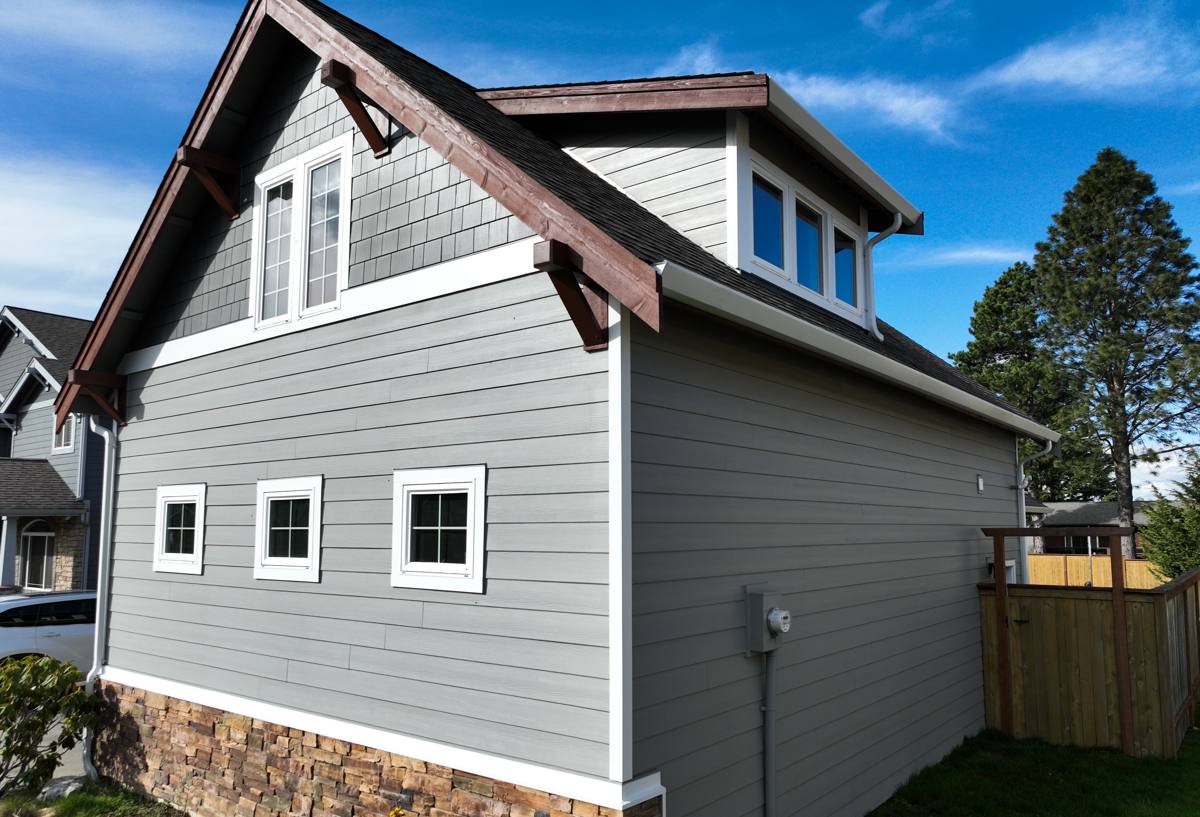
We don't install vinyl, LP SmartSide, Cemplank, Allura, or primed wood siding — not because those products have no place in the industry, but because after years of doing this work in Pinellas County's climate, James Hardie fiber cement is the only system we're willing to put our name behind.
Built for This Climate
Hardie's HZ5 product line is engineered specifically for humid, high-wind, hurricane-prone regions like ours. Fiber cement doesn't warp, rot, or provide a food source for pests the way wood-based products can, and it's non-combustible — a real advantage during Florida's dry brush-fire season as well as for insurance considerations.
ColorPlus Factory Finish
Rather than relying on job-site paint that starts degrading under UV exposure almost immediately, Hardie's ColorPlus finish is baked on in a factory-controlled process, resulting in more consistent color and far better fade resistance than field-applied paint on other materials. That matters in a market where the sun works on a house 300-plus days a year.
A Warranty That Means Something
Hardie backs its siding with a strong, transferable limited warranty — a real consideration for Countryside homeowners who may sell within the product's lifespan. A warranty is only as good as the material and installation behind it, which is why correct installation to Hardie's published specifications matters as much as the product choice itself.
Our Installation Process for Countryside Homes
Every project follows the same disciplined sequence, regardless of how small or large the job is.
1. Inspection and Moisture Check
We start by assessing the existing siding, checking for hidden moisture damage, and evaluating the substrate underneath — not just the visible surface.
2. Tear-Off and Substrate Repair
Old siding comes off, and any compromised sheathing or framing gets repaired before anything new goes up. Installing over a damaged substrate just locks the problem in.
3. Weather-Resistive Barrier and Flashing
A properly lapped house wrap and correctly integrated flashing at every window, door, and penetration go in first — this is the layer that actually keeps water out, not the siding itself.
4. Installation to Hardie's Specification
Panels or planks are installed with the fastener schedule, clearances, and joint treatment Hardie specifies for this wind zone — not generic "close enough" spacing.
5. Caulking, Trim, and Touch-Up Finishing
Seams, trim, and penetrations are sealed correctly, and any factory-finish touch-up is done with matched product, not a generic paint.
6. Final Walkthrough
We walk the completed job with the homeowner before calling it done, so nothing gets discovered later that should have been caught on site.
Material and Cost Factors for a Countryside Project
Every home is different, but these are the main variables that drive scope and cost on a siding installation in this area:
| Factor | Why It Matters Here |
|---|---|
| Tear-off vs. new construction | Removing and disposing of old siding, plus any substrate repair, adds labor that a fresh install doesn't require |
| Substrate condition | Wind-driven rain intrusion over the years can mean hidden sheathing or framing repair before new siding goes on |
| Hardie product line | Lap siding, panel siding, and shingle-style each have different material and labor requirements |
| Home height and complexity | Multiple stories, dormers, and detailed trim increase both time and equipment needs |
| Color and finish | Factory ColorPlus finish versus field-primed for paint affects both material cost and long-term maintenance |
| Wind zone detailing | Proper fastening and flashing to hurricane-wind specifications takes more time than a minimal install, but it's what actually holds up |
Why Hiring a Crew That Already Works This Area Matters
A siding crew that regularly works Pinellas County homes already understands the wind-load and moisture-management realities that a crew unfamiliar with this climate might treat as optional extras. That familiarity shows up in the details — how flashing is integrated around Florida-style window and door assemblies, how fastening is handled for our wind zone, and how the job is sequenced around our rain patterns instead of fighting them. For Countryside homeowners, that means fewer surprises during installation and a siding system that's actually built for the conditions it has to survive, not just installed to a generic national standard.
Caring for Hardie Siding After Installation
One advantage of fiber cement is that it doesn't demand much once it's installed correctly. Periodic rinsing to remove salt residue and pollen buildup, prompt attention to any caulking that shows wear at seams or trim, and keeping an eye on paint condition if the siding was field-painted rather than factory-finished are really the extent of it. Compared to materials that need frequent recoating or are prone to moisture-related warping, a correctly installed Hardie system is meant to be low-maintenance for the long haul in this climate — not maintenance-free, but close.
If your Countryside home's siding is showing its age, or you're planning ahead for storm season, we're happy to take a look and give you a straightforward, no-pressure estimate — just fill out the form below.