 Oldsmar Siding
 Why Clearwater Decking Has to Answer to the Climate, Not Just the Design
A deck in Clearwater doesn't fail the way a deck in a drier, cooler climate fails. It fails from the combination of things that show up here every year: months of intense UV that bakes any exposed surface, wind-driven rain that gets pushed sideways into joints and fastener holes, salt-laden air off the Gulf that accelerates corrosion on anything metal, and the occasional hurricane-force wind event that tests every connection in the structure at once. None of these are dramatic on their own. Together, over a few Florida summers, they're what separates a deck that still looks and performs well from one that's cupping, fading unevenly, or working loose at the ledger.
Composite decking exists specifically to handle a lot of that abuse better than wood does, but "composite" isn't a single material with one set of behaviors — and even a good composite board installed the wrong way for this climate will underperform. This page is about what a composite deck actually needs to hold up in Clearwater, not composite decking in general.
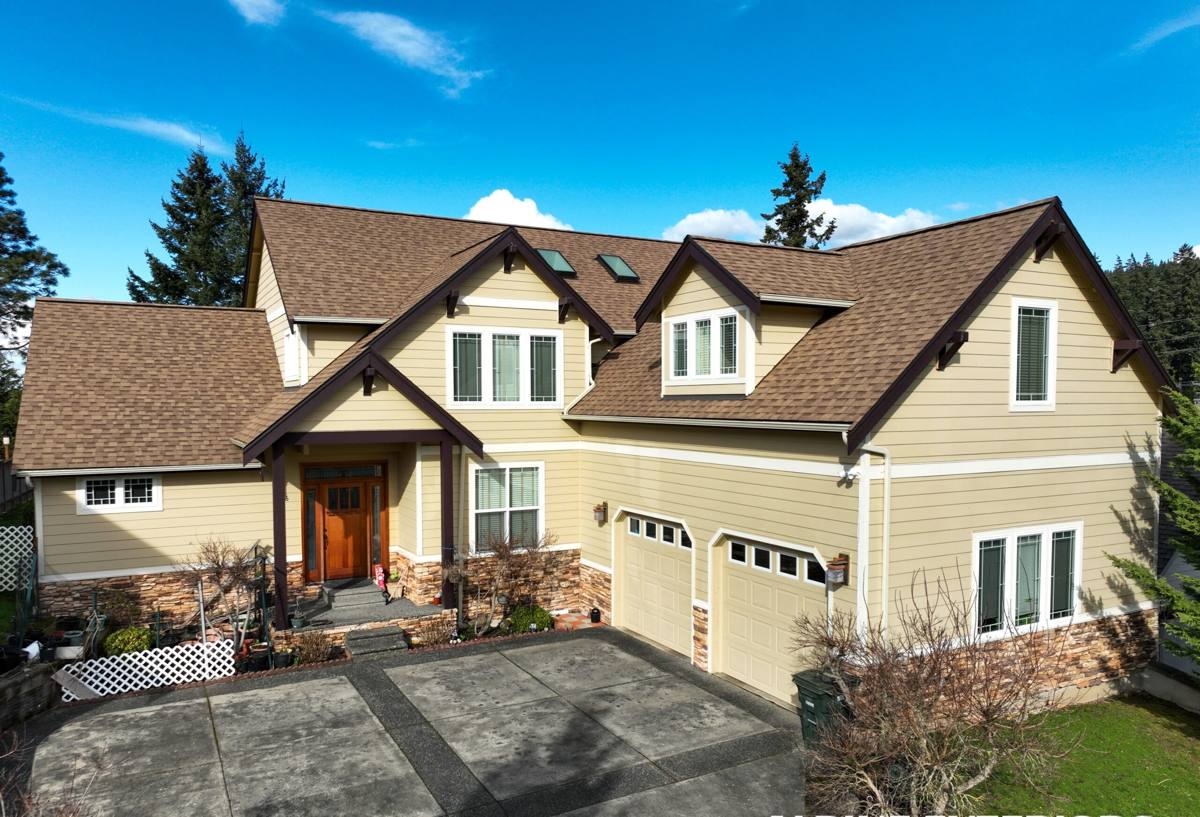
What Pinellas County Weather Actually Does to a Deck
UV and Heat
Composite boards are far more UV-stable than wood, but they're not immune to it. Cheaper capless boards and older-generation composites can fade, chalk, or soften slightly with years of direct sun exposure, especially on south- and west-facing decks that get afternoon sun most of the year. Board temperature also matters more here than people expect — dark composite decking can get uncomfortably hot underfoot on a July afternoon, which is a real consideration when you're picking a color, not just a look.
Wind-Driven Rain and Humidity
Clearwater doesn't just get rain, it gets rain pushed horizontally during storms, which finds its way into any gap in flashing, any unsealed fastener hole, and any spot where the ledger board meets the house. Composite decking itself doesn't rot, but the structure underneath it — joists, ledger, posts, hardware — absolutely can if water is allowed to sit against it. A composite deck built on a poorly flashed or poorly ventilated substructure will look fine on top while the frame underneath deteriorates.
Salt Air
Even away from the immediate waterfront, Pinellas County's air carries enough salt to speed up corrosion on standard fasteners, brackets, and hidden clip systems. This is a substructure and hardware issue more than a decking-surface issue, but it's one of the most common reasons a deck develops problems years before the boards themselves would have failed.
High Wind Events
Every ledger connection, joist hanger, post base, and railing post has to be sized and fastened for real wind load, not just gravity load. This is code-driven, and it's also just good practice given what this area sees during storm season.
What a Correct Composite Decking Job Includes
A composite deck is only as good as what's underneath it and how it was fastened together. The board itself gets most of the attention because it's what you see, but the parts of the job that actually determine how the deck performs over ten or fifteen years are mostly invisible once it's finished.
- Proper ledger attachment and flashing where the deck meets the house — this is the single most common source of hidden water damage on any deck, composite or wood.
- Corrosion-resistant hardware — stainless steel or coated fasteners and connectors rated for coastal exposure, not standard interior-grade hardware.
- Adequate ventilation under the deck so moisture doesn't get trapped against the framing, especially on low-to-grade decks.
- Joist spacing matched to the specific composite board — composite boards vary in stiffness and heat expansion, and manufacturers specify different joist spacing than what's standard for wood.
- Expansion gaps sized correctly — composite boards expand and contract with heat more than wood does. Gaps that are too tight can cause buckling; gaps that are too loose look sloppy and trap debris.
- Hidden fastener systems installed to spec, when used, so boards don't work loose or squeak over time.
- Post bases and railing connections built for actual wind load, not just what looks sturdy.
Composite vs. the Alternatives, Honestly
We install composite because for most Clearwater homeowners it's the best balance of appearance, low maintenance, and durability against this climate — but it's not automatically the right call for every project or budget, and it's worth understanding the trade-offs rather than just taking that on faith.
| Material | How it handles this climate | Maintenance | Typical lifespan here |
|---|---|---|---|
| Pressure-treated wood | Prone to warping, splintering, and fastener corrosion staining under UV and humidity cycles | Annual sealing/staining recommended | 10-15 years before major repair |
| Tropical hardwood | Naturally dense and rot-resistant, but still moves and grays under intense UV without upkeep | Periodic oiling to maintain color | 15-25 years with upkeep |
| Capped composite | Strong UV and moisture resistance at the wear surface; performance depends on brand and substructure | Occasional washing, no sealing/staining | 25+ years, brand-dependent warranty |
| Uncapped/entry-level composite | More prone to fading, staining, and moisture absorption at cut edges over time | More frequent cleaning; edges need sealing | Shorter service life, especially in direct sun |
We steer most Clearwater clients toward capped composite boards specifically because of the UV and moisture load this area sees. We're upfront when a client's budget or design calls for something else — the point isn't to sell one product, it's to make sure whatever goes down is installed correctly and the client understands the trade-offs before we start.
Our Process
- On-site assessment. We look at sun exposure, existing structure (if replacing an old deck), drainage around the footprint, and how the deck ties into the house.
- Design and material selection. We walk through board options, colors, and railing systems based on your budget, the deck's exposure, and how you actually use the space.
- Permitting. Deck work in Pinellas County typically requires a permit and inspection, and connections have to meet current wind load requirements. We handle that process rather than leaving it to you.
- Substructure build. Framing, ledger flashing, joist spacing, and hardware selection are all done to the composite manufacturer's specs and to coastal-grade corrosion standards, not generic lumber-yard defaults.
- Deck installation. Boards, fastening system, and expansion gaps installed to spec, followed by railings, stairs, and any trim or fascia work.
- Final walkthrough. We go over care, what to expect from the boards seasonally, and what the warranty actually covers before we consider the job done.
What Drives the Cost of a Composite Deck
Composite decking costs more up front than pressure-treated wood and less than most tropical hardwoods, but the total project cost depends on more than just the board price per square foot.
| Factor | Why it matters |
|---|---|
| Board tier | Entry-level uncapped composite vs. premium capped composite is a wide range on its own |
| Deck height and substructure condition | A deck built over an existing footprint costs less than one needing new footings and framing |
| Railing system | Composite or aluminum railing adds meaningfully more than a basic wood or cable rail |
| Stairs and multiple levels | Each added run of stairs or elevation change adds labor and material |
| Permit and inspection requirements | Larger or elevated decks may require engineered plans |
We'll give you a real, itemized number for your specific footprint and material choice rather than a rough per-square-foot estimate that doesn't hold up once the design is finalized.
Maintaining a Composite Deck in a Salt-Air, High-UV Climate
Composite decking is low-maintenance compared to wood, not maintenance-free. In this climate, a few habits make a real difference over the years:
- Rinse or sweep off salt residue, pollen, and organic debris regularly — buildup left to sit in the sun can stain the board surface over time.
- Wash the deck a couple of times a year with mild soap and water to prevent mildew, especially in shaded or low-airflow areas.
- Check railing posts and stair connections periodically for looseness — this is more about the hardware than the composite boards themselves.
- Keep gutters and downspouts near the deck clear so water isn't dumping onto or under the structure during storms.
- After any major storm, take a look underneath the deck if you can — that's where early water or corrosion issues actually show up first.
Why It Matters That We Already Work in Clearwater
A lot of what determines whether a composite deck holds up here isn't in the product spec sheet — it's local knowledge: which fastener grades actually hold up this close to the Gulf, how to flash a ledger against wind-driven rain instead of just vertical rain, what Pinellas County's permitting and inspection process expects, and how much expansion gap a given board needs when it's baking on a west-facing exposure most of the year. A crew that's built decks around Oldsmar and Clearwater has already worked through those specifics on real houses in this climate — it's not a guess, it's a routine.
A Quick Checklist Before You Hire Anyone for Composite Decking
- Do they specify coastal-grade or stainless hardware, or just "standard" fasteners?
- Do they pull a permit and schedule inspections, or suggest skipping it?
- Do they explain joist spacing and expansion gaps specific to your chosen board, or just build it like a wood deck with composite on top?
- Do they address ledger flashing explicitly, or treat it as an afterthought?
- Can they explain the actual warranty terms on the board, not just repeat the manufacturer's marketing language?
If you're weighing composite decking for a home in Clearwater, we're glad to come take a look, walk you through material and design options, and give you a straightforward, no-pressure estimate — just fill out the form below.