 Oldsmar Siding
 Decks in the Clearwater Area Take a Different Kind of Beating
A deck on the west side of Pinellas County lives a harder life than one further inland. Between hurricane-season wind loads, near-daily UV exposure, wind-driven rain that finds its way into every joint and fastener hole, and the salt air drifting in off the Gulf, outdoor structures here age faster than most homeowners expect. We work decks throughout the Oldsmar and Clearwater area regularly, and the damage pattern is consistent: it's rarely one big failure. It's usually a slow accumulation of small ones — a loose ledger board, a few soft boards, corroded hardware — that eventually adds up to a deck that doesn't feel as solid as it used to.
Deck repair done right in this climate isn't just cosmetic. It's about catching structural issues before they become safety issues, and using fasteners, flashing, and materials that are actually rated to handle salt air and constant moisture cycling — not just whatever was available at the time the deck was originally built.
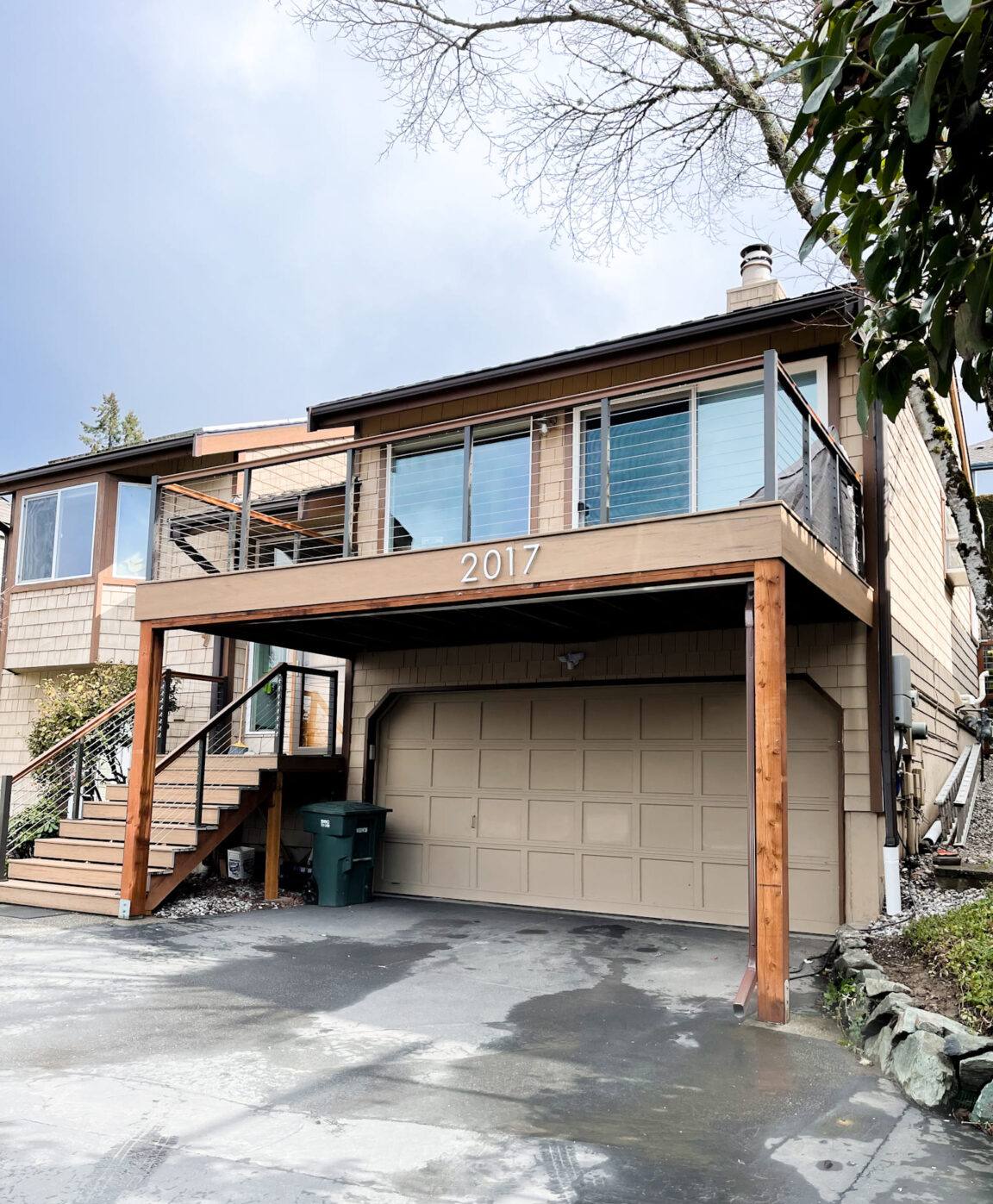
Common Damage We See on Clearwater-Area Decks
Sun and Heat Damage
Florida sun is relentless on exposed wood and composite decking alike. Wood boards gray, split, and cup as they dry out and rehydrate over and over. Composite boards can fade unevenly, and lower-quality composite can soften or warp in sustained heat. Fasteners exposed to direct sun cycle through expansion and contraction faster, which loosens them over time.
Wind and Storm Stress
Hurricane-force gusts put real lateral load on a deck structure, especially at the point where it attaches to the house — the ledger board connection. Repeated storm seasons can work fasteners loose, crack ledger boards, or stress railing posts that weren't anchored with enough depth to begin with.
Wind-Driven Rain and Moisture Intrusion
Rain that comes in sideways gets pushed into gaps that vertical rain never would reach — behind ledger boards, around post bases, and under railing connections. That moisture doesn't dry out quickly in Florida's humidity, which is exactly the condition wood rot and hardware corrosion need to take hold.
Salt Air Corrosion
Being close enough to the Gulf to catch salt-laden air means standard fasteners, brackets, and hardware corrode faster here than they would inland. We see this most often in older decks built with galvanized hardware that wasn't rated for coastal exposure — it looks fine on the surface for years, then fails all at once.
Signs Your Deck Needs Repair, Not Full Replacement
Most decks don't need to be torn out and rebuilt. If the main structural framing is sound, targeted repair is usually the smarter and more affordable path. Watch for these signs:
- Boards that feel spongy, bounce, or flex noticeably underfoot
- Visible cracking, splitting, or soft spots you can press a screwdriver into
- Railings or posts that wiggle or feel less rigid than they used to
- Rust streaks around fasteners or visibly corroded brackets and hangers
- Gaps opening up where the deck meets the house (the ledger connection)
- Stairs that feel uneven, loose, or have developed a wobble
- Standing water or slow drainage after rain instead of water running off cleanly
Any one of these on its own might be a simple fix. Several at once, especially around the ledger board or main support posts, usually means it's worth having someone look at the whole structure before deciding what's repair and what's replacement.
What a Proper Deck Repair Actually Involves
A repair that just swaps out the board you can see and leaves everything underneath alone is a temporary fix at best. A repair that holds up through another few storm seasons starts with understanding why that board or connection failed in the first place.
Structural Inspection First
Before any boards come off, we check the framing underneath — joists, beams, and especially the ledger board connection to the house, since that's the single most load-bearing and most commonly under-built part of a residential deck. Corroded or undersized hardware at this connection is one of the most common issues we find on older decks in this area.
Addressing the Root Cause
If boards failed because of standing water, we look at whether drainage or board spacing needs adjustment, not just replacement in kind. If fasteners corroded, we upgrade to hardware rated for coastal/salt-air exposure rather than replacing like-for-like with the same grade that failed. Repair that ignores the cause just buys a few more years before the same problem resurfaces.
Matching Materials Correctly
Mixing incompatible materials — for example, certain fasteners against certain treated lumber, or patching composite decking with a mismatched product — can accelerate corrosion or create visible inconsistency. We match fastener chemistry to the lumber treatment being used and source decking material as close to your existing product as possible when full board replacement isn't needed.
Repair vs. Replacement: How We Help You Decide
| Factor | Favors Repair | Favors Replacement |
|---|---|---|
| Framing condition | Joists/beams solid, damage is surface-level | Rot or corrosion found in structural framing |
| Ledger board connection | Sound, properly flashed and fastened | Cracked, corroded, or improperly attached |
| Extent of damage | Isolated boards, railings, or stairs | Damage spread across most of the deck surface |
| Deck age | Under 10-15 years, built to code | Older deck, unknown or outdated construction |
| Budget goal | Extend usable life affordably | Want a long-term reset, possibly a material upgrade |
We'll always tell you honestly which side of this table your deck falls on. There's no benefit to us talking a homeowner into a full rebuild when a solid repair will genuinely hold up.
Materials: What We Use for Repairs in This Climate
For wood repairs, we use pressure-treated lumber rated for ground contact where appropriate, and we're selective about fastener compatibility — the wrong combination of treated lumber and standard hardware accelerates corrosion instead of preventing it. For composite decking repairs, we source boards that match your existing product as closely as possible, since composite lines vary in color, texture, and profile between manufacturers and even between production runs.
We don't push composite as a blanket upgrade during every repair. It has real advantages in this climate — no splitting, no re-staining, better resistance to moisture cycling — but it also comes with its own considerations: heat retention underfoot in direct sun, and the fact that damaged composite boards are replaced rather than sanded and refinished. We'll walk through the honest trade-offs for your specific deck rather than assuming one material is automatically right.
Hardware Standards We Hold Ourselves To
- Fasteners and brackets rated for coastal/salt-air exposure, not just standard galvanized
- Structural connectors at the ledger board and post bases, properly flashed against wind-driven rain
- Corrosion-resistant screws matched to the specific lumber treatment chemical used
- Stair stringers and railing posts checked for adequate anchoring depth, not just surface attachment
Our Repair Process
- On-site inspection. We walk the full deck — surface, railings, stairs, and the framing underneath where accessible — and identify both visible damage and root causes.
- Honest scope and estimate. You get a clear breakdown of what needs repair, what's optional, and what we'd flag as a future concern even if it's not urgent yet.
- Repair work. Damaged boards, hardware, and structural elements are replaced with materials matched to your deck and appropriate for coastal Florida exposure.
- Final check. We confirm the deck is structurally sound, fasteners are properly set, and drainage is working as it should before we consider the job done.
Permitting and Local Considerations
Structural deck repairs — particularly anything involving the ledger board connection, support posts, or stair stringers — can require permitting under Pinellas County building codes, depending on scope. Cosmetic board replacement typically doesn't, but structural work often does. We'll let you know upfront if your repair falls into permit territory so there are no surprises, and we build to current wind-load standards given the storm exposure homes in this area deal with.
After the Repair: A Simple Maintenance Checklist
A repaired deck lasts longer with a little routine attention, especially given our sun and storm exposure:
- Rinse off salt residue and debris after storms, particularly on hardware and connection points
- Check fasteners and railings for looseness once or twice a year
- Keep gutters and downspouts clear so runoff isn't draining directly onto the deck
- Reseal or restain wood decking on a regular schedule rather than waiting until it looks worn
- Watch the ledger board area after major storms — it's the connection point most likely to show early stress
Why It Matters Who You Hire for This
Deck repair looks straightforward from the outside, but the decisions that determine whether it lasts — fastener selection, understanding why a connection failed, knowing what Pinellas County code requires for structural work — come from doing this work regularly in this specific climate. A crew that repairs decks mainly in drier, milder regions won't necessarily think about salt-air hardware corrosion or wind-driven rain intrusion as a first-priority issue, because it isn't one where they usually work. We do this work throughout the Oldsmar and Clearwater area and build every repair around the conditions decks here actually face.
If your deck has soft spots, loose railings, or just doesn't feel as solid as it used to, we're happy to take a look and give you a straightforward assessment of what it needs. Reach out for a free, no-pressure estimate using the form below.