 Oldsmar Siding
 Siding That Has to Work Year-Round in Citrus Park
Citrus Park sits in the Tampa Bay area, close enough to open water that salt air is a real factor in how exterior materials age, and far enough inland that it still takes the full brunt of Gulf humidity, summer thunderstorms, and hurricane-season wind. That combination is hard on siding. Intense, near-constant UV breaks down pigments and surface coatings. Wind-driven rain finds every gap in a poorly flashed wall. Humidity keeps wood-based and cellulose-based products damp longer than they were ever designed for. None of this is unique to one street or subdivision — it's the baseline condition every home in this part of Pinellas and the surrounding Tampa Bay corridor has to live with, and it's the starting point for any honest conversation about siding.
We install James Hardie fiber cement siding exclusively, and we work in Citrus Park regularly enough to know how these conditions actually show up on homes here: fading and chalking on south- and west-facing walls, soft or delaminating trim boards, caulk joints that fail years before the siding field does, and paint that needs recoating far sooner than a homeowner was told to expect. A correct fiber cement job addresses all of that at the install stage, not after the fact.
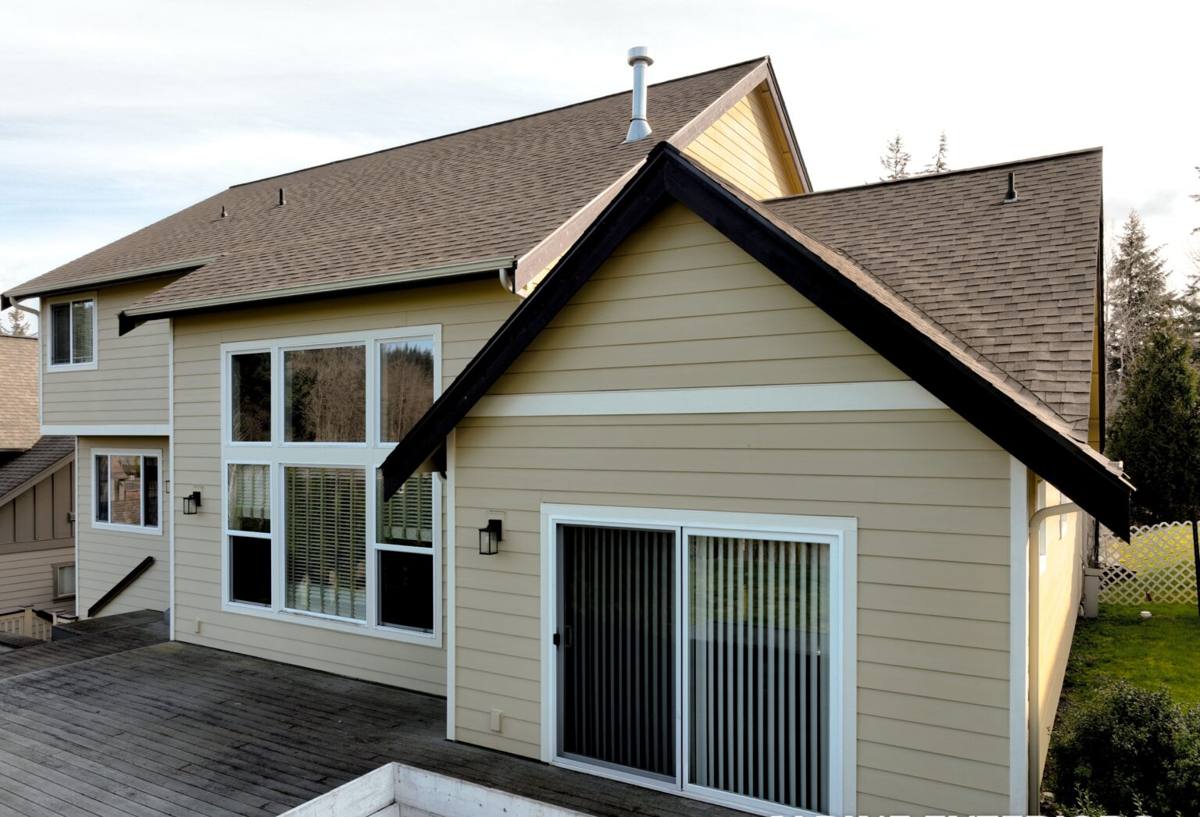
What Citrus Park's Climate Demands From a Siding System
UV and Heat
Florida sun is not gentle on exterior finishes. Cheap or field-applied paint jobs chalk, fade unevenly, and require repainting on a much shorter cycle than most homeowners expect. A factory-applied finish that's engineered to resist UV breakdown holds color and integrity far longer than paint applied on-site after installation.
Wind-Driven Rain
Summer storms and tropical systems don't just drop rain straight down — wind pushes it sideways, up under laps, and into any gap in the water-resistive barrier or flashing detail. Siding that isn't installed with the right clearances, laps, and flashing will let water behind the cladding regardless of how good the panel itself is.
Salt Air
Even at a moderate distance from the coast, airborne salt accelerates corrosion of fasteners and hardware and speeds up the breakdown of coatings that aren't formulated to handle it. Fastener choice and coating quality matter more here than they would in an inland, low-humidity climate.
Humidity and Moisture Cycling
Tampa Bay humidity means exterior walls rarely get to fully dry out between rain events. Any product that absorbs moisture, swells, or supports rot needs a maintenance commitment most homeowners don't want to sign up for. A siding material that is dimensionally stable and moisture-resistant by composition removes that whole category of risk.
Why Fiber Cement, Specifically, for This Neighborhood
Fiber cement is cement, sand, and cellulose fiber — it doesn't rot, it isn't a food source for pests, and it holds up to direct sun without warping or cupping the way some wood-based and engineered-wood products can when moisture gets past the coating. For a neighborhood dealing with UV, humidity, and wind-driven rain in the same year, that combination of properties is exactly what the wall assembly needs.
We only install James Hardie product specifically — not a generic fiber cement or a different manufacturer's version — because of how the plank is engineered and finished:
- ColorPlus factory-applied finish, baked on and cured under controlled conditions rather than painted on-site after installation
- HZ5 and HZ10 product lines engineered for higher-moisture, higher-humidity climates like ours
- Non-combustible core material, which matters for insurance conversations as much as for safety
- A manufacturer warranty structure built around correct installation practices, which is transferable to a future buyer if you sell
We don't install LP SmartSide, vinyl, Cemplank, Allura, or primed wood siding. That's not a knock on every homeowner who has one of those products — it's a standard we hold to based on what we've seen happen to those materials in this climate over time, and on the installation and warranty structure Hardie backs its product with when installed to spec.
What a Correct Installation Actually Involves
The siding panel itself is only part of the system. Most siding failures we get called out to inspect in the Tampa Bay area trace back to installation shortcuts, not the material. A correct James Hardie install includes:
Water-Resistive Barrier and Flashing
A continuous weather barrier behind the siding, with flashing at every window, door, and penetration, so any water that does get past the cladding has somewhere to drain instead of soaking into the wall assembly.
Proper Clearances
Hardie specifies minimum clearances from roofing, decking, and grade. Skipping these is one of the most common shortcuts we see, and it's a direct path to moisture intrusion at the bottom course of siding.
Fastening Pattern and Fastener Material
Correct nail or screw placement, spacing, and depth — and corrosion-resistant fasteners suited to a coastal-influenced, humid climate. Under- or over-driven fasteners are a common cause of premature panel cracking.
Joint Treatment and Caulking
Butt joints, corners, and trim transitions need to be treated per manufacturer spec, using compatible sealants. Caulk that isn't rated for the movement and UV exposure siding sees here fails early and often looks like a "siding problem" when it's really a joint-treatment problem.
Our Process on a Citrus Park Project
- On-site assessment — we look at your current siding, the wall assembly underneath where accessible, trim condition, and any moisture history around windows, doors, and the foundation line.
- Scope and product selection — plank profile, HZ line, and ColorPlus color selected based on your home's exposure (south/west-facing walls take the worst UV and heat load) and any HOA or neighborhood guidelines that apply.
- Tear-off and substrate check — old siding comes off and we check sheathing condition before anything new goes up. Rot or moisture damage found at this stage gets addressed, not covered over.
- Weather barrier and flashing installation — done to manufacturer spec before a single piece of siding goes on.
- Siding installation — correct clearances, fastening, and joint treatment throughout, with trim and accessory details finished to match.
- Final walkthrough — we go over the finished job with you before we consider it done.
Fiber Cement vs. Other Common Options in This Climate
| Factor | James Hardie Fiber Cement | Vinyl | Engineered Wood (e.g. LP SmartSide) |
|---|---|---|---|
| Moisture/rot resistance | Not organic; won't rot | Won't rot, but can warp/melt in extreme heat | Wood-based; vulnerable if coating is compromised |
| UV/fade resistance | Factory-cured ColorPlus finish | Can fade and become brittle over time | Depends on field-applied or factory coating quality |
| Wind/impact performance | Rated for high-wind regions when installed to spec | Can crack or blow off in high wind | Reasonable, but panel damage exposes substrate |
| Fire | Non-combustible core | Combustible | Combustible |
| Warranty structure | Manufacturer-backed, transferable when installed correctly | Varies widely by manufacturer | Varies; installation sensitivity affects claims |
This isn't a claim that every alternative product fails — it's why we standardized on one system and stopped installing the others. We'd rather stand behind fewer products and do them right than offer everything and dilute the install quality on any one of them.
Maintenance: What Ownership Actually Looks Like
Fiber cement is lower-maintenance than wood or engineered wood, but "lower" isn't "zero." A reasonable annual routine for a Citrus Park home includes:
- Rinsing the siding to remove salt residue, pollen, and mildew buildup before it sets in
- Inspecting caulk lines at trim, corners, and penetrations for cracking or separation
- Checking that gutters and downspouts are directing water away from the wall assembly, not onto it
- Watching for any soft spots, staining, or discoloration at the bottom course, which can signal a clearance or drainage issue
- Touching up any impact damage promptly so the coating stays sealed
Vetting a Siding Contractor for This Area
Hurricane-prone, high-UV, salt-influenced climates punish bad installation faster than milder ones do. Before hiring anyone for a fiber cement job in the Tampa Bay area, it's worth confirming:
- They carry active Florida contractor licensing and insurance, and will show you proof without being asked twice
- They can explain their flashing and clearance details specifically, not just "we follow code"
- They're familiar with manufacturer installation instructions for the specific product line being used, since warranty coverage depends on it
- They give you a written scope, not just a verbal price, before work starts
- They've done work in this immediate area and understand the wind and moisture exposure of homes here specifically, not just siding in general
A crew that already works in and around Citrus Park has a practical advantage: they've seen how the local exposure — sun angle on specific elevations, storm-driven rain patterns, salt exposure at this distance from the coast — actually plays out on homes here over several years, not just at handoff.
Get a Straight Answer on Your Siding
If your current siding is fading unevenly, holding moisture, or just due for replacement, we're happy to take a look and give you a straightforward read on condition and options — no pressure, no inflated scare tactics. Use the form below to request a free estimate for your Citrus Park home.