 Oldsmar Siding
 What Town 'N Country Homes Are Up Against
Siding on a home in the greater Oldsmar and Pinellas County service area doesn't get an easy ride. Between hurricane-force wind events, intense year-round UV exposure, wind-driven rain that gets pushed sideways into every seam and joint, and salt-laden air drifting in off the Gulf and Tampa Bay, the exterior envelope of a Town 'N Country home is working hard every single day of the year — not just during storm season. Most siding materials weren't designed with that combination of stresses in mind. They were designed for a milder, drier climate somewhere else and then sold everywhere, including here.
That mismatch is exactly why we install only James Hardie fiber cement siding, and why this page focuses on one thing: what a correct James Hardie installation looks like for a home in Town 'N Country specifically, not siding in general. If you're weighing a full re-side or replacing storm-damaged sections, the details below are the ones that actually determine whether your new siding is still doing its job in fifteen or twenty years.
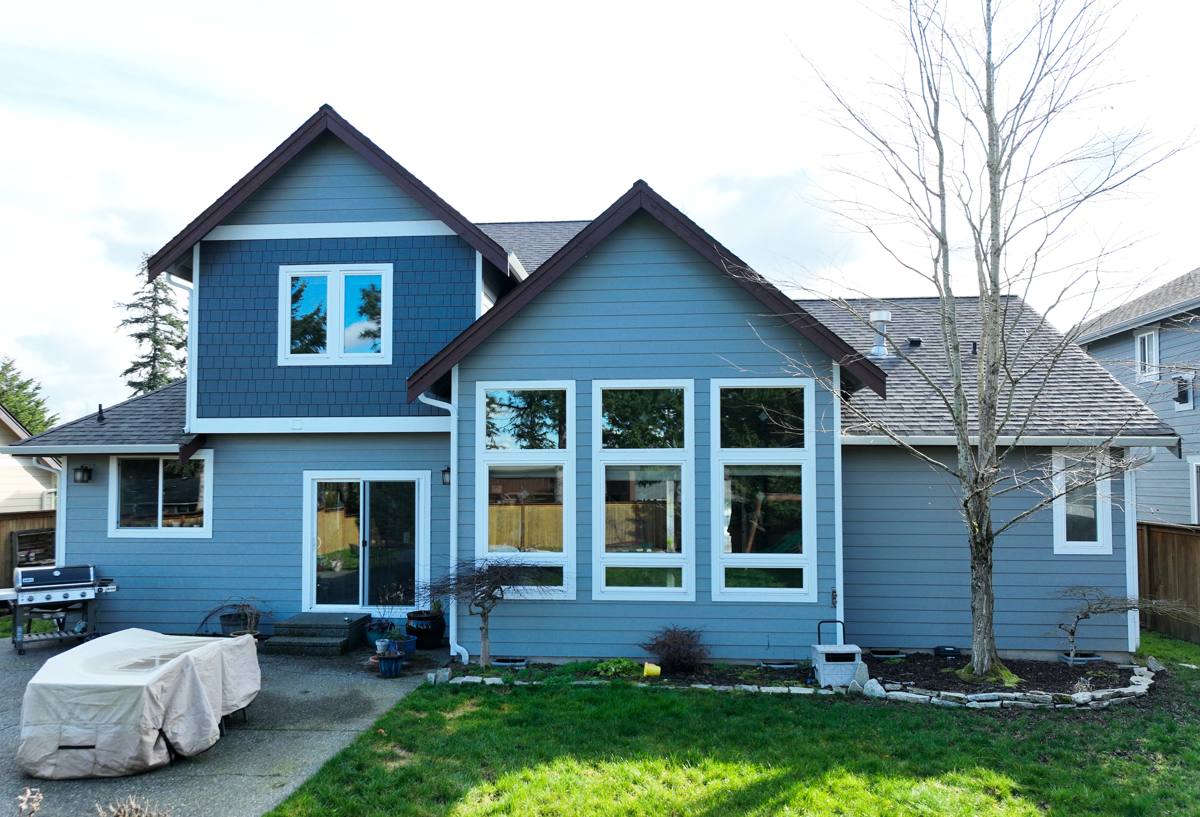
Why We Standardized on James Hardie Fiber Cement
We don't install vinyl, LP SmartSide, Cemplank, Allura, primed spruce, or cedar. That's not a marketing position — it's a standard we settled on after years of tearing old siding off homes in this climate and seeing firsthand what survives and what doesn't.
Non-Combustible by Design
James Hardie siding is made from Portland cement, sand, and cellulose fiber, cured into a dense, stable board. It doesn't burn, soften, or melt the way plastic and wood-based products can under heat exposure. That's a real, practical difference in material composition, not a cosmetic one.
Engineered for This Exact Climate
James Hardie manufactures regional formulations rather than one universal product. Siding installed in our part of Florida uses the HZ product line engineered specifically for high-humidity, high-moisture, hurricane-exposed climates — a different mix than what's shipped to a dry inland state. It's built to resist the swelling, cupping, and moisture-cycling damage that wears down less climate-specific materials here.
ColorPlus Factory Finish
Most of what we install carries Hardie's ColorPlus finish — baked on in multiple coats under controlled factory conditions rather than sprayed or rolled on site. It holds color and resists chipping far better than field-applied paint standing up to Florida's UV load, and it carries its own separate finish warranty on top of the substrate warranty.
How Local Conditions Attack Ordinary Siding
It helps to be specific about what each climate stressor actually does to a wall, because "Florida weather is tough on siding" undersells the mechanics of the problem.
| Climate Stressor | Effect on Ordinary Siding | How Hardie Fiber Cement Responds |
|---|---|---|
| Hurricane-force wind | Can pry loose fasteners, lift panel edges, and turn debris into impact damage | Dense, rigid board holds fasteners securely when installed to spec; resists wind-driven impact better than lighter materials |
| Year-round intense UV | Breaks down field-applied paint, causes fading and chalking on lower-grade finishes | ColorPlus factory finish is engineered specifically to resist UV fade and chip over a long service life |
| Wind-driven rain | Forces water sideways into loose seams, unsealed joints, and gaps around trim | Correct flashing, gapping, and fastening close off the entry points water actually uses |
| Salt air off the Gulf/Bay | Accelerates fastener corrosion and speeds up surface degradation on unprotected materials | Corrosion-resistant fastener specifications and a stable, non-porous board surface resist salt-driven wear |
| Sustained humidity | Keeps moisture-absorbent materials damp longer between rain events, inviting rot and mold | Fiber cement doesn't absorb and release moisture the way wood or wood-composite products do |
What a Correct James Hardie Installation Actually Involves
The material is only half the equation. A large share of the siding failures we get called out to look at in this area trace back to installation shortcuts, not the product itself. A correct job follows James Hardie's published specifications closely, not general "siding experience."
Flashing and Water Management
Every window head, door head, roof-to-wall intersection, and horizontal transition needs proper flashing behind the siding, layered correctly with the weather-resistive barrier so water sheds outward instead of tracking behind the cladding. This is invisible once the job is done, which is exactly why it's the step most likely to get rushed by a crew that isn't held to it.
Fastening Pattern for Wind Resistance
Hardie publishes specific fastener type, spacing, and penetration-depth requirements, and those requirements get more exacting in higher wind zones like ours. Fasteners driven too deep can crack the board; fasteners spaced too far apart or the wrong type for the substrate weaken the wall's ability to hold up in sustained hurricane-force gusts.
Clearances and Joint Treatment
Siding needs correct clearance from grade, roofing, and decking so the bottom edge isn't sitting in standing water after a heavy rain event. Butt joints need the gap and sealant treatment Hardie specifies — not a bead of caulk run down every seam regardless of whether the manufacturer calls for it there.
Our Process, Start to Finish
- On-site assessment: we walk the exterior, check the current siding and sheathing condition, and note wind, sun, and moisture exposure specific to your lot and orientation
- Written estimate: a clear scope covering product line, profile, color, trim, and what tear-off and prep involves — no vague allowances
- Tear-off and inspection: removing old siding down to the sheathing lets us catch rot, prior water damage, or failed flashing before it gets covered up again
- Sheathing repair and weather barrier: any compromised sheathing gets addressed, and a properly lapped weather-resistive barrier goes on before a single piece of Hardie touches the wall
- Flashing installation: windows, doors, and every horizontal transition get flashed per spec before siding closes over them
- Hardie installation: panels or planks installed to manufacturer fastening, gapping, and clearance specifications, with trim and corners detailed to shed water correctly
- Final inspection and walkthrough: we check the completed exterior against the original scope before calling the job done
Choosing the Right Product Line for Your Home
James Hardie offers several profiles, and the right one depends on your home's architectural style rather than a one-size-fits-all default.
- HardiePlank lap siding — the traditional horizontal lap look, the most common choice for full re-sides in this area
- HardiePanel vertical siding — a clean vertical look often paired with HardieTrim battens for a board-and-batten style accent or full elevation
- HardieShingle — a shingle-style profile for homes wanting more texture and dimension on gables or accent sections
- HardieTrim — corner boards, fascia, and window/door trim engineered to match and pair with whichever siding profile you choose
Color is worth planning early rather than as an afterthought. ColorPlus finishes come in a range of options engineered to hold up under sustained Florida UV, and darker, more saturated tones will show shadow lines and architectural detail more dramatically than lighter, more uniform colors — a real consideration on a home with a lot of trim or a mixed-profile design.
Signs Your Current Siding Is Already Failing
Homeowners often call us after noticing something that turns out to be a symptom of a larger problem underneath. Worth checking for:
- Soft or spongy spots when you press on the siding, especially near the bottom of walls or below windows
- Visible cupping, warping, or gapping at seams and joints
- Paint that's peeling, bubbling, or chalking heavily in patches rather than evenly with age
- Staining or streaking below window and door trim after rain
- Any soft or discolored drywall or trim visible from inside near an exterior wall
- Loose panels or trim after a wind event, even if nothing looks obviously broken
None of these are things to wait out. Water damage behind siding tends to get worse quietly, out of sight, until it's a much larger repair than it would have been caught early.
What Affects the Cost of a James Hardie Project
| Cost Factor | Why It Matters |
|---|---|
| Total square footage and wall complexity | More corners, gables, and dormers mean more cutting, trim work, and labor hours |
| Tear-off and sheathing condition | Rotted sheathing or hidden water damage found during tear-off adds necessary repair scope |
| Product line and profile | HardieShingle and mixed-profile designs generally run more than a straightforward HardiePlank lap job |
| Trim and detail work | Extensive window, door, and corner trim adds material and installation time |
| Story height and access | Second-story and steep-roof sections require more setup, staging, and time |
| Color and finish selection | Factory ColorPlus finishes are priced differently than field-applied paint options |
We give straightforward written estimates rather than vague ranges pulled from a phone call — an accurate number requires seeing the actual walls, trim, and access.
Why Local Installation Experience Matters
A crew that regularly works Town 'N Country and the wider Oldsmar area already knows what this specific stretch of Florida throws at an exterior — the wind exposure of a particular lot orientation, how quickly UV and salt air wear down a poorly finished surface, and what the local permitting and wind-load requirements call for on a re-side. That local track record matters more than it might seem: siding installed to the letter of the manufacturer's specification, by a crew that's done it repeatedly under these exact conditions, is what actually holds up through hurricane season after hurricane season — not just at the final walkthrough, but five and ten years out.
If you're considering new siding for a Town 'N Country home, we're glad to walk the property, talk through the product line and color options that fit your home, and put together a free, no-pressure estimate for a correctly installed James Hardie system.