 Oldsmar Siding
 Building Decks That Hold Up in Citrus Park
A deck in Citrus Park has to do more than look good on a Saturday afternoon. It has to survive a Florida summer of near-daily rain and blistering UV, shrug off the wind load from tropical storms and hurricanes that move through the Tampa Bay area, and keep performing while sitting a short drive from the salt air rolling in off the Gulf. Homes in this part of Oldsmar and unincorporated Pinellas County see all of that in a single year, sometimes in a single week. A deck built with generic, one-size-fits-all methods will show it fast — cupped boards, rusted fasteners, wobbly railings, wood that grays and splits within a couple of seasons.
This page is about doing custom decks right for this specific area: what the climate actually does to a deck over time, what a correctly built deck looks like underneath the surface, and how we approach the job from first estimate to final walk-through.
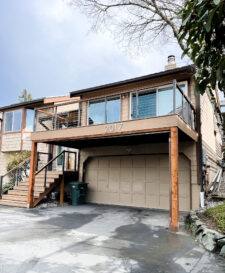
What Citrus Park's Climate Does to a Deck
Sun and Heat
Central Florida sun is intense and it's overhead for most of the day, most of the year. Unshaded deck boards absorb heat and UV constantly, which accelerates fading, drying, and checking in wood, and stresses the resin binders in composite and PVC products. A deck that faces west or gets full afternoon sun will age differently than one tucked under tree cover, and that should factor into material choice and finish.
Wind-Driven Rain and Humidity
Rain here doesn't fall straight down — tropical systems and afternoon storms push it sideways, driving water into joints, fastener holes, and end grain that a north-facing deck in a drier climate would never see. Combined with year-round humidity, that means any framing member, ledger board, or post base that isn't properly flashed and sealed is on a clock.
Hurricane and Tropical Storm Wind Loads
Pinellas County sits in a wind zone that requires decks to be engineered for real uplift and lateral loads, not just gravity. Railings, guardrails, and the connections between the deck and the house all need hardware rated for that, not standard deck screws and toe-nailed joists.
Salt Air
Citrus Park isn't oceanfront, but it's close enough to the Gulf that salt-laden air still reaches inland neighborhoods on a regular breeze, especially with onshore winds. Salt air accelerates corrosion in untreated steel fasteners and lower-grade hardware, which is one of the most common causes of premature deck failure we see in this part of the county — not the decking boards themselves, but the metal holding everything together.
Decking Material Options for This Area
There's no single "best" decking material — there's a best material for your budget, your sun exposure, and how much upkeep you're willing to do. Here's how the common options actually perform in a Citrus Park backyard.
| Material | Upfront Cost | Sun/Heat Behavior | Moisture & Salt Air | Ongoing Maintenance |
|---|---|---|---|---|
| Pressure-treated pine | Lowest | Fades and can check/warp without regular sealing | Needs sealing to resist swelling and rot; fasteners must be corrosion-rated | Annual cleaning and re-sealing recommended |
| Tropical hardwood (ipe and similar) | High | Naturally dense, holds up well to UV with periodic oiling | Excellent natural moisture resistance | Periodic oiling to maintain color; very durable if neglected |
| Capped composite | Mid to high | Stays cooler-toned than wood colors, resists fading better than uncapped composite | Doesn't rot or swell; won't absorb salt spray | Occasional washing; no sealing or staining |
| PVC decking | Highest | Very stable in heat, minimal expansion issues | Fully moisture-proof, unaffected by salt air | Lowest maintenance of the group |
For a lot of Citrus Park homeowners, the real decision comes down to how long they plan to stay in the house and how much they want to spend a Saturday maintaining a deck versus using it. We'll walk through the trade-offs honestly rather than push whatever has the best margin.
What a Correctly Built Deck Looks Like Underneath
Footings Sized for Local Soil
Pinellas County soil and water table conditions affect how deep and how wide footings need to be to stay stable under load and resist movement over time. Undersized or shallow footings are a common shortcut that shows up years later as a deck that sways or settles unevenly.
Ledger Attachment and Flashing
Where a deck attaches to the house is the single most important — and most commonly botched — connection on the whole structure. It needs proper flashing to keep wind-driven rain from getting behind the siding or into the rim joist, and lag bolts or through-bolts sized for the actual load, not just enough screws to hold it up on installation day.
Corrosion-Resistant Hardware
Given the salt air exposure in this area, we use fasteners, joist hangers, and post bases rated for coastal or high-corrosion environments — not standard interior-grade hardware that starts rusting and staining within a season or two.
Hurricane-Rated Connections
Post-to-beam, beam-to-joist, and deck-to-house connections all need hardware sized for the wind uplift this area actually experiences, not the minimum you'd see in a milder climate.
Permits and Code in Oldsmar and Pinellas County
Deck construction in this area is governed by the Florida Building Code and local permitting requirements, which cover structural sizing, guardrail height, baluster spacing, and stair geometry. Most custom decks require a permit and inspection before and after the work — this isn't optional paperwork, it's what confirms the structure was actually built to hold up under Florida wind and weather. We handle the permitting process as part of the job rather than leaving it for the homeowner to sort out.
Our Process for a Citrus Park Deck Project
- On-site visit to assess the yard, sun exposure, drainage, and how the deck ties into the house
- Honest conversation about material options and budget, with real trade-offs explained up front
- Design and a written estimate before any work begins
- Permit pulled and submitted to the local jurisdiction
- Footings and framing built to code, with corrosion-resistant hardware throughout
- Decking, railing, and stairs installed and finished
- Final inspection and a walk-through so you know how to maintain what you paid for
Railings, Stairs, and the Details That Get Skipped
Guardrail height, baluster spacing, and stair rise-and-run are all code-governed details that exist because they're genuine safety issues, not bureaucratic boxes to check. We also pay attention to smaller things that matter in this climate specifically: gapping deck boards correctly so wind-driven rain drains instead of pooling, using stainless or coated screws at the surface so you don't get rust streaks bleeding into light-colored decking, and making sure any post caps or trim pieces are sealed against wind-driven moisture at the joints.
Maintaining a Deck in a Florida Climate
- Rinse off pollen, salt residue, and organic debris every few weeks, more often near tree cover
- Check fastener heads and hardware annually for early rust or corrosion, especially after storm season
- Re-seal or re-oil wood decking on a schedule appropriate to the product — don't wait until it looks dry
- Keep gutters and downspouts clear so runoff isn't dumping extra water onto or under the deck
- Trim back vegetation that shades boards constantly, which slows drying and promotes mildew
- After any tropical storm or hurricane, walk the structure and check railings, stairs, and ledger attachment for movement
What to Confirm Before You Hire a Deck Contractor
A deck is a structural project, not a cosmetic one — the framing and fasteners you can't see matter more than the boards you can. Before signing with anyone for a custom deck in this area, it's worth confirming a few basics.
- They pull a permit and schedule inspections rather than treating it as optional
- They can explain, specifically, what hardware and fastener grade they use and why
- They size footings and framing for local soil and wind conditions, not a generic national default
- They give you a written estimate that spells out materials, not just a bottom-line number
- They have experience with decks in this specific climate, not just decks in general
Why Local Experience in Citrus Park Actually Matters
A deck built by a crew that already works in and around Oldsmar and Pinellas County isn't guessing at how the sun, rain, and salt air here will treat different materials and hardware over time — they've already seen what holds up and what fails early in this exact climate. That translates into fewer callbacks, fewer surprises during permitting, and a deck that's actually sized and detailed for the conditions it has to survive, not a spec sheet written for a different part of the country.
If you're planning a custom deck in Citrus Park or anywhere around Oldsmar, we're happy to take a look at your space and put together a straightforward, no-pressure estimate — just fill out the form below and we'll go from there.