 Oldsmar Siding
 Siding Built for Life on the Course in Tampa Bay Golf and Country Club
Homes in Tampa Bay Golf and Country Club sit in one of Oldsmar's most established residential settings, with mature landscaping, open lots along the fairways, and plenty of direct sun exposure on multiple sides of the house. That combination is exactly what siding manufacturers design for when they talk about "Florida exposure" — long stretches of full sun, humidity that never really lets up, and the occasional tropical system that brings sideways rain and sustained wind. Siding here isn't just a cosmetic layer. It's the first line of defense between the house and everything Pinellas County's climate throws at it.
This page focuses specifically on James Hardie fiber cement siding as it applies to homes in this neighborhood — what the local climate demands from a siding system, what a correct installation actually involves, and why we only install this one product line rather than offering a menu of cheaper alternatives.
What This Climate Actually Does to Siding
Oldsmar sits close enough to Tampa Bay that homes get a steady dose of salt-laden air, even away from the immediate waterfront. Add in the intensity of year-round Florida UV and the wind-driven rain that comes with summer storms and hurricane season, and you've got a set of conditions that will find every weakness in a siding product within a few years if the material or the installation isn't right for the job.
- UV exposure: Constant sun breaks down pigments and resins in lower-grade siding, leading to fading, chalking, and surface degradation on southern and western elevations.
- Humidity and moisture cycling: Florida's air holds moisture almost year-round. Siding that absorbs water or traps it behind the surface stays damp longer, which accelerates rot, swelling, and paint failure.
- Wind-driven rain: During tropical storms and hurricane-force wind events, rain doesn't fall straight down — it drives sideways into wall assemblies, testing every seam, joint, and piece of flashing.
- Salt air: Even inland pockets of Oldsmar pick up salt content in the air blowing off Tampa Bay and the Gulf. Salt accelerates corrosion of fasteners and trim and can degrade certain coatings over time.
None of this is unique to Tampa Bay Golf and Country Club, but it's worth naming plainly because it explains why generic siding advice — the kind written for a house in Ohio or Colorado — doesn't really apply here. The right siding choice for this neighborhood has to hold up to all four of these stresses at once, every year, indefinitely.
Why We Install Only James Hardie Fiber Cement
We made a decision as a company to install James Hardie fiber cement siding exclusively — not vinyl, not LP SmartSide, not Cemplank, not Allura, not primed wood. That's not a marketing position; it's a practical one built around what actually holds up in this climate over the long haul.
Non-Combustible Material
James Hardie siding is fiber cement, meaning its core is made from cement, sand, and cellulose fibers rather than wood fiber or vinyl resin. It doesn't burn, warp from heat, or provide fuel to an exterior fire the way combustible siding materials can. For a neighborhood with mature trees and landscaping like Tampa Bay Golf and Country Club, that's a meaningful safety margin.
Engineered for Humid, Coastal-Adjacent Climates
Hardie's HZ5 product line is specifically engineered for climates like ours — hot, humid, and prone to wind-driven rain. The material resists moisture absorption far better than wood-based composite sidings, which means less swelling, less rot risk, and a more stable substrate for paint and caulking to hold onto over time.
ColorPlus Factory Finish
Hardie's ColorPlus finish is baked on in a controlled factory environment rather than sprayed or brushed on-site. That finish is formulated to resist UV fading better than field-applied paint, which matters directly here given how much direct sun this neighborhood's homes receive across the day.
A Warranty Built Around the System
James Hardie backs its siding with a strong transferable limited warranty when the product is installed to their specifications — a meaningful detail for homeowners who may sell in the years ahead, since it's the house, not just the current owner, that benefits.
What Correct Installation Looks Like
Fiber cement siding is only as good as the installation behind it. Hardie publishes detailed installation requirements, and skipping steps is the single biggest reason fiber cement siding underperforms in the field. A correct job in this climate includes:
- Proper clearances: Siding held to correct gaps above rooflines, decks, and grade so water can't wick up into the material.
- Correct fastening: Corrosion-resistant fasteners driven at the manufacturer-specified pattern and depth — critical given the salt content in coastal-adjacent air.
- Weather-resistant barrier and flashing: A continuous drainage plane behind the siding so any moisture that gets past the surface has somewhere to go besides your sheathing.
- Properly sealed joints and butt seams: Every seam is a potential entry point for wind-driven rain if it's not caulked and flashed correctly.
- Field-cut edge sealing: Any edge cut on-site needs to be sealed to protect the exposed core from moisture intrusion.
None of these steps are optional extras — they're the difference between siding that performs for decades and siding that fails early, regardless of what brand is on the box.
How Our Process Works for Tampa Bay Golf and Country Club Homes
1. On-Site Assessment
We start with a walk-around of the home, looking at current siding condition, trim, soffits, fascia, and any signs of existing moisture issues. We also take note of exposure — which elevations take the most sun and wind — since that can affect product selection and detailing.
2. Product and Profile Selection
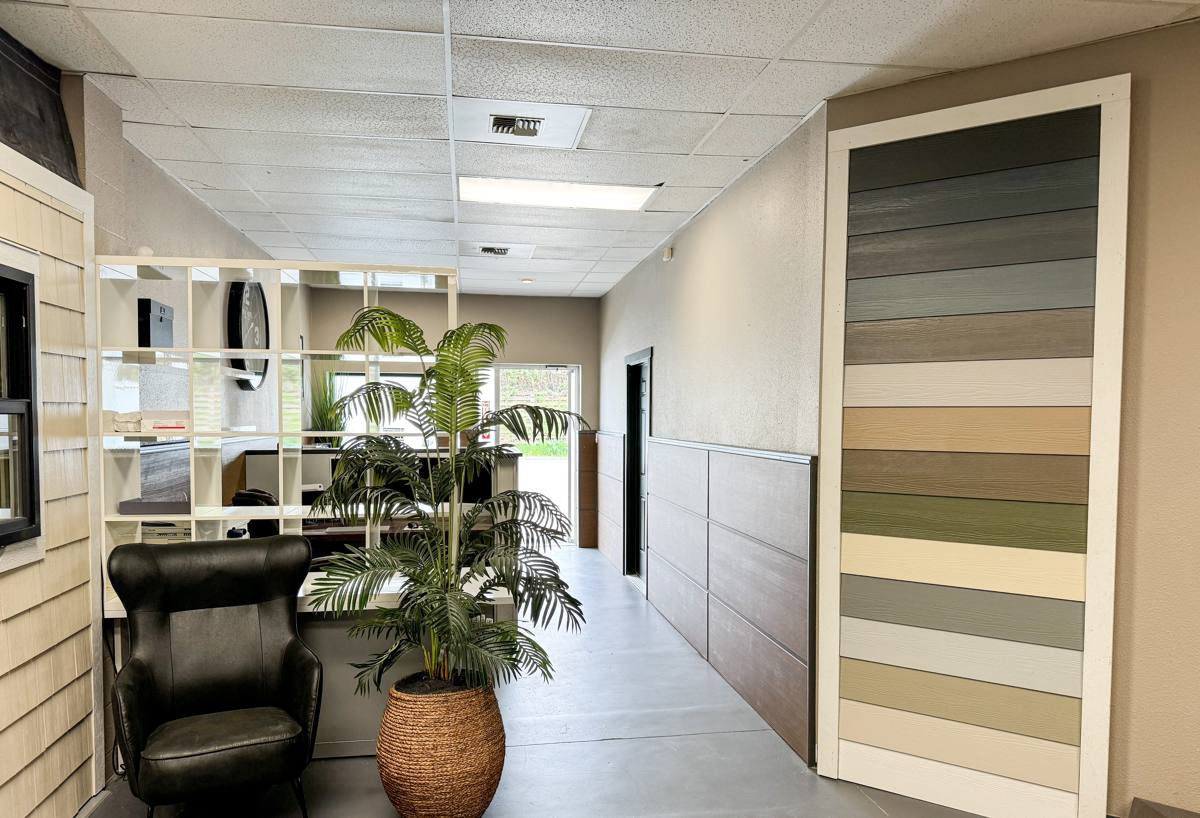
James Hardie offers multiple siding profiles (lap siding, board and batten, shingle-style panels) and trim options. We walk homeowners through what fits the home's existing lines and the look they're going for, all within the Hardie product family.
3. Tear-Off and Substrate Check
Old siding comes off and we inspect the sheathing underneath for any hidden rot or damage before new material goes up. This step matters more in older Oldsmar homes where prior moisture intrusion may not be visible from the outside.
4. Installation to Manufacturer Spec
Siding, flashing, and trim go up following Hardie's published installation requirements — not a shortcut version. This is where experience with the product specifically (rather than fiber cement in general) shows up in the details.
5. Final Walkthrough
We review the finished job with the homeowner, covering care and maintenance basics and answering questions about the warranty.
Cost Factors Homeowners Should Understand
Every home and project is different, so exact pricing depends on the specifics of your house. But the major cost drivers are consistent across most jobs in this area:
| Factor | Why It Matters |
|---|---|
| Home size and elevation count | More square footage and more complex rooflines mean more material and labor |
| Current siding removal | Tear-off of existing siding adds labor versus a bare-wall install |
| Substrate repairs | Hidden rot or sheathing damage found during tear-off adds scope |
| Siding profile and trim selection | Board-and-batten, extensive trim work, or custom details add time versus a straightforward lap siding job |
| Color and finish selection | ColorPlus factory finishes vs. field-applied primed products carry different costs |
We provide a written estimate that breaks these factors down for your specific home rather than a flat per-square-foot number that doesn't reflect what your project actually needs.
Why Local Experience in This Neighborhood Matters
Tampa Bay Golf and Country Club has its own mix of home styles and ages, and a crew that's already worked in the neighborhood understands the common issues that show up here — how homes of certain vintages were originally sided, where moisture problems tend to hide, and how exposure varies from a lot backing up to the course versus an interior lot. That familiarity shortens the assessment phase and helps avoid surprises once tear-off begins. It also means we're a known, accountable local presence rather than a crew that's only in the area for one job.
A Practical Pre-Project Checklist
- Walk your home's exterior and note any soft spots, visible gaps, or peeling paint, especially near ground level and roof intersections
- Check caulking around windows, doors, and trim for cracking or separation
- Look for staining or discoloration that could indicate moisture getting behind the current siding
- Note which sides of your home get the most direct afternoon sun
- Ask any contractor you're considering for their specific James Hardie installation experience, not just general siding experience
- Get manufacturer warranty details in writing before signing a contract
Ready to Talk About Your Home
If you're weighing a siding replacement for your home in Tampa Bay Golf and Country Club, we're happy to take a look and give you a straight, no-pressure assessment of what your house needs. Fill out the form below to schedule a free estimate.