 Oldsmar Siding
 Why Siding Installation Is Different in the Town 'N Country Area
Homes in the Town 'N Country area sit close enough to Tampa Bay that the siding on the outside of the house is doing more work than most homeowners realize. It's not just a cosmetic layer — it's the only thing standing between the wood framing underneath and a climate that combines four separate stresses: intense year-round UV that bakes and fades weaker materials, wind-driven rain that gets pushed sideways into every seam and joint, hurricane-force wind loads that test every fastener, and a steady dose of salt air drifting inland off the water that accelerates corrosion and breaks down finishes that weren't built for it.
Any one of those stresses is manageable on its own. All four hitting the same wall assembly, year after year, is what separates a siding installation that holds up for decades from one that starts showing problems in five or six years. That's the standard we install to on every Town 'N Country and greater Oldsmar project — not just getting boards on the wall, but getting them on in a way that's actually engineered for this specific climate.
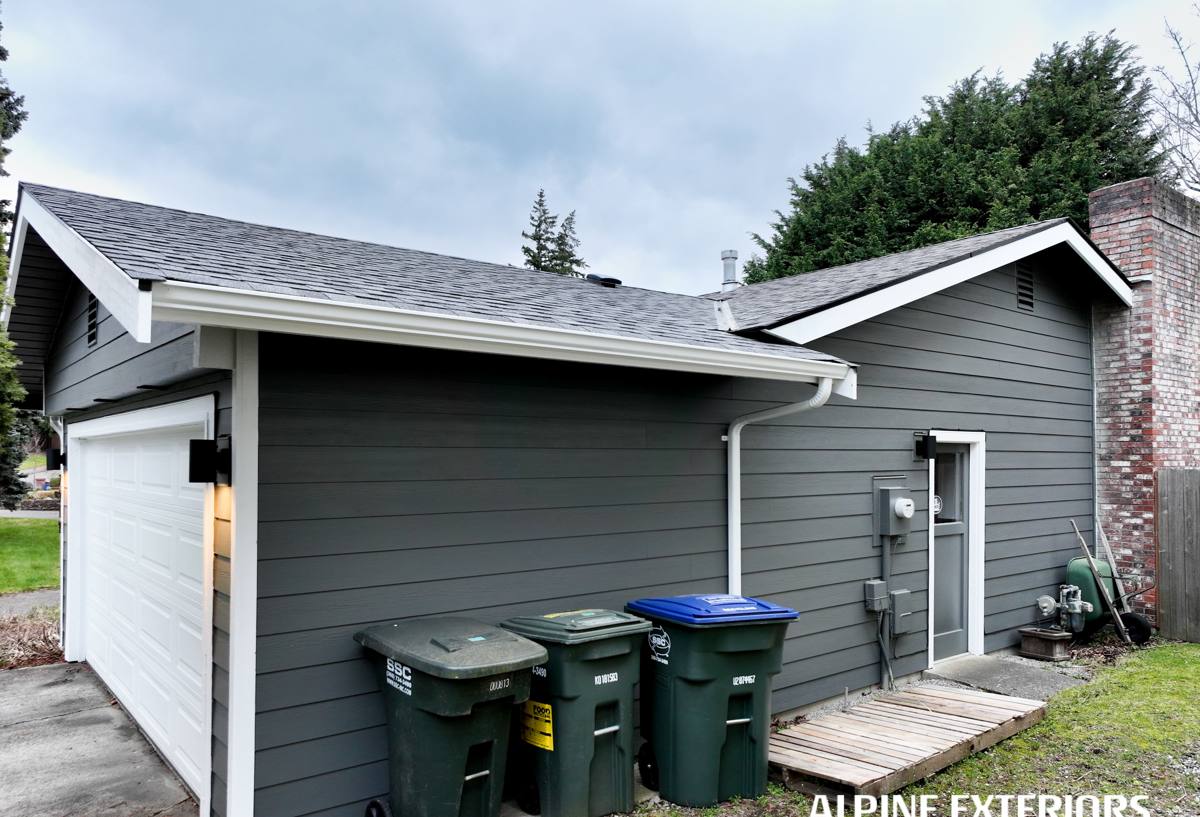
What a Correct Siding Installation Actually Involves
"Siding installation" sounds simple from the curb, but the parts that determine whether it lasts are mostly invisible once the job is done. A rushed or corner-cutting install can look identical to a correct one on day one and still fail in a fraction of the time.
Weather-Resistive Barrier and Moisture Management
Before a single piece of siding goes up, the wall needs a continuous weather-resistive barrier installed with proper overlaps, sealed penetrations, and correct integration around windows and doors. In a coastal, humid climate like this one, gaps or shortcuts here are what let moisture get behind the siding — where it can sit against the sheathing and framing for months without anyone noticing until there's rot or a mold problem.
Fastening and Wind Resistance
Fastener type, spacing, and placement aren't cosmetic details — they're what keeps siding attached during a tropical storm or hurricane-force wind event. Manufacturer fastening schedules exist for a reason, and in wind zones like ours, following them (not eyeballing it) is the difference between siding that stays put and siding that peels off in a storm.
Flashing, Clearances, and Trim Details
Every window head, door, and horizontal trim piece needs flashing that sheds water outward instead of behind the cladding. Siding also needs proper clearance from the roofline, decks, and grade — installed too tight to any of those, it wicks up moisture constantly, which is a slow, quiet way to void a warranty and shorten the life of the wall behind it.
Why We Install Only James Hardie Fiber Cement Siding
We standardized on James Hardie fiber cement for every home we side, including in the Town 'N Country service area, and we don't install vinyl, LP SmartSide, or other engineered wood or fiber cement alternatives. Fiber cement is non-combustible, which matters in a state where wildfire and electrical exposure risk are part of the insurance conversation, and it holds its shape and paint line far better than vinyl in extreme heat and direct sun.
Hardie's ColorPlus factory-applied finish is baked on under controlled conditions rather than field-painted, which gives it more consistent UV and fade resistance than most site-applied paint jobs. The company also engineers specific product lines, including HZ5 formulations, for high-humidity, moisture-prone climates like Florida's Gulf Coast — which is exactly the environment a Town 'N Country home sits in. Combined with a strong transferable warranty when installed to spec, it's the product we're willing to put our name behind. We don't cut corners by offering a cheaper alternative and hoping it holds up.
Our Installation Process for Town 'N Country Homes
Assessment and Prep
We start by walking the exterior and identifying problem areas most likely to have hidden moisture damage — around windows, at wall penetrations, near the roofline, and anywhere prior siding or trim has failed. This tells us what's happening behind the old cladding before we ever quote the job.
Removal and Substrate Repair
On a replacement project, old siding comes off in sections so we can inspect the sheathing underneath. Any soft, rotted, or water-damaged sheathing gets repaired or replaced before new siding goes up — installing new siding over damaged substrate just hides a problem that will keep getting worse.
Installation to Manufacturer and Code Spec
We install the weather-resistive barrier, flashing, and Hardie siding according to manufacturer fastening schedules and local building code requirements for wind exposure. This isn't a step we adjust based on the budget — the wind and moisture loads on a Pinellas County home don't change because a job is smaller.
Final Inspection and Walkthrough
Before we call a job done, we check seams, caulking, trim lines, and fastening throughout, and we walk the finished exterior with the homeowner so they know exactly what was done and what to expect from the material going forward.
What Siding Installation Costs Depend On
Every home is different, so we won't quote a number without seeing the house — but the factors that actually move the price are consistent from job to job. Knowing them upfront helps homeowners understand a quote instead of just comparing bottom-line numbers.
| Cost Factor | Why It Matters |
|---|---|
| Substrate condition | Rotted or water-damaged sheathing found during removal adds repair work that can't be skipped without risking the new siding's lifespan. |
| Home size and wall complexity | More corners, gables, and architectural detail mean more cutting, trim work, and labor hours than a simple rectangular wall plan. |
| Siding profile chosen | Lap siding, panel siding, and shingle-style Hardie profiles differ in material and labor cost per square foot. |
| Trim and accessory scope | Fascia, soffit, window trim, and corner boards can be replaced or reused, which changes both cost and how well the final look integrates. |
| Access and site conditions | Tight lot lines, landscaping, or second-story sections affect staging and labor time. |
Signs Your Current Siding Is Already Overdue for Replacement
Coastal wind and sun exposure don't always announce themselves with an obvious event — most siding failure in this climate is gradual. These are the signs worth acting on before they turn into a bigger repair:
- Visible warping, buckling, or panels that no longer sit flat against the wall
- Soft or spongy spots when you press on the siding near the base of the wall or under windows
- Paint or finish that's chalking, peeling, or fading unevenly, especially on sun-exposed elevations
- Visible gaps at seams, corners, or around window and door trim
- A musty smell or discoloration on interior walls that back up to exterior siding
- Siding that's more than 20-25 years old and has never been fully inspected behind the surface
Why a Crew That Already Works in Town 'N Country Matters
Siding installation isn't a one-size-fits-all trade, and a crew that regularly works this part of the Oldsmar area brings something a traveling or out-of-area contractor can't: direct, repeated experience with how this specific coastal-adjacent climate treats a wall assembly over time. That means knowing which details — flashing at a certain trim style, fastener choice, clearance at grade — actually matter here versus in a drier, inland climate where the same shortcuts might not show consequences for years.
It also means accountability. A local crew's reputation follows them from house to house in the same community, which is a real incentive to install correctly the first time rather than move on to the next town before problems surface. And practically, being local means faster response if a question or a warranty issue comes up after the job is finished — no waiting on a crew that has to drive in from somewhere else.
Warranty and Long-Term Protection
James Hardie backs its fiber cement products with a manufacturer warranty that's transferable to a future homeowner if the house sells — a detail worth knowing if resale is ever a consideration. That warranty is conditioned on correct installation according to Hardie's specifications, which is exactly why installation quality isn't a place to save money. A great product installed incorrectly doesn't get the protection a homeowner is paying for; it just looks like it does until something goes wrong.
On our end, we stand behind our own installation workmanship separately from the manufacturer's material warranty, so a homeowner isn't left trying to sort out whose responsibility a problem is if one comes up.
If your Town 'N Country home's siding is showing its age, or you're planning ahead of a full exterior update, we're happy to take a look and give you a straightforward, no-pressure estimate — just fill out the form below to get started.