 Oldsmar Siding
 Safety Harbor homeowners deal with a roofing climate that doesn't forgive shortcuts. Between hurricane-force wind events, brutal year-round UV exposure, wind-driven rain that finds every weak seam, and the salt-laden air drifting in off Old Tampa Bay, a roof here works harder than one almost anywhere else in the country. Metal roofing, installed correctly, is one of the best answers to that combination of stresses — but "installed correctly" is doing a lot of work in that sentence. This page covers what a Safety Harbor metal roof actually needs to hold up, what a proper installation involves, and what to look for in the crew you hire to do it.
Why Safety Harbor Roofs Take a Different Kind of Beating
Pinellas County sits in one of the most storm-exposed parts of the country, and Safety Harbor is no exception. Even homes set back from the water still face sustained wind loads during tropical systems, plus the everyday grind of intense sun and humidity that never really lets up. A roofing material that performs fine in a milder climate can fail here in ways that surprise homeowners who moved from out of state — curling shingles, rusted-through fasteners, or granule loss that shows up years earlier than the warranty implied.
Metal roofing handles this environment well when it's matched to the right panel type, fastening system, and coating — and handles it poorly when any of those are chosen wrong or installed carelessly. That distinction is the whole point of this page.
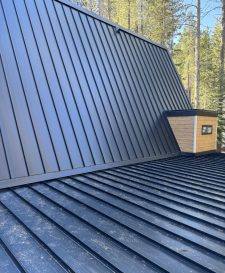
The Four Forces a Safety Harbor Metal Roof Has to Resist
Hurricane-Force Wind
Wind doesn't just push on a roof — it creates uplift at edges, ridges, and corners that can peel panels if fastening spacing or clip systems are undersized for the exposure. A metal roof rated for wind resistance on paper still needs the fastening pattern and edge detailing to actually deliver that rating in the field.
Intense, Year-Round UV
Florida sun degrades coatings and sealants faster than almost anywhere in the continental U.S. On a metal roof, UV exposure is what determines how long the paint finish holds its color and how long any exposed sealant stays flexible instead of cracking.
Wind-Driven Rain
During a tropical storm or squall line, rain doesn't fall straight down — it's driven sideways and can work its way under laps, around penetrations, and past flashing that would be perfectly adequate in a calmer climate. Wind-driven rain is usually where a marginal installation gets exposed, sometimes years after the fact.
Salt Air
Safety Harbor sits close enough to Old Tampa Bay that salt-bearing air reaches roofing systems even on homes several miles from open water. Salt accelerates corrosion at fasteners, cut edges, and any spot where a coating has been scratched or worn through during installation — which is exactly why fastener grade and panel coating matter more here than in an inland climate.
Choosing the Right Metal Roofing System
Not all metal roofing is built the same way, and the differences matter more in a high-wind, salt-air environment than they do in milder climates. The two systems homeowners most often compare are standing seam and exposed-fastener (screw-down) panels.
| Factor | Standing Seam | Exposed-Fastener |
|---|---|---|
| Fasteners | Concealed under interlocking seams | Visible screws through the panel face |
| Wind performance | Generally stronger uplift resistance with clip systems | Adequate when installed correctly, but relies on gasket integrity at each screw |
| Long-term maintenance | Minimal — no exposed fasteners to inspect | Gaskets and screws should be checked periodically as they age |
| Upfront cost | Higher material and labor cost | More budget-friendly |
| Typical best fit | Primary residences, higher wind exposure, longer ownership horizon | Outbuildings, budget-driven projects, shorter ownership horizon |
We'll talk through both honestly during an estimate rather than pushing one system across the board — the right call depends on your roof's exposure, your budget, and how long you plan to own the home.
Panel Material: Steel or Aluminum
Galvanized or Galvalume steel panels are common, durable, and cost-effective, and with a quality factory finish they hold up well in coastal-influenced air. Aluminum costs more but doesn't rust — it can corrode under certain conditions, but not in the same way ferrous metal does — which is why some homeowners closer to the water opt for it despite the higher price. We'll help you weigh that trade-off against your budget rather than defaulting to whichever is easiest to install.
What a Correct Installation Actually Involves
A metal roof is only as good as what's underneath it and how it's fastened down. The visible panel is the last step, not the whole job.
- Deck inspection and repair — any soft, rotted, or delaminated decking gets replaced before a single panel goes down, since metal won't hide or forgive a bad substrate.
- High-quality underlayment — a synthetic or self-adhering underlayment rated for our climate, installed as a full secondary water barrier, not an afterthought.
- Correct fastener spacing and grade — fastener type and spacing matched to the wind exposure of your specific roof, not a generic pattern.
- Proper flashing at every penetration — vents, chimneys, skylights, and wall transitions are where wind-driven rain finds its way in if flashing is rushed.
- Ridge and edge detailing built for uplift — the edges and ridge are where wind loads concentrate, so these details get extra attention rather than standard treatment.
- Ventilation planning — a metal roof needs the attic underneath it to breathe correctly, or heat and moisture buildup can cause problems that have nothing to do with the roof material itself.
Our Process, Start to Finish
We keep the process straightforward and communicate at each stage so there are no surprises.
- On-site inspection — we walk the roof, check the decking where accessible, and assess your home's specific wind exposure and any problem areas.
- Honest recommendation — we tell you what your roof actually needs, including whether a full metal roof replacement makes sense or a targeted repair is the smarter call right now.
- Clear, written estimate — panel type, underlayment, fastening approach, and flashing details spelled out, not buried in vague line items.
- Permitting — we handle the permitting process required for roofing work in Pinellas County so you don't have to navigate it yourself.
- Installation — deck prep, underlayment, panels, flashing, and ridge work completed in sequence, with attention to the details that matter most in wind and salt exposure.
- Final walkthrough and cleanup — we review the finished roof with you and make sure the property is left clean, including magnetic sweeps for stray fasteners.
Repair, Recover, or Full Replacement?
Not every roofing problem calls for a full tear-off. If your existing roof structure is sound and only a section of metal panel or flashing has failed, a targeted repair can extend its life for a reasonable cost. If the underlayment has failed broadly, if there's widespread corrosion at fasteners, or if the roof is old enough that a repair would just be a temporary patch on a system nearing the end of its service life, replacement is the more honest recommendation — even if it's not what a homeowner wants to hear. We'll tell you which situation you're actually in rather than steering every call toward the larger job.
Maintaining a Metal Roof in a Salt-Air Climate
Metal roofing is low-maintenance compared to shingles, but "low-maintenance" isn't "no-maintenance" in a coastal-influenced climate like ours. A simple annual check goes a long way toward protecting the investment.
- Rinse off accumulated salt, pollen, and debris periodically, especially after long dry stretches followed by storms.
- Check exposed fasteners (on screw-down systems) for backing out or gasket wear.
- Clear debris from valleys and around penetrations so water doesn't pool.
- Look for scratches or scuffs in the coating after any roof access — trapped moisture at a bare spot is where corrosion starts.
- Have the roof inspected after any major named storm, even if nothing looks obviously wrong from the ground.
Why Local Experience in Safety Harbor Matters
A crew that already works in and around Safety Harbor understands the wind exposure categories, the permitting process through Pinellas County, and the way this specific climate — salt air, intense sun, hurricane season — actually wears on roofing systems over years, not just what a manufacturer's spec sheet claims. That local familiarity shows up in the decisions that don't make it onto an estimate line item: how tight to set fastener spacing on a corner exposed to prevailing wind, which flashing details need extra attention on an older home, when a coating upgrade is worth the cost versus when it isn't. It's the difference between a roof that meets code on paper and one that's actually built for what Safety Harbor throws at it.
Questions to Ask Before You Hire
A little vetting up front saves a lot of frustration later. Before signing a contract for metal roofing work, it's worth asking:
- Are you licensed and insured to perform roofing work in Pinellas County?
- Will you pull the required permit, or is that left to me?
- What underlayment and fastener grade are included, specifically — not just "quality materials"?
- How is the estimate itemized, and what would change the final cost?
- What's the manufacturer's warranty on the panels, and what's your own workmanship warranty?
- Can you explain, in plain terms, how the fastening and flashing approach accounts for wind exposure on my specific roof?
A contractor who answers those questions clearly and without hedging is one worth trusting with a roof over your head.
If you're weighing metal roofing for your Safety Harbor home, we're glad to take a look and give you a straight answer — no pressure, no upsell, just an honest assessment of what your roof needs. Use the form below to request a free estimate.