 Oldsmar Siding
 Palm Harbor sits close enough to Oldsmar and the Pinellas County coastline that its homes take on the same environmental punishment as anything closer to open water: hurricane-force wind events, relentless UV exposure nearly every month of the year, wind-driven rain that finds every gap in a wall system, and a steady dose of salt air working on fasteners, trim, and finishes. Siding here isn't just an appearance decision. It's a weather system, and it either does its job for twenty-plus years or it starts failing quietly behind the paint long before anyone notices.
This page covers what a correct siding installation looks like specifically for Palm Harbor homes, why the details matter more here than in a drier, calmer climate, and how we approach the job from first estimate to final walk-through.
What Palm Harbor's Climate Actually Does to Siding
It helps to be specific about the stresses instead of just saying "Florida weather is tough." Four things are doing most of the damage over time:
Wind Load
Pinellas County sits in a hurricane-exposed wind zone, and even a "near miss" storm can bring sustained winds strong enough to test every fastener and lap joint in a siding installation. Siding that isn't fastened to the manufacturer's specified pattern, or that's nailed into weak sheathing, is the siding that peels off first — sometimes taking water intrusion damage with it even before wind actually removes a piece.
UV Exposure
Florida sun is intense and it's consistent — there's no long winter break where UV load drops off. Paint films, especially lower-quality or improperly applied ones, chalk, fade, and lose adhesion under that kind of exposure. Products and finishes that were designed with a milder climate in mind tend to show their age here years ahead of schedule.
Wind-Driven Rain
Rain that falls straight down is manageable. Rain that's being pushed sideways at 40-60 mph finds its way behind trim, into unsealed joints, and up under laps that weren't installed with the right reveal. This is where a lot of siding failures actually start — not on the visible face of the material, but in the wall assembly behind it, where trapped moisture rots sheathing and framing long before it shows up as a visible problem.
Salt Air
Palm Harbor isn't beachfront, but it's close enough to the Gulf and to Tampa Bay that airborne salt is a real factor, especially on the sides of a home that face open water or prevailing wind. Salt accelerates corrosion on fasteners and metal trim and can degrade lower-quality coatings faster than inland exposure would.
None of these four stresses act alone. A home in Palm Harbor deals with all four, more or less continuously, which is why the margin for error in both material choice and installation technique is smaller here than in most parts of the country.
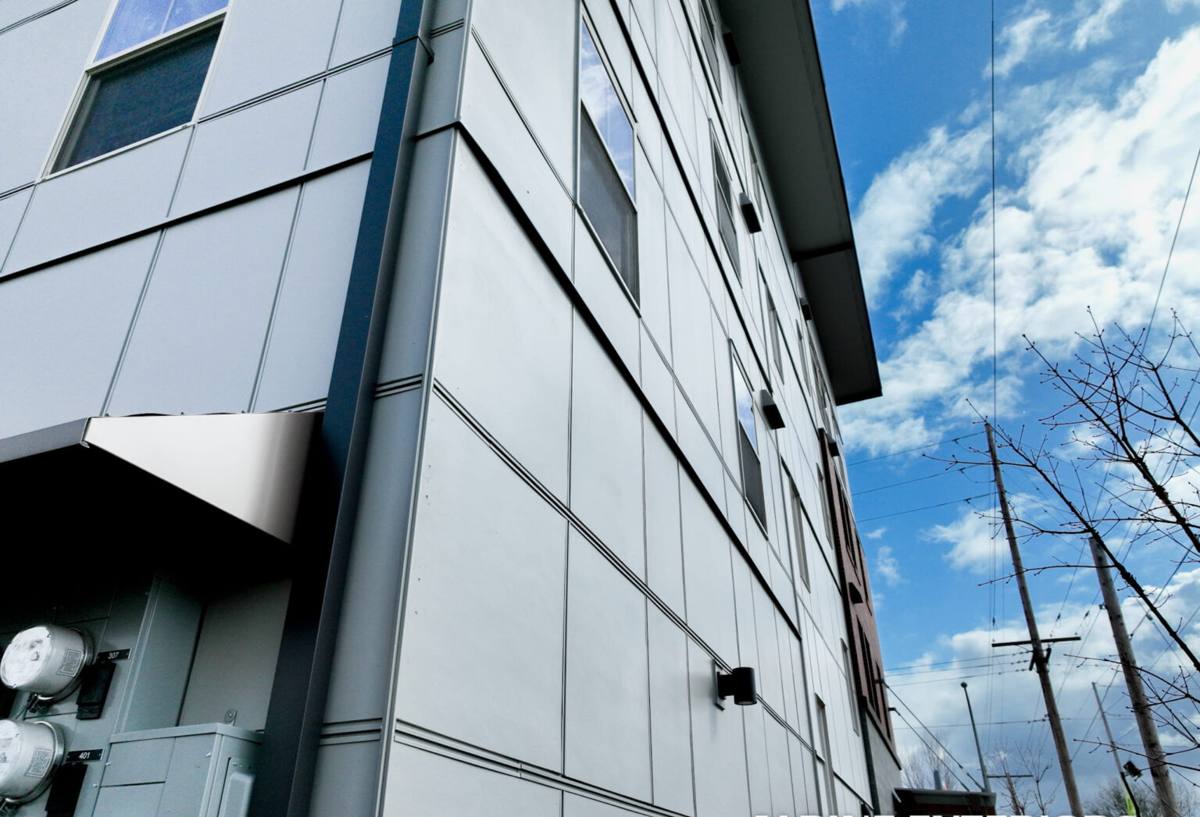
Why We Only Install James Hardie Fiber Cement
We made a decision as a company to install one siding system: James Hardie fiber cement. We don't install vinyl, LP SmartSide, primed wood, cedar, or other fiber cement brands. That's not a marketing position — it's the result of comparing how different products actually hold up against the four stresses above.
- Non-combustible: Fiber cement doesn't contribute fuel to a fire, which matters in a state where wind-driven wildfire and lightning-strike fires are both realistic risks.
- Engineered for the climate: James Hardie's HZ5 product line is specifically engineered for high-humidity, high-moisture climates like Florida's — it's not a generic product sold everywhere with no regional adjustment.
- Factory-applied finish: ColorPlus finishing is baked on in a controlled factory environment, which gives it more consistent UV and fade resistance than field-applied paint, and it comes with its own finish warranty separate from the substrate warranty.
- Dimensional stability: Fiber cement doesn't expand and contract with humidity swings the way wood-based products do, which matters for how well caulked joints and trim connections hold up over years of Florida humidity cycling.
- Warranty structure: Hardie's non-prorated, transferable limited warranty is a real asset when a home eventually sells — it's a selling point buyers can independently verify with the manufacturer.
That's not to say every other product on the market is worthless. Vinyl is inexpensive and low-maintenance in mild climates. Engineered wood products have their place. But in a wind, UV, rain, and salt environment like Palm Harbor's, we've found the trade-offs on alternative products — moisture sensitivity, finish longevity, impact resistance, warranty gaps — aren't ones we're willing to put our name behind. Fiber cement, installed correctly, is the product we trust to still be doing its job in twenty years.
What a Correct Siding Installation Involves
The material is only half the equation. A premium siding product installed poorly will fail faster than a mid-grade product installed correctly. Here's what we consider non-negotiable on every job:
Water-Resistive Barrier First
Before a single piece of siding goes up, the wall needs a continuous, properly lapped water-resistive barrier (WRB) with all penetrations — windows, doors, utility penetrations — flashed and sealed. This is the layer that actually stops wind-driven rain that gets past the siding face. Skipping or shortcutting this step is invisible on installation day and expensive to discover later.
Fastening Pattern and Blind-Nailing
James Hardie specifies fastener type, spacing, and placement for a reason — it's engineered against the wind loads the product is rated for. Correct installation means following that pattern exactly, using corrosion-resistant fasteners suited to a salt-air environment, not generic hardware.
Proper Clearances and Reveal
Siding needs the right clearance from grade, roofing, decks, and other transitions to avoid wicking moisture. Reveal (how much of each course is exposed) has to be consistent for both drainage and appearance — inconsistent reveal is often a visible sign of a rushed installation.
Joint and Butt Seam Treatment
Every seam is a potential water entry point. Butt joints need to be treated per manufacturer specification — properly caulked or flashed, not just butted together and painted over.
Trim and Penetration Detailing
Where siding meets windows, doors, corners, and roof lines is where the majority of long-term failures start. These transitions need dedicated flashing and sealant details, not just caulk applied generically at the end of the job.
| Installation Detail | Why It Matters in Palm Harbor |
|---|---|
| Continuous WRB with sealed penetrations | Stops wind-driven rain from reaching sheathing during storm events |
| Manufacturer-spec fastening pattern | Maintains wind-load rating during hurricane-force gusts |
| Corrosion-resistant fasteners | Resists degradation from ambient salt air |
| Factory-applied ColorPlus finish | Holds color and integrity under continuous UV exposure |
| Correct grade and roof clearances | Prevents moisture wicking during Florida's wet season |
Our Process for a Palm Harbor Siding Installation
The process is the same core sequence for every home, adjusted for the specifics of the property:
1. On-Site Assessment
We walk the exterior, check the condition of the existing wall assembly where accessible, and note anything that affects scope — soft sheathing, existing moisture damage, window and door flashing condition, and any areas with elevated wind or salt exposure based on the home's orientation.
2. Detailed Estimate
The estimate breaks down material (product line, profile, color), labor, and any sheathing repair or WRB work needed. We walk through it in person so there's no ambiguity about what's included.
3. Prep and Tear-Off
Old siding comes off, the wall is inspected for hidden damage, and any compromised sheathing gets repaired before anything new goes up. This is the point where problems that were invisible from outside get caught and addressed instead of covered over.
4. Barrier and Flashing Installation
WRB goes on continuous and lapped correctly, with all windows, doors, and penetrations flashed before siding installation begins.
5. Siding Installation to Spec
James Hardie panels or lap siding go up following the manufacturer's fastening, clearance, and joint-treatment specifications — not shortcuts that speed up the schedule at the expense of long-term performance.
6. Trim, Caulking, and Final Detail
Trim work, corner details, and caulking get finished, followed by a walk-through so the homeowner can see the completed work and ask questions before we consider the job done.
Why Local Installation Experience Matters
A siding crew that regularly works Pinellas County homes understands things a crew unfamiliar with the area might not think to check: how wind exposure varies by lot orientation, which parts of a home take the worst of wind-driven rain during a typical Gulf-influenced storm, and how much salt air realistically factors into fastener and trim choices for a given property. That local pattern recognition doesn't replace following manufacturer specifications — it adds judgment on top of them, particularly during the assessment stage when the crew is deciding where extra attention is warranted.
It also means faster, more realistic scheduling. Contractors who know the area's storm season timing and permitting expectations can set homeowner expectations accurately instead of guessing.
Signs Your Palm Harbor Home May Need New Siding
- Visible cracking, buckling, or warping in the siding panels or boards
- Soft spots when pressing on the siding near the bottom courses or around windows
- Paint that's chalking, peeling, or fading unevenly across different sides of the house
- Rising energy bills with no other obvious cause, which can point to compromised wall insulation behind failing siding
- Visible gaps at trim, corners, or window and door edges
- A musty smell near exterior walls, which can indicate trapped moisture behind the siding
Any one of these on its own might be minor. Several together, especially on a home that hasn't had its siding inspected in a while, usually means it's worth a professional look before the next storm season.
What This Means for Your Investment
Siding replacement is a meaningful investment, and in a climate like Pinellas County's, the return on that investment depends almost entirely on installation quality and product selection working together. A well-installed James Hardie system protects the structure underneath it, holds its appearance for decades rather than years, and comes with a manufacturer warranty that transfers if the home sells. A poorly installed system — regardless of the product behind it — puts all of that at risk from the first hurricane season it faces.
If you're weighing a siding project for a Palm Harbor home, we're happy to walk the property, look at what's there now, and give you a straightforward, no-pressure estimate for what a correct James Hardie installation would involve. There's no obligation — just an honest assessment from a crew that installs this system and only this system, every day.