 Oldsmar Siding
 Carrollwood's Siding Has a Harder Job Than Most
Homes in the Carrollwood area sit in the same demanding climate corridor as the rest of Pinellas County: long stretches of intense UV exposure, wind-driven rain that comes in sideways during summer storms, salt-laden air pulling in off the Gulf, and the standing threat of hurricane-force wind loads every season. Siding here isn't just a cosmetic layer — it's the first line of defense against moisture intrusion, and it takes a beating that siding in a drier, cooler climate never has to handle.
That's the backdrop for every siding conversation we have with Carrollwood homeowners. The product and the installation both have to be engineered for this environment, not just installed and hoped for. This page covers what that actually means for a James Hardie fiber cement siding project on a Carrollwood home — what the climate demands, what correct installation looks like, and how our process works.
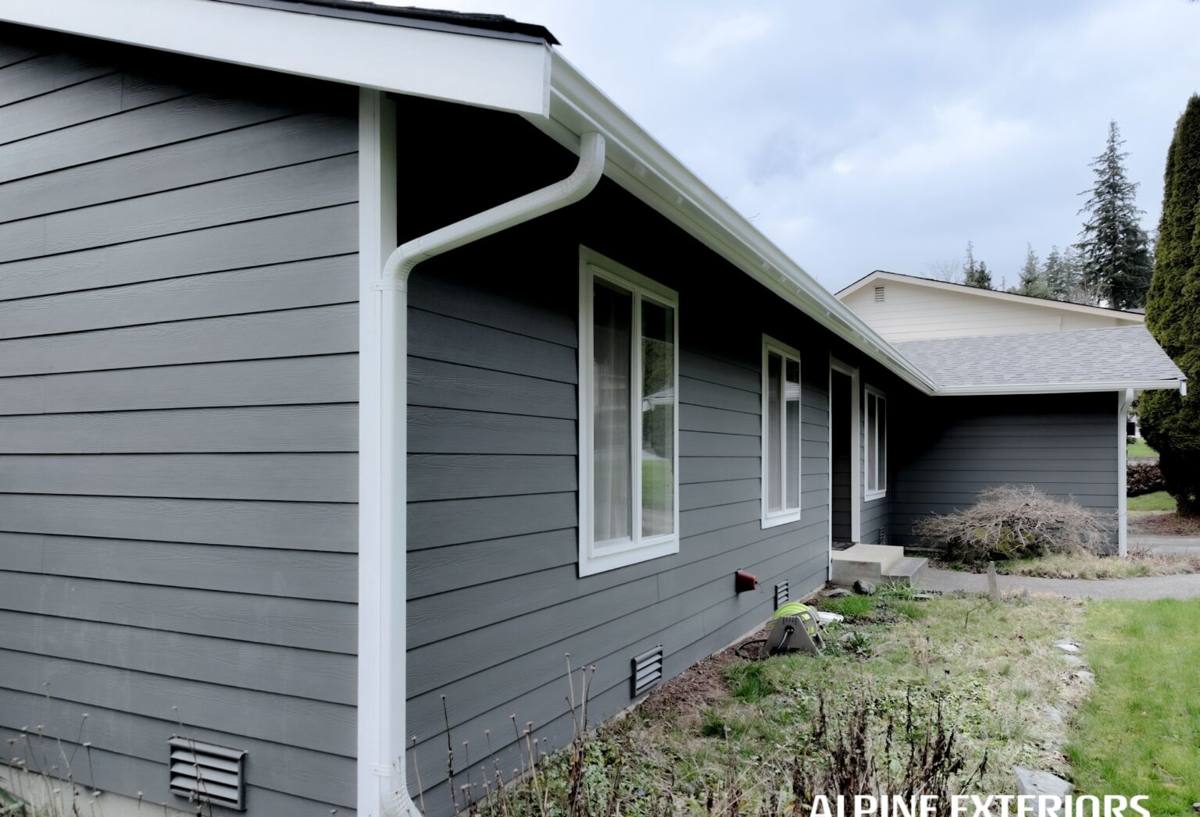
Why We Only Install James Hardie
We install James Hardie fiber cement siding exclusively. We don't install vinyl, LP SmartSide, Cemplank, Allura, or primed wood siding, and we're upfront about why: those products each carry real trade-offs — heat distortion and impact brittleness in vinyl, engineered-wood moisture sensitivity in LP SmartSide, inconsistent factory finishes in some competing fiber cement lines — that we don't think hold up well under sustained Gulf Coast conditions. James Hardie's fiber cement is non-combustible, dimensionally stable in heat and humidity, and backed by a factory-applied ColorPlus finish designed to resist fading from exactly the kind of relentless UV this region gets. Standardizing on one product means our crews install it correctly every time, rather than juggling installation specs across five different systems.
What HZ5 Engineering Means for This Area
James Hardie designs specific product formulations for different climate zones, and Pinellas County falls within the HZ5 (humid, high-moisture) engineering zone. HZ5 products are formulated to resist moisture-related damage in exactly the humidity and rainfall patterns Carrollwood sees most of the year. This isn't a marketing distinction — using the correctly zoned product matters for how the siding performs over a 20-plus-year lifespan in this specific climate.
What Correct Installation Actually Involves
James Hardie siding performs well when it's installed to the manufacturer's specification — and performs poorly, regardless of the product quality, when it isn't. Most siding failures we get called out to inspect trace back to installation shortcuts, not the material itself. A correct install includes:
- Proper water-resistive barrier and flashing behind every seam, window, and door opening — this is what actually keeps wind-driven rain out of the wall assembly
- Correct minimum clearance between the bottom edge of the siding and the ground, roofline, deck, or patio surface, so moisture doesn't wick up into the material
- Fastener placement and spacing that meets Hardie's specification and local wind-load requirements — this matters directly for hurricane performance
- Properly sized gaps at butt joints and trim, caulked with a flexible, paintable sealant rated for exterior use
- Field-cut edges sealed with touch-up paint so raw fiber cement isn't left exposed to moisture
- Correct nail depth — overdriven or underdriven fasteners are one of the most common causes of premature siding failure
None of this is exotic. It's discipline and attention to the manufacturer's published installation guide, applied consistently across every board on the house.
Signs a Carrollwood Home's Siding Needs Attention
Because this area's climate accelerates wear, it's worth knowing what to watch for before small issues become structural moisture problems:
- Visible cracking, bubbling, or peeling paint, especially on south- and west-facing walls that get the most sun
- Soft spots or a spongy feel when pressed, which usually indicates moisture has already gotten behind the siding
- Gaps opening up at seams, corners, or trim boards
- Visible fading or chalking on older vinyl or wood siding compared to newer sections
- Warping, bowing, or buckling panels, particularly after storm season
- Increased pest activity around siding edges, which often signals softened or compromised material underneath
If any of these sound familiar, it's worth having the siding looked at before the next hurricane season rather than after storm damage forces the issue.
James Hardie Product Lines: What Fits a Carrollwood Home
James Hardie makes several siding profiles, and the right one depends on the home's architecture and the homeowner's maintenance preferences. Here's how the main options compare for this area:
| Product Line | Look | Best Fit For |
|---|---|---|
| HardiePlank Lap Siding | Traditional horizontal lap board | Most single-family homes; the standard choice for classic Florida exteriors |
| HardiePanel Vertical Siding | Vertical panel, often paired with lap | Accent walls, gables, or modern architectural styles |
| HardieShingle Siding | Staggered or straight-edge shingle look | Coastal or craftsman-style homes wanting textured detail |
| HardieTrim Boards | Smooth trim for corners, fascia, windows | Finishing detail on any of the above, resists rot better than wood trim |
Most Carrollwood projects use HardiePlank as the primary field material, with HardieTrim finishing the corners and openings. Homes with more architectural detailing sometimes mix in HardieShingle or HardiePanel as accents.
ColorPlus vs. Field-Painted Siding
James Hardie's ColorPlus Technology applies the finish at the factory under controlled conditions, using a multi-coat baked-on process that resists fading, chipping, and cracking better than paint applied on-site after installation. In a climate with this much UV exposure, that finish durability translates directly into a longer stretch of years before repainting is needed. Field-painted (primed) Hardie siding is also an option and gives more flexibility on custom colors, but it will need repainting on a shorter cycle than ColorPlus.
Cost Factors Worth Understanding Up Front
We don't publish fixed prices because every home is different, but the main variables that drive cost on a Carrollwood siding project are consistent:
| Factor | Why It Matters |
|---|---|
| Square footage and home height | More surface area and multi-story access both increase labor time |
| Existing siding removal | Tear-off of old vinyl, wood, or damaged material adds labor and disposal cost |
| Substrate condition | Rotted or moisture-damaged sheathing found underneath needs repair before new siding goes on |
| Product line and finish | ColorPlus factory finish, trim detailing, and shingle accents cost more than plain HardiePlank |
| Architectural complexity | Dormers, multiple gables, and cut-ins around windows and doors add labor |
An accurate number only comes from a walk of the actual house — anyone quoting a firm price sight unseen is guessing.
How Our Process Works
We keep the process straightforward and don't rush the parts that determine long-term performance:
- On-site assessment — we inspect the existing siding, check for moisture damage or rot in the sheathing, and measure the home
- Written estimate — a clear scope covering removal, repair work if needed, product line, and finish
- Substrate repair — any rotted or compromised sheathing gets replaced before new siding goes up, not covered over
- Weather barrier and flashing — installed per Hardie's specification at every seam and opening
- Siding installation — correct fastening, clearances, and joint treatment throughout
- Final detail and walkthrough — trim, caulking, touch-up, and a walk-through with the homeowner
Why Local Installation Experience Matters
A crew that regularly works the Oldsmar and Carrollwood area already understands the practical realities of building here — how quickly an afternoon storm can roll in and interrupt a job, what wind-load fastening standards apply locally, and how salt air and humidity actually behave against a wall assembly over time, not just in a manufacturer's brochure. That's different from a crew that installs siding occasionally and treats every regional climate the same way. Local experience shows up in the small decisions: sequencing work around weather, sealing details more conservatively in high-exposure areas, and catching substrate problems before they turn into callbacks.
Maintenance After Installation
James Hardie siding is low-maintenance compared to wood or vinyl, but "low-maintenance" isn't "no-maintenance." A simple annual routine keeps it performing as designed:
- Rinse the siding with a garden hose once or twice a year to clear salt residue and grime
- Inspect caulking at trim and seams annually and re-caulk any cracked or separated joints
- Trim landscaping back from the siding to maintain airflow and reduce moisture retention against the wall
- Check after major storms for impact damage or loosened panels
Following that routine, combined with a correct original installation, is what gets a Hardie siding system to its full expected service life in this climate.
If your Carrollwood home's siding is showing wear, or you're planning ahead of the next storm season, we're happy to take a look and put together a free, no-pressure estimate — just fill out the form below.