 Oldsmar Siding
 Siding Repair Built for Forest Lakes' Climate and Housing Stock
Forest Lakes homes sit in one of the more established residential pockets of Oldsmar, and like most neighborhoods in this part of Pinellas County, the housing stock spans several decades of construction styles and siding materials. That mix matters when it comes to repair work. A siding failure on a newer fiber cement installation looks and behaves very differently than a failure on 20-year-old vinyl or an older wood-composite product, and the right repair depends on correctly diagnosing which material you have and how it has aged in this specific climate.
Oldsmar sits close enough to Tampa Bay that homes deal with a steady combination of salt-laden air, wind-driven rain, and some of the most intense year-round UV exposure in the continental United States. Add in the real risk of hurricane-force winds during storm season, and you get a set of stresses that most siding materials were never fully engineered to handle over the long term. Forest Lakes homeowners calling about siding repair are almost always dealing with one or more of these forces at work, whether they realize it or not.
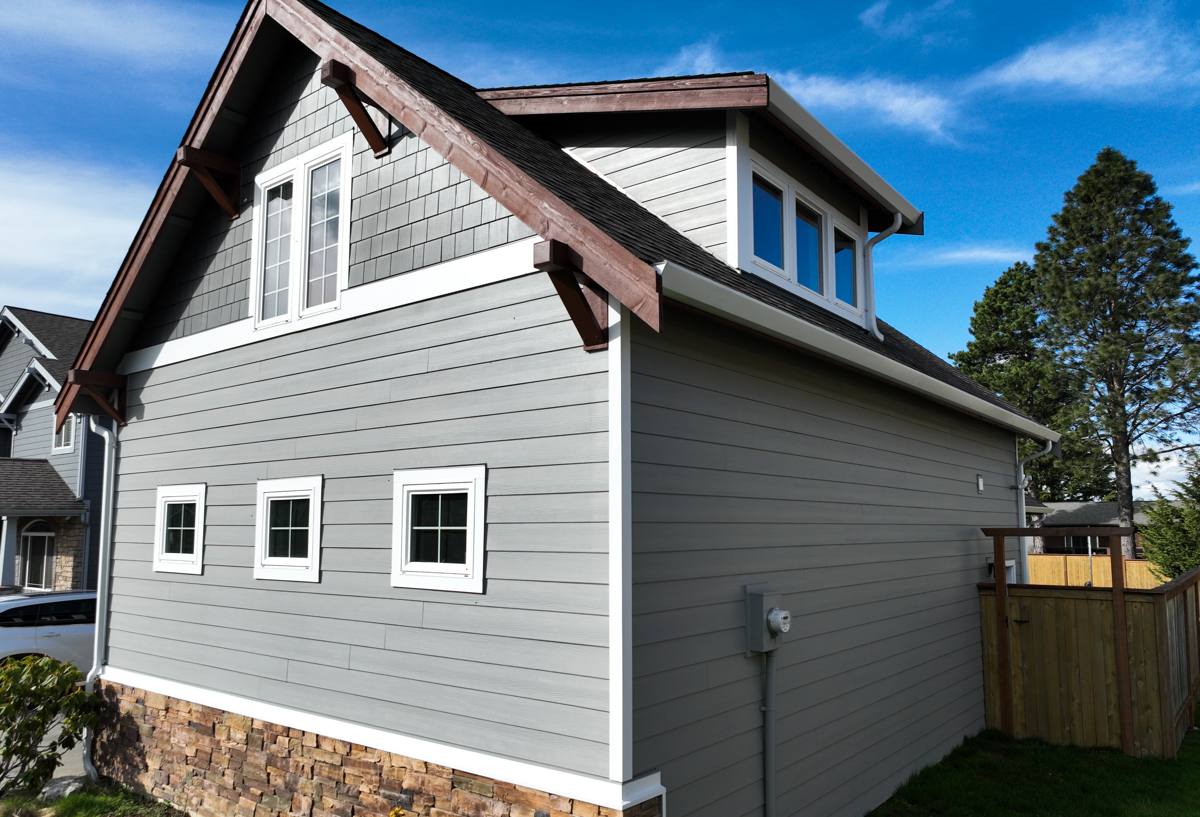
What's Actually Failing on Forest Lakes Siding
Sun and Heat Damage
Florida sun is relentless, and siding facing south and west exposures in Forest Lakes takes the worst of it. On vinyl siding, that means warping, buckling, and a chalky, faded finish that no amount of washing restores. On older wood or composite products, UV exposure dries out surface coatings, opens hairline cracks, and accelerates rot once moisture finds its way in. Fiber cement handles UV far better structurally, but even it needs its factory finish maintained to keep looking right over the decades.
Wind-Driven Rain and Moisture Intrusion
Pinellas County doesn't get gentle rain most of the year — it gets short, hard, sideways downpours that drive water into every seam, lap joint, and fastener hole that isn't sealed correctly. Once water gets behind siding, the damage is rarely visible from the street. It shows up later as soft spots, staining, or a section of wall that just doesn't feel solid when you press on it. This is the single most common root cause behind the "surprise" repairs we get called out for.
Storm and Wind Damage
Forest Lakes isn't immune to the tropical systems that pass through the bay area, and even storms well short of hurricane strength can rip loose panels, crack brittle siding, or peel back sections that were under-fastened to begin with. After any significant wind event, a walk-around inspection is worth the twenty minutes it takes — small openings left unaddressed turn into much larger repair bills by the next storm season.
Salt Air Corrosion
Being close to Tampa Bay means airborne salt settles on exterior surfaces even well inland from the immediate coastline. Salt accelerates corrosion on fasteners, trim flashing, and any exposed metal components tied into the siding system. A repair that reuses corroded fasteners or skips corrosion-resistant hardware is a repair that fails again — usually sooner than the original problem took to develop.
How We Diagnose a Siding Repair Correctly
Every repair call starts with figuring out what's actually wrong, not just patching what's visible. A proper inspection covers:
- Identifying the siding material and confirming how it was originally installed
- Checking for soft or spongy sections that indicate moisture behind the siding, not just on it
- Inspecting flashing, seams, and butt joints — the places water actually gets in
- Looking at fastener condition and pattern, especially after wind events
- Assessing whether damage is isolated or a sign of a wider systemic issue (poor original install, missing weather barrier, etc.)
- Checking the condition of trim, corner boards, and any transitions to windows, doors, or roofline
That last point is often where amateur repairs go wrong. A patched panel that ignores a failed flashing detail underneath it will look fine for a season and then fail again in the exact same spot, because the actual cause was never fixed.
Repair vs. Replace: How We Make the Call
Not every damaged section needs full replacement, but not every "repair" is worth doing either. We look at scope, cause, and the remaining service life of the surrounding siding before recommending a path.
| Situation | Typical Recommendation | Why |
|---|---|---|
| Isolated impact damage on sound siding | Spot repair / panel replacement | Surrounding material is structurally fine; no reason to disturb it |
| Recurring moisture damage at the same location | Repair the root cause first (flashing, sealant, drainage), then the siding | Patching siding without fixing water entry guarantees a repeat failure |
| Widespread warping, chalking, or brittleness across a wall | Full section or full-wall replacement | Material has reached end of service life; repairs won't hold uniformly |
| Old wood, vinyl, or non-Hardie composite nearing 15-20+ years | Replacement with James Hardie fiber cement | Repair cost approaches replacement cost with far less remaining value |
| Storm damage confined to a few panels on an otherwise sound wall | Targeted repair, matched to existing material where feasible | Targeted fix restores protection without unnecessary cost |
We'll always tell you honestly which category your situation falls into. If a repair is the smart move, that's what we recommend — we don't push replacement on a wall that has years of life left in it.
What a Correct Siding Repair Actually Involves
A repair that holds up in Oldsmar's climate isn't just "cut out the bad piece and screw in a new one." It involves:
- Removing damaged material carefully to expose the underlying wall assembly without creating new damage to adjacent panels.
- Inspecting the weather barrier and sheathing underneath — this is where hidden rot or moisture damage actually lives, and it has to be addressed before new siding goes back on.
- Correcting flashing and drainage details at windows, doors, and horizontal joints so water has a way out instead of a way in.
- Matching material and profile as closely as possible when patching into existing siding, so the repair doesn't stand out or create a mismatched moisture-management system.
- Using corrosion-resistant fasteners appropriate for a salt-air environment, not standard hardware that will corrode within a few seasons.
- Re-sealing and refinishing to manufacturer specification so the repaired section performs — and looks — like it belongs.
Skip any one of those steps and you get a repair that looks fine at closeout and fails again within a year or two — often in a way that's worse than the original problem because water has now had another cycle to work into the wall assembly.
Why James Hardie Is What We Use for Replacement Sections
When a repair calls for new siding material — whether it's a few panels or a full wall — we install James Hardie fiber cement, and only James Hardie. We don't install vinyl, LP SmartSide, Cemplank, Allura, or primed wood siding, and that's a deliberate standard, not a limitation of what we're capable of installing.
Fiber cement doesn't warp, chalk out, or become brittle under sustained Florida UV the way vinyl and some engineered wood products can. It's non-combustible, which matters in a region where wind-driven embers and lightning-strike fires are a real, if uncommon, risk. Hardie's HZ10 product line is specifically engineered for high-humidity, moisture-prone climates like ours, and the ColorPlus factory finish holds color far longer than field-applied paint on other siding types — which matters when a repaired section needs to match surrounding siding for years, not just at installation.
We're not saying every other product on the market is worthless — vinyl and engineered wood siding have real advantages in upfront cost and installation speed. But when we weigh long-term performance against Oldsmar's combination of UV, humidity, salt air, and storm exposure, fiber cement is the material that holds up the way homeowners expect siding to hold up, and that's why it's the only thing we put back on a wall.
Why Local Repair Experience Matters in Forest Lakes
A siding repair crew that regularly works in and around Oldsmar understands things a generic contractor from outside the area has to learn on the fly: how humidity behaves against certain wall orientations, which fastening patterns actually hold up through a real hurricane season, and how salt air changes maintenance timelines on hardware and finishes. That experience shows up in fewer callbacks and repairs that are diagnosed correctly the first time, instead of guessed at.
It also means faster response after storm events, when demand for repair work spikes across the whole bay area and contractors who don't already have a presence here are booked out or simply not taking new calls.
Simple Maintenance That Prevents the Next Repair Call
- Walk the exterior after any significant storm and look for lifted panels, cracks, or gaps at trim and corners
- Keep gutters and downspouts clear so water isn't sheeting down siding it wasn't designed to handle
- Trim vegetation back from siding to reduce trapped moisture and physical abrasion
- Re-caulk seams and penetrations (vents, fixtures, hose bibs) every few years, since sealant fails long before siding does
- Address small issues — a hairline crack, a slightly lifted corner — before the next rainy season, not after
None of this eliminates the need for repairs entirely, but it stretches the time between them and keeps small issues from becoming structural ones.
Getting an Honest Assessment
If you're seeing damage on your Forest Lakes home — storm impact, soft spots, warping, or siding that just doesn't look right anymore — the first step is a straightforward inspection, not a sales pitch. We'll tell you plainly whether you're looking at a spot repair, a larger section replacement, or something in between, and why. If new material is needed, we'll explain why James Hardie fiber cement is what goes back on your wall and what that means for how long it should last in this climate.
Reach out for a free, no-pressure estimate. We'll take a look, explain what we find, and give you a clear picture of your options before any work begins.