 Oldsmar Siding
 Forest Lakes homes sit inland from the open Gulf, but "inland" in Pinellas County still means hurricane-force wind exposure, some of the most consistent year-round UV load in the country, and salt-laden air that travels farther than most homeowners assume. Siding here doesn't fail because a hurricane hits directly — most years, none does. It fails slowly, from sun and moisture cycling that never really lets up, until a storm finds the weak point that's been building for years. Fiber cement siding done right is one of the few exterior products actually engineered for that combination. Done wrong, or with the wrong material, it's just another surface waiting to show the same problems as whatever it replaced.
Why Forest Lakes Needs Siding Engineered for This Climate
Oldsmar sits at the north end of Tampa Bay, and Forest Lakes shares the same weather pattern as the rest of the county even though it's not waterfront: long, humid summers, a real hurricane season every year, and near-constant sun exposure that most siding products elsewhere in the country simply don't have to handle at the same intensity. A siding material chosen for a milder climate — or a product not engineered for coastal Florida at all — tends to show it within a handful of years: fading, edge swelling, seams opening up, paint that needs redoing long before it should.
James Hardie fiber cement is manufactured in climate-specific formulations for exactly this reason. Homes in our part of Florida get the HZ5 product line, engineered for high-humidity, high-moisture-exposure regions — a different mix and cure than the versions sold in drier inland climates. That's not a marketing distinction. It's the difference between a board that holds its shape and finish through a Pinellas County summer and one that wasn't built for it.
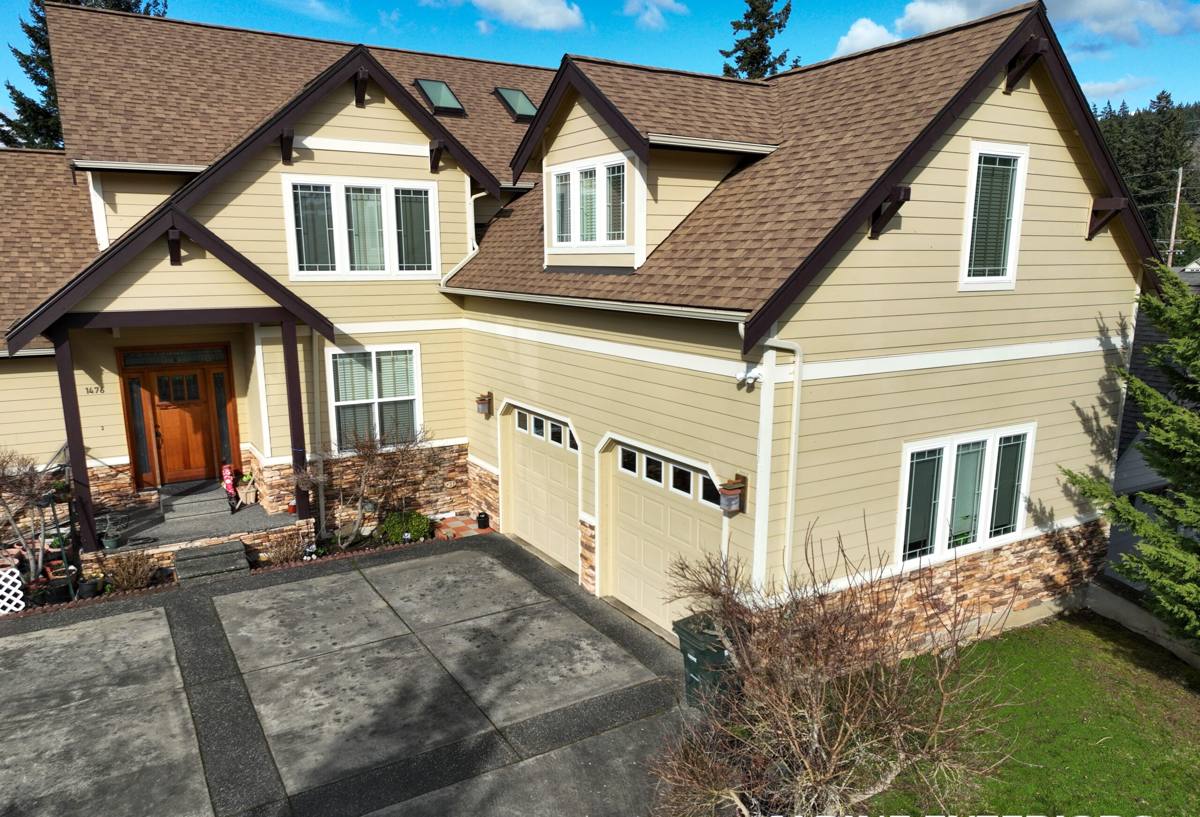
What the Climate Actually Does to Siding in Forest Lakes
Four things do most of the damage to exterior siding here, and they work on every home in the neighborhood whether or not it ever takes a direct hurricane hit.
Hurricane-Force Wind
Wind doesn't just push on a wall — it gets under loose edges, works fasteners back out of their holes, and turns any gap in the siding envelope into an entry point for wind-driven rain. Fiber cement's weight and rigidity give it a real advantage over lighter materials here, but only when it's fastened and flashed to spec. A correctly installed system stays tight through repeated wind-loading events; a rushed one starts telegraphing movement at the seams within a season or two.
Year-Round UV
Pinellas County doesn't get a real off-season for sun exposure. Field-applied paint and lower-grade siding finishes chalk, fade, and lose adhesion faster here than almost anywhere else in the country, which means a homeowner is either repainting on a compressed cycle or living with a house that looks tired well before the siding itself is actually worn out.
Wind-Driven Rain
Forest Lakes gets its share of intense summer thunderstorms and tropical system rain bands, and wind-driven rain behaves differently than a straight downpour — it drives sideways and upward under laps, trim, and penetrations that a calmer rain would never reach. That's a flashing and lap-spacing problem as much as a materials problem, and it's where a lot of siding failures actually start, regardless of what product is on the wall.
Salt Air
Forest Lakes isn't beachfront, but Tampa Bay salt air doesn't stop at the waterline — it travels on prevailing wind and settles on exposed fasteners, trim, and hardware well inland, working on corrosion slowly and continuously rather than in a single event. Homes here need corrosion-resistant fasteners and a finish system that isn't degrading from salt exposure on top of everything else the climate is doing.
Why Fiber Cement Specifically — and Why Only Hardie
We install James Hardie fiber cement exclusively, and Forest Lakes is a good example of why. Fiber cement is dimensionally stable — it doesn't expand and contract with humidity swings the way wood and wood-composite products do, so boards stay flat and seams stay tight instead of cupping, gapping, or telegraphing movement through the finish. It's also non-combustible, which matters in a state where wildfire risk gets less attention than hurricanes but hasn't disappeared. And it's engineered, tested, and rated for the wind loads this region actually sees, rather than adapted from a product built for a milder climate.
We don't install vinyl, LP SmartSide, Cemplank, Allura, or primed wood siding, and it's worth being straightforward about why. Vinyl softens, warps, and can crack under sustained UV and heat, and it isn't rated for the wind speeds Pinellas County design standards require in many applications. Wood-based engineered sidings depend heavily on an intact factory seal — once that's compromised at a cut edge or fastener hole, moisture gets in and the clock starts on swelling and rot, and Florida's humidity accelerates that timeline. Other fiber cement brands may be reasonable products, but we've standardized on James Hardie because of its climate-specific HZ5 formulation for our region, its factory-applied ColorPlus finish, and a warranty structure we're comfortable standing behind. Standardizing on one manufacturer also means our crews install it the same correct way on every job, instead of relearning installation quirks brand to brand.
ColorPlus Factory Finish
Where a field-painted board depends on weather conditions the day it's painted and how evenly a crew applies it, ColorPlus finish is baked on in a controlled factory environment through multiple coats before the boards ever reach the job site. That finish resists fading and chipping meaningfully better than site-applied paint under sustained UV, which is exactly the condition Forest Lakes sees for most of the year. It also means a faster install — there's no waiting on weather to paint in the field, and no repainting cycle for years after the crew leaves.
What a Correct Fiber Cement Job Involves
The material is only half the equation. A correct fiber cement install in this climate comes down to a handful of details that either get done right or don't, and the difference shows up years later, not on install day.
| Installation Detail | Why It Matters Here |
|---|---|
| Fastener type and spacing | Corrosion-resistant fasteners, placed per manufacturer spec, resist salt-air degradation and hold through repeated wind loading |
| Lap and clearance spacing | Correct board overlap and ground clearance keep wind-driven rain from working its way behind the siding |
| Flashing at penetrations and trim | Windows, doors, and utility penetrations are where wind-driven rain actually gets in if flashing is skipped or undersized |
| Caulking and joint treatment | Properly sealed and backer-rodded joints move with the building instead of cracking open under thermal cycling |
| House wrap and moisture barrier | A continuous, correctly lapped barrier behind the siding is the backup layer if any surface detail is ever compromised |
| Cut-edge sealing | Factory finish doesn't extend to field cuts — sealing them protects against moisture intrusion at every trimmed edge |
Checklist: What to Confirm Before Siding Goes On Your Home
- Confirm the product is James Hardie's HZ5 line, engineered for our humidity and moisture exposure
- Ask what fastener type is being used and whether it's rated for coastal salt-air corrosion resistance
- Get the flashing plan explained for windows, doors, and any wall penetrations, not just a general assurance
- Confirm ground clearance and lap spacing will meet manufacturer specifications, not just look right
- Ask whether cut edges will be factory-primed or field-sealed, and how
- Get the manufacturer and workmanship warranty terms in writing before work starts
Our Process for Forest Lakes Projects
- On-site assessment — we walk the home, evaluate existing siding condition, wall assemblies, and any moisture or substrate issues before quoting anything
- Honest scope and product recommendation — full replacement, partial repair, or targeted repair, explained plainly, with the HZ5 product line specified
- Substrate prep — any rot, damaged sheathing, or compromised house wrap gets addressed before new siding goes up, not covered over
- Installation to manufacturer spec — correct fastening, lap spacing, flashing, and clearance, built for this climate rather than a generic install
- Trim, caulking, and finish detail — joints sealed, cut edges treated, trim finished to match the ColorPlus color system
- Final walkthrough — we go over the finished work and the warranty coverage with you directly
Cost Factors for Forest Lakes Homeowners
Every fiber cement project prices out differently, but the same handful of factors drive most of the variation on Forest Lakes homes specifically.
| Factor | What Changes the Price |
|---|---|
| Scope | Full replacement versus repair or partial re-siding changes labor and material quantities significantly |
| Existing wall condition | Rot, damaged sheathing, or failed house wrap found during removal adds prep work before new siding goes on |
| Siding profile | Lap siding, board and batten, and panel systems all price differently based on material and labor complexity |
| Trim and detail work | Homes with more corners, windows, and architectural trim require more cutting, flashing, and finish labor |
| Color and finish | Factory ColorPlus finish adds cost up front but removes a repainting cycle that field-painted siding requires |
| Access and site conditions | Two-story sections, tight lot lines, or landscaping that limits equipment access affect labor time |
Why Hiring a Crew That Already Works Forest Lakes Matters
Manufacturer installation guidelines describe average conditions. Forest Lakes, like the rest of Oldsmar and Pinellas County, isn't always average — the wind load requirements, the humidity, and the salt exposure this far up Tampa Bay all push installation decisions in a specific direction, and a crew that hasn't worked this area regularly can follow the instructions on paper and still miss the calls that actually matter in practice: how much extra attention a west-facing wall needs given the UV load it takes on, which fastener spacing actually holds up under real storm conditions versus code minimums, where flashing needs to be built up because of how water moves across a specific roofline.
We work in this part of Pinellas County regularly, which means those decisions aren't guesswork on your home. It also means we're already familiar with the permitting expectations and wind-load requirements Oldsmar and the county apply to siding work, so there are fewer surprises mid-project.
Maintenance and What to Expect Afterward
Fiber cement siding installed to spec is genuinely low-maintenance compared to the alternatives, but "low-maintenance" isn't "no-maintenance" in this climate. A rinse-down a couple of times a year clears salt residue and pollen buildup before it accumulates. Caulked joints are worth a visual check after major storms, since that's the spot most likely to need attention over a long service life. Beyond that, the ColorPlus finish is built to go a long stretch without needing a repaint — which is the entire point of choosing a factory-finished product in a climate this hard on field-applied paint.
If you're planning a full re-side, replacing storm-damaged sections, or just want an honest read on what your current siding actually needs, we offer free, no-pressure estimates for Forest Lakes and the rest of the Oldsmar area. Use the form below to get a time on the schedule.