 Oldsmar Siding
 Siding That Has to Work Against Pinellas County Weather, Not Just Look Good
Homes in the Clearwater area near Oldsmar sit in one of the more demanding exterior environments in the country. It's not one big threat — it's four smaller ones working on your siding at the same time, year-round. Hurricane-force wind gusts test every fastener and seam. Wind-driven rain finds any gap in flashing or caulking and pushes water sideways, uphill, into places gravity alone would never take it. Intense, near-constant UV breaks down pigments and resins faster than in northern climates. And salt-laden air moving in off the Gulf accelerates corrosion on anything metal and speeds up the breakdown of lower-grade building materials.
None of that is unique to one street or subdivision — it's the baseline for this stretch of Pinellas County. What it means practically is that siding choices which perform fine in Ohio or even inland Georgia can fail early here. We install fiber cement siding for homes in this area because it's built to handle exactly this combination of stresses, and we install it a specific way because a good product installed loosely still fails against this climate.
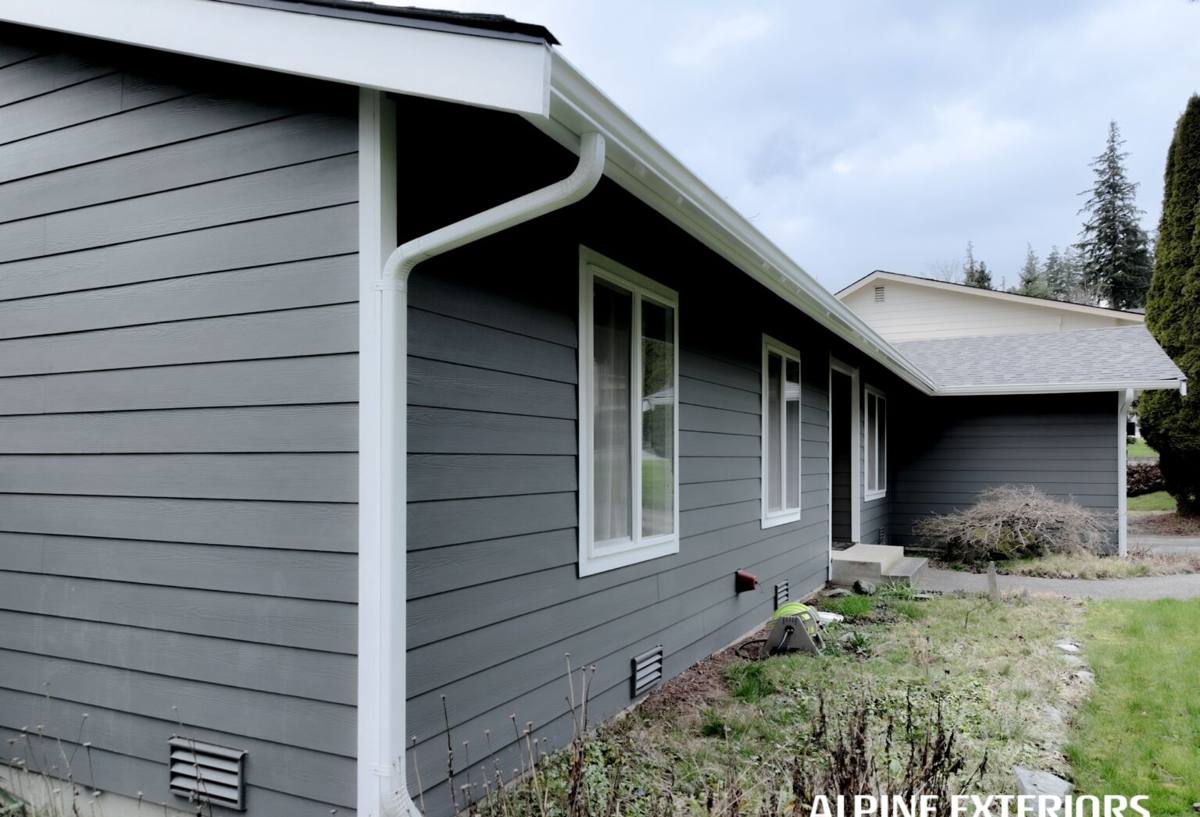
Why Fiber Cement Is the Right Call for This Area
Fiber cement is a mix of cement, sand, and cellulose fibers, cured into a dense, stable board. That composition matters a lot here for reasons that are specific to coastal Florida:
- It doesn't rot. Wood-based siding and trim absorb moisture from wind-driven rain and stay damp in Florida's humidity, which is exactly the condition rot needs. Fiber cement has no organic material for moisture to break down.
- It holds paint and color far longer. UV exposure this intense chalks and fades lower-grade coatings within a few years. Factory-applied finishes are formulated and baked on under controlled conditions, which holds color and sheen much longer than anything applied on-site after installation.
- It's non-combustible. Not a coastal-specific point, but a real one — fiber cement doesn't contribute fuel to a fire the way wood-based siding products can.
- It's dimensionally stable. Florida's daily swing between soaked morning air and baking afternoon sun expands and contracts most materials. Fiber cement moves far less, which means fewer stress cracks at joints and around fasteners over time.
We install James Hardie fiber cement exclusively — not as a brand preference, but because Hardie engineers specific product lines for specific climate zones. The HZ5 line is built for regions with Pinellas County's combination of humidity and temperature swings, and Hardie's ColorPlus factory-finish system is what gives the color-retention advantage above. We don't install vinyl, LP SmartSide, primed wood, or other fiber cement brands, because none of them combine climate-specific engineering with a factory finish backed by a strong transferable warranty the way this system does.
What a Correct Fiber Cement Job Actually Involves
The material is only half the equation. In a climate that drives rain sideways and into gaps, installation quality is what actually determines whether a wall stays dry for the next twenty years or starts showing problems in three.
Moisture Management Behind the Boards
Fiber cement is not waterproof siding — it's a durable rain-screen material that has to work with a correctly built water-resistive barrier and flashing system behind it. Every window, door, and penetration needs properly lapped flashing so that any water that gets past the siding is directed back out, not into the wall cavity. This is the step that's invisible once the job is done, and it's also the step most likely to be rushed on a crew unfamiliar with what wind-driven rain actually does to a wall assembly.
Fastening and Clearances
Hardie specifies fastener type, spacing, and placement for a reason — under hurricane-force gusts, siding that's under-fastened or face-nailed incorrectly is what comes loose first. Clearances matter just as much: siding installed too close to grade, roof lines, or decking wicks up moisture and traps it against the board's cut edges, which is where fiber cement is most vulnerable if left unsealed.
Caulking and Sealed Cut Edges
Every field-cut edge needs to be sealed before installation, and every joint that calls for caulk needs a product rated for sustained UV and moisture exposure, not a bargain sealant that turns brittle in year two. Skipping this step is one of the most common ways a fiber cement job underperforms — the material itself is fine, but an unsealed cut edge gives water a place to start working.
Our Process for Clearwater-Area Fiber Cement Projects
- On-site assessment. We look at your current siding's condition, the substrate underneath, existing flashing, and any problem areas — moisture staining, soft spots, gaps — before recommending anything.
- Written scope and product selection. You get a clear plan covering board profile, ColorPlus color, trim details, and what's being replaced versus reused, in writing before work starts.
- Tear-off and substrate check. Once old siding is off, we inspect sheathing for hidden moisture damage — this is often the first time hidden problems become visible, and we address them before anything new goes up.
- Water-resistive barrier and flashing installation. This is the step that determines long-term performance, done to manufacturer and code specification, not shortcuts.
- Fiber cement installation. Installed to Hardie's fastening, clearance, and sealing specifications — the details in the section above aren't optional extras, they're the job.
- Final walkthrough. We go over the finished work with you before calling it done.
Fiber Cement Compared to Other Common Siding Choices
| Factor | Fiber Cement (James Hardie) | Vinyl | Wood / LP SmartSide |
|---|---|---|---|
| Resistance to wind-driven rain | High when correctly flashed and sealed | Moderate; seams and panels can flex and gap under wind load | Moderate; vulnerable at cut edges and joints |
| Color/finish life in intense UV | Long, with factory-applied finish | Fades and can become brittle over time | Depends heavily on field-applied paint and repainting schedule |
| Moisture and rot resistance | Not organic; doesn't rot | Doesn't rot, but traps moisture behind panels if installed poorly | Engineered wood products carry inherent moisture sensitivity |
| Performance in high wind | Strong when fastened to spec | Lower impact and wind resistance than fiber cement | Varies by product and installation quality |
| Combustibility | Non-combustible | Combustible | Combustible (wood-based) |
This isn't a knock on every alternative product across the board — it's specific to what this climate demands. A vinyl or wood-based product might be a reasonable choice in a milder climate. In a market with hurricane wind exposure, salt air, and this much UV, the trade-offs stack up differently, which is why fiber cement is the only material we put on homes here.
Maintenance Expectations in This Climate
Fiber cement is low-maintenance, not no-maintenance. In coastal Pinellas County conditions, a homeowner should expect to:
- Rinse siding periodically to remove salt residue, especially on homes closer to the water.
- Inspect caulking at trim and joints annually, since even good sealant has a service life in this UV load.
- Watch for any staining or discoloration around window and door trim, which can indicate a flashing issue worth catching early.
- Keep an eye on the transition points where siding meets roofline, decking, or grade — these are the areas most exposed to wind-driven rain intrusion.
None of this is heavy upkeep compared to repainting wood siding every few years — it's closer to a seasonal walk-around than a maintenance program.
Signs Your Current Siding Is Already Losing the Fight
- Soft or spongy spots when you press on siding or trim boards
- Visible warping, buckling, or panels that have pulled away from the wall
- Chalky, faded color that wipes off on your hand
- Staining or streaking that suggests water is tracking somewhere it shouldn't be
- Cracked or missing caulk at joints, corners, and around windows
- Higher cooling bills than neighbors with comparable homes, which can point to a compromised building envelope
Any one of these on its own isn't necessarily an emergency. Several at once, especially after a rough storm season, usually means it's worth having someone look at the whole wall assembly rather than patching the visible symptom.
Why It Matters That We Already Work This Area
A crew that regularly works siding in the Clearwater area near Oldsmar has already made the calls that come up on every job here: how to detail flashing against wind-driven rain, which fastening patterns hold up through hurricane season, and how to sequence a job around Florida's afternoon storm patterns without leaving a wall open to weather overnight. That's not a marketing point — it's the difference between a crew applying general best practices and one applying the specific practices this climate actually requires. We stand behind our installation work and only install a product system we're willing to warranty that work against.
If your home's siding is aging, showing early wear, or you're planning ahead of the next storm season, we're happy to walk the exterior with you and give you a straight assessment. Reach out for a free, no-pressure estimate — there's a form below to get started.