 Oldsmar Siding
 Composite Decking in East Lake: Built for Pinellas County's Sun, Salt Air, and Storm Season
East Lake sits inland from the immediate coastline, but it's still squarely inside Pinellas County's tropical exposure zone. Homes here deal with intense year-round UV, salt-tinged air pushed in off Tampa Bay and the Gulf, wind-driven rain during the summer storm pattern, and the occasional hurricane-force wind event. A deck is one of the more exposed structures on a property, sitting flat under direct sun for most of the day and taking on standing water after every heavy rain. Decking material and installation details that work fine in a drier, milder climate can fail early here if they weren't chosen and built with this exposure in mind.
We install composite decking for homeowners throughout East Lake and the rest of our Oldsmar service area. That's a deliberate choice based on how different decking materials actually hold up under this specific combination of sun, moisture, and salt air, not just a default product we happen to carry.
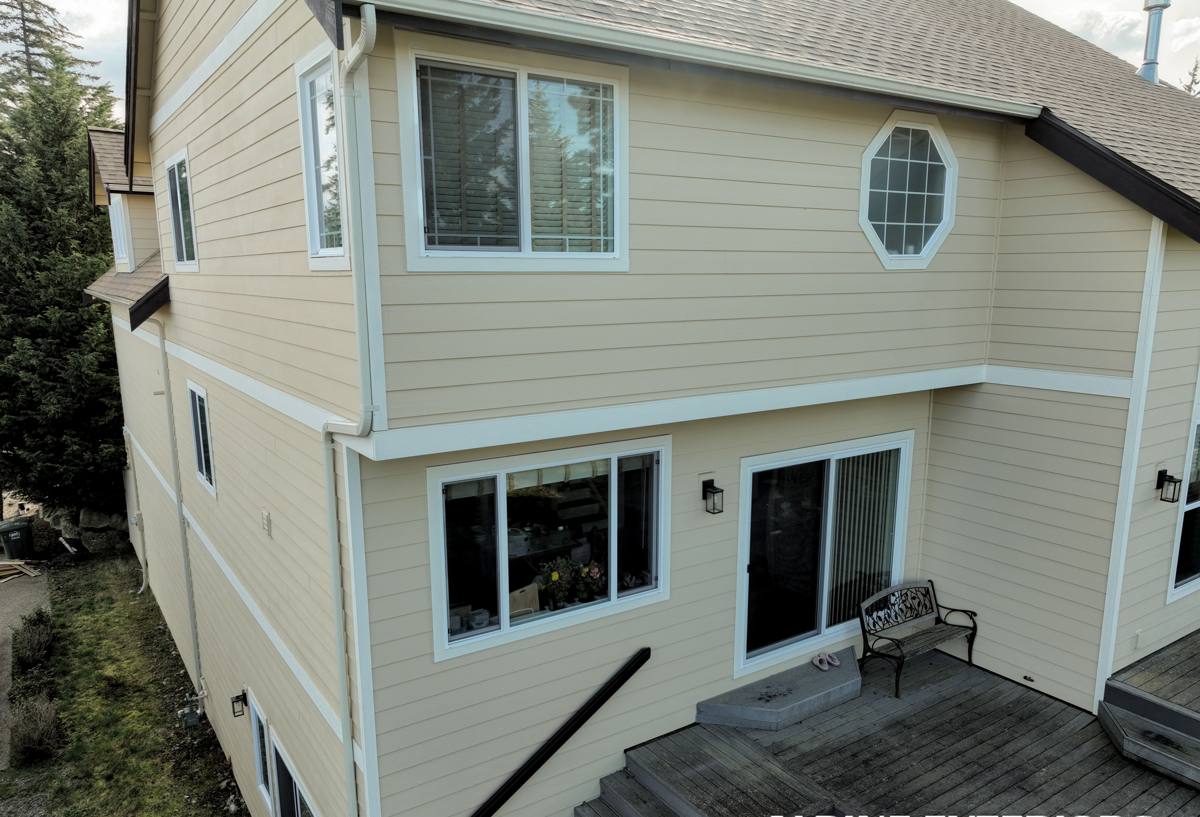
What East Lake's Climate Does to a Deck
Year-Round UV Exposure
Florida's sun angle and day length mean deck boards here get more cumulative UV exposure in a year than most other parts of the country see in two or three. Untreated or lower-grade wood grays, splinters, and dries out under that kind of sun load, and even some composite products fade or chalk if they weren't engineered with adequate UV inhibitors. A deck that looks good on install day needs a surface built to hold its color and structure through a full decade or more of unbroken Florida sun, not just a few seasons.
Wind-Driven Rain and Standing Water
Summer storms in this part of Pinellas County tend to arrive fast and heavy, and wind often pushes rain sideways into railings, fascia boards, and the gaps between deck boards rather than letting it run straight off. That means a deck surface needs real drainage built into the board profile and the substructure below it, not just a flat run of boards sitting on joists. Standing water that lingers after a storm is one of the more common causes of early substructure rot and hardware corrosion we see on decks that weren't built with drainage as a priority from day one.
Salt Air and Hardware Corrosion
East Lake isn't on the immediate coastline, but salt-laden air still moves inland across Pinellas County, especially during onshore wind patterns. Salt exposure accelerates corrosion in fasteners, joist hangers, and any exposed metal hardware. A deck that uses standard, non-coated fasteners can develop rust streaks and weakened connections years before the decking boards themselves show any wear, which is why hardware selection matters just as much as the decking material on top of it.
Hurricane-Force Wind Events
Pinellas County sits in a hurricane-exposed part of the state, and a deck's structural connections, ledger attachment, post bases, and railing anchoring all need to be built to handle real wind load, not just everyday use. A deck that looks solid under normal conditions can come apart at exactly the wrong moment if the framing and fastening weren't sized and secured for a wind event from the start.
Why We Install Composite Decking
We used to offer a wider range of decking materials, including standard pressure-treated wood. We narrowed that down, and the reason was practical: what we kept seeing on service calls and replacement jobs in this exact climate pointed us toward composite as the more reliable long-term choice for most East Lake homeowners.
- Composite boards don't absorb water the way wood does, which matters directly in a climate with frequent heavy rain and high humidity.
- Quality composite products are manufactured with UV-stabilized capping that resists fading and surface breakdown under Florida's year-round sun exposure.
- Composite doesn't require the sanding, staining, or sealing cycle that pressure-treated wood needs every one to two years to stay protected.
- Composite resists splintering and cupping, which is a real safety consideration on a deck used barefoot around a pool or patio, common throughout East Lake.
- Composite doesn't attract the wood-boring insects that are active year-round in this part of Florida.
None of that means composite is maintenance-free or the automatic right answer for every project. It's a trade-off: higher upfront material cost against a lower long-term maintenance burden and a longer realistic service life in this specific climate. We'll walk through that trade-off honestly during an estimate rather than assuming one material fits every budget and every deck.
What a Correct Composite Deck Installation Involves
Substructure First
The framing underneath a composite deck matters as much as the boards on top, arguably more. Joists, beams, and posts need to be sized for the actual span and load, and in this climate we favor corrosion-resistant hardware and fasteners throughout, not just at the points most visible after the deck is finished. A composite deck built on an undersized or poorly fastened substructure will show problems in the frame long before the decking surface itself wears out.
Ledger Attachment and Flashing
Where a deck attaches to the house is one of the most common failure points we see on tear-outs, especially in a climate with this much wind-driven rain. Proper ledger flashing keeps water from working its way behind the siding or into the rim joist over time. This is a detail that's invisible once the deck is finished but has an outsized effect on how long the whole structure lasts.
Drainage and Board Spacing
Board spacing needs to allow water to shed through rather than pool on the surface, and that spacing has to account for composite's slightly different expansion behavior compared to wood as temperatures shift through a Florida day. Getting this wrong shows up as standing water, staining, or boards that buckle slightly out of alignment within the first couple of storm seasons.
Fastener and Hardware Selection
Given the salt air exposure across Pinellas County, we default to coated or stainless-rated fasteners and hardware on composite deck builds rather than standard hot-dipped galvanized hardware, which can start showing corrosion sooner in this environment. This is a small line-item cost difference upfront that avoids a much larger repair bill down the road.
Railings and Wind-Rated Connections
Railing posts and their connection to the deck frame need to be built to handle real lateral load, both from everyday use and from wind events. We size and anchor these connections to the same standard we'd want on our own homes, not just to pass a minimum inspection.
Composite Decking Options: What the Trade-Offs Actually Look Like
| Factor | Composite Decking | Standard Pressure-Treated Wood |
|---|---|---|
| Upfront material cost | Higher | Lower |
| Ongoing maintenance | Occasional cleaning, no sanding or staining cycle | Sanding, staining, or sealing every 1-2 years in this climate |
| UV fading resistance | Strong, with a quality capped product | Grays and weathers without regular refinishing |
| Moisture absorption | Minimal | Absorbs and releases moisture, which drives warping and cupping |
| Insect resistance | Not a food source for wood-boring insects | Vulnerable without ongoing treatment |
| Realistic service life in this climate | Typically longer with proper installation | Shorter without consistent upkeep |
This isn't a case where one option is universally right. A homeowner planning to sell in a few years, or working with a tighter budget, may reasonably choose pressure-treated wood with a clear understanding of the maintenance commitment. We'll give you the honest version of that comparison specific to your project rather than steering everyone toward the higher-cost option by default.
Our Process for an East Lake Deck Project
- On-site evaluation of the existing structure or planned footprint, including sun exposure, drainage path, and how the deck ties into the house.
- A straightforward estimate that lays out material options, realistic cost ranges, and the trade-offs between them, in plain language.
- Permitting handled through Oldsmar and Pinellas County as required for the scope of work.
- Substructure build-out with corrosion-resistant hardware and properly sized framing for the span and load.
- Ledger flashing and waterproofing detail work where the deck meets the house.
- Composite board installation with spacing and fastening set for this climate's drainage and thermal movement needs.
- Railing and stair installation built to handle real wind and everyday load, not just a minimum standard.
- A final walkthrough so you understand what maintenance, if any, the finished deck actually needs going forward.
A Homeowner's Pre-Project Checklist
- Confirm whether your project needs a new permit or falls under repair/replacement rules with Pinellas County.
- Ask any contractor bidding the job what fastener and hardware grade they plan to use, given the salt air exposure in this area.
- Get clarity on how the ledger board will be flashed where the deck meets your home's exterior.
- Ask how board spacing and expansion gaps will be handled for composite material specifically, since this differs from wood.
- Confirm whether railing posts will be through-bolted into the frame rather than only surface-mounted.
- Get a clear answer on realistic maintenance expectations for the specific composite product being proposed.
Why a Local Crew Matters for This Job
A crew that installs decks across Oldsmar and the surrounding Pinellas County communities on a regular basis sees, year after year, which framing details, fastener choices, and drainage decisions actually hold up under this area's combination of sun, salt air, and storm-season rain. That's different from a general contractor doing an occasional deck job between other kinds of work. East Lake's mix of inland location with a full share of Pinellas County's coastal-influenced climate means the details worth getting right, hardware grade, ledger flashing, drainage, and wind-rated railing connections, aren't optional extras. They're the difference between a deck that holds up for its full service life and one that needs early repairs.
Decks Alongside Siding and Roofing Work
A deck rarely exists in isolation from the rest of a home's exterior. A ledger board that's trapping moisture against the house, or a roofline that's shedding water directly onto a deck surface, can shorten a deck's life regardless of how well the decking itself was installed. Because we also handle siding and roofing work, we can look at how a deck interacts with the rest of your home's exterior rather than treating it as a completely separate project.
Get a Free, No-Pressure Estimate
If you're planning a new composite deck, replacing an aging wood deck, or just want an honest opinion on what your current deck actually needs, we're glad to take a look at your East Lake property. Reach out using the form below to schedule a free estimate, no pressure and no upsell script.