 Oldsmar Siding
 Deck Repair Built for the Land O' Lakes Climate
A deck in this part of Florida works harder than people realize. It's not just a place to put a grill and a couple of chairs — it's an outdoor structure that spends every day of the year exposed to intense UV, sudden downpours, and the kind of wind gusts that show up with a summer storm or a tropical system. Homes in the Land O' Lakes area sit close enough to the Tampa Bay coastline that salt-laden humidity rides inland on the breeze, and that moisture works its way into fasteners, brackets, and end-grain wood even on decks that never see open water directly.
Our crew is based in Oldsmar and has repaired decks across this stretch of the region long enough to know the failure patterns are predictable. UV bleaches and dries out wood fibers, causing checking and splitting. Wind-driven rain finds its way behind ledger boards and under railings where flashing was skipped or done wrong the first time. Hurricane-force gusts put lateral stress on connections that were never rated for it. None of this is unique to one house — it's what Florida does to every deck, year after year, and it's why a repair here needs to address the cause, not just replace the board that finally gave out.
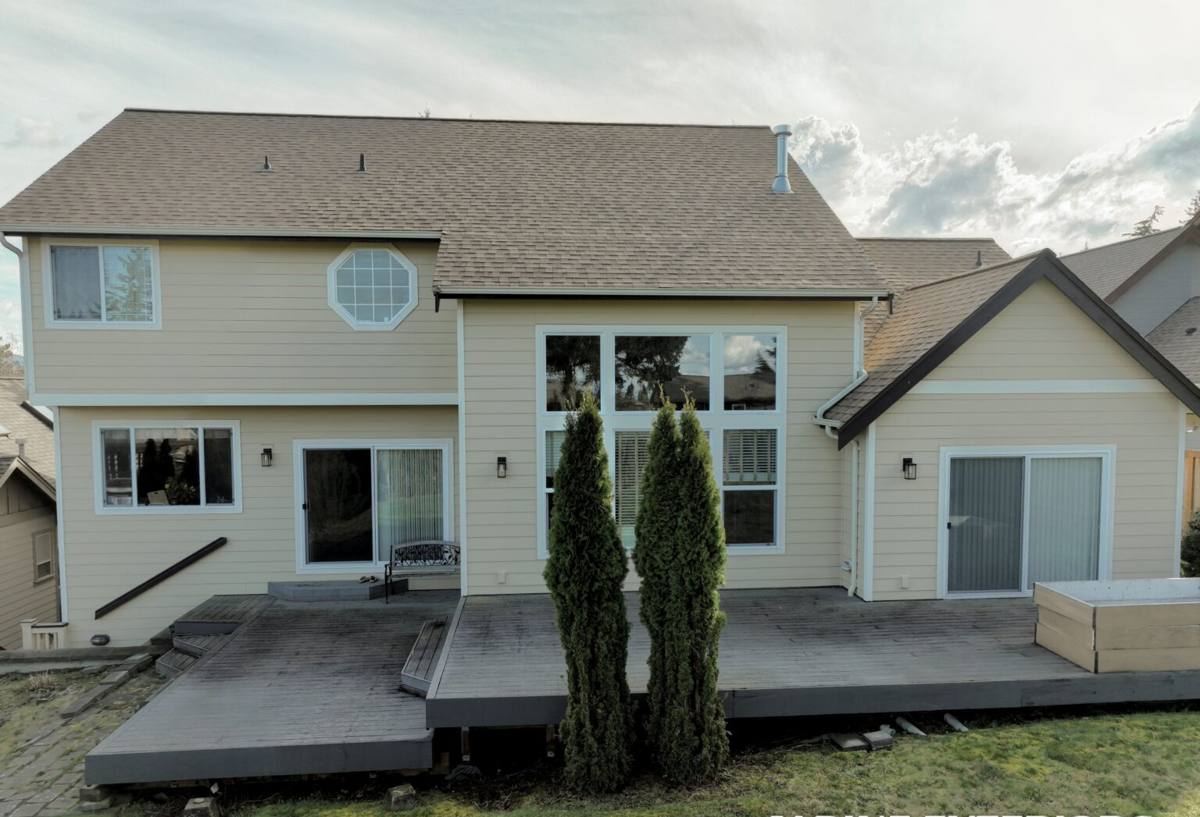
Signs Your Deck Needs Repair
Most deck problems don't start with a collapsed board — they start small and get ignored because the deck still looks usable. The issues below are the ones we're called out for most often in this area, and catching them early is almost always cheaper than waiting.
- Boards that feel spongy, soft, or flex noticeably when you walk on them
- Rust streaks bleeding out around screw or nail heads
- A railing or post that wobbles or has visible play when pushed
- Gaps opening up between deck boards or where the deck meets the house
- Visible daylight, water staining, or dark streaking where the ledger board attaches to the house
- Cracked or splitting stair stringers, or stairs that feel bouncy
- Fasteners backing out or heads that have popped above the board surface
- A musty smell or visible mold/algae growth in shaded, damp areas underneath the deck
Any one of these on its own might be minor. Several at once, or anything involving the ledger board or stair structure, is worth a professional look before it becomes a safety issue.
Structural vs. Cosmetic Damage
It's worth separating the two, because they get fixed differently. Cosmetic damage — graying wood, minor surface cracking, faded finish — affects looks and, over time, the wood's ability to shed water, but it doesn't threaten the deck's integrity. Structural damage involves the framing, ledger connection, footings, or stair stringers: the parts holding weight and resisting wind and lateral load. A deck can look rough and be structurally sound, or look fine on the surface while hiding a compromised ledger board underneath. That's why we inspect the framing before quoting anything, not just the visible decking.
What a Correct Repair Actually Involves
A lot of deck "repairs" amount to swapping out the board that looks worst and calling it done. That approach almost always leaves the underlying cause in place, which means the same failure shows up again a season or two later. A repair that's actually going to hold up here needs to address a few things specifically:
The Ledger Board Connection
This is where the deck attaches to the house, and it's the single most important structural point on the whole deck. If flashing is missing, cracked, or was never installed correctly, wind-driven rain gets behind it and rots the rim joist and ledger from the inside — often invisibly until the wood is already soft. Any real repair in this climate includes checking and, if needed, correcting the ledger flashing, not just the boards around it.
Framing and Fasteners
Joists and beams that have started to soften or split get sistered (reinforced with new lumber alongside the damaged piece) rather than just capped over. Fasteners matter too — coastal humidity and salt air corrode standard fasteners faster than people expect, so we use stainless steel or hot-dip galvanized hardware rated for exterior and coastal-adjacent use, along with code-rated structural connectors (joist hangers, hurricane ties) rather than generic screws driven at an angle.
Railings and Guard Systems
Loose railings are one of the most common repair calls and one of the most important to get right — a railing needs to resist real lateral force, not just look attached. We reset posts into solid framing with proper structural fasteners rather than just tightening what's already there, since a wobbly railing on soft framing will loosen again within a season.
Repair or Rebuild? How We Help You Decide
Not every deck needs a full rebuild, and not every deck can be reasonably saved with spot repairs. The table below covers the factors that usually drive the decision, based on what we see during an inspection.
| Factor | Leans Toward Repair | Leans Toward Rebuild |
|---|---|---|
| Ledger board condition | Solid wood, flashing intact or easily corrected | Soft, rotted, or flashing failure has gone on for years |
| Extent of affected boards | Isolated boards or sections | Damage spread across most of the deck surface |
| Framing/joists | Mostly sound, a few sistered joists needed | Widespread softness or multiple failed joists |
| Age of the structure | Newer deck with isolated wear | Original deck is decades old and near end of service life |
| Footings/posts | Stable, no movement or settling | Visible settling, heaving, or undersized footings for current code |
We'll tell you honestly which category your deck falls into. If a repair is a real fix and not a stopgap, we'll say so and price it accordingly — if the framing has failed in enough places that repair would just be chasing problems one board at a time, we'll tell you that too.
Material Considerations for Repairs in This Climate
What we repair with matters as much as how we repair it. Pressure-treated pine is the most common decking material in this area and repairs well, but it needs consistent sealing to handle UV and moisture cycling. Composite decking (materials like Trex or TimberTech-style products) resists rot and doesn't need staining, but it has its own repair considerations — damaged composite boards typically need full replacement rather than patching, and substructure framing underneath is still almost always wood, so it still needs the same moisture protection. Cedar and other naturally rot-resistant woods look good but come with a higher maintenance commitment to keep that resistance intact over time. When we repair a section of deck, we'll walk you through how the replacement material will weather compared to what's already there, so the finished repair doesn't age unevenly against the rest of the deck.
Our Deck Repair Process in Land O' Lakes
- Inspection. We check the full structure — decking, framing, ledger connection, railings, stairs, and footings — not just the obviously damaged area.
- Honest assessment. We tell you what's cosmetic, what's structural, and whether repair or partial rebuild makes more sense, with a written scope before any work starts.
- Permit check. Structural repairs — anything touching framing, footings, or the ledger connection — may require a permit from your local building department. We handle that step when it applies rather than leaving it on you.
- The repair work. Sistering or replacing framing, correcting ledger flashing, resetting railings into solid structure, and replacing decking with properly rated, corrosion-resistant fasteners throughout.
- Cleanup and walkthrough. We clear debris and walk the finished repair with you so you can see exactly what was done and why.
Why an Oldsmar-Based Crew That Already Works This Area Matters
Deck repair isn't a one-size-fits-all trade job, and a crew that's unfamiliar with this region is more likely to miss the things that actually cause failures here — a ledger flashing detail that's fine in a dry climate but wrong for wind-driven Gulf storms, or fasteners that hold up in a low-humidity market but corrode within a couple of years in coastal-adjacent Florida air. Working out of Oldsmar and repairing decks throughout the surrounding area, including Land O' Lakes, means we're not learning the regional failure patterns on your project — we've already seen how UV, storm wind, and salt-influenced humidity affect decks built the way homes are built around here. That also means faster response for inspections and estimates, and a crew that's still reachable afterward if something needs a follow-up look, rather than a company that worked one job in the area and moved on.
Keeping Your Deck in Good Shape After the Repair
A repair holds up a lot longer with a bit of regular attention, especially in a climate that doesn't give a deck any downtime. A few habits go a long way:
- Reseal or restain wood decking on a regular schedule — sun and rain break down finishes faster here than in milder climates
- Sweep debris out from between boards so moisture doesn't sit trapped against the wood
- Check railings and stair connections for looseness once or twice a year, especially after storm season
- Keep gutters and downspouts near the deck clear so runoff isn't dumping directly onto framing or footings
- Look underneath the deck occasionally for standing water, soft wood, or new rust streaking around fasteners
- Address small issues — a loose board, a hairline crack — before the next rainy season rather than after
If you're in the Land O' Lakes area and something on your deck feels off — soft, wobbly, or just not holding up the way it used to — we're happy to take a look. We offer free, no-pressure estimates, and we'll give you a straight answer on what the deck actually needs. You can request one using the form below.