 Oldsmar Siding
 Building Decks for Palm Harbor's Waterfront Climate
Palm Harbor sits close enough to the Gulf and the canals feeding St. Joseph Sound that a lot of homes here deal with conditions a deck in a landlocked suburb never sees. Salt-laden air rolls in off the water and settles on every exposed surface, including yours. Add in Pinellas County's summer thunderstorm pattern, wind-driven rain that gets up under railings and ledger boards, and UV exposure that runs nearly year-round instead of tapering off for a winter, and you've got a structure that ages faster here than the same deck would three states north.
We build decks in this area every week, which means we've seen what actually fails first: cheap fasteners that rust and stain the boards around them, ledger connections that let water sit against the house framing, and decking installed without enough attention to expansion and drainage. None of that is exotic knowledge, but it's the difference between a deck that looks good for two years and one that holds up for twenty.
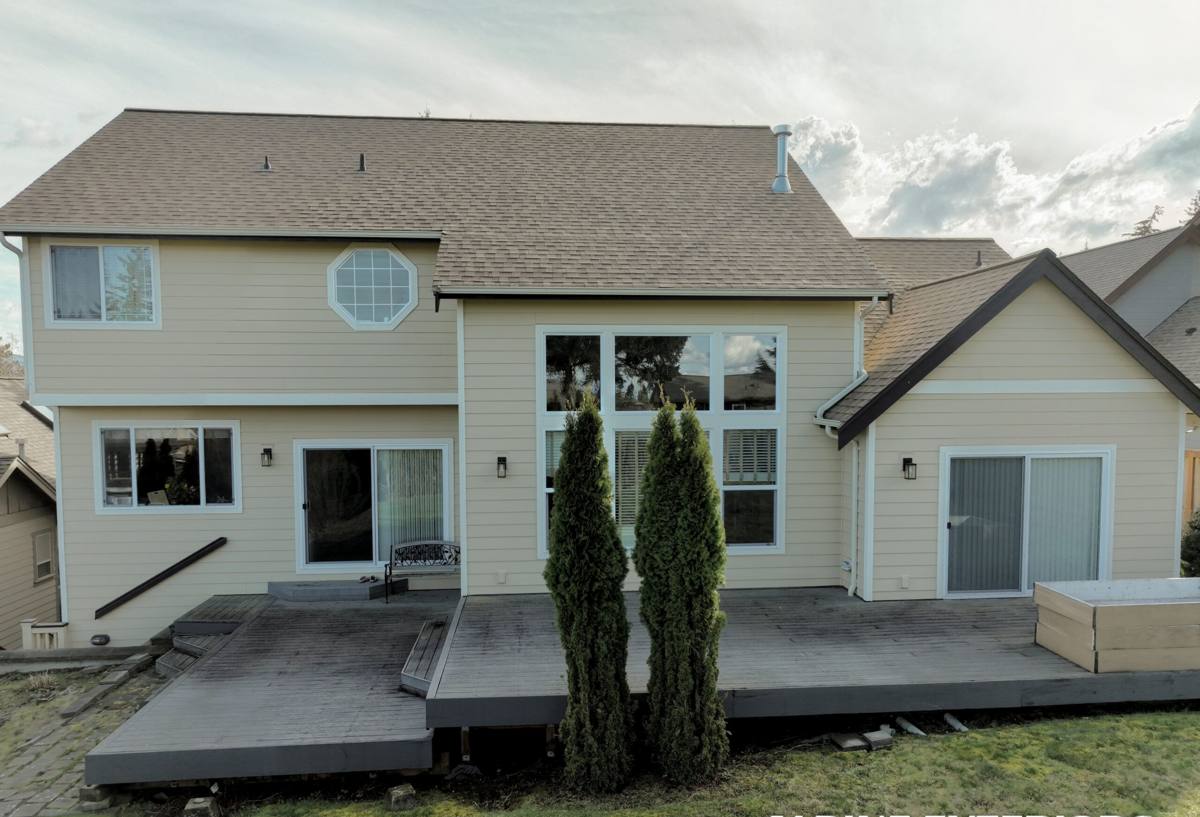
What a Deck Built for This Climate Actually Needs
A deck that's going to hold up in Palm Harbor isn't a different design so much as it's the same design built with the right details in the right places. The bones matter more than the finish.
Fasteners and Hardware
Standard galvanized hardware corrodes faster near saltwater than most homeowners expect, sometimes within a few years. We use stainless steel or heavy-duty coated fasteners rated for coastal exposure, along with joist hangers and structural connectors built to the same standard. It costs more up front. It's also the single easiest place for a deck to fail early if it's skipped.
Ledger Attachment and Flashing
The ledger board — where the deck bolts to the house — is the most common failure point on any deck, anywhere. In a climate with frequent wind-driven rain, a poorly flashed ledger lets water track behind it and into the house framing, which you often won't see until there's rot or a soft spot. We flash every ledger connection properly and never rely on caulk alone to keep water out.
Wind Resistance
Pinellas County building code accounts for hurricane-force wind loads, and your deck's structural connections — post-to-beam, beam-to-joist, railing posts — need to be engineered and fastened to match. This isn't optional detail work; it's code-required in this wind zone, and it's also just common sense for a structure that has to survive tropical storm season every year.
Choosing a Decking Material for Palm Harbor Conditions
There's no single "right" material for every project — it depends on your budget, how much upkeep you want to take on, and how close you are to the water. Here's how the common options actually compare in this climate:
| Material | UV & Salt Air Performance | Maintenance | Typical Lifespan |
|---|---|---|---|
| Pressure-treated wood | Fades and grays faster in intense sun; needs protection from moisture | Annual sealing/staining recommended | 10–15 years with upkeep |
| Tropical hardwood | Naturally dense and rot-resistant, handles UV well | Periodic oiling to maintain color | 20-plus years |
| Capped composite | Excellent — resists fading, moisture, and salt staining | Occasional washing, no sealing | 25–30 year warranties common |
| PVC decking | Fully synthetic, unaffected by salt or moisture | Lowest — just periodic cleaning | Similar to capped composite |
We install all of the above and will walk you through the honest trade-offs for your specific project rather than pushing whatever's easiest to sell. Real wood gives you a look composite can't fully match, but it demands more attention in a climate this harsh. Capped composite and PVC cost more initially but save on maintenance for homeowners who'd rather spend weekends on the water than resealing boards.
A Note on Uncapped Composite
Older-generation uncapped composite decking has a real weak spot in coastal climates: without a protective outer layer, it can absorb moisture and show staining or mold growth faster than capped products, especially in humid, salt-heavy air. It's a maintenance and appearance issue more than a structural one, but it's why we default to capped composite or PVC when a homeowner wants a low-maintenance synthetic deck.
Framing: Where the Real Work Happens
The decking boards are what you see, but the framing underneath determines whether the deck is safe and whether it'll still be tight and level in ten years. In this climate, we pay particular attention to a few things most homeowners never see once the project's done:
- Footings sized and set deep enough for stable support in Florida's sandy or shifting soils
- Post bases and connectors rated for wind uplift, not just downward load
- Joist spacing tightened up under composite and PVC decking, which can flex more than wood between supports
- Proper gaps between boards for drainage and material expansion in heat and humidity
- Beam and joist protection where framing sits close to grade or near sprinkler overspray
None of this shows up in a photo of the finished deck. It shows up five years later, in whether the deck still feels solid underfoot.
Permits and Wind Load Requirements
Decks in Pinellas County require a building permit in nearly all cases, and inspections check both the structural framing and the railing/guard requirements before the project is signed off. Wind load is a real design factor here, not paperwork for its own sake — it directly affects post sizing, connector hardware, and how the deck ties back to the house. We handle the permitting and design work to meet code so you're not the one chasing inspections or guessing at requirements. A deck that skips this process might look fine at first, but it's not something we'll build, because it puts you at risk both structurally and if you ever sell the home.
Our Process, Start to Finish
- On-site assessment — we look at your yard, sun exposure, drainage, and how close you are to canal or saltwater influence, since that changes material and hardware recommendations.
- Design and material selection — we go over layout, decking options, and railing choices, with honest cost and maintenance trade-offs for each.
- Permitting — we prepare and submit the plans to meet Pinellas County code, including wind load requirements.
- Framing and structural build — footings, posts, beams, and joists go in first, built to handle both weight and wind, with coastal-rated hardware throughout.
- Decking, railing, and finish work — boards, railings, stairs, and any lighting or fascia details are installed to spec.
- Final walkthrough and inspection — we confirm everything passes inspection and walk you through basic care for your specific material.
Keeping a Deck Sound in Palm Harbor's Climate
Whatever material you choose, a few habits go a long way toward protecting the investment in a climate that's tougher on outdoor structures than most:
- Rinse salt residue off decking and hardware periodically, especially on canal-facing or waterfront properties
- Check railing posts and stair connections yearly for any looseness after storm season
- Keep gutters and downspouts directing water away from the deck's footings
- Reseal or oil wood decking on the schedule recommended for that species — don't wait until it looks dry and gray
- Clear debris from between boards so moisture doesn't sit and trap heat or mildew
- After a major storm, do a quick visual check of framing connections and railings before heavy use
Why Hire a Crew That Already Works in Palm Harbor
Building a deck that holds up here isn't about following a national how-to guide — it's about knowing which details actually matter in this specific environment. A crew that mostly works inland doesn't think twice about fastener grade or ledger flashing detail, because they've never had to watch standard hardware rust out in three years near the water. We work in Palm Harbor and the surrounding Oldsmar area regularly, so the coastal-rated hardware, the wind load detailing, and the drainage considerations aren't an upsell — they're just how we build every deck out here, because we've seen what happens when they're skipped.
That local familiarity also means fewer surprises during permitting and inspection, since we're working within the same Pinellas County requirements on a regular basis rather than relearning them project to project.
Get a Straightforward Estimate
If you're considering a new deck or replacing one that hasn't held up to Palm Harbor's sun, salt, and storms, we're happy to take a look and give you an honest read on materials, structure, and cost — no pressure, no pushy sales pitch. Fill out the form below to schedule a free estimate.