 Oldsmar Siding
 Custom Decks for Town 'N Country Homes
A deck in Town 'N Country has to do more work than a deck almost anywhere outside Florida. It sits under intense sun nearly every day of the year, takes on wind-driven rain during the summer storm season, and lives within reach of salt-laden air moving in off the Gulf. A deck built without those conditions in mind will show it early — cupped boards, rusted fasteners, a railing that's gone spongy at the post base. A deck built for them will still look and feel solid a decade in.
We build and repair custom decks for homeowners across this part of Pinellas County, and Town 'N Country's mix of established homes and newer construction means we see everything from decks that need a full teardown to additions being built onto a house for the first time. The approach changes with the project, but the standards don't.
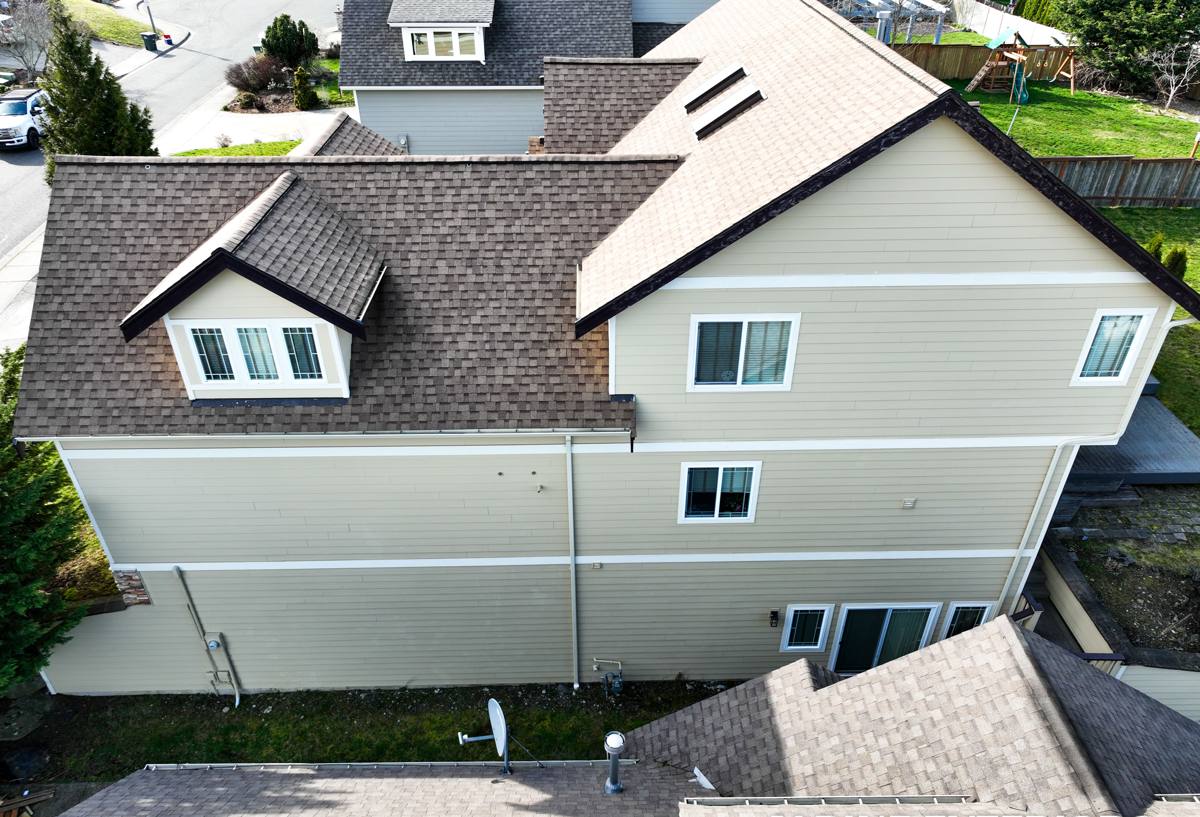
What Florida's Climate Actually Does to a Deck
It helps to understand the specific ways this climate attacks a deck, because it explains almost every decision that goes into building one correctly.
UV and Heat
Year-round sun exposure breaks down the surface fibers of untreated or poorly finished wood, drying it out and making it brittle and prone to splintering and cracking. Dark-colored composite boards can also run hotter underfoot than lighter colors — worth thinking about if the deck gets full afternoon sun.
Wind-Driven Rain and Humidity
Rain here rarely falls straight down. Wind pushes it sideways and underneath structures, which means ledger boards, joists, and any wood-to-house connection point need real flashing and moisture management, not just a caulk bead. Add in Florida's humidity, and any wood that stays damp between rain events becomes a target for rot and fungal decay.
Salt Air and Corrosion
Town 'N Country isn't directly on the coast, but the Tampa Bay area's air still carries enough salt content to accelerate corrosion on standard fasteners and hardware over time. Once a fastener starts rusting, it loses grip strength long before it looks obviously bad.
Hurricane-Force Wind
A deck is a structure, and in Pinellas County it has to be engineered to handle real wind load — uplift on railings, racking on the frame, and the connection back to the house pulling loose in a storm. This isn't a place to build to the minimum and hope.
Choosing the Right Decking Material
There's no single "best" material — there's a best fit for the homeowner's budget, maintenance appetite, and how the deck will be used. Here's how the common options stack up under this climate specifically:
| Material | How It Handles This Climate | Maintenance | Typical Lifespan |
|---|---|---|---|
| Pressure-treated pine | Affordable, but prone to cupping, splintering, and gray-out under constant UV without upkeep | Needs sealing/staining every 1-2 years | 10-15 years |
| Composite decking | Resists rot and UV fading well; doesn't splinter; some early-generation boards did poorly with moisture, but modern capped composites hold up | Occasional washing, no sealing | 20-25+ years |
| PVC decking | Fully synthetic, handles moisture and salt air with essentially no rot risk; can flex more than composite in extreme heat | Minimal — periodic cleaning | 25-30 years |
| Tropical hardwoods (ipe, etc.) | Naturally dense and rot-resistant, very durable, but requires disciplined oiling to prevent graying and surface checking | Annual oiling recommended | 25+ years with upkeep |
We'll walk through these trade-offs honestly during the estimate — including where a lower upfront cost means more maintenance down the road, and where a composite or PVC premium pays for itself in years without refinishing.
What a Correctly Built Deck Involves
Whether it's a simple ground-level platform or a full second-story deck off the back of the house, the fundamentals that keep a deck safe and long-lasting in this climate don't change:
- Footings sized for the soil and structure — undersized or shallow footings are one of the most common failure points we find on older decks.
- Proper ledger board attachment and flashing where the deck connects to the house, so wind-driven rain doesn't get behind the siding.
- Joist spacing and framing rated for the actual load — not just furniture and foot traffic, but wind uplift and lateral force.
- Corrosion-resistant fasteners and hardware rated for coastal/humid exposure, not standard interior-grade hardware.
- Railing and post connections built to code for wind resistance, not just visual attachment.
- Proper drainage and airflow underneath the deck surface to keep framing from staying wet after storms.
Skipping any one of these doesn't usually cause an immediate problem — it causes a problem in year four or five, which is exactly why so many "already built" decks we're called to inspect have issues that were invisible at handoff.
Our Custom Deck Process
1. On-Site Consultation and Design
We start at the house, looking at how the space will actually be used, sun exposure and shade patterns, drainage on the lot, and how the deck should tie into the home's existing lines and siding. This is also where we talk through material options against the homeowner's budget and long-term maintenance preference.
2. Engineering and Permitting
Decks in Pinellas County require permits, and larger or elevated decks typically need engineered plans to satisfy wind-load and structural requirements. We handle this step rather than leaving it to the homeowner — it's the part most likely to get skipped by unlicensed crews, and it's the part that protects the homeowner if there's ever an insurance question down the line.
3. Construction
Footings and framing go in first, built to the engineered plan, followed by decking, railings, and any stairs or built-in features. We flash every point where the structure meets the house and use fasteners and hardware rated for this climate throughout, not just at visible connection points.
4. Final Walkthrough
Before we consider the job done, we walk the finished deck with the homeowner — checking rail stability, board spacing, drainage, and finish quality, and answering any questions about care going forward.
Permits, Codes, and Wind Load in Pinellas County
Because this region sits in a hurricane-prone zone, local building codes require decks to meet specific structural and wind-load standards — this covers everything from footing depth to railing attachment to how the deck frame connects back to the house. These requirements exist because a deck that fails in a storm isn't just a repair bill, it's a safety hazard. A licensed, locally established contractor pulls the proper permits and builds to these standards as a matter of course; it shouldn't be something a homeowner has to ask for or double-check.
Maintaining a Deck in This Climate
Even a well-built deck needs some ongoing attention in Florida's conditions. What that attention looks like depends on the material, but a few habits apply across the board:
- Rinse off pollen, dirt, and salt film periodically — buildup traps moisture against the surface.
- Check railing posts and stair connections once or twice a year for looseness, especially after a heavy storm season.
- Look underneath the deck occasionally for standing water, debris blocking airflow, or any sign of rust on fasteners.
- For wood decking, keep up with sealing or staining on schedule — this is the single biggest factor in how long wood lasts here.
- For composite or PVC, a simple wash a couple of times a year is usually all that's needed.
- After any major storm, do a quick visual check of the structure before resuming normal use.
Why Hire a Crew That Already Works in Town 'N Country
A contractor who works this area regularly already understands the practical realities — how sun exposure and afternoon storm patterns typically hit a given lot orientation, what inspectors in this jurisdiction expect to see, and how homes of this area's common vintages are typically framed, which affects how a new deck ties into the existing structure. That local familiarity shows up as fewer surprises during permitting, fewer change orders mid-build, and a finished deck that's actually suited to how the property sits, not a generic design dropped onto it.
It also matters for accountability. A local, licensed and insured crew is easy to reach if a question comes up two years after the build — which is worth more than it sounds like the day the deck is finished.
What Affects the Cost of a Custom Deck
Every deck is priced around its own specifics, but the same handful of factors drive most of the variation between projects:
| Factor | Why It Matters |
|---|---|
| Size and footprint | More square footage means more framing, footings, and decking material |
| Height/elevation | Elevated decks need stairs, additional railing, and often more robust engineering |
| Material choice | Pressure-treated wood costs less upfront; composite/PVC cost more but need far less upkeep |
| Design complexity | Multiple levels, built-in seating, or custom railing designs add labor time |
| Site access and prep | Sloped yards, existing landscaping, or tight access can add site work |
We give straightforward numbers during the estimate rather than a lowball figure that grows once work starts — the goal is a quote the homeowner can actually plan around.
If you're considering a new deck or need an honest look at one that's already showing its age, we're glad to come take a look. The estimate is free, there's no pressure, and you'll get a straight answer about what your specific property needs — use the form below to get started.