 Oldsmar Siding
 Composite Decking Built for a Safety Harbor Backyard, Not a Showroom
Safety Harbor sits on Old Tampa Bay in Pinellas County, a few minutes from our Oldsmar crew's home base. It's a good place for outdoor living — mature tree canopy, waterfront and near-waterfront lots, and a mild enough winter that a deck gets used most of the year. It's also a demanding place for any exterior building material. Between the bay-facing salt air, near-constant UV exposure, sudden wind-driven downpours, and the real chance of hurricane-force wind loads, a deck here has to handle conditions that a product spec sheet written for a national market doesn't always account for.
Composite decking has become the default choice for a lot of Safety Harbor homeowners for good reason — it doesn't rot, it doesn't need annual staining, and it resists the kind of splintering and cupping that Florida humidity does to real wood over a few seasons. But "composite" isn't one product. Board quality, cap technology, substructure choices, and fastening details all affect how a deck holds up five and ten years out, and those are the details that separate a deck that still looks tight after a decade from one that starts showing fastener pops, board sag, or fading within a couple of years.
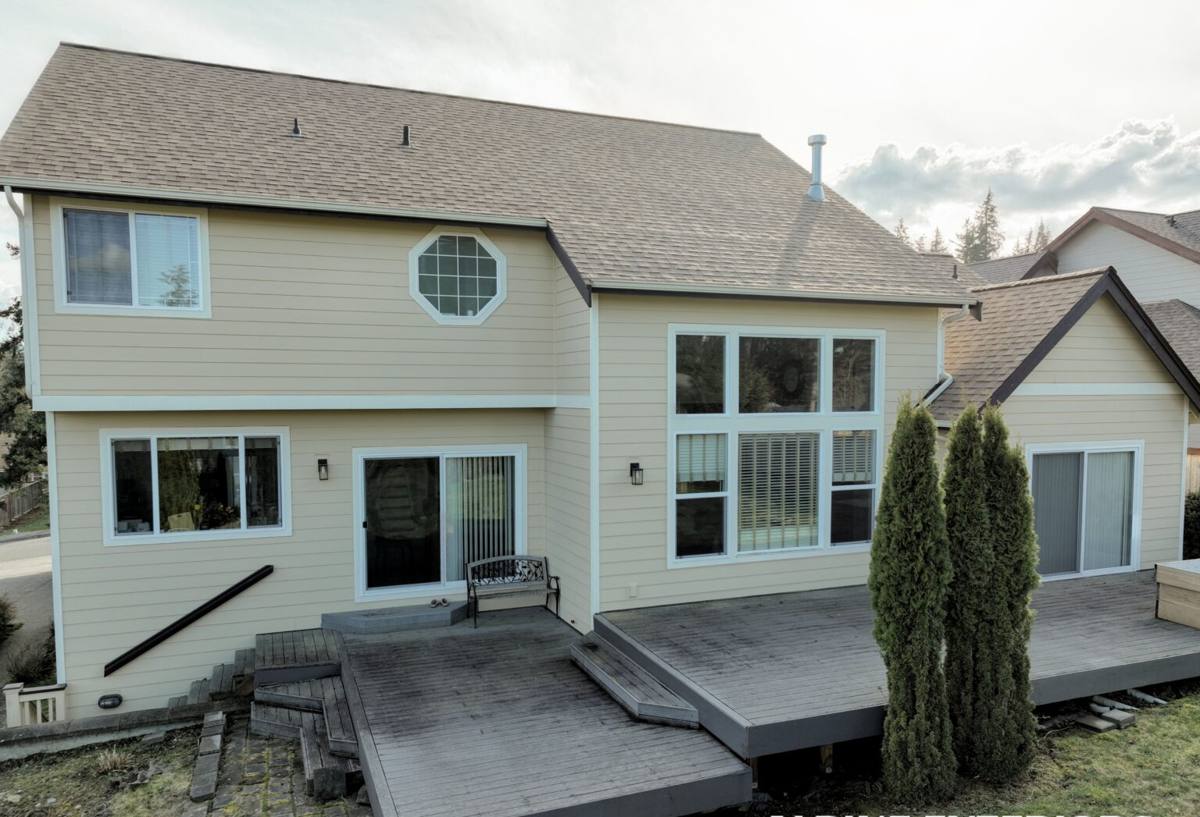
What This Climate Actually Does to a Deck
It helps to be specific about what a Safety Harbor deck is up against, because it shapes almost every decision in the installation.
Salt Air and Corrosion
Even a mile or two off the water, salt-laden air accelerates corrosion on anything metal — fasteners, joist hangers, structural screws, railing hardware. Standard zinc-coated fasteners can start showing rust streaks on light-colored decking within a couple of seasons. This is one of the most common callback issues we see on decks that weren't built with coastal-grade hardware from the start.
UV and Heat
Florida sun is intense and consistent nearly year-round. Lower-grade composite boards without a real cap layer can fade unevenly, especially where a rail post or planter creates a partial shade line. Surface temperature also matters for comfort — darker boards in full sun get hot enough to affect how usable a deck actually is on a summer afternoon.
Wind-Driven Rain and Standing Water
Afternoon storms in this part of Pinellas County come in fast and heavy. Decking that isn't gapped and pitched correctly holds water between boards and against the substructure, which is where problems start even on a "waterproof" composite product — the board itself may not absorb water, but trapped moisture at fastener points and ledger connections still causes damage underneath.
Hurricane-Force Wind Loads
Pinellas County construction has to account for real wind events, not just afternoon gusts. Railing systems, post connections, and ledger attachment all need to be built to hold under uplift and lateral load, not just look solid on a calm day.
What a Correct Composite Deck Installation Actually Involves
The composite boards get the attention, but most of what determines a deck's lifespan here is underneath them.
Ledger and Structural Connection
If the deck attaches to the house, that ledger connection is the single most safety-critical point on the whole structure. It needs proper flashing to keep water out of the house framing and lag or through-bolt fastening rated for the actual load, not just what's fast to install.
Substructure Material
We frame with pressure-treated lumber rated for ground contact where applicable, and we pay attention to joist spacing — composite boards generally need tighter joist spacing than wood decking (commonly 12 inches on center, sometimes tighter on diagonal or picture-frame layouts) to avoid deflection over time. Cutting corners on joist spacing is a common source of the "springy" feel homeowners notice in composite decks a year or two after installation.
Fastener Selection
We use coastal-rated, corrosion-resistant fasteners and hardware throughout — hangers, screws, and connectors — specifically because of the salt air exposure this area gets. Hidden fastener clip systems are used where the board profile supports them, which also gives a cleaner top surface with no exposed screw heads to corrode or work loose.
Board Spacing and Expansion Gaps
Composite material expands and contracts with heat more than people expect. Board-end gaps and perimeter clearance are set to the manufacturer's specification for our temperature range, not a generic figure — too tight and boards can buckle in peak summer heat; too loose and the deck looks sloppy and catches debris.
Comparing Decking Materials for This Climate
Homeowners often ask us to lay out the real trade-offs rather than just recommend the most expensive option. Here's how the common choices stack up for a Safety Harbor property specifically.
| Material | Upfront Cost | Coastal Climate Behavior | Maintenance |
|---|---|---|---|
| Pressure-treated wood | Lowest | Prone to cupping, splintering, and fastener staining in humidity; needs annual sealing to slow it down | High — sanding, sealing, staining on a regular cycle |
| Basic (uncapped) composite | Moderate | Can absorb moisture at cut edges and fade faster under constant UV without a protective cap | Low, but surface wear shows sooner near the water |
| Capped composite | Moderate-high | Cap layer resists moisture absorption, staining, and fading; performs well in salt air and sun | Very low — periodic washing |
| Capped PVC/polymer | Highest | No wood content at all; excellent moisture and UV resistance, lightest weight per board | Very low — periodic washing |
For most Safety Harbor projects, we steer homeowners toward a capped composite or capped polymer board. The uncapped products cost less up front but tend to need replacement or show wear sooner in this climate, which changes the real cost comparison once you account for how long the deck actually lasts.
Problems We Commonly Find on Existing Composite Decks in This Area
- Corroding fasteners on decks built with standard (non-coastal) screws and hangers
- Board sag or bounce from joist spacing that was too wide for the composite product used
- Water staining and soft spots at the ledger board from missing or failed flashing
- Uneven fading where boards weren't from the same production lot or run
- Railing posts that were under-fastened for actual wind load, not just static weight
Most of these aren't visible until the deck has been through a few seasons of Florida weather, which is exactly why the installation details matter more than the brand name on the board.
Our Process, Start to Finish
On-Site Estimate
We walk the property, look at grade, drainage, sun exposure, and how the deck ties into the house, and talk through board and layout options based on how the space will actually be used.
Design and Material Selection
We help homeowners pick board profile, color, and railing style, and we're upfront about which products hold up best given the site's specific sun and moisture exposure.
Permitting
Deck construction in Pinellas County generally requires a permit and inspection, especially for anything attached to the house or built above a certain height. We handle that process rather than leaving it to the homeowner.
Build
Substructure first, with attention to ledger flashing, joist spacing, and fastener grade, then decking, then railing and any finish trim.
Final Walkthrough
We go over the finished deck together before calling the job done, including care basics for the specific board product installed.
Permits and Local Code Considerations
Structural decks attached to a home in Pinellas County typically fall under the county or local municipal building code, which sets requirements for footing depth, ledger attachment, guardrail height, and baluster spacing on railings. Waterfront and near-waterfront properties around Safety Harbor can also have additional review depending on setback and flood zone status. We pull the required permits and build to the load and safety requirements that apply to the property, rather than treating code minimums as optional.
Maintenance Checklist for Composite Decking in a Coastal Climate
- Rinse the deck surface periodically to clear salt residue and pollen buildup before it embeds in the board texture
- Sweep leaves and debris out from between boards so gaps stay clear for drainage
- Check railing post connections once a year for any looseness, especially after a storm season
- Inspect fastener heads and hardware for early corrosion, particularly on boards closest to the water
- Avoid pressure-washing at close range or high PSI, which can damage the cap layer on some composite products
- Trim back plants or landscaping that keep any section of the deck shaded and damp longer than the rest
Why a Crew That Already Works Safety Harbor Makes a Difference
A lot of what protects a composite deck here isn't in the manufacturer's install manual — it's knowing that a bay-facing property needs a step up in fastener grade, or that a shaded, tree-heavy lot needs extra attention to drainage and mildew-resistant board selection. Our crew works Oldsmar, Safety Harbor, and the surrounding Pinellas County communities regularly, so those adjustments aren't guesswork — they're standard practice on every deck we build in this area. We're also positioned to be there quickly if a warranty question or storm-related concern comes up after the job is done, rather than being a crew that shows up once from out of the area and is hard to reach afterward.
If you're weighing composite decking for a Safety Harbor property, we're happy to walk the site, talk through honest material trade-offs for your exposure and budget, and give you a straightforward, no-pressure estimate — just use the form below to get started.