 Oldsmar Siding
 Siding in Citrus Park: What the Climate Actually Demands
Homes in the Citrus Park area sit close enough to Tampa Bay and the Gulf that the climate isn't background noise — it's a design constraint. Every summer brings the possibility of hurricane-force wind, and even in a quiet storm season, the daily grind of intense UV exposure, wind-driven rain, and salt-laden air works on exterior siding year-round. Siding here isn't just cosmetic. It's the first line of defense between your framing and a climate that doesn't let up.
That combination is harder on siding than most homeowners realize. UV breaks down pigments and surface coatings faster than in milder climates, which is why paint on lesser materials chalks and fades within a few years. Wind-driven rain finds any gap in flashing or caulking and pushes moisture sideways and upward, not just down, which defeats siding systems that were only ever tested against straight-down rainfall. And salt air, even well inland of the immediate coastline, accelerates corrosion on fasteners, trim screws, and any metal component that wasn't specified for a coastal-adjacent environment. A siding installation that doesn't account for all three — wind, UV, and salt — is a callback waiting to happen.
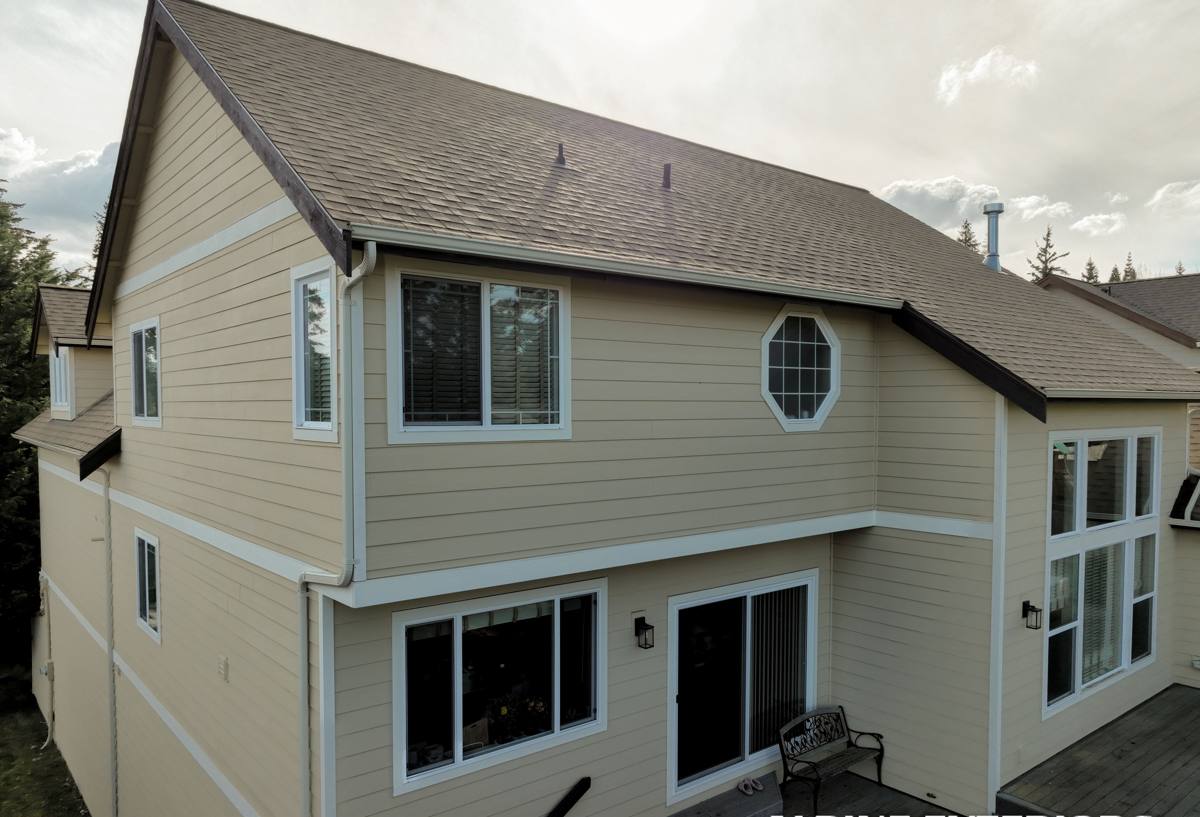
What Correct Siding Installation Actually Involves
"Siding installation" sounds simple from the curb, but the parts that determine whether it lasts are the parts you can't see once the job is done. A correct install in this climate means getting the following right, every time, not just when it's convenient:
- A continuous, properly lapped weather-resistive barrier behind the siding, with no gaps at seams or penetrations
- Flashing at every window, door, and roofline transition, installed so water sheds outward and downward, never trapped behind the cladding
- Correct fastener type, length, and spacing — under-fastening is a common cause of wind-related siding failure in storm-prone areas
- Proper clearance between the bottom edge of the siding and grade, roofing, decking, or hardscape to avoid wicking moisture
- Manufacturer-specified gaps at butt joints and trim to allow for expansion without cracking caulk lines
- Sealed, primed cut edges on any field-cut siding panel, since a raw edge is where moisture intrusion typically starts
Skip any one of these steps and the siding may still look fine for a year or two. The failures show up later — usually after the first serious wind event or after a couple of Florida summers have had time to work on unsealed edges and undersized fasteners.
Why Wind Rating Isn't Optional Here
Siding installed in this part of Florida needs to be installed to the wind-load requirements that apply to the property, not just to a generic national standard. That affects fastener schedule, starter strip attachment, and how corners and trim are secured. It's one of the most commonly shortcut details on lower-bid siding jobs, because it doesn't change how the finished wall looks — until it's tested by a real storm.
Why We Install Only James Hardie Fiber Cement
We standardized on James Hardie fiber cement siding and don't install vinyl, LP SmartSide, or other engineered wood or composite products. That's a deliberate professional call, not a sales preference. Fiber cement is non-combustible, doesn't soften or warp under sustained Gulf Coast heat the way some vinyl products can, and holds paint and factory finish far longer under intense UV than primed wood-based alternatives. James Hardie's ColorPlus finish is baked on at the factory under controlled conditions, which gives it a longer, more consistent fade resistance than field-applied paint — a real advantage in a climate that punishes coatings.
Hardie also engineers regional product lines specifically for humid, storm-exposed climates like ours, with moisture and impact performance built for exactly the conditions Citrus Park homes deal with. Combined with a strong, transferable manufacturer warranty, it's the product we're willing to put our own installation warranty behind. We'd rather turn down a job than install a product we don't believe will hold up on a home in this climate.
Our Installation Process, Step by Step
The process is the same discipline on every home, whether it's a full re-side or a single elevation replacement:
- On-site assessment. We inspect existing sheathing, look for hidden moisture or rot behind current siding, and check window and door flashing before quoting anything.
- Tear-off and substrate repair. Old siding comes off, damaged sheathing is replaced, and the wall is brought back to a sound, flat surface — nothing gets covered up.
- Weather barrier installation. A continuous water-resistive barrier goes on with correctly lapped and taped seams, sized to the specific wall assembly.
- Flashing at every penetration. Windows, doors, hose bibs, vents, and roof transitions all get flashed before a single piece of siding goes up.
- James Hardie panel or plank installation. Installed to manufacturer fastening specs and local wind-load requirements, with proper joint gaps and clearances.
- Trim, caulking, and touch-up. Corners and trim are sealed with exterior-grade sealant rated for sustained UV and moisture exposure, and any factory-finish touch-up is done with matched product.
- Final walkthrough. We review the finished work with the homeowner before calling the job complete.
Warning Signs Your Current Siding Is Failing
Most siding problems don't announce themselves with a single dramatic failure — they show up gradually, and homeowners often live with early warning signs longer than they should. Watch for:
- Visible warping, buckling, or waviness anywhere on a wall
- Soft spots when you press on siding near the bottom edge or around windows
- Paint or finish that's chalking heavily or peeling in sheets rather than fading evenly
- Cracked or missing caulk at joints, corners, and trim
- Streaking, dark staining, or a persistent musty smell near exterior walls
- Siding panels that flex, rattle, or have visibly worked loose after windy weather
- Rust streaks running down from fastener heads or trim screws
Any one of these on its own might be minor. Several at once, especially on a wall that takes the brunt of prevailing wind and sun, usually means moisture has already gotten behind the cladding.
What Affects the Cost of a Siding Installation
Every home is different, and we don't quote a job without seeing it, but the same handful of factors drive most of the cost variation between houses of similar size:
| Factor | Why It Matters |
|---|---|
| Tear-off vs. new construction | Removing and disposing of existing siding, plus repairing any hidden sheathing damage, adds labor a bare wall doesn't require |
| Home size and wall complexity | More corners, dormers, and roof transitions mean more flashing and cutting, which adds time regardless of square footage |
| Siding profile and trim style | Lap width, shingle-style accents, and trim detail all affect material and labor cost |
| Story height and access | Second-story and steep-roof sections require additional staging and safety setup |
| Color and finish selection | Factory ColorPlus finishes vary by line and color, and darker colors absorb more UV over time |
| Substrate condition | Rotted or water-damaged sheathing found during tear-off needs repair before new siding can go on correctly |
Why a Locally Experienced Crew Matters
A crew that regularly works the Citrus Park and greater Oldsmar area already understands the practical realities of building here: the wind-load expectations local inspectors check for, how quickly UV and salt air punish a shortcut installation, and what drainage and flashing details actually hold up through a full hurricane season rather than just looking right on installation day. That experience shows up in decisions that aren't on the estimate — where extra flashing gets added even when it's not strictly required, how tight the fastener schedule is pulled on a wall that catches prevailing wind, and which details get double-checked because they've seen what happens when they're skipped.
It also means fewer surprises with permitting and inspection, since local requirements and typical construction conditions for this part of the Tampa Bay area are already familiar territory rather than something learned on your job.
Caring for Your New Siding After Installation
James Hardie fiber cement is low-maintenance compared to wood or vinyl, but "low-maintenance" isn't "no-maintenance," especially in this climate. A little routine attention protects the investment:
- Rinse siding periodically with a garden hose to clear salt residue and airborne grime, especially on walls facing prevailing wind
- Inspect caulking at trim and joints annually and reseal any cracked or shrinking sections before the next storm season
- Keep irrigation heads and sprinklers from spraying directly on siding, which causes localized mineral staining over time
- Trim back landscaping so foliage isn't holding moisture against the wall
- After any major wind event, walk the exterior and check for loose panels, damaged trim, or fresh caulk failures
None of this is demanding, but skipping it is how small issues turn into bigger repairs a few years down the line.
If your Citrus Park home's siding is showing its age, or you're planning ahead of the next storm season, we're happy to take a look and walk you through what correct installation looks like for your specific home. Reach out for a free, no-pressure estimate using the form below.